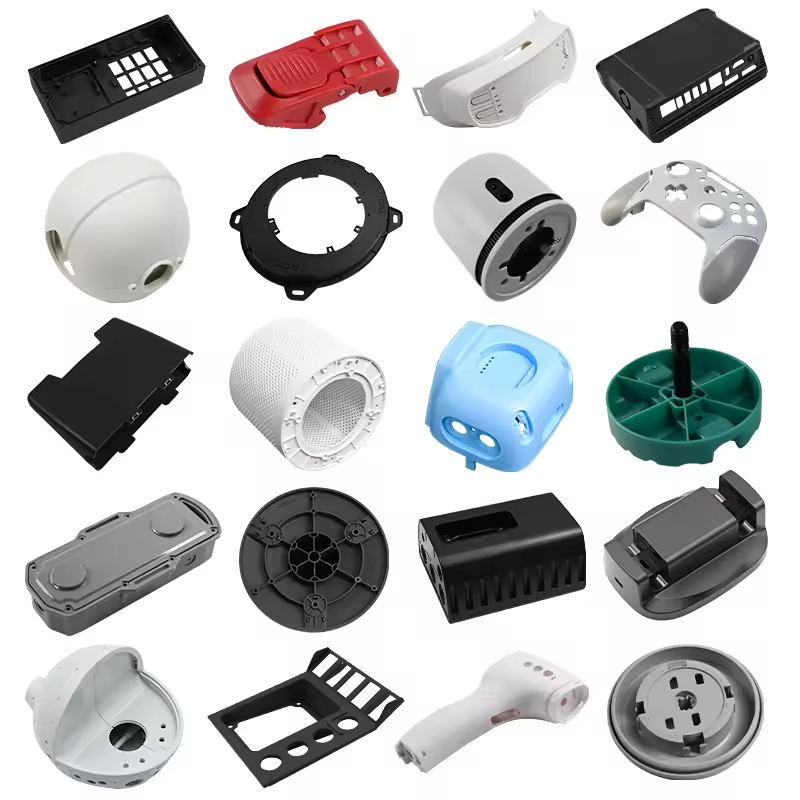

What Is Low-Volume Injection Molding?
Low-volume injection molding refers to the production of plastic parts in quantities typically ranging from 100 to 10,000 units per run. Unlike mass production tooling designed for hundreds of thousands or millions of cycles, low-volume molding employs specialized approaches to bridge the gap between prototyping and full-scale manufacturing. This production strategy is especially relevant for product validation testing, bridge tooling during design iterations, market pilot launches, replacement parts for legacy equipment, and niche industrial applications where annual demand never justifies high-volume tooling investment.
The defining characteristic of low-volume injection molding is the use of lower-cost mold materials and streamlined manufacturing methodologies. While production-grade molds fabricated from hardened tool steel can cost $50,000 to $150,000 or more, low-volume mold options can reduce tooling expenditure by 50% to 70%. The trade-off is mold longevity — a low-volume mold may reliably produce 100 to 100,000 shots versus a production mold rated for one million or more cycles. For the right application, this trade-off delivers compelling economics.
Mold Technologies for Low-Volume Production
Selecting the appropriate mold technology is the single most important decision in low-volume injection molding. The following options represent the primary pathways, each with distinct cost, lead time, and quality profiles.
Aluminum Prototype Molds
Aluminum molds are the workhorse of low-volume injection molding. Tool-grade aluminum alloys such as 7075-T6 and QC-10 offer excellent machinability, reducing mold fabrication time by 30% to 50% compared to steel. Aluminum’s superior thermal conductivity — approximately four times that of tool steel — enables faster cycle times and more uniform cooling, which can improve part quality by reducing warpage and sink marks. Typical aluminum molds are rated for 1,000 to 100,000 shots depending on the resin, part geometry, and maintenance. They are best suited for unfilled thermoplastics; glass-filled resins accelerate wear on aluminum cavities due to abrasive fiber content.
A standard aluminum mold for a part of moderate complexity can be fabricated in 2 to 4 weeks at a cost ranging from $3,000 to $15,000. The combination of rapid turnaround and moderate cost makes aluminum the default choice for most low-volume injection molding programs.
Steel Prototype Molds (P20/H13)
When production volumes exceed 50,000 units or when processing abrasive materials such as glass-filled nylon (PA66-GF30) or high-temperature resins like PEEK, pre-hardened steel molds become necessary. P20 steel, hardened to approximately 28-32 HRC, provides a middle ground — significantly more durable than aluminum while costing less than fully hardened production tooling. Typical lead times for P20 prototype molds range from 4 to 8 weeks, with costs of $8,000 to $30,000 for moderately complex parts.
Steel prototype molds also support higher injection pressures and can accommodate more complex gating arrangements, including hot runner systems that are impractical or impossible in aluminum. For parts requiring tight tolerances across the entire production run, the dimensional stability of steel provides a meaningful advantage over aluminum, which exhibits greater thermal expansion and can show measurable wear after several thousand cycles of abrasive materials.
MUD (Master Unit Die) Frame Systems
MUD mold frame systems offer a compelling middle ground for low-volume production. In a MUD system, a standardized, reusable steel frame houses interchangeable insert sets that contain the actual cavity and core geometry. The frame — a significant capital investment at $10,000 to $25,000 — is a one-time purchase. Each new part design requires only the fabrication of new insert sets, which typically cost $1,500 to $8,000 per set and can be produced in 1 to 3 weeks.
For manufacturers running multiple low-volume parts, the economics of MUD systems are transformative. A single MUD frame amortized across ten insert sets reduces per-part tooling cost by 40% to 60% compared to building complete molds for each design. MUD systems are particularly popular in the automotive and medical device industries, where frequent design changes and moderate volumes are the norm. The primary limitation is part size — MUD frames impose maximum envelope dimensions, typically around 200 mm x 250 mm in cavity area.
Family Molds for Cost Sharing
A family mold combines cavities for multiple different parts within a single mold base. This approach is most effective when the parts share similar wall thickness, material, and projected area so that filling is balanced. Family molds can reduce total tooling cost by 30% to 50% compared to building separate molds for each component. However, they introduce manufacturing complexity: if one cavity requires maintenance, the entire mold comes out of production; if parts have significantly different volumes, one cavity runs unnecessarily; and achieving balanced filling across dissimilar cavities demands sophisticated runner design and possibly different gate sizes.
Family molds work best when the combined parts are always needed in the same ratio — for example, a left and right housing pair, or a base and lid that ship together as an assembly.
Cost Breakdown: Low-Volume vs. High-Volume Injection Molding
| Cost Factor | Low-Volume (Aluminum Mold, 5,000 Units) | High-Volume (Hardened Steel, 500,000 Units) |
|---|---|---|
| Mold Fabrication | $5,000 – $15,000 | $50,000 – $150,000 |
| Mold Lead Time | 2 – 4 weeks | 8 – 16 weeks |
| Unit Part Cost | $2.50 – $8.00 | $0.30 – $1.50 |
| Amortized Tooling per Part | $1.00 – $3.00 | $0.10 – $0.30 |
| Total Cost per Part (Tooling + Unit) | $3.50 – $11.00 | $0.40 – $1.80 |
| الأفضل لـ | Prototypes, pilot runs, niche products, bridge tooling | Consumer goods, automotive production, high-volume industrial |
This comparison illustrates a fundamental economic principle of injection molding: mold cost amortization dominates unit economics at low volumes, while unit part cost dominates at high volumes. The crossover point — where high-volume tooling becomes economically justified — varies by part complexity and material but typically falls between 20,000 and 100,000 units. Below this threshold, low-volume strategies deliver superior total cost of ownership.
Lead Time Expectations and Project Planning
Lead time is often the primary driver behind low-volume injection molding decisions. When a product launch deadline looms or when design iterations demand rapid turnaround, the compressed schedule of prototype tooling becomes a strategic advantage. Below are typical lead time ranges for low-volume injection molding projects:
| Project Phase | Aluminum Mold | P20 Steel Mold | MUD Insert Set |
|---|---|---|---|
| DFM Review and Mold Design | 3 – 5 days | 5 – 10 days | 3 – 5 days |
| Mold Fabrication | 10 – 20 days | 20 – 40 days | 7 – 14 days |
| Mold Trial (T0 Sampling) | 1 – 2 days | 1 – 3 days | 1 – 2 days |
| Mold Adjustments and T1 | 3 – 7 days | 5 – 10 days | 2 – 5 days |
| Production Run (5,000 units) | 2 – 5 days | 3 – 7 days | 3 – 5 days |
| Total Estimated Timeline | 4 – 6 weeks | 7 – 12 weeks | 3 – 5 weeks |
These timelines assume standard part complexity and availability of mold base components. Complex parts with side actions, unscrewing cores, or intricate cooling channels will extend each phase. Expedited schedules are possible at additional cost — rush charges for mold fabrication typically add 30% to 50% to the tooling price but can compress the mold build phase by 30% to 40%.
When to Use Alternatives: 3D Printing and CNC Machining
Low-volume injection molding is not always the optimal solution. For quantities below 100 units, additive manufacturing (3D printing) or CNC machining often provides better economics and faster turnaround. The decision framework should consider the following factors.
3D printing is appropriate when quantities are below 50 to 100 units, when geometric complexity exceeds what is moldable, when design iterations are ongoing and tooling investment cannot yet be justified, or when lead time must be compressed to days rather than weeks. Technologies such as selective laser sintering (SLS) for nylon parts, Multi Jet Fusion (MJF) for production-grade PA12, and stereolithography (SLA) for high-detail visual prototypes are the most common choices for functional low-volume production.
CNC machining is the superior choice when material properties must match production intent exactly (3D-printed parts rarely match the mechanical properties of injection-molded equivalents), when tight tolerances of plus or minus 0.05 mm or better are required, when the part is predominantly prismatic and machining access is straightforward, or when quantities fall between 50 and 500 units where machining cycle time remains competitive. CNC machining avoids all tooling cost but unit costs are substantially higher — typically $15 to $150 per part depending on complexity — and do not decline with volume.
| Decision Factor | الطباعة ثلاثية الأبعاد | التصنيع الآلي باستخدام الحاسب الآلي | Low-Volume Injection Molding |
|---|---|---|---|
| Optimal Quantity Range | 1 – 100 units | 10 – 500 units | 100 – 10,000 units |
| Tooling Required | None | None (fixtures only) | Yes ($3,000 – $30,000) |
| خواص المواد | Anisotropic, limited to printable resins | Isotropic, any machinable plastic | Isotropic, full resin selection |
| تشطيب السطح | Layered texture, requires post-processing | Machined finish, polishable | Mold finish transfer, texture options |
| Lead Time (First Parts) | 1 – 5 days | 3 – 10 days | 14 – 30 days |
Bridge Tooling Strategy
Bridge tooling is a strategic approach that uses low-volume molds to begin production while the full production tooling is still being fabricated. This strategy is particularly valuable in the automotive, medical device, and consumer electronics industries, where time-to-market pressure is intense and production tooling lead times of 12 to 20 weeks can jeopardize launch schedules.
A typical bridge tooling program proceeds as follows: the aluminum or P20 bridge mold is designed and fabricated in 3 to 6 weeks. Production of initial market inventory begins immediately upon mold qualification, generating revenue and building market presence while the hardened production mold is built over 10 to 16 weeks. When the production mold is qualified, the bridge mold is either retired or retained as a backup for capacity surges and replacement part production.
The financial case for bridge tooling is straightforward: the additional tooling investment — typically $5,000 to $20,000 — is weighed against the revenue loss and market share erosion of delaying product launch by 8 to 12 weeks. For most commercial products, this calculation strongly favors the bridge approach. A bridge mold producing 5,000 to 20,000 units during the transition period typically pays for itself several times over in accelerated revenue capture.
Quality Considerations in Low-Volume Molding
Low-volume does not mean low-quality. Parts produced from aluminum prototype molds can meet the same dimensional and cosmetic standards as parts from production tooling, provided the mold is properly designed and maintained. Key quality factors include uniform cooling channel design to minimize warpage, adequate venting to prevent burn marks and short shots, proper draft angles of 1 to 3 degrees to ensure clean ejection without drag marks, and gate location optimization to control knit line placement and minimize visible flow marks.
Process validation for low-volume production should include first-article inspection (FAI) per AS9102 or equivalent standards, capability studies (Cp/Cpk) on critical-to-quality dimensions, and material certification including melt flow index verification and, where applicable, UL 94 flammability rating confirmation. These validation steps establish that the low-volume process produces conforming parts and provide baseline data for any future transition to high-volume production.
Case Example: Automotive Sensor Housing
A Tier 1 automotive supplier required 8,000 injection-molded sensor housings in glass-filled PA66 for a pre-production vehicle validation program. Full production tooling — a hardened S136 steel mold with hot runner system — was quoted at $85,000 with a 14-week lead time. The bridge strategy employed an aluminum mold at $12,000 with a 4-week lead time, producing the full 8,000-unit requirement over 10 days of molding. Total cost including tooling and production was approximately $38,000. The alternative — delaying the program by 10 weeks and proceeding directly to production tooling — would have incurred program delay penalties exceeding $100,000 and jeopardized the supplier relationship. The bridge mold successfully produced all required parts within specification and was retained for service part production.
الأسئلة الشائعة
What is the minimum order quantity for low-volume injection molding?
Most low-volume injection molding suppliers set a minimum order quantity between 100 and 500 units, depending on part size and complexity. For quantities below 100 units, 3D printing or CNC machining is typically more cost-effective. The practical lower bound is driven by mold setup cost, material minimums, and the time required for process stabilization during the initial shots. Some specialized rapid injection molding services accept orders as low as 50 units, though unit pricing at these quantities reflects the inefficiency of extremely short production runs.
How does aluminum mold life compare with steel for low-volume production?
Aluminum molds typically last 1,000 to 100,000 shots depending on the resin, fillers, and part geometry. Unfilled resins such as ABS, polypropylene, and unfilled nylon cause minimal wear, allowing aluminum molds to reach the upper end of this range. Glass-filled resins, particularly PA66-GF30 and PPS-GF40, are abrasive and accelerate cavity wear, reducing aluminum mold life to the 1,000 to 10,000 shot range. Pre-hardened P20 steel molds can reliably produce 100,000 to 500,000 shots even with abrasive materials, making them the preferred choice when volume requirements exceed aluminum capabilities or when abrasive fillers are specified.
Can surface textures and finishes be applied to low-volume molds?
Yes. Aluminum molds support a range of surface finishes including Mold-Tech and Yick Sang texture standards up to approximately MT-11000 depth. However, the softer aluminum surface means texture durability is limited compared to steel. For fine textures (VDI 12-24 or MT-11010 and finer), aluminum performs well for the mold’s rated lifespan. Deep textures (VDI 33+ or MT-11300 and deeper) may degrade visibly within 5,000 to 10,000 cycles. Steel molds support the full range of textures with excellent durability. High-gloss polished finishes (SPI A-1 to A-3) are achievable on both aluminum and steel, though aluminum requires more frequent re-polishing to maintain the surface quality.
What is the cost difference between making a mold in China versus domestically?
Chinese mold fabrication typically costs 30% to 50% less than equivalent molds built in North America or Western Europe, with lead times that are often 20% to 30% shorter. This cost advantage extends across all mold types — aluminum, P20 steel, and hardened production tooling. A mold quoted at $25,000 domestically might be priced at $12,000 to $17,000 from a qualified Chinese mold maker. However, buyers should factor in international shipping (typically $500 to $2,000 for mold freight), import duties, and the value of direct engineering communication. Working with an established export-oriented manufacturer that employs English-speaking project engineers and maintains ISO 9001 certification significantly reduces the communication and quality risks associated with overseas tooling.
How do I transition from low-volume to high-volume production?
The transition path depends on the original low-volume tooling strategy. If an aluminum bridge mold was used, the production steel mold is typically ordered in parallel — the bridge mold runs initial production while the production mold is fabricated. The production mold undergoes the same qualification process (T0 sample, dimensional inspection, T1 adjustments, process validation) before the bridge mold is retired. If the low-volume approach used MUD inserts, the transition may simply involve producing additional insert sets or upgrading from aluminum to steel inserts within the same MUD frame. The key to a smooth transition is thorough documentation of the low-volume process — mold temperature profiles, injection parameters, dimensional data, and any processing issues encountered — so that the production mold can be validated against a known-good baseline rather than starting from scratch.