
If this article answers one question, it should be this: what actually happens after you upload a CAD file to an online CNC machining service? This page is not about whether CNC machining is useful in general. It is specifically about the digital buying workflow: file upload, manufacturability review, quote logic, order confirmation, production communication, and delivery risk. Engineers usually do not struggle with the machining concept itself — they struggle with the handoff. Once the supplier is behind a web form instead of across the shop floor, the real skill becomes sending the right files, asking the right questions, and knowing which warning signs matter before you click place order. That is the lens for everything below.
I get it. Sending a precision part into the internet feels weird. You’re used to handing a print to a machinist you know by name. But here’s the reality: online CNC machining services have matured to the point where they’re often faster, cheaper, and more consistent than walking into a local shop — if you know how the process works and what to watch for.
This guide walks you through the entire online CNC workflow. No marketing fluff. Just how it actually goes down, from your CAD file to parts in your hands.
Core Concepts & Fundamentals
Before we get into the step-by-step, let’s get on the same page about what “online CNC service” actually means.
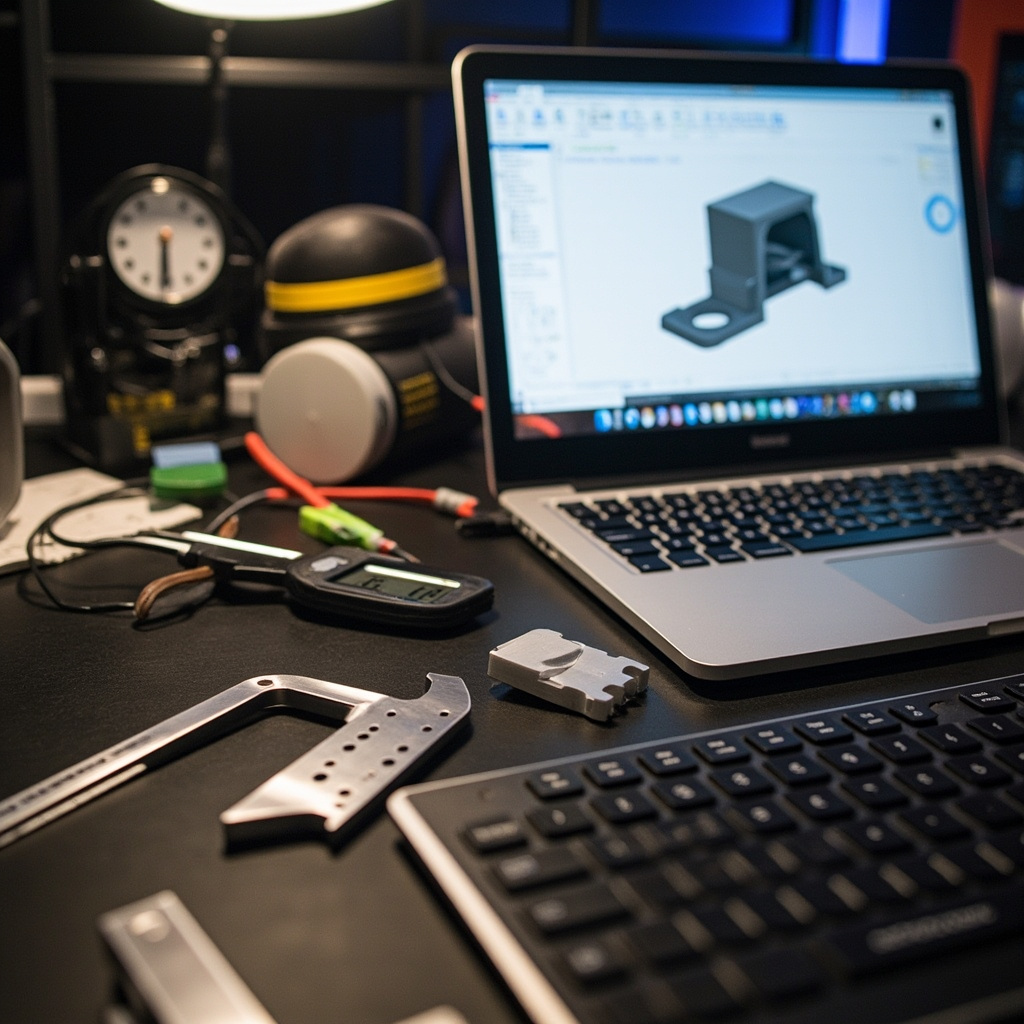
An online CNC machining service is essentially a digital manufacturing bureau. You upload a 3D CAD file (STEP, IGES, or native format), configure your material and finishing requirements, and the platform handles everything from quoting to manufacturing to shipping. The key difference from traditional shops isn’t the machines — it’s the workflow automation.
Most platforms use automated DFM (Design for Manufacturability) analysis to catch issues before your part hits a machine. They run instant or near-instant quoting based on geometry extraction, material costs, and machine time estimates. And they aggregate orders across hundreds or thousands of customers to achieve economies of scale that a single local shop simply can’t match.
Here’s what’s actually happening behind the scenes: when you upload a STEP file, the platform’s software extracts geometric features, identifies the machining operations required (facing, pocketing, drilling, tapping, contouring), calculates tool paths, and estimates cycle time. It checks for impossible geometry — 90-degree internal corners with no fillet, walls thinner than the tool diameter, features that require 5-axis when you specified 3-axis. This layer of automation is what lets these services turn quotes around in hours instead of days.
But make no mistake — real machinists are still running real machines. The software handles the quoting and DFM checks; the humans handle the judgement calls, setups, and quality verification.
Key Processes & Technologies
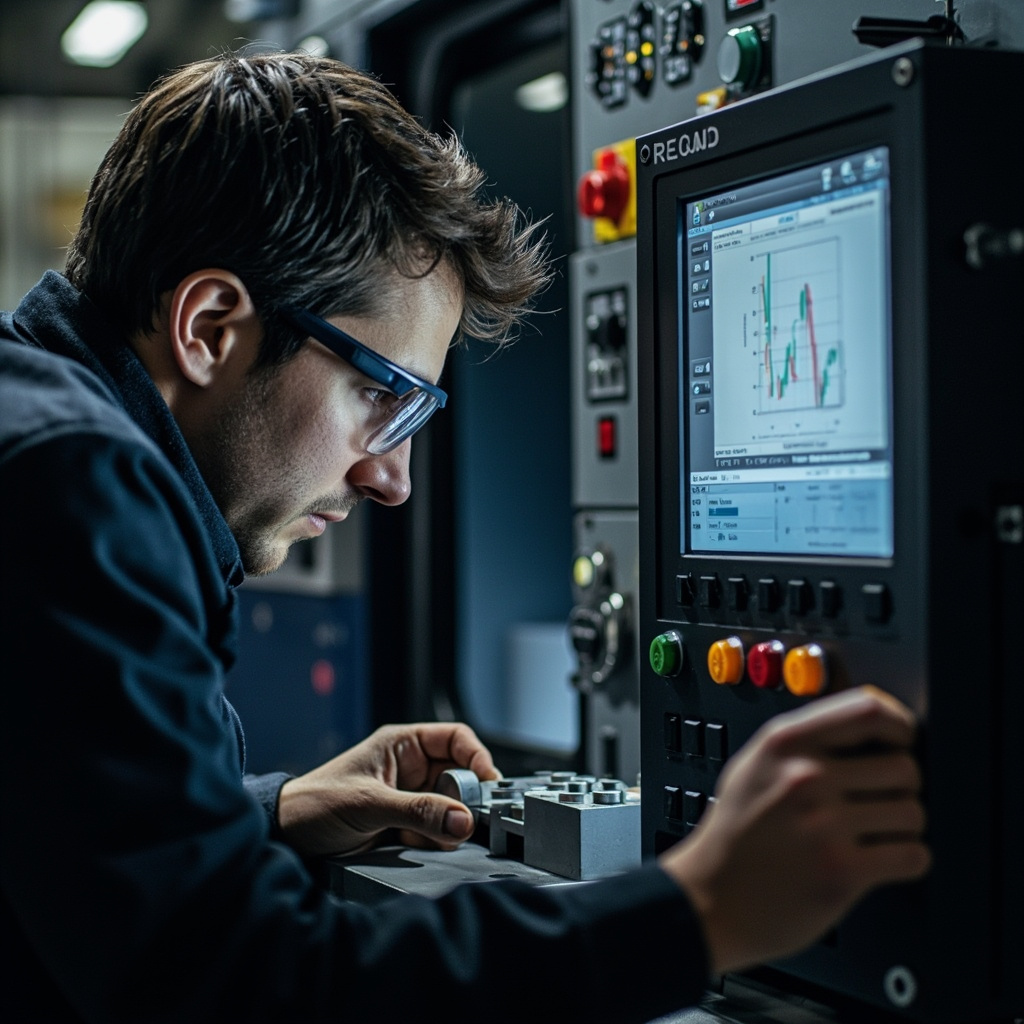
Not all online CNC services operate the same way. Here’s a breakdown of what you’re actually tapping into when you place an order.
| العملية | What It Does | الأفضل لـ | Typical Lead Time |
|---|---|---|---|
| 3-Axis CNC Milling | Cuts from top-down and side angles with a rotating tool on a workpiece clamped to a moving table | Prismatic parts, brackets, plates, housings with features accessible from one orientation | 3–7 business days |
| 5-Axis CNC Milling | Simultaneous 5-axis motion; the tool or workpiece tilts and rotates for compound-angle cuts | Complex geometries, impellers, turbine blades, medical implants, parts needing fewer setups | 5–10 business days |
| الخراطة باستخدام الحاسب الآلي الرقمي | Workpiece rotates while a stationary tool removes material — lathe-based process | Shafts, pins, bushings, spacers, any cylindrical part | 3–5 business days |
| Swiss Machining | Sliding headstock lathe for ultra-small diameters; guide bushing supports the bar near the cut | Medical screws, watch components, miniature connectors, parts under 32mm diameter | 5–8 business days |
| Wire EDM | Uses electrical discharge with a thin wire electrode to erode conductive material with extreme precision | Tight internal corners, thin slots, tooling inserts, extrusion dies, parts where milling can’t reach | 5–10 business days |
The platform’s automated quoting engine decides which process your part gets routed to based on geometry. A cylindrical part with tight concentricity gets flagged for turning. A square housing with pockets and tapped holes goes to 3-axis milling. A complex aerospace bracket with angled faces on three sides needs 5-axis. This routing is one of the biggest advantages of online services — you don’t need to figure out the process chain yourself.
Most platforms also offer supplementary processes integrated into the same order flow: anodizing, bead blasting, powder coating, chromate conversion, passivation, and laser engraving. You pick the finish and it gets applied before shipping — no separate PO, no separate vendor.
التطبيقات الصناعية
| الصناعة | Application | المواد | Key Requirement | nylonplastic.com Advantage |
|---|---|---|---|---|
| السيارات | Custom gearbox mounting brackets | 6061-T6 Aluminum | High strength-to-weight ratio, corrosion resistance | 3-axis & 5-axis milling with instant DFM feedback on thin-wall features |
| الفضاء الجوي | Flight control linkage components | 7075-T7351 Aluminum | Fatigue resistance, traceability, AS9100-level QA | Material certs provided; full reports on request |
| الطبية | Surgical instrument handles | 316L Stainless Steel | Biocompatibility, autoclave-ready surface finish | Passivation & electropolishing integrated into the same order |
| الإلكترونيات | Heat sink enclosures | 6063-T5 Aluminum | Thermal conductivity, tight flatness tolerance | Stress-relieved machining preserves flatness on thin fins |
| معدات صناعية | Pump housing prototypes | Cast Iron / 4140 Steel | Wear resistance, pressure-tight seals | Multi-process routing: turning + milling without splitting the order |
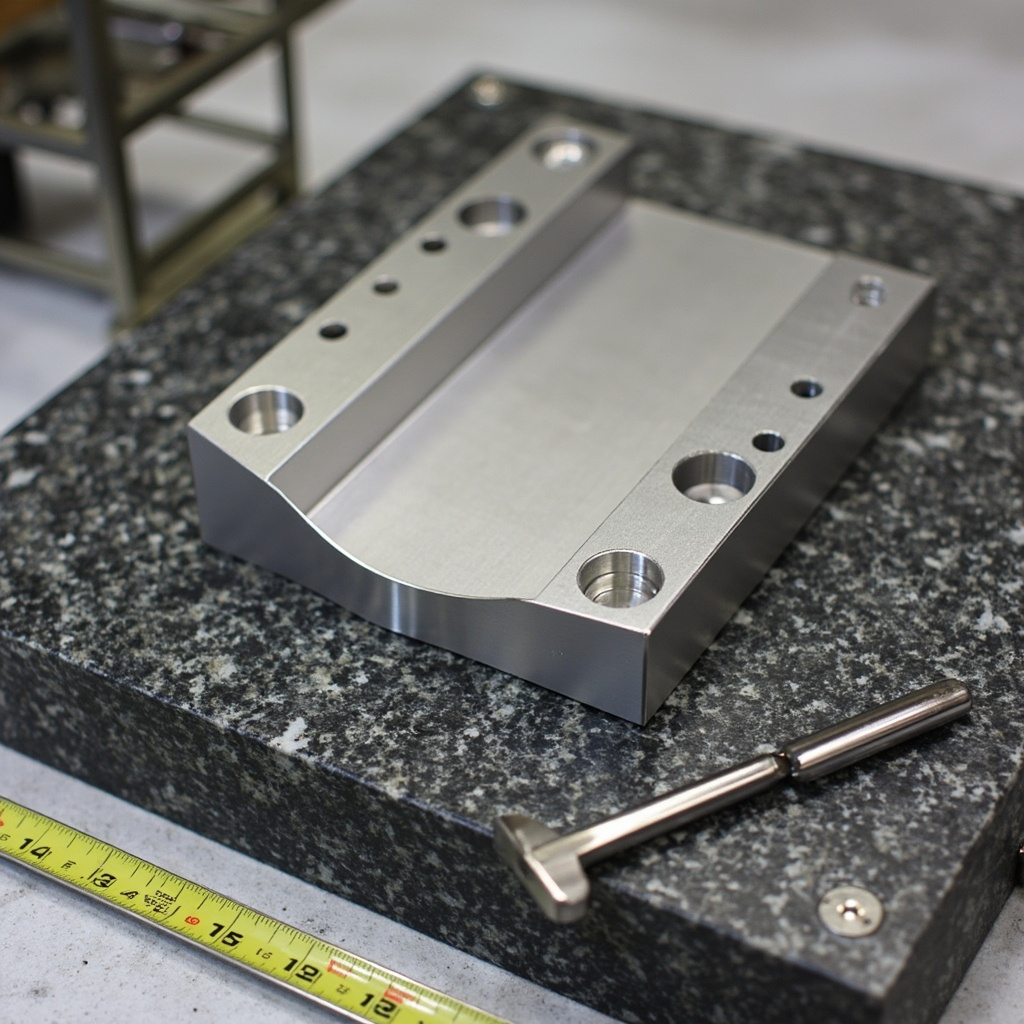
| الأتمتة الآلية الآلية | End-effector mounting plates | 7075 Aluminum / Carbon Steel | Precise dowel hole positioning, high stiffness | Tight positional tolerances (±0.01mm) verified by CMM |
What I want you to notice in that table: the same platform that machines a robotic end-effector plate to ±0.01mm can also handle a simple bracket. That’s the power of aggregation — the quality systems scale across every order size.
Material Selection — What Actually Works
You’ll see online platforms list 50+ materials. Don’t get hypnotized by the catalog. In practice, about 80% of CNC parts coming through any online service fall into these families:
- 6061-T6 Aluminum: The workhorse. Machines beautifully, anodizes well, solid strength, and costs less than you think. If you’re not sure where to start, start here.
- 7075-T6/T7351 Aluminum: Aerospace-grade strength but harder on tooling and more expensive. Worth it when weight savings plus strength matter.
- 304/316L Stainless Steel: Corrosion resistance king. 316L for medical/food contact. Both are gummy to machine — expect longer lead times and higher cost than aluminum.
- 1018/A36 Mild Steel: Cheap, weldable, machinable. Not pretty, not corrosion-resistant, but it works for structural parts you’re going to paint or powder coat anyway.
- 4140/4340 Alloy Steel: When you need steel that takes a beating. Heat-treatable. Used everywhere from tooling to axles.
- Delrin (POM): The polymer you reach for when you need a plastic that machines like metal. Dimensionally stable, low friction, great for gears and bushings.
- Brass C360: Free-machining, electrically conductive, looks good. Connectors, fittings, decorative parts.
The real question isn’t “what material can I use” — it’s “what material will actually ship on time and within budget.” Online platforms show real-time material availability. If a material shows “extended lead time,” believe it. I’ve seen engineers pick exotic grades because they looked cool in a datasheet, only to wait three extra weeks.
Cost & Performance Trade-offs
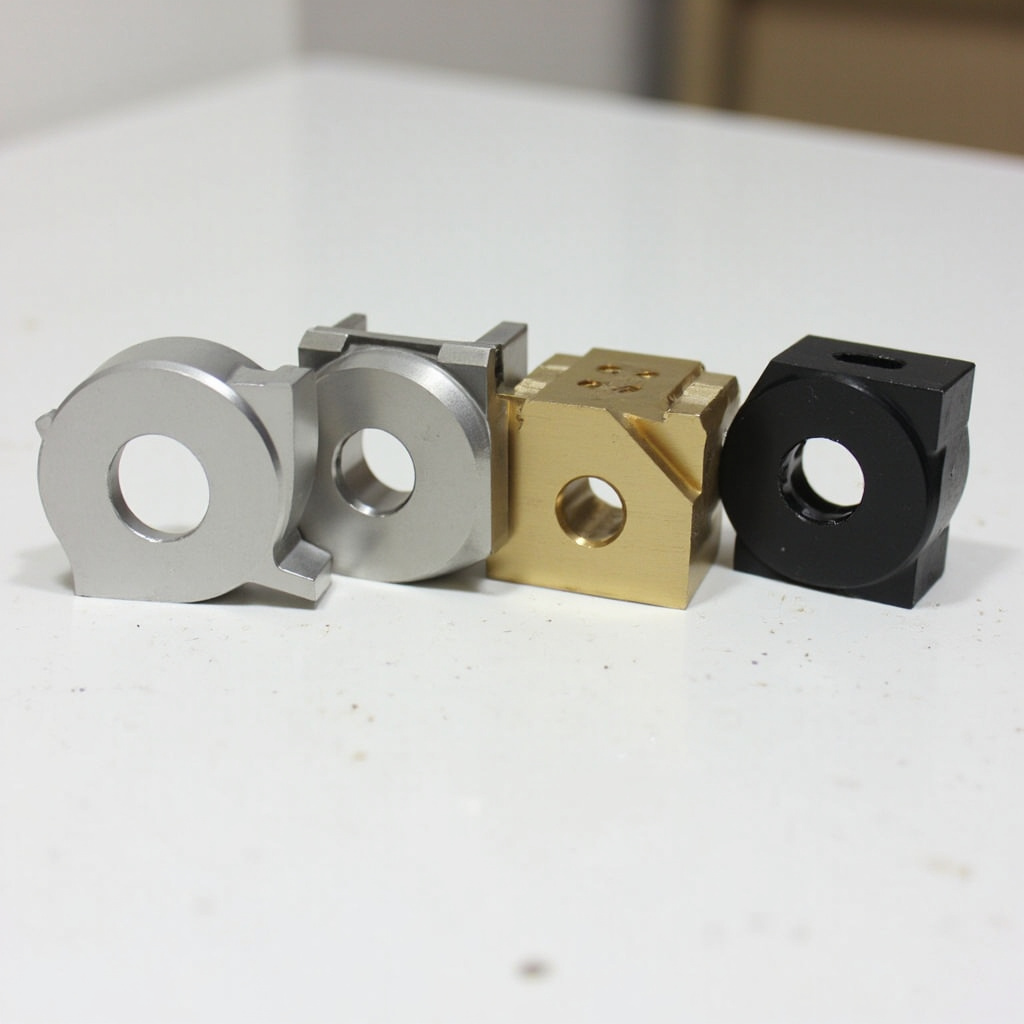
Let’s talk numbers — not exact prices (those depend on geometry), but the relationships that drive cost.
Quantity breaks are real. A single prototype part might cost $300. Order five of the same part, and the unit price could drop to $110. The big cost isn’t the material — it’s the setup. Once the is built and the is proven, the marginal cost per part drops fast. This is where online services shine: they batch your parts with others using similar setups, spreading the setup cost.
Tolerances drive cost exponentially. A bracket machined to ±0.125mm is straightforward. Tighten that to ±0.025mm and the cost jumps 30–50%. Go to ±0.01mm and it can double. Every decimal place you tighten adds time, slower feeds/speeds, and more scrapped parts. Ask yourself: does this surface actually need ±0.005mm, or are you just copying a default tolerance block?
5-axis vs. 3-axis isn’t always what you think. If your part can be made on a 3-axis machine with two setups, that’s almost always cheaper than 5-axis — even though 5-axis can do it in one. But if the part needs four setups on a 3-axis, the 5-axis route may actually be cheaper because it eliminates multiple builds and the tolerance stack-up from re-clamping.
Surface finishing adds both cost and time. Anodizing typically adds 3–5 days and $15–40 per part depending on size. Powder coating adds a week. These are batch processes — one small bracket costs nearly as much to anodize as a large one, so finishing costs disproportionately impact small parts.
The bottom line: upload your file, get the instant quote, then experiment. Change the material from 316 to 304 and watch the price shift. Loosen a tolerance from ±0.01 to ±0.05 and see what happens. The quoting engine is your sandbox.
Quality Standards & Best Practices
Reputable online CNC services don’t just ship parts and hope for the best. Here’s what you should expect — and demand.
DFM feedback before machining. The platform should catch undercuts, impossible geometry, and tolerance conflicts before your part gets cut. If the DFM report comes back with zero flags, that’s either a simple part or the system didn’t try hard enough. Good platforms flag things like: “This pocket has 90° internal corners — we can’t machine those with a round end mill. Rounded fillets will be applied.”
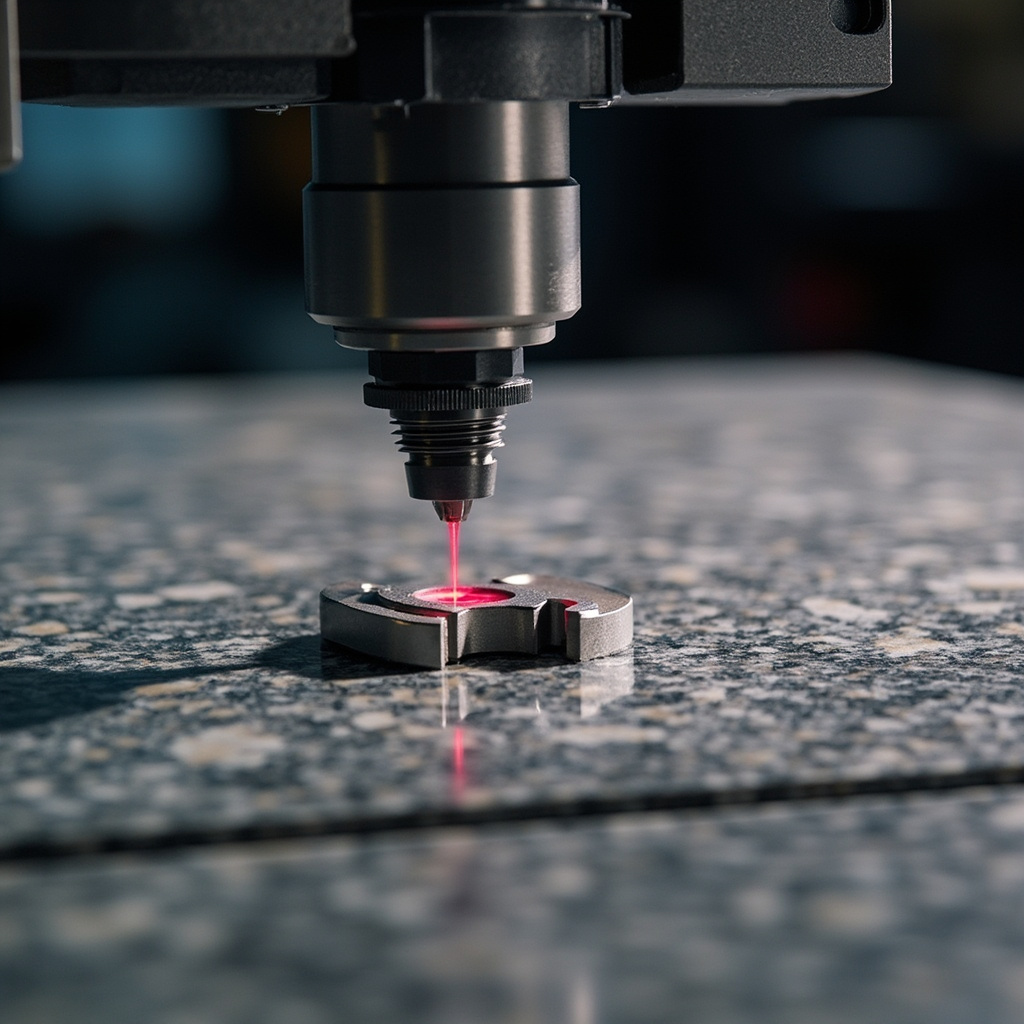
data. For critical parts, you should have the option to request a dimensional report — typically a CMM (Coordinate Measuring Machine) report showing actual measurements vs. nominal for key features. Some platforms include basic standard; others charge extra. For aerospace and medical, pay for it.
Material certifications. If your application requires traceability, ask for material certs upfront. Reputable services provide mill test reports (MTRs) showing chemical composition and mechanical properties. Don’t assume they’ll be included — specify it during quoting.
ISO and AS9100. Look for ISO 9001 certification at minimum. For aerospace, AS9100D is the gold standard. These aren’t just logos on a website — they mean documented processes, calibrated equipment, and audit trails. If the service doesn’t list their certifications, ask.
Shipping and packaging. Good shops don’t just toss your precision-machined parts into a cardboard box. Expect individually bagged or foam-lined packaging, especially for parts with tight surface finish requirements. If parts show up with dings from banging into each other in transit, find a different service.
Getting Started — Practical Steps
- Prep your CAD file. Export as STEP (.stp or .step) — never STL for machining. STL is a mesh format; STEP is solid geometry. Include all dimensions, tolerances, and thread callouts either in the file or in a 2D drawing PDF. Don’t make the machinist guess.
- Choose your material. Start from the shortlist above. If you’re prototyping, 6061 aluminum is rarely the wrong answer. If it’s a functional test part that needs to match production material, spec the production material now to avoid surprises later.
- Upload and review the DFM report. Read every flag. If it says “minimum wall thickness violated” on a feature you care about, fix it before ordering. If it says “thread depth exceeds standard” and you need that depth, confirm with support.
- Set tolerances deliberately. Only tolerance the features that matter. A general tolerance block of ±0.125mm with tighter tolerances only on critical bores and mating surfaces gives you a cheaper, faster part than blanket ±0.025mm.
- Confirm finishing requirements. Anodize type (Type II vs. Type III hardcoat), color, masking requirements — specify everything. “Clear anodize” means different things to different shops. Be explicit.
- Place the order, track it, inspect it. Most platforms give you an online dashboard with real-time status. When parts arrive, measure the critical features. If something’s off, reputable services have remake policies. Document with photos and measurements.
الخاتمة
Online CNC machining services have fundamentally changed how engineers get parts made. What used to take phone calls, emails, and a week of waiting for a quote now takes five minutes on a website. But the process still rewards people who understand the fundamentals — materials, tolerances, DFM, and finishing.
The best advice I can give you: treat the instant quoting engine as a learning tool. Upload different versions of your part. Change one thing at a time and watch how the price and lead time shift. Within a few iterations, you’ll develop an instinct for what drives cost and what doesn’t. That instinct is worth more than any guide — and it only comes from doing it.
Related Resources
- CNC Machining Capabilities — Full Equipment List & Specs
- CNC Machining Materials — Complete Selection Guide
- Material Selection Hub — Compare Properties & Applications
- Surface Finishing Options — Anodizing, Plating, Coating & More
Ready to get your parts made? Upload your STEP file at nylonplastic.com/one-stop-solution and get an instant CNC machining quote — DFM feedback included, no login required. Or browse our مركز اختيار المواد to compare 50+ materials before you upload. Got a complex part? Our engineers review every manual-quote order and get back to you within one business day.
الأسئلة الشائعة
When is Online CNC Machining Services: From Upload to Delivery — How the Process Works the right choice?
Online CNC Machining Services: From Upload to Delivery — How the Process Works is the right choice when the part requires machined accuracy, controlled surfaces, repeatable features, and a material that can be cut reliably.
What should be confirmed before ordering Online CNC Machining Services: From Upload to Delivery — How the Process Works?
قم بتأكيد إصدار الرسم، ودرجة المواد، والتفاوتات المسموح بها، والكمية، والأبعاد الحرجة، وتشطيب السطح، ومتطلبات الفحص قبل بدء الإنتاج.
What usually drives cost in Online CNC Machining Services: From Upload to Delivery — How the Process Works?
وعادةً ما تكون التكلفة مدفوعة بالمواد، ووقت الإعداد، ووقت الماكينة، وصعوبة التفاوت، والتركيبات، والوصول إلى الأدوات، والتشطيب، والفحص، وكمية الطلب.
How can quality risk be reduced in Online CNC Machining Services: From Upload to Delivery — How the Process Works?
يتم تقليل مخاطر الجودة من خلال وضع علامات واضحة على السمات الحرجة، وتجنب التفاوتات الضيقة غير الضرورية، والتأكد من قابلية التصنيع في وقت مبكر، واستخدام بيانات الفحص للأبعاد المهمة.

 English
  Dutch
Dutch  German
  French
  Korean
  Russian
  Japanese
  Spanish
  Vietnamese
  Chinese
  Portuguese
  Arabic