
Surface Finishing Customization for Manufacturing Parts
Compare injection molding, CNC machining, and 3D printing surface finishes by cost, durability, appearance, and application fit — so your parts meet both functional requirements and esthetic expectations, from prototype to production.
A surface finish is not an afterthought — it is a functional specification
The right finish can mean the difference between a part that sells and a part that fails. It determines whether a medical device survives 100 autoclave cycles, whether an automotive trim piece retains color after five summers, and whether a bearing surface lasts 10,000 or 100,000 cycles.
From mirror-polished SPI A-1 for optical clarity to coarse VDI textures for grip, the range of options is vast. This page organizes every surface finishing method available at our facility — organized by manufacturing process, cost tier, and industry requirement — so buyers and engineers can match finish to function before production begins.
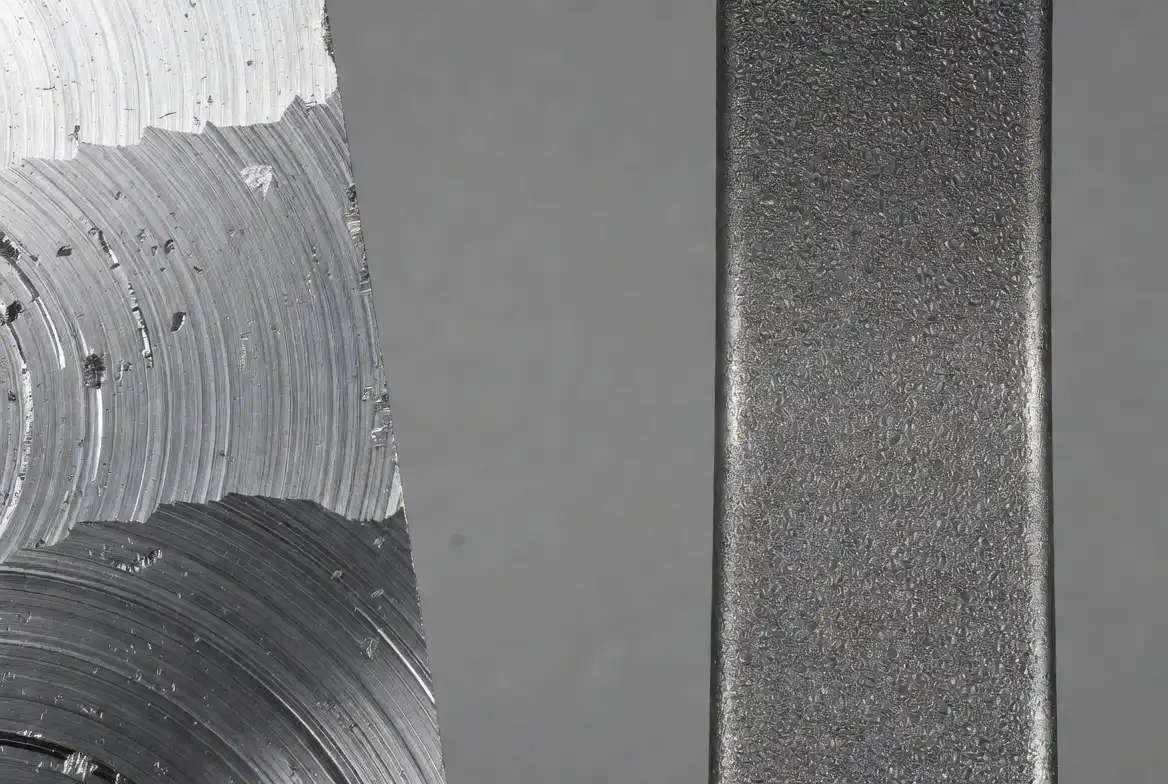
Injection Molding Surface Finishes
Mold finishes transfer directly to the part surface. Choosing the right SPI or VDI grade at the mold design stage avoids costly rework and ensures consistent appearance across production runs.
| Finish Method | Process & Typical Use | Cost Level | Durabilidad | Lo mejor para |
|---|---|---|---|---|
| SPI Polish (A1-A3) | Diamond or stone polish; mirror to high-gloss | Alta | Mold only, part is raw plastic | Optical lenses, cosmetic covers, transparent parts |
| SPI Stone (B1-B3) | Fine to coarse stone; semi-gloss to matte | Medio | Mold only | Consumer electronics, appliance housings |
| SPI Sandpaper (C1-C3) | Fine to coarse sandpaper; satin textures | Medio | Mold only | Industrial covers, general-purpose enclosures |
| SPI Blast (D1-D3) | Glass bead or oxide blast; fine to coarse texture | Low-Medium | Mold only | Textured grips, matte surfaces, hiding weld lines |
| VDI 12-45 | EDM textured surface; uniform matte patterns | Medio | Mold only | Automotive interiors, durable goods, consistent textures |
| Printing (Silk/Pad/Transfer) | Post-mold decoration; logos, text, graphics | Bajo | Moderate, dependent on ink adhesion | Branding, UI labels, regulatory markings |
| Painting & Powder Coating | Spray or electrostatic application + curing | Medium-High | High, weather and chip resistant | Color matching, UV protection, automotive exterior |
| Laser Engraving | Contactless permanent marking; serial numbers, barcodes | Bajo | Permanent | Traceability, branding, precise graphics on plastics |
| Electroplating (Plastics) | Metallization of plastic surface; chrome, nickel, copper | Medium-High | Alta | Automotive trim, plumbing fixtures, premium cosmetics |
| IMD / IML | Film insert molded during injection; decoration + protection | Medio | Very high, sealed under clear film | Consumer electronics, automotive interior panels |
CNC Machining Surface Finishes
CNC surfaces start as-machined and can be upgraded through mechanical, chemical, or coating processes. The target Ra value, material type, and post-processing sequence determine what is achievable — and at what cost.
As Machined
Standard finish with visible tool marks; Ra 0.8–3.2 µm depending on feeds, speeds, and tool condition.
No added costFastest lead time
Granallado
Uniform matte texture by propelling glass beads or oxide media. Masks tool marks and prepares for coating.
Consistent matteDeburrs edges
Anodizing (Type II / III)
Electrochemical oxide layer on aluminum; Type II for cosmetic and general use, Type III for hardcoat wear resistance.
Corrosion resistantColor options
Electropolishing
Reverse electroplating that removes surface peaks to achieve Ra down to 0.1 µm. Ideal for stainless steel medical and food-contact parts.
Ultra-smoothDeburrs micro-edges
Recubrimiento en polvo
Electrostatic dry powder cured into a thick (50–150 µm) protective layer. Excellent for outdoor and industrial equipment.
Thick & toughWide color range
Brushed & Polished
Mechanical brushing for satin directional finish or progressive polishing to mirror finish. Common on stainless steel and aluminum trim.
DecorativeRa <0.4 µm possible
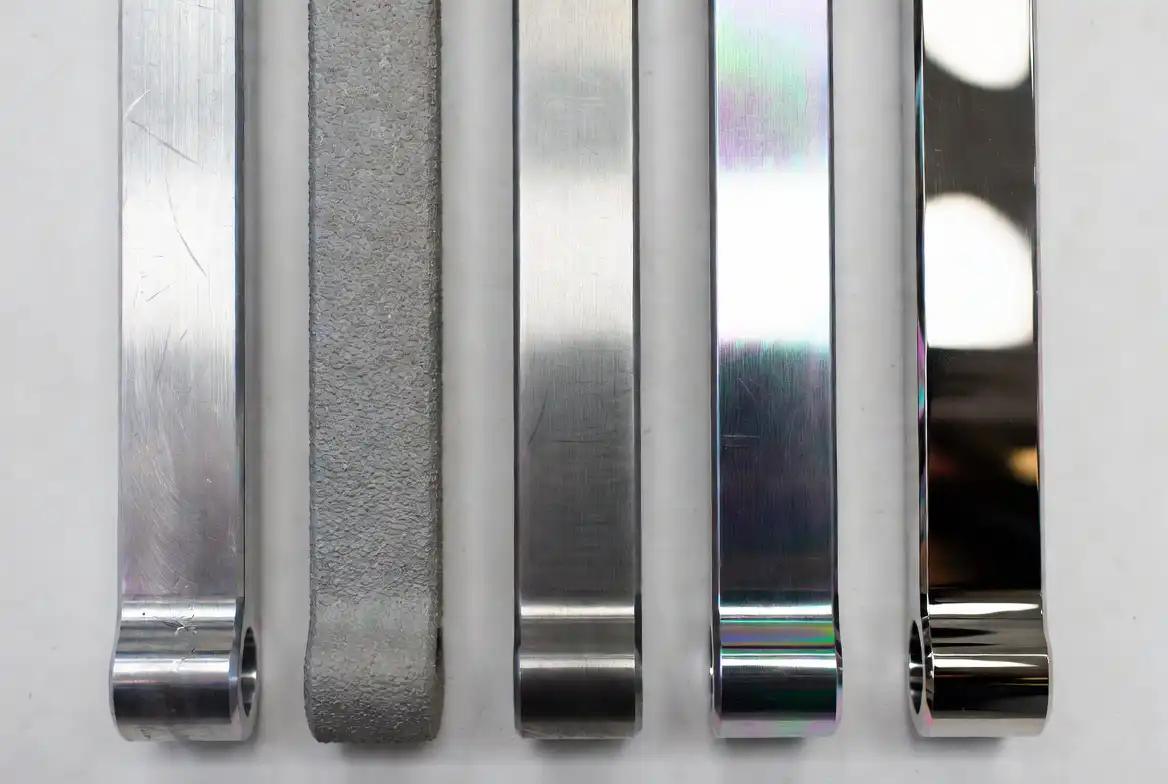
SPI Mold Finish Standards — Complete Grade Reference
The Society of the Plastics Industry (SPI) defines 12 standard mold finish grades across four categories. These are universally referenced in mold specifications and should be specified on every injection molding drawing.
| SPI Grade | Process Method | Surface Roughness Ra (µm) | Appearance | Aplicaciones típicas |
|---|---|---|---|---|
| A-1 | Grade #3 diamond buff | 0.012 – 0.025 | Mirror finish | Optical lenses, reflectors, transparent medical parts |
| A-2 | Grade #6 diamond buff | 0.025 – 0.050 | High polish | Transparent covers, cosmetic enclosures, light guides |
| A-3 | Grade #15 diamond buff | 0.050 – 0.100 | Gloss polish | Consumer electronics, high-end appliance panels |
| B-1 | 600-grit paper | 0.050 – 0.100 | Fine semi-gloss | General aesthetic parts, medium-gloss enclosures |
| B-2 | 400-grit paper | 0.100 – 0.150 | Medium semi-gloss | Standard enclosures, functional visible parts |
| B-3 | 320-grit paper | 0.280 – 0.320 | Matte semi-gloss | Industrial housings, non-visible structural parts |
| C-1 | 600-grit stone | 0.350 – 0.400 | Fine satin | Commercial products, texture-preference surfaces |
| C-2 | 400-grit stone | 0.450 – 0.550 | Medium satin | Budget enclosures, internal structural components |
| C-3 | 320-grit stone | 0.630 – 0.700 | Coarse satin | Functional parts where finish is not critical |
| D-1 | Dry blast glass bead #11 | 0.800 – 1.000 | Fine texture | Grip surfaces, matte industrial parts, paint-ready |
| D-2 | Dry blast #240 oxide | 1.000 – 2.800 | Medium texture | Tool handles, equipment panels, anti-glare |
| D-3 | Dry blast #24 oxide | 3.200 – 18.000 | Coarse texture | Non-slip flooring, maximum grip, heavy texture |
3D Printing Post-Processing Finishes
Additive parts typically exhibit visible layer lines and limited material color options. Post-processing transforms a raw print into a functional or presentation-ready component.
Vapor Smoothing
Chemical vapor exposure (acetone for ABS, specialized solvents for PA12) melts surface peaks to create a sealed, glossy surface without adding thickness. Reduces Ra by 60-80%.
Sealed surfaceWatertight
Sanding & Priming
Progressive grit sanding (180 → 400 → 800) followed by filler primer eliminates layer lines. Standard preparation path before painting for display models and consumer prototypes.
Paint-readySmooth touch
Metal Plating (3DP)
Electroless nickel or copper plating on SLA or SLS nylon parts adds 25–75 µm of metal for EMI shielding, wear resistance, and metallic appearance without metal tooling.
ConductiveMetallic look
Surface Finishing by Industry
How to choose the right surface finish
Use these three filters to narrow down finishes before locking specifications on a drawing or RFQ.
Define the primary requirement
Is the finish cosmetic, protective, or functional? A mirror polish is a cosmetic choice; anodizing is protective; electropolishing for food-contact is functional. One finish can serve multiple goals — prioritize the most critical one.
Match to material and process
Not every finish works on every material. Aluminum anodizes beautifully; steel does not. Injection molded parts inherit the mold finish; CNC parts need separate post-processing. Check compatibility before committing.
Balance cost, volume, and tolerance
A hand-polished A-1 mold costs more than a bead-blasted D-2. For 500 parts the premium may be justified; for 5,000 the per-unit math changes. Also consider: some finishing processes add thickness (powder coat: ~75 µm), affecting tight-tolerance fits.
Finish Cost and Lead Time Comparison
Relative comparison across common finishing methods. Exact costs depend on part geometry, batch size, and material. Use this as a selection starting point, not a quote.
Preguntas frecuentes
How do I specify a surface finish on my drawing?
The most reliable way is to include three pieces of information: (1) the SPI/VDI grade or Ra value, (2) the process method expected, and (3) which surfaces need the finish. Example: “SPI B-1 on cavity side only” or “Ra 0.8 µm max, electropolish, all external surfaces.” Callouts like “smooth” or “nice finish” are ambiguous and lead to rework — always use standard grades.
What SPI finish should I use for a clear plastic lens?
SPI A-1 or A-2 mirror polish is the standard for transparent optical parts. The mold steel itself must be capable of taking a mirror finish — typically 420 stainless or H13 with high polish rating. Material choice matters equally: PC and PMMA reproduce polish well; nylon and PP will never achieve the same clarity regardless of mold finish. Pre-hardened P20 can generally reach B-2 but struggles below B-1.
Does anodizing change part dimensions?
Yes, and this catches many first-time designers. Type II anodizing builds ~50% of the coating thickness outward and ~50% inward into the aluminum surface. A typical 10 µm coating adds roughly 5 µm to the surface. Type III hardcoat can build 25–50 µm per side. If your part has press-fit or bearing tolerances, specify pre-anodize machining allowance (typically 0.025–0.050 mm diametral) on the drawing.
Can you match a specific color across different materials and finishes?
Color matching across materials is challenging but achievable within defined tolerances. Anodized aluminum, painted plastic, and powder-coated steel will never be identical under every light source due to different surface physics. For consumer products, we recommend a master color chip agreed upon by all stakeholders, with a delta E tolerance of ≤1.5 for critical cosmetic surfaces. For functional parts, batch-to-batch consistency within ≤3.0 delta E is standard.
Need a surface finish recommendation for your parts?
Send your drawing, 3D file, or even a photo of the look you want. We will suggest the most practical finishing path — balancing appearance, durability, lead time, and per-unit cost for your specific volume.
No vendemos, comerciamos ni alquilamos sus datos personales. Puede ponerse en contacto con nosotros en cualquier momento para solicitar, actualizar o eliminar sus datos.
 English
  Dutch
Dutch  German
  French
  Korean
  Russian
  Japanese
  Spanish
  Vietnamese
  Chinese
  Portuguese
  Arabic