

For engineering teams producing plastic components, the choice between CNC machining and injection molding is one of the most consequential manufacturing decisions they will face. Both processes can produce high-quality plastic parts from materials like Nylon, POM, and PEEK, yet they differ fundamentally in cost structure, production speed, design freedom, and material performance. Making the right choice requires understanding not just the technical differences but the economic and strategic implications for your specific application.
Process Fundamentals
Mecanizado CNC
Moldeo por inyección
Injection molding is a formative process. Plastic pellets are melted and injected under high pressure into a precision-machined steel or aluminum mold cavity. The material cools and solidifies into the cavity shape, and the mold opens to eject the finished part. The process is highly repeatable — once the mold is qualified, millions of identical parts can be produced. However, mold fabrication is a significant upfront investment, typically requiring 4-12 weeks and costing $5,000 to $100,000+ depending on complexity.
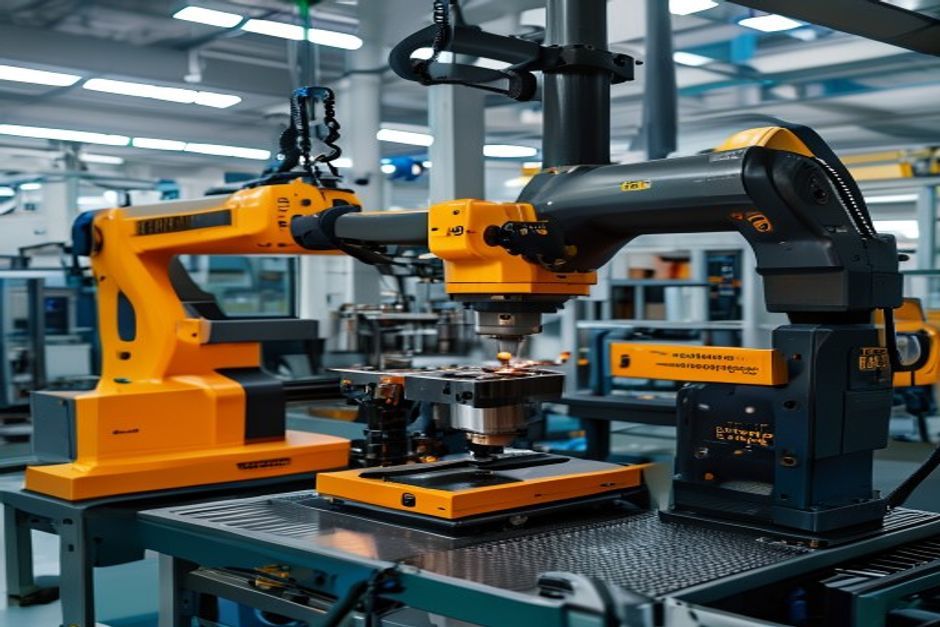
Head-to-Head Comparison
| Factor | Mecanizado CNC | Moldeo por inyección |
|---|---|---|
| Coste de utillaje | Minimal ($0-$1,000) | High ($5,000-$100,000+) |
| Unit Cost at 1-100 Units | Moderate ($10-$500 per part) | Very High (tooling amortization) |
| Unit Cost at 10,000+ Units | Linear — no significant decrease | Very Low ($0.10-$5 per part) |
| Lead Time (First Part) | 1-7 days | 4-12 weeks (mold fabrication) |
| Cambios de diseño | Quick — re, no tooling change | Slow — modify or replace mold |
| Propiedades de los materiales | Original material properties preserved | Properties altered by melt process |
| Tolerancias | ±0.001-0.005 inches | ±0.002-0.010 inches (varies) |
| Acabado superficial | Visible tool marks, post-processable | Mold finish replicated, consistent |
| Material Waste | Moderate-high (subtractive) | Minimal (runners/risers recyclable) |
When to Choose CNC Machining
CNC machining is the superior choice when:
- Production volumes are low-to-moderate (1-1,000 units)
- Rapid prototyping and design iteration are priorities
- Material properties must be preserved without thermal history
- Tight tolerances (±0.001 inches) are required on critical features
- Design changes are anticipated during development
- Part geometry is too complex for mold ejection (undercuts, internal threads)
- Lead time from order to first article must be minimized
When to Choose Injection Molding
Injection molding becomes the economically superior process when:
- Production volumes exceed 1,000-5,000 units annually
- Design is stable and unlikely to change
- Material costs dominate unit economics (molding uses less material per part)
- Surface finish must be consistent and aesthetically uniform
- Multiple identical parts must be produced per machine cycle
- Labor costs are a significant concern (molding is highly automated)
Hybrid Approach: The Smart Strategy
Many manufacturers adopt a hybrid strategy: CNC machining for prototyping and initial production, transitioning to injection molding once the design is validated and volumes justify the tooling investment. This approach combines the speed and flexibility of CNC machining during development with the unit economics of injection molding at scale.
PREGUNTAS FRECUENTES

When does CNC Machining vs Injection Molding: Complete Manufacturing Comparison make sense?
CNC Machining vs Injection Molding: Complete Manufacturing Comparison makes sense when the part volume, material choice, geometry, and repeatability needs justify mold design and tooling investment.
What design factors matter most for CNC Machining vs Injection Molding: Complete Manufacturing Comparison?
Wall thickness, ribs, bosses, draft angle, gate location, shrinkage, parting line, and ejection all affect molded part quality.
What information is needed before mold production?
The supplier should confirm the 3D model, material, expected annual volume, appearance requirements, tolerance needs, and any assembly or functional testing requirements.
What is the biggest risk in CNC Machining vs Injection Molding: Complete Manufacturing Comparison?
The biggest risk is approving tooling before material behavior, shrinkage, flow, and part function are fully checked against the real application.


 English
 Dutch
Dutch German
 French
 Korean
 Russian
 Japanese
 Spanish
 Vietnamese
 Chinese
 Portuguese
 Arabic