
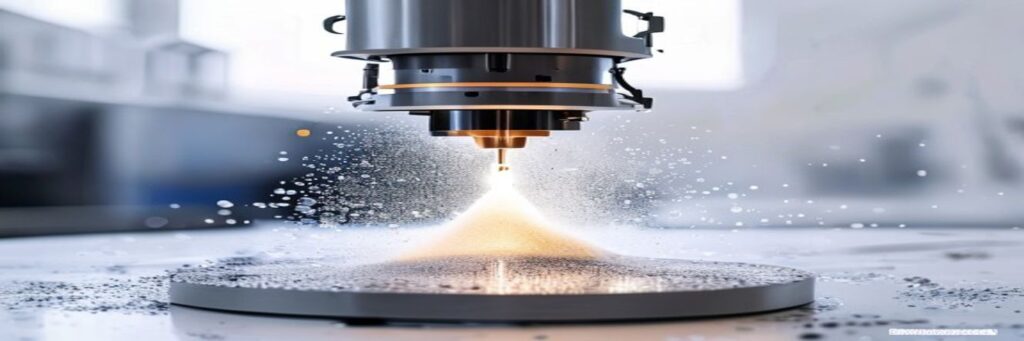
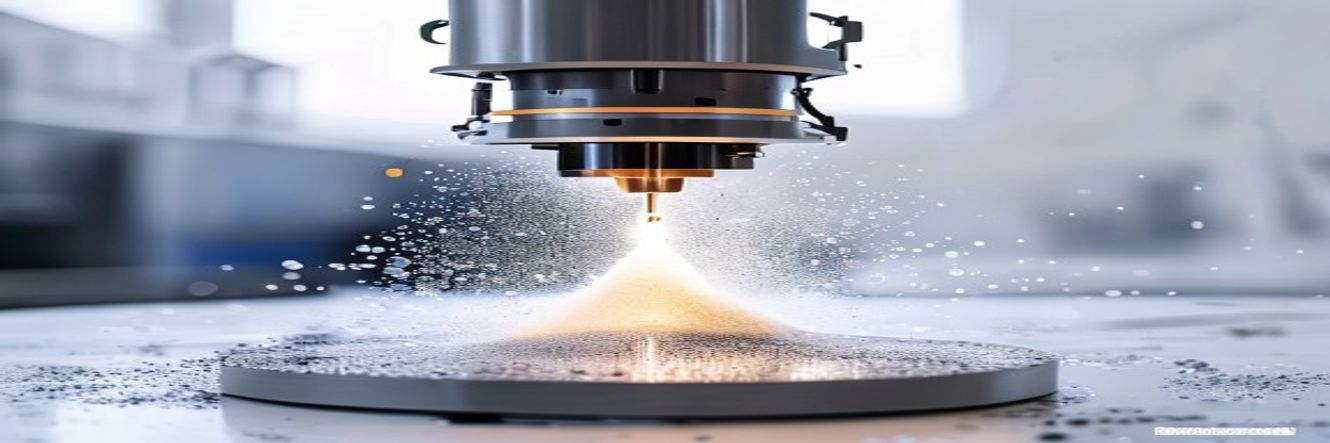
Selective Laser Sintering (SLS) is a powder bed fusion 3D printing technology that uses a high-powered laser to fuse small particles of polymer powder into solid, three-dimensional objects. Developed at the University of Texas in the mid-1980s, SLS has evolved into one of the most versatile additive manufacturing technologies for producing functional prototypes and end-use production parts. Unlike many other 3D printing processes, SLS requires no support structures, enabling complex geometries, interlocking parts, and consolidated assemblies.
How Selective Laser Sintering (SLS) Works
The SLS process begins by spreading a thin layer of polymer powder (typically nylon PA12) across a build platform inside a heated chamber. A CO₂ laser then selectively scans the powder surface, sintering (fusing) particles together in the shape of the part’s cross-section. After each layer is complete, the build platform lowers by one layer thickness (typically 100-120 microns), a fresh layer of powder is spread on top, and the process repeats. The un-sintered powder surrounding the part acts as a natural support structure, eliminating the need for dedicated support material. After cooling, parts are excavated from the powder cake, cleaned with compressed air or bead blasting, and are ready for use.
Key Advantages of SLS 3D Printing
No Support Structures Required
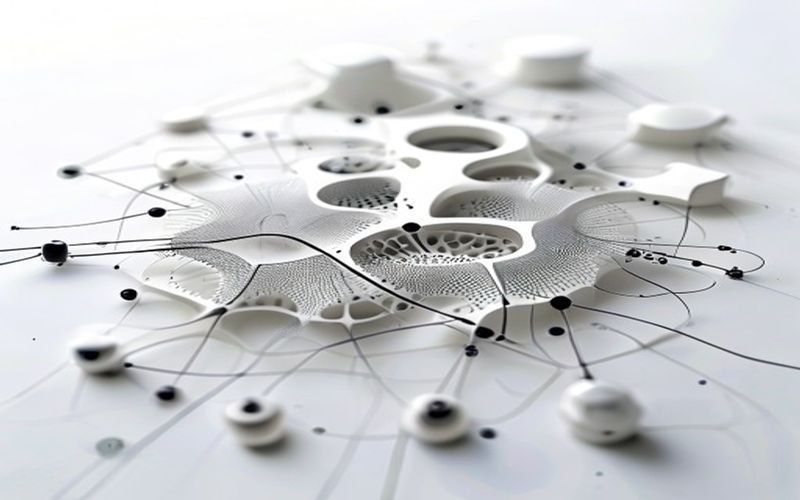
The surrounding unsintered powder acts as a natural support for overhangs, undercuts, and complex internal geometries. This enables design freedom impossible with FDM or SLA, including interlocking chain links, living hinges, and complex lattice structures — all printed in a single build without post-processing to remove supports.
Excellent Mechanical Properties
SLS parts in PA12 nylon exhibit tensile strengths of 48-50 MPa, comparable to injection-molded nylon. Parts are durable, wear-resistant, and suitable for functional testing and end-use applications. PA12 offers excellent chemical resistance to oils, greases, and most solvents.
High Packing Density
Because no support structures are needed, the entire build volume can be packed with nested and interlocking parts. This maximizes throughput per build cycle and significantly reduces per-part cost for production runs.
Consistent, Isotropic Properties
SLS parts exhibit near-isotropic mechanical behavior, meaning strength and stiffness are similar in all directions. Unlike FDM parts, which are weakest in the Z-axis, SLS components perform consistently regardless of orientation.
SLS 3D Printing Materials
| Matériau | Propriétés principales | Applications typiques |
|---|---|---|
| PA12 (Nylon 12) | High strength, chemical resistant, durable | Functional prototypes, end-use parts, housings, brackets |
| PA11 (Nylon 11) | Higher elongation, impact resistant, ductile | Living hinges, snap-fits, impact-resistant components |
| Glass-Filled PA12 | High stiffness, low creep, thermal stability | Structural components, jigs and fixtures, under-hood parts |
| TPU (Thermoplastic Polyurethane) | Flexible, rubber-like, Shore 65A-95A | Gaskets, seals, footwear, flexible ducts |
| Polypropylène (PP) | Chemical resistant, lightweight, fatigue resistant | Fluid containers, automotive ducts, medical devices |
| Carbon-Filled PA | Conductive, high stiffness, ESD-safe | Electronic housings, ESD-safe fixtures, tooling |
Common Applications of SLS 3D Printing
- Functional Prototypes: Parts that need to withstand mechanical testing, assembly verification, and real-world use conditions
- End-Use Production Parts: Low-to-medium volume production of brackets, housings, ducting, and consumer products
- Automobile : Under-hood components, intake manifolds, mounting brackets, custom tooling
- Aerospace: Lightweight ducting, interior cabin components, UAV structural parts
- Medical: Custom surgical guides, prosthetic components, orthotic devices
- Consumer Products: Drone frames, camera mounts, sporting goods, customized accessories
SLS vs FDM and SLA
SLS offers several differentiating advantages: unlike FDM, SLS requires no support structures and produces near-isotropic parts with consistent mechanical properties. Compared to SLA, SLS parts are generally stronger, more durable, and better suited for functional applications, though they may have slightly rougher surface finishes. SLS is the preferred technology when functional performance matters more than visual aesthetics, and when design complexity demands the freedom that only support-free printing can provide.
Questions fréquemment posées
What is the typical build volume for SLS 3D printing?
Common industrial SLS machines offer build volumes ranging from 300 × 300 × 300 mm to 700 × 380 × 580 mm. Desktop SLS systems have smaller volumes around 110 × 110 × 110 mm. Multi-jet fusion and high-speed sintering variants can reach even larger capacities for production-scale manufacturing.
Can SLS parts be dyed or finished?
Yes, SLS nylon parts are naturally white or light gray and highly porous, making them excellent candidates for dyeing. Parts can be dyed black, red, blue, or custom colors using heated acid dyes. Additional finishing options include vapor smoothing for a sealed, glossy surface, bead blasting for a uniform matte finish, and painting or coating for specific aesthetic requirements.
What is the minimum wall thickness for SLS parts?
The minimum recommended wall thickness for SLS parts is 0.8-1.0 mm for PA12. Thinner walls may sinter but become fragile. For structural components, a minimum of 1.5-2.0 mm is recommended. Features smaller than 0.5 mm may not resolve reliably due to the laser spot size and powder particle size limitations.
What is SLS printing lead time?
Typical SLS lead times range from 5-10 business days for standard orders, depending on part size, quantity, and post-processing requirements. The printing cycle itself takes 24-48 hours for a full build, plus cooling time. Expedited services can deliver within 2-4 business days for urgent projects.