
I once had a customer reject an entire batch of 500 aluminum housings. The dimensions were spot-on. Surface finish was beautiful. Threads were clean. The problem? Sharp edges on a finger-access slot that nobody thought to call out on the drawing.
That was a $12,000 lesson in one simple truth: deburring isn’t a secondary operation — it’s part of the part. If your machined component has edges that can cut skin, snag wires, create stress risers, or interfere with assembly, the part isn’t done. Period.
But here’s where it gets interesting: there are about a dozen ways to deburr a part, they cost wildly different amounts, and picking the wrong method can destroy a perfectly good machined component. Let’s walk through what actually works, what doesn’t, and how to specify deburring so your supplier delivers what you actually need.
Core Concepts & Fundamentals
First, let’s define what we’re actually talking about, because “deburring” gets thrown around like it’s one thing. It’s not.
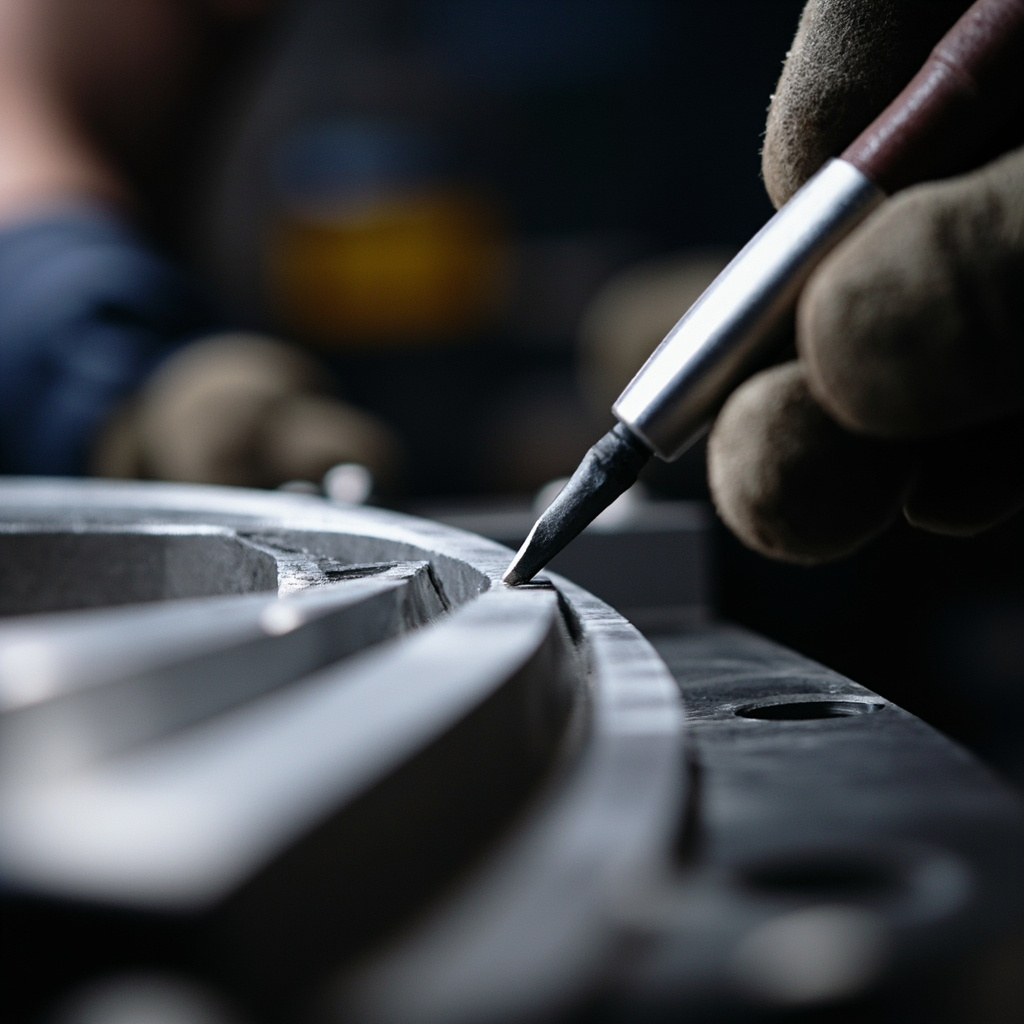
A burr is unwanted material that remains attached to the workpiece after machining. It forms at the edges where the cutting tool exits the material, or where material deforms plastically instead of being cleanly sheared. Burrs can be microscopic hairlines you can barely feel, or they can be thick, jagged ribbons of metal that will slice your finger open.
Burr formation depends on four main factors:
- Material type: Ductile materials (aluminum, copper, mild steel) produce larger, more stubborn burrs. Brittle materials (cast iron, some tool steels) tend to produce smaller, more fragile burrs.
- Tool condition: A sharp tool produces smaller burrs. A worn tool pushes material instead of cutting it, creating large, rolled-over burrs. This is actually the single biggest factor any machinist can control.
- Cutting parameters: Feed rate, spindle speed, and depth of cut all influence burr size. Higher speeds with appropriate feeds generally produce smaller burrs in aluminum; the opposite can be true for stainless.
- Part geometry: Sharp corners, thin walls, and exit surfaces where the tool breaks through all concentrate burr formation.
Deburring is the process of removing these burrs. Edge breaking is a related but distinct concept — it’s creating a deliberate small chamfer or radius on an edge, typically for safety, assembly, or stress relief purposes. You can deburr without edge-breaking (remove the burr but leave the sharp 90° corner), though in practice these often happen together.
Understanding the difference matters because your drawing callout determines what your supplier actually does. “Deburr all edges” and “Break all edges 0.2-0.5mm” are two different instructions that produce two different parts.
Key Processes & Technologies
There’s no single “best” deburring method. The right choice depends on your material, part geometry, volume, and what the part actually does. Here’s the landscape:
| Method | How It Works | 최상의 대상 | 제한 사항 | Approx. Cost/Part Impact |
|---|---|---|---|---|
| Manual Deburring | Hand tools — files, scrapers, deburring knives, abrasive pads. Operator removes burrs by feel and sight. | Prototypes, low volume, complex geometries, parts with hard-to-reach edges | Inconsistent, labor-intensive, operator-dependent, slow at volume | $ — Low for a few parts, high per-part at volume |
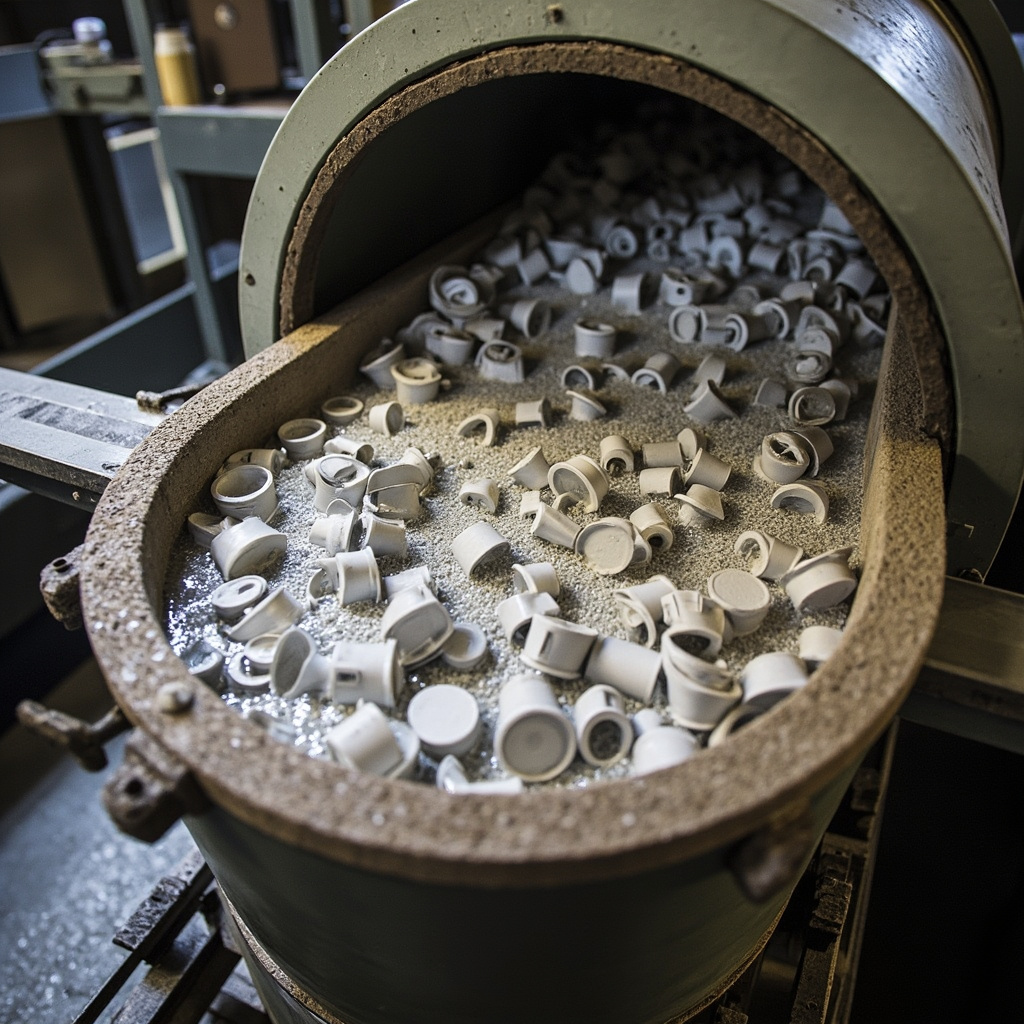
| Vibratory Tumbling | Parts placed in a vibrating bowl with abrasive media. Media scrubs edges as parts tumble. | Small-to-medium parts, moderate volumes, non-precision edges | Can round sharp corners you wanted to keep, media can get stuck in holes, not suitable for delicate features | $ — Very low per-part at volume |
| Thermal Deburring (TEM) | Parts placed in a sealed chamber filled with combustible gas mixture. Ignition creates a millisecond heat pulse that burns off burrs. | Internal passages, intersecting holes, blind features | High equipment cost, surface oxidation possible, limited to burr thickness under ~0.3mm | $$$ — High setup, moderate per-part |
| Electrochemical Deburring (ECD) | Electrolytic dissolution selectively removes burr material. An electrode targets burr areas without touching the part. | Precision edges, internal intersections, hardened materials | Requires custom fixturing, electrolyte management, only works on conductive materials | $$$ — High tooling, low per-part |
| Brush Deburring | Rotating abrasive brushes sweep across part edges. Can be automated on CNC or done as separate operation. | Flat surfaces, linear edges, uniform deburring on production parts | Limited reach into recesses, brush wear affects consistency over time | $ — Low cost, moderate speed |
| Abrasive Flow Machining (AFM) | Viscous abrasive media forced through internal passages under pressure, eroding burrs and smoothing surfaces. | Internal passages, fuel system components, hydraulic manifolds | Expensive, slow, custom media development needed, only for internal features | $$$$ — Highest cost, specialized application |
| High-Pressure Water Jet | Water at 500-6000 bar blasts away burrs, particularly effective for small, fragile burrs. | Delicate parts, electronics housings, parts with many small features | Can’t remove heavy burrs, requires drying step, capital equipment cost | $$ — Moderate |
In practice, most CNC shops combine methods. A production aluminum bracket might go: machine → vibratory tumble (bulk edge softening) → manual touch-up (critical surfaces) → clean → inspect. The vibratory step does 90% of the work for pennies per part; the manual step handles the 10% that matters.
산업 애플리케이션
Different industries have wildly different deburring requirements. What’s acceptable for a bracket inside an industrial machine would get parts rejected instantly in a medical device application.
| 산업 | Application | 재료 | Key Requirement | nylonplastic.com Advantage |
|---|---|---|---|---|
| 의료 기기 | Surgical instrument bodies, implantable device housings, endoscopic components | 316L Stainless, Ti-6Al-4V, PEEK | Zero residual burrs, surface Ra ≤ 0.4µm, no embedded media, passivation-ready surface | Multi-stage deburring with 100% visual under magnification; cleanroom-ready finishing |
| 항공우주 | Hydraulic manifolds, fuel system components, structural brackets | 7075 Aluminum, Ti-6Al-4V, 15-5 PH Stainless | No burrs in fluid passages, controlled edge breaks per engineering spec, full traceability | Abrasive flow machining for internal passages, documented edge break verification on CTQ features |
| 자동차 | Engine brackets, sensor housings, transmission components | 6061 Aluminum, 4140 Steel, Cast Aluminum | Consistent edge quality at high volume, no loose burrs that could enter fluid systems | Automated vibratory + targeted manual QC; production-ready processes at scale |
| 전자 제품 | Heat sink fins, RF enclosure edges, connector bodies | 6061 Aluminum, Copper, Brass | No sharp edges that could damage wires, clean contact surfaces, minimal edge radius on sealing faces | Selective deburring — aggressive on handling edges, conservative on functional surfaces |
| 로봇 자동화 | End-effector fingers, joint components, sensor mounts | 7075 Aluminum, Stainless 304, Nylon 6/6 | Safe handling edges for assembly techs, no burrs on mating surfaces that affect positioning repeatability | Application-aware deburring — we understand which edges get handled and which get assembled |
| 산업 장비 | Pump impellers, valve bodies, hydraulic blocks | Ductile Iron, 17-4 PH, 316 Stainless | Internal passage cleanliness, no burrs that could dislodge under pressure/vibration | Thermal + mechanical combined processes for internal features; pressure-tested clean |
The medical and aerospace rows deserve extra attention. In medical applications, a retained burr that breaks off inside a patient is a catastrophic failure. In aerospace hydraulic systems, a loose burr can block a micron-sized orifice and cause system failure. These aren’t cosmetic concerns — deburring is a functional requirement that directly impacts safety.
Material Selection — What Actually Works
Your material choice determines your deburring strategy. Some materials deburr beautifully with vibratory finishing; others fight you every step of the way.
Materials that deburr easily:
- 6061-T6 Aluminum: Responds well to almost any deburring method. Vibratory tumbling with ceramic media produces excellent results. Manual deburring is fast because the material is soft. Thermal deburring works well on thin burrs.
- Brass (C360): Very machinable, very easy to deburr. Similar to aluminum in behavior.
- POM (Delrin) & most engineering plastics: Burrs are usually small and easily removed. Cryogenic deburring (freezing parts to make plastic brittle) works exceptionally well for complex geometries.
- Mild Steel (1018, 1045): Burrs are manageable with standard methods. Vibratory tumbling effective, though cycle times are longer than aluminum.
Materials that demand more attention:
- 304 & 316 Stainless: Work-hardens during machining, which also affects burr toughness. Stainless burrs are tenacious and require more aggressive deburring. Electrochemical deburring shines here because it doesn’t care about work-hardening.
- Titanium (Ti-6Al-4V): Burrs can be tough and sharp. Thermal deburring works well, but the high temperatures can affect the alpha-case layer. Manual deburring is slow because titanium is abrasive on cutting tools — including deburring tools.
- Inconel & Nickel Alloys: Nightmare territory. Burrs are hard, tough, and resistant to mechanical removal. ECD or thermal methods are the practical path; manual deburring of Inconel is an exercise in patience.
The material-deburring relationship is something designers often overlook. If your part has dozens of edges that need deburring and you spec Inconel when 316 stainless would work, you just multiplied your deburring cost by 3-5x. Material selection is deburring strategy.
Cost & Performance Trade-offs
Deburring costs range from fractions of a penny per part to more than the machining cost itself. Here’s how the economics shake out:
Manual deburring: For low-volume work (1-50 pieces), manual deburring is often the cheapest option because there’s zero setup cost. But it doesn’t scale. At 500 pieces, you’re paying for skilled labor to do repetitive work, and consistency suffers. Budget $2-15 per part for manual deburring depending on complexity.
Vibratory tumbling: The workhorse of production deburring. Once you’ve bought the machine ($5,000-50,000 depending on size) and the right media, per-part cost drops to cents. But — and this is the big but — you might round over edges you wanted to keep sharp. Vibratory deburring is a bulk process; it doesn’t discriminate between edges you want broken and edges you want preserved.
Thermal deburring (TEM): High fixed cost ($100,000+ for the equipment), very low variable cost. Makes sense when you have thousands of parts with internal passages that can’t be reached mechanically. The millisecond heat pulse burns off burrs without affecting the bulk part — physics is on your side here, because burrs have a much higher surface-to-volume ratio than the parent material.
Electrochemical deburring (ECD): Expensive tooling for each part family ($5,000-50,000 for custom electrodes and fixturing), then pennies per part after that. The sweet spot is high-volume precision work where you need to deburr specific features without touching adjacent surfaces.
The hidden cost: over-deburring. I’ve seen shops tumble parts with media that’s too aggressive, rounding off precision edges and ruining dimensional tolerances. I’ve seen operators over-file edges on mating surfaces, creating gaps in assemblies. The most expensive deburring mistake isn’t leaving burrs — it’s removing material you needed to keep.
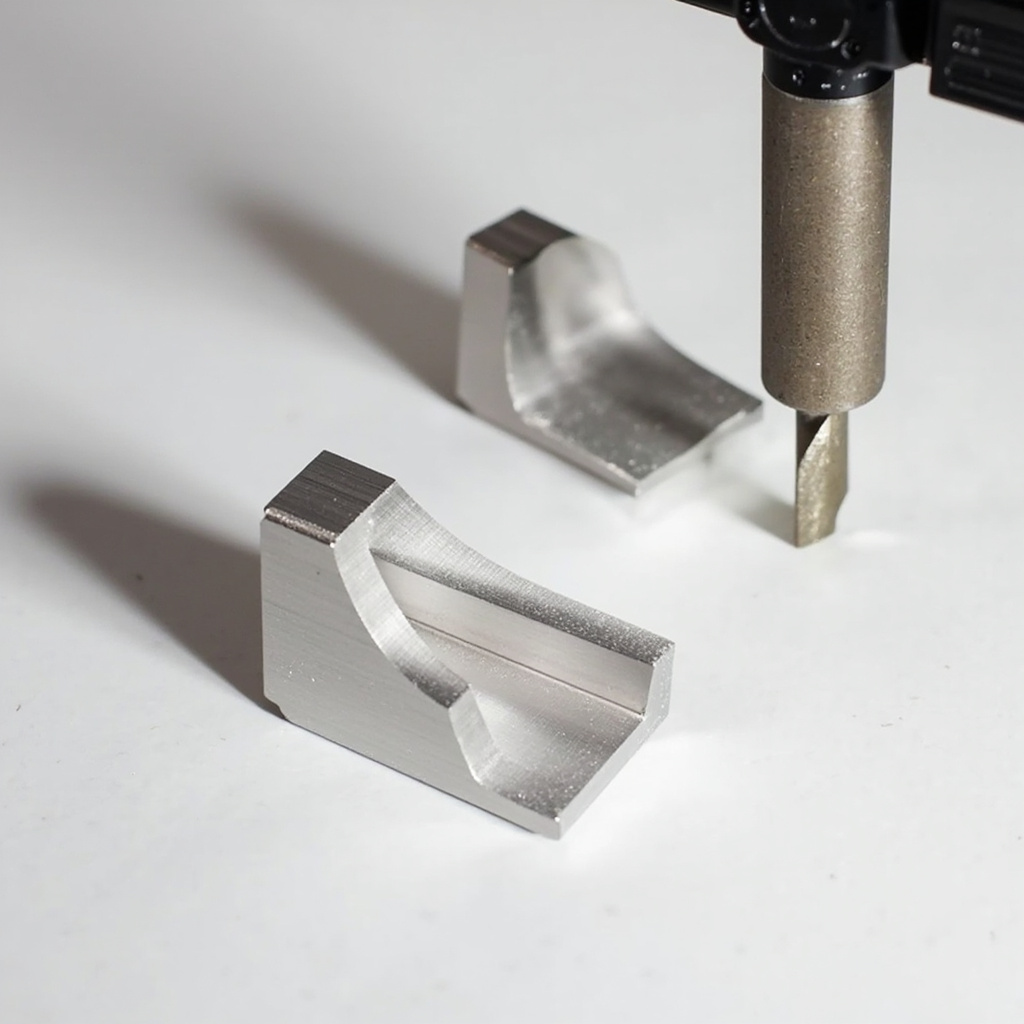
For most CNC machined parts, the cost-optimal approach is a hybrid: bulk processing (vibratory or brush) for 90% of edges, targeted manual work for critical features. This balances cost, speed, and quality across almost any reasonable volume.
Quality Standards & Best Practices
If there’s one thing that causes more deburring-related rejections than anything else, it’s vague specifications. “Deburr all edges” means something different to every machinist who reads it. Here’s how to be specific enough that your parts come back right the first time.
Drawing callouts that actually work:
- Instead of “deburr all edges” → “Break all external edges 0.2-0.4mm x 45°. Internal corners: remove visible burrs, maintain sharp corner.”
- Instead of “no sharp edges” → “All handling edges: minimum 0.3mm radius or chamfer. Mating surfaces: break edge 0.1mm max.”
- Instead of “clean all threads” → “Chase all tapped holes after deburring. No burrs permitted at thread entry or exit.”
methods by application:
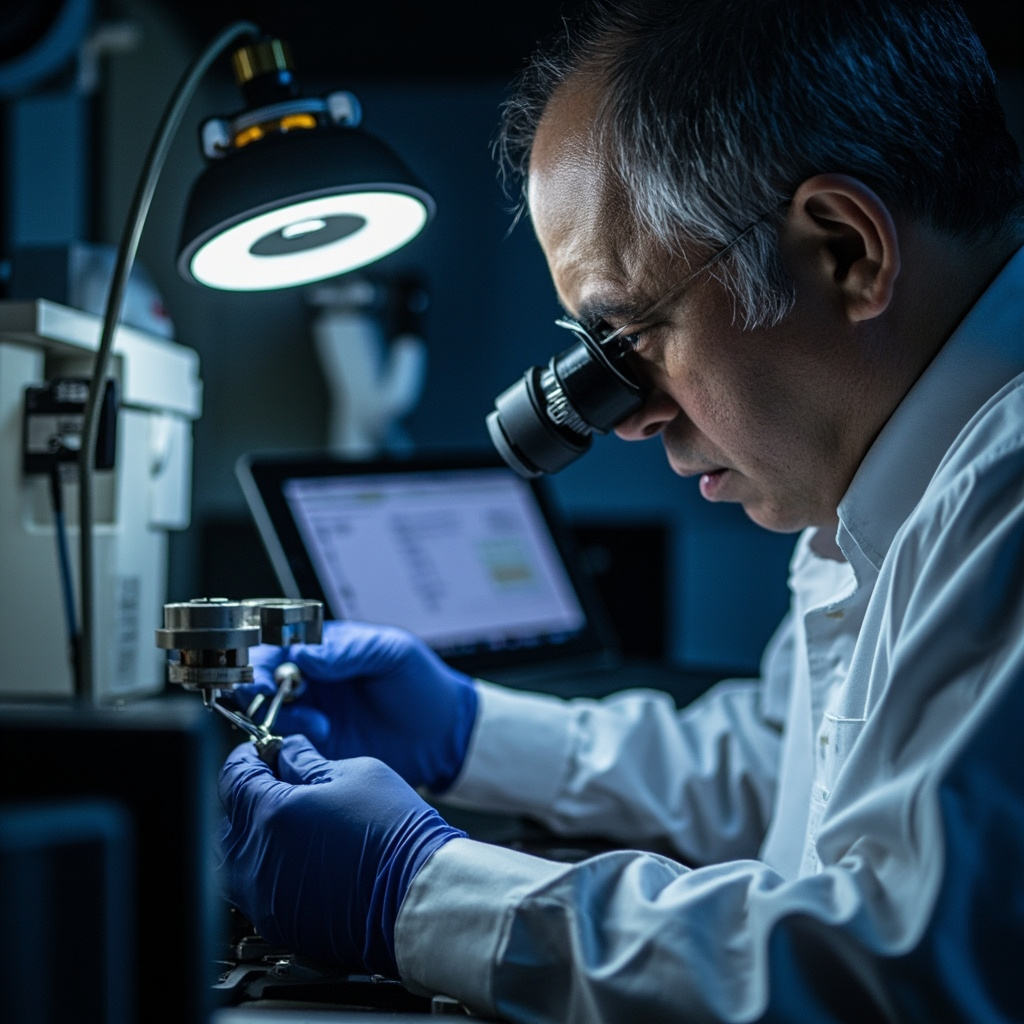
- Visual under 10x magnification: Standard for most commercial parts. Catches loose burrs, rolled edges, and surface contamination.
- Fingertip check: Simple, effective, and surprisingly reliable. If an edge catches on a gloved fingertip, it fails. Don’t laugh — this is an actual QC step in many shops.
- Cotton swab test: For precision fluid passages. Run a cotton swab through the passage; if fibers snag and pull off, there’s a burr. Used extensively in aerospace hydraulic components.
- Borescope : For internal features and cross-drilled holes where direct visual access isn’t possible.
- Edge radius measurement: Using comparator or contour measurement systems for edges where the break dimension is critical to function.
Common deburring defects to watch for:
- Embedded media: Ceramic or plastic tumbling media fragments lodged in holes or recesses. A nightmare in fluid system components.
- Rolled-over burrs: Instead of removing the burr, the operator folded it over into a hole. Looks clean from the outside, blocks the passage internally.
- Over-radiused edges: Vibratory finishing ran too long, rounding edges beyond the tolerance zone.
- Scratched surfaces: Aggressive deburring tools or contaminated media leaving marks on cosmetic or functional surfaces.
Getting Started — Practical Steps
Whether you’re designing a new part or solving a deburring problem on an existing one, here’s the sequence that works:
- Identify which edges actually matter. Not every edge on your part needs the same treatment. Mark up your drawing or 3D model: red for safety-critical edges (sharp edge = injury risk), yellow for functional edges (affects assembly or performance), green for cosmetic-only edges. This tells your machinist where to focus.
- Specify edge condition on the drawing. Use the callout formats above. If some edges must remain sharp (cutting edges, seal surfaces, locating features), say so explicitly. “DO NOT BREAK” is a perfectly valid drawing note on specific edges.
- Consider deburring during design. Can you add a small chamfer to that internal corner the tool always leaves a burr on? Can you change the approach angle on that feature so the tool exits on a non-functional surface? Small design changes can eliminate burrs entirely, which is cheaper than removing them later.
- Discuss deburring with your supplier before quoting. Send photos or marked-up drawings. Ask “how would you deburr this part?” A good shop will have a specific answer — “we’d vibratory tumble for 30 minutes with ceramic media, then manual touch-up on the sealing faces.” A bad shop will say “we’ll deburr it.”
- Request first-article samples with the deburring method documented. Once the method is proven, lock it into the production process. Changing deburring media or cycle time should require re-validation, just like changing a cutting tool path.
결론
The solution isn’t complicated: be specific about what you need on your drawings, choose the right deburring method for your material and geometry, and work with a shop that treats deburring as a defined process rather than an afterthought. Your parts will be safer, your assemblies will go together smoother, and you won’t get that phone call about sharp edges that should have been caught six months ago.
관련 리소스
- CNC Machining Services — From Prototype to Production
- Surface Finishing & Customization — Anodizing, Plating, Coating Options
- CNC Machining Materials — Metals, Plastics & Selection Guide
- Product Design for Manufacturing — DFM Best Practices
Need parts that are deburred right — not just “deburred”? We treat edge finishing as part of the machining process, not an afterthought. Whether you need surgical-grade surface quality on 5 pieces or consistent, cost-optimized deburring on 5,000, we’ll match the method to your application and document the process. Send us your model and spec — let’s talk about what your parts actually need. Get a quote today →
자주 묻는 질문
When is Deburring in CNC Machining: Methods, Standards, and What Your Parts Actually Need the right choice?
Deburring in CNC Machining: Methods, Standards, and What Your Parts Actually Need is the right choice when the part requires machined accuracy, controlled surfaces, repeatable features, and a material that can be cut reliably.
What should be confirmed before ordering Deburring in CNC Machining: Methods, Standards, and What Your Parts Actually Need?
생산을 시작하기 전에 도면 버전, 재료 등급, 공차, 수량, 임계 치수, 표면 마감 및 검사 요구 사항을 확인합니다.
What usually drives cost in Deburring in CNC Machining: Methods, Standards, and What Your Parts Actually Need?
비용은 일반적으로 재료, 설정 시간, 기계 시간, 공차 난이도, 고정, 공구 접근, 마감, 검사 및 주문 수량에 따라 결정됩니다.
How can quality risk be reduced in Deburring in CNC Machining: Methods, Standards, and What Your Parts Actually Need?
중요한 기능을 명확하게 표시하고, 불필요하게 엄격한 공차를 피하고, 제조 가능성을 조기에 확인하고, 중요한 치수에 대한 검사 데이터를 사용하면 품질 위험을 줄일 수 있습니다.

 English
 Dutch
Dutch German
 French
 Korean
 Russian
 Japanese
 Spanish
 Vietnamese
 Chinese
 Portuguese
 Arabic