
엔지니어링 애플리케이션을 위한 나일론과 POM(아세탈/델린)의 일대일 비교 - 기계적, 열적, 화학적, 마모 및 가공상의 차이점.
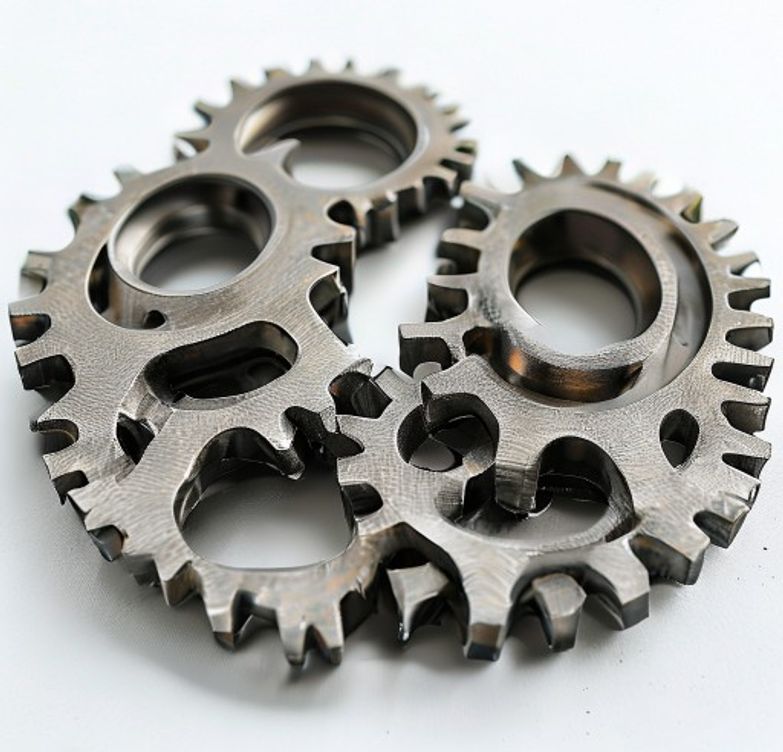
나일론과 POM: 엔지니어링 플라스틱의 두 거인
나일론(폴리아미드)과 POM(폴리옥시메틸렌, 아세탈 또는 델린이라고도 함)은 기계 부품에 가장 많이 사용되는 두 가지 엔지니어링 열가소성 플라스틱입니다. 두 소재 모두 뛰어난 내마모성, 낮은 마찰, 우수한 치수 안정성을 제공하지만 분자 구조가 다르기 때문에 정밀 애플리케이션에서 매우 중요한 성능 절충점을 만들어냅니다.
나일론과 POM 중 하나를 선택하는 것은 간단하지 않습니다. POM으로 50,000 사이클을 견디는 베어링은 동일한 하중에서 나일론으로 8,000 사이클을 견디면 고장날 수 있습니다. 반대로 자동차 유체에 노출된 기어 하우징은 POM에서는 균열이 발생하지만 PA66에서는 견딜 수 있습니다. 이 가이드는 엔지니어가 올바른 선택을 하는 데 필요한 데이터 기반 비교 정보를 제공합니다.
기계적 특성 비교
| 인장 강도(MPa) | 80 | 82 | 70 | 62 |
|---|---|---|---|---|
| 인장 계수(GPa) | 2.8 | 3.0 | 2.8 | 2.5 |
| 굴곡 강도(MPa) | 100 | 110 | 98 | 90 |
| 굴곡 탄성률(GPa) | 2.6 | 2.8 | 2.6 | 2.3 |
| 휴식 시 연신율 (%) | 150 | 60 | 40 | 35 |
|---|---|---|---|---|
| 크리프 계수(1000시간, 20MPa) | 1.2 GPa | 1.4 GPa | 2.3 GPa | 2.0 GPa |
Key Insight: Creep Resistance — POM has significantly better creep resistance than nylon. Under sustained loading, POM retains more of its stiffness over time. For components under constant load (spring clips, retaining rings, fastener bushings), POM’s superior creep resistance often makes it the better choice despite similar initial strength.
내충격성 — Nylon has higher unnotched impact resistance. But POM often outperforms nylon in notched impact tests because POM’s ductile failure mode absorbs more energy at the crack tip. For parts with stress concentrations (keyways, holes, threads), POM’s toughness at sharp notches is an advantage.
Fatigue Resistance — Nylon has superior fatigue resistance for repeated loading. In cyclic loading tests, nylon components survive 3-5× more cycles before failure than equivalent POM parts. Critical for components like conveyor belt guides, pump impellers, and hinge mechanisms.
열 및 환경 성능
| 녹는점(°C) | 225 | 265 | 175 |
|---|---|---|---|
| 연속 서비스 온도(°C) | 100-115 | 130-150 | 90-100 |
| HDT @ 1.82MPa(°C) | 65 | 90 | 95 |
|---|---|---|---|
| 열팽창(×10-⁵/°C) | 8-9 | 8-9 | 11-12 |
POM’s thermal weakness — The 175°C melting point of POM is its thermal limitation. At temperatures above 100°C, POM loses mechanical strength rapidly. PA66-GF30 (HDT 250°C) operates at temperatures where POM would melt.
| - | - | - | - |
|---|---|---|---|
| 차원 변화(채도) | 1.5-2.0% | 1.3-1.8% | 0.2% |
POM wins decisively on moisture — At 0.8% maximum moisture absorption, POM is essentially dimensionally stable in humid environments. Nylon’s 8-9% absorption causes measurable swelling and property changes. For underwater or outdoor exposed applications without encapsulation, POM is often the only viable choice.
내화학성: 각 소재의 우수성
| 휘발유/연료 | 우수 | 우수 |
|---|---|---|
| 모터 오일 | 우수 | 우수 |
| 브레이크 오일 | Good | 불량(부풀어 오름) |
| 알코올 | 우수 | Good |
| 케톤(아세톤) | Good | 불량(용해됨) |
| 약산 | 공정 | Good |
| 강산 | Poor | Poor |
| 에스테르/가소제 | 우수 | Poor |
|---|---|---|
| Steam | Poor | Poor |
Critical Decision Points:
- Brake fluid or glycol coolants: POM swells and cracks — use PA66 or PA12
- Hot water (>60°C): Nylon hydrolyzes — use POM or PVDF
- Plasticizer migration (flexible cables, wire insulation): POM absorbs plasticizers — use PA12
- Automotive under-hood: PA66-GF30 for its heat resistance (180°C+) and fluid resistance
- Consumer appliances: POM for its dimensional stability and surface finish
마모 및 마찰 성능
두 소재 모두 마찰이 적고 내마모성이 우수하지만 중요한 차이점이 있습니다:
| 마찰 계수(강철 대비, 건식) | 0.25-0.40 | 0.20-0.35 | 0.15-0.35 |
|---|
| PV 제한(MPa-m/min) | 80-120 | 90-130 | 80-100 |
|---|---|---|---|
| 기계 가공성 | Good | 우수 | 우수 |
The critical difference: wear factor — POM’s wear factor (1-3) is 10-20× lower than nylon’s (10-40). This means POM parts generate less heat and wear more slowly in sliding contact. For high-PV applications (bearings, wear strips, sliding inserts), POM is the superior choice.
Self-lubricating versions:
- POM + PTFE: Wear factor drops to 0.5-1.0 — excellent for boundary lubrication
- PA6/66 + PTFE or silicone: Significantly reduces friction, but PTFE can migrate to surface and affect bonding
- Carbon fiber reinforced: Improves wear resistance in both materials, especially at elevated temperatures
Surface Speed Consideration: At surface speeds above 1 m/s in dry sliding, both materials generate enough heat to cause thermal softening. For high-speed applications, consider internally lubricated grades or oil-impregnated sintered bronze backings.
선택 방법: 의사 결정 프레임워크
Choose Nylon (PA66-GF30) when:
- 작동 온도가 100°C를 초과하는 경우
- 반복적인 충격 또는 주기적인 부하가 예상되는 경우
- 브레이크액, 냉각수 또는 가소제에 노출되는 경우
- 동적 부하에서 더 높은 피로 수명이 필요합니다.
- 비용이 주요 요인입니다(일반적으로 PA66은 POM보다 저렴합니다).
Choose POM when:
- 습한 환경에서의 치수 안정성이 중요합니다.
- 낮은 마찰과 낮은 마모율을 우선시합니다(슬라이딩/회전 접촉).
- 부품이 뜨거운 물이나 증기에 노출됩니다.
- 아세톤, 에스테르 또는 가소제가 존재합니다.
- 뛰어난 표면 마감과 엄격한 공차가 필요합니다.
Hybrid Solution — Metal Replacement:
많은 금속 대체 애플리케이션에서 선택은 나일론과 POM 중 하나가 아니라 나일론과 알루미늄 중 하나입니다. Nylon-GF와 POM은 모두 하우징, 브래킷 및 구조 부품을 대체할 수 있는 우수한 금속 소재이며, 알루미늄 대비 70~85%의 무게 감소와 적절한 강도를 제공합니다. 이러한 애플리케이션의 경우 내열성 및 유체 저항성이 뛰어난 PA66-GF30이 기본 선택입니다.
자주 묻는 질문
When is Nylon vs. POM (Acetal): Engineering Plastics Comparison Guide a good option?
Nylon vs. POM (Acetal): Engineering Plastics Comparison Guide is a good option when fast iteration, complex geometry, low tooling cost, or low-volume production is more important than molded-part unit cost.
What should be checked before choosing Nylon vs. POM (Acetal): Engineering Plastics Comparison Guide?
부품 크기, 재료 특성, 표면 마감, 치수 공차, 열 노출, 하중 방향, 후처리가 필요한지 여부를 확인합니다.
How does Nylon vs. POM (Acetal): Engineering Plastics Comparison Guide compare with CNC machining?
3D 프린팅은 복잡한 형상을 빠르게 제작할 수 있는 반면, CNC 가공은 정밀한 표면, 엄격한 공차 및 생산 등급 재료에 더 적합한 경우가 많습니다.
What affects the cost of Nylon vs. POM (Acetal): Engineering Plastics Comparison Guide?
비용은 재료, 빌드 볼륨, 프린트 시간, 레이어 높이, 서포트 제거, 마감, 검사 및 빌드 내 부품 수에 따라 달라집니다.

