
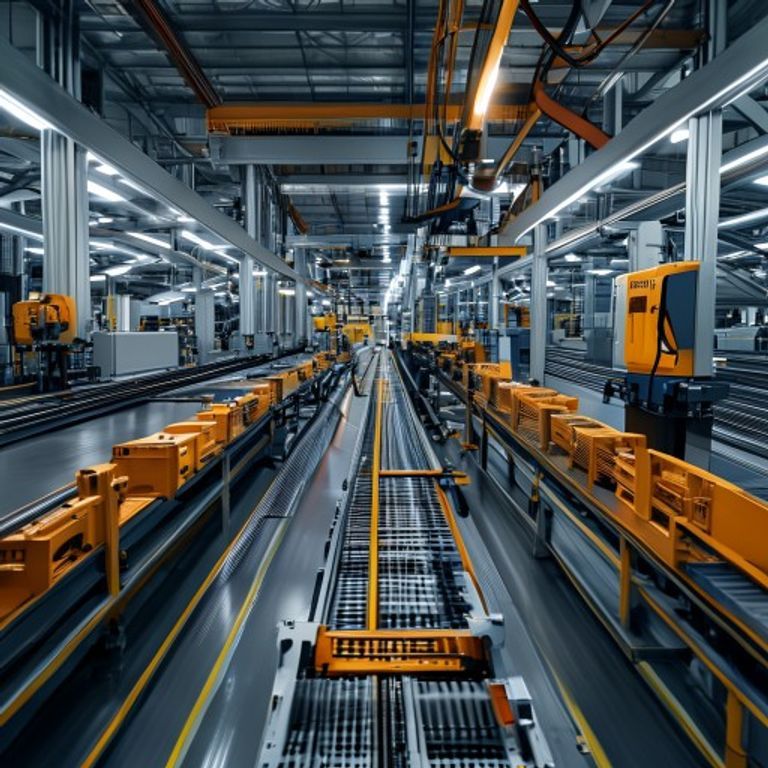
High-volume CNC production bridges the gap between prototype machining and mass manufacturing, delivering precision parts at industrial-scale volumes while maintaining the accuracy and quality standards of low-volume CNC work. With optimized fixturing, automated tool management, statistical process control, and lean manufacturing principles, high-volume CNC production achieves per-part costs competitive with injection molding for complex geometries that molds cannot produce. From 1,000 to 100,000+ parts, scalable CNC machining provides the flexibility, quality, and economics that modern manufacturers demand.
Scaling CNC Machining Across Volume Tiers
| Volume Tier | Quantity | Strategy | Vorlaufzeit |
|---|---|---|---|
| Prototype | 1 – 100 | Single setup, manual fixturing, no tooling optimization | 5 business days |
| Low Volume | 101 – 1,000 | Soft jaws, batch processing, first-article | 7-10 business days |
| Medium Volume | 1,001 – 10,000 | Custom fixturing, optimized CAM, SPC monitoring | 10-15 business days |
| High Volume | 10,001 – 100,000+ | Dedicated s, pallet systems, robotic loading, full SPC | 15-20 business days (setup) + ongoing |
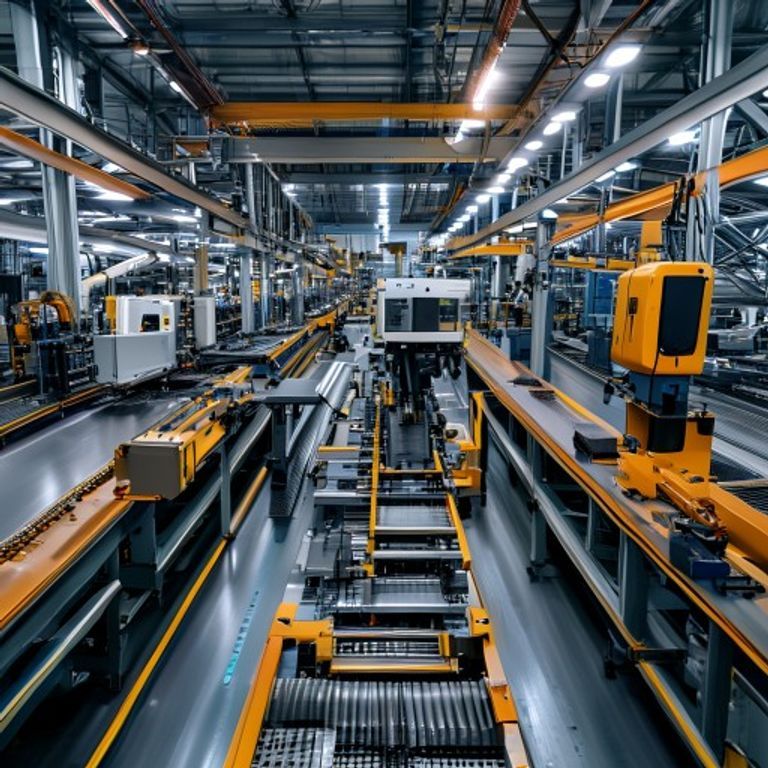
Key Advantages of High-Volume CNC Production
Cost Optimization Through Volume
Flexibility Without Tooling Commitment
Quality Consistency at Scale
Material and Process Breadth
High-volume CNC production processes the full range of metals (aluminum, steel, stainless, titanium, brass) and engineering plastics (nylon, POM, PEEK, PC, PTFE, UHMWPE). Multi-process cells combine milling, turning, and secondary operations (thread rolling, heat treatment, surface finishing) in lean production flows that minimize handling time and maximize throughput.
Production Optimization Strategies
| Optimization | Impact | Applied At Volume |
|---|---|---|
| Soft Jaws / Quick Fixturing | Reduce setup time 50% | 100+ parts |
| Custom Hard s | Eliminate manual positioning, boost repeatability | 1,000+ parts |
| Pallet Pool Systems | Enable unattended multi-part machining | 5,000+ parts |
| Optimized CAM (adaptive roughing) | Reduce cycle time 30% | 500+ parts |
| Robotic Part Loading | Enable lights-out production shifts | 10,000+ parts |
| SPC with Real-Time Monitoring | Prevent quality drift, reduce scrap | 1,000+ parts |
When to Choose CNC vs Injection Molding
| Decision Factor | Choose CNC | Choose Injection Molding |
|---|---|---|
| Volume | Under 10,000 or uncertain demand | Over 50,000 with stable demand |
| Geometry Complexity | Undercuts, thin walls, sharp corners, metal inserts | Uniform wall thickness, no undercuts, simple draft |
| Design Iteration | Still iterating, need fast changes | Design frozen, committed to volume |
| Tolerance | ±0.01mm or tighter required | ±0.1mm acceptable |
| Material | Metal, PEEK, or non-moldable plastics | Standard moldable plastics (PA, POM, PC, PP) |
| Lead Time to First Parts | 5 days | 8-12 weeks (mold fabrication) |
Common Applications of High-Volume CNC Production
- Automotive Components: Sensor housings, connector blocks, mounting brackets, valve bodies, custom fasteners
- Medical Devices: Surgical instrument components, diagnostic device parts, implant prototypes to mid-volume production
- Electronics: Enclosures, heatsinks, connector shells, EMI shields, mounting hardware
- Aerospace: Structural brackets, linkage components, fastener bodies, sensor mounts
- Industrial Equipment: Pump components, valve bodies, gear housings, bearing seats, shaft couplings
- Consumer Products: Custom hardware, premium mechanical components, limited-edition product parts
FAQ
When is High-Volume CNC Production: Scalable Machining from Prototype to Mass Production the right choice?
High-Volume CNC Production: Scalable Machining from Prototype to Mass Production is the right choice when the part requires machined accuracy, controlled surfaces, repeatable features, and a material that can be cut reliably.
What should be confirmed before ordering High-Volume CNC Production: Scalable Machining from Prototype to Mass Production?
Bestätigen Sie die Zeichnungsversion, die Materialqualität, die Toleranzen, die Menge, die kritischen Maße, die Oberflächenbeschaffenheit und die Prüfanforderungen, bevor Sie mit der Produktion beginnen.
What usually drives cost in High-Volume CNC Production: Scalable Machining from Prototype to Mass Production?
Die Kosten werden in der Regel durch Material, Rüstzeit, Maschinenzeit, Toleranzschwierigkeiten, Vorrichtungen, Werkzeugzugang, Endbearbeitung, Inspektion und Auftragsmenge bestimmt.
How can quality risk be reduced in High-Volume CNC Production: Scalable Machining from Prototype to Mass Production?
Das Qualitätsrisiko wird durch die eindeutige Kennzeichnung kritischer Merkmale, die Vermeidung unnötig enger Toleranzen, die frühzeitige Bestätigung der Herstellbarkeit und die Verwendung von Prüfdaten für wichtige Abmessungen verringert.


 English
 Dutch
Dutch German
 French
 Korean
 Russian
 Japanese
 Spanish
 Vietnamese
 Chinese
 Portuguese
 Arabic