
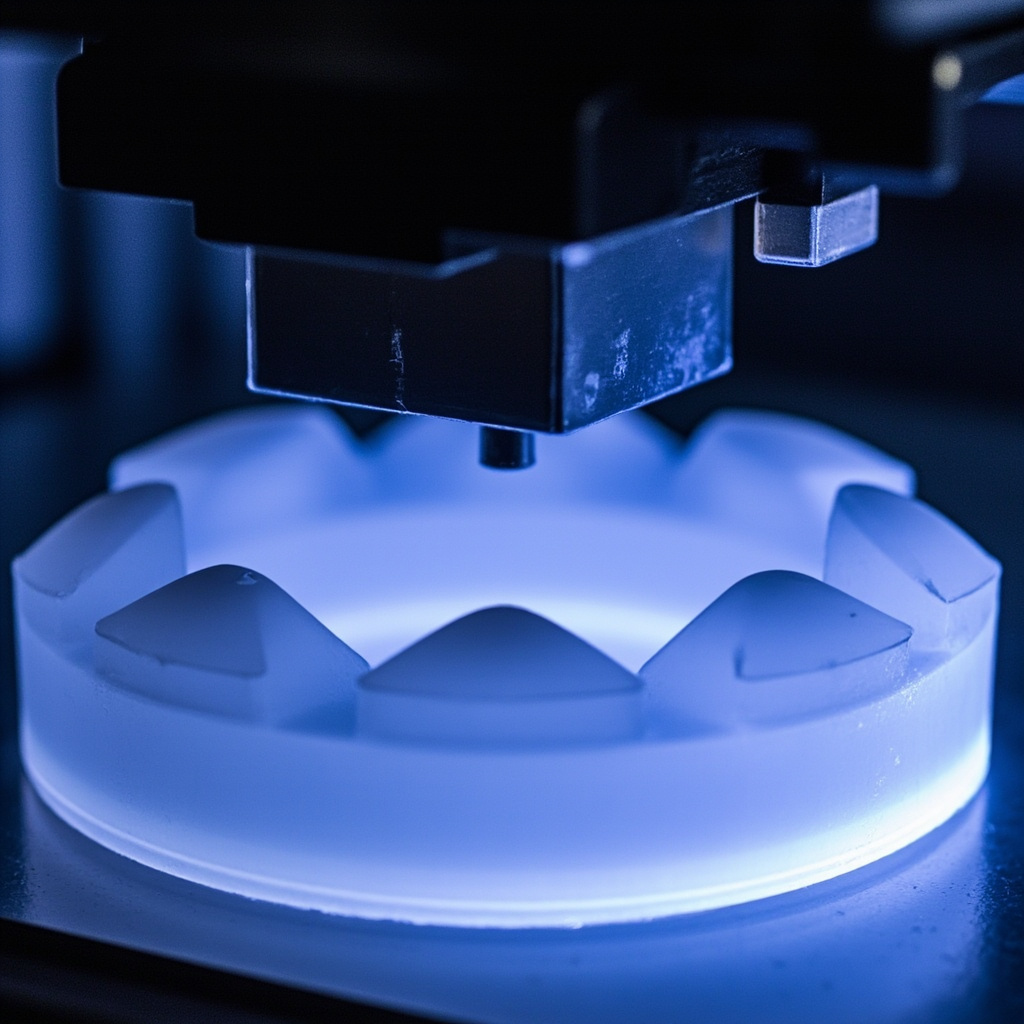
Stereolithography (SLA) is one of the most established and widely used additive manufacturing technologies in precision engineering. By selectively curing liquid photopolymer resin with a precisely controlled UV laser, SLA transforms digital designs into physical parts with exceptional dimensional accuracy and smooth surface finishes — qualities that are difficult to achieve with conventional manufacturing methods.
How SLA 3D Printing Works
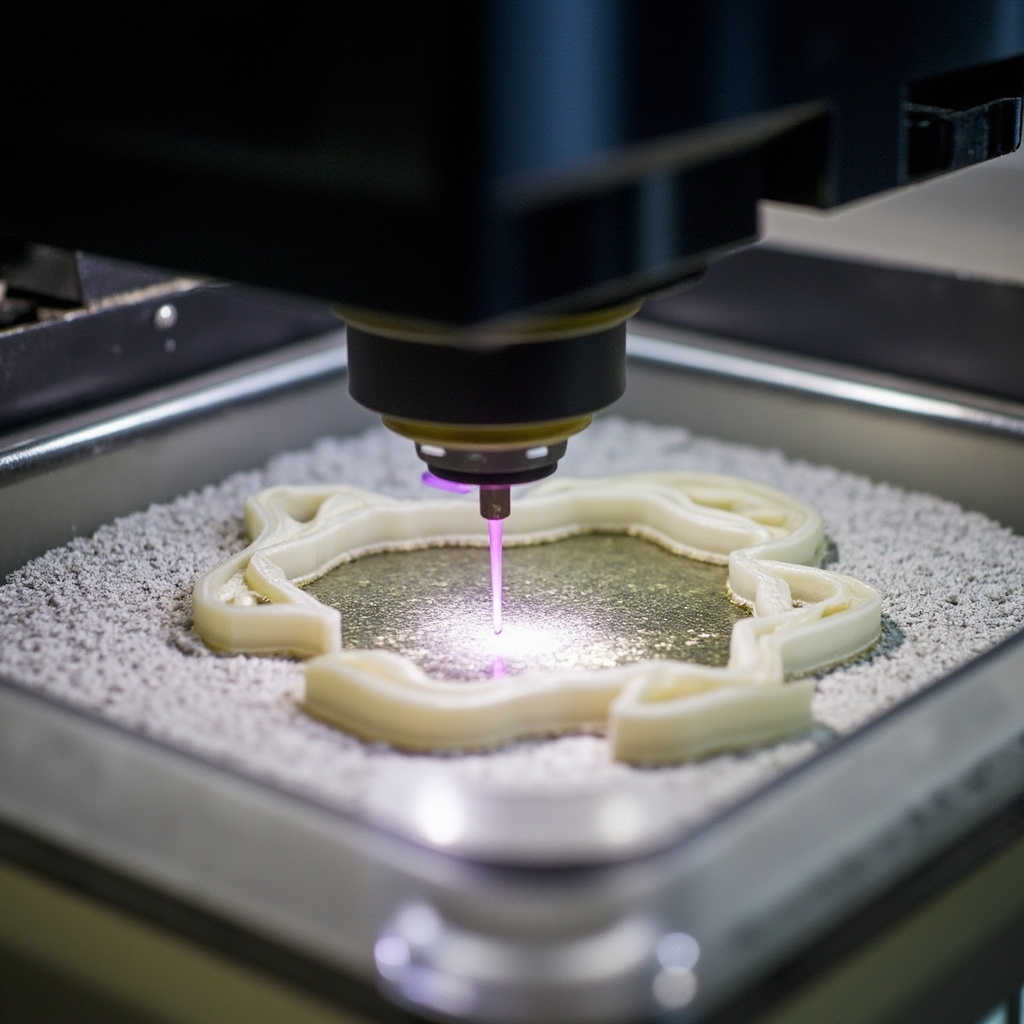
The SLA process begins with a tank filled with liquid photopolymer resin. A UV laser, guided by CAD data, traces the cross-section of the design on the surface of the resin, hardening the material where needed. After each layer is cured, the build platform lowers by one layer thickness, and a fresh coat of resin is swept across the surface before the next layer is lasered. This cycle repeats until the complete 3D part is formed.
Once printing is complete, the part is removed from the tank and washed in a solvent solution to remove any uncured resin from the surface. A final UV post-curing step ensures the material reaches its full mechanical properties.
Key Advantages of SLA Technology
Exceptional Surface Quality
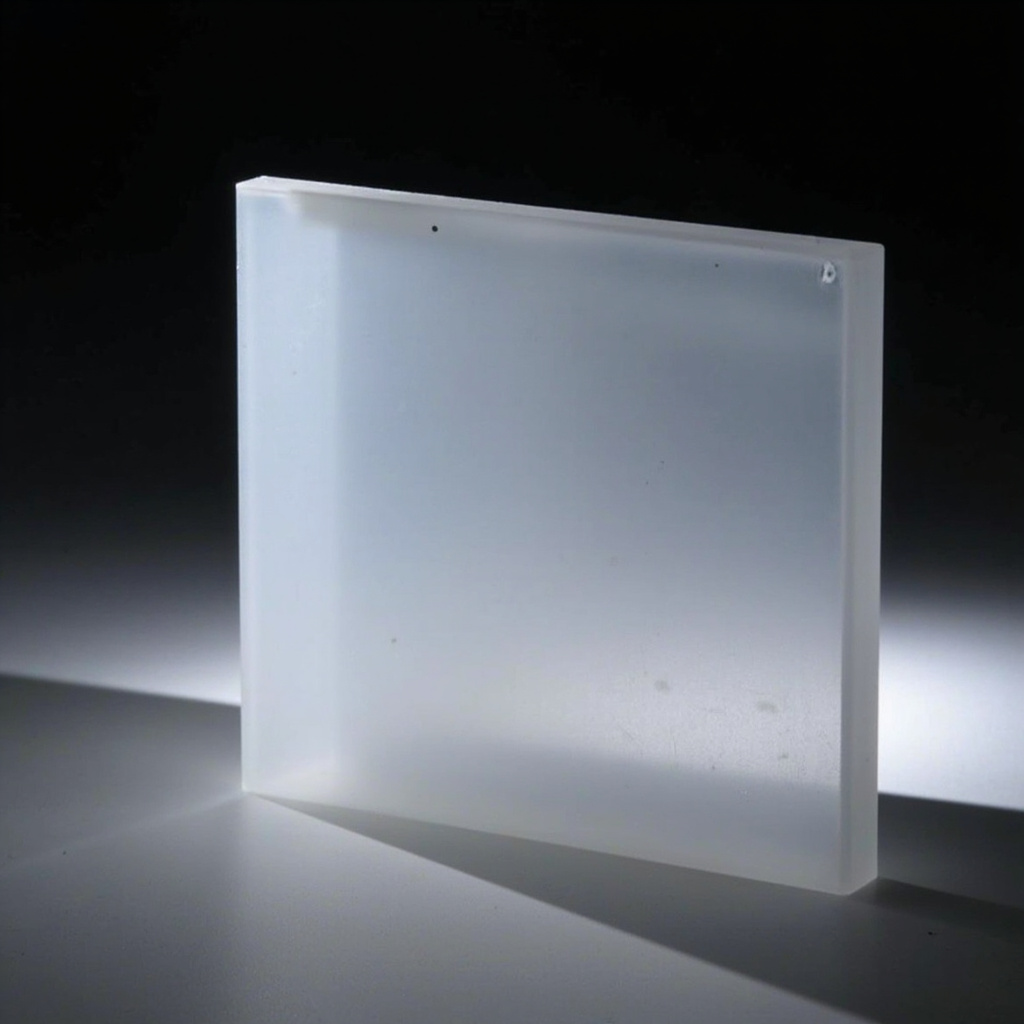
SLA produces parts with smooth, injection-molded-like surfaces straight off the printer, significantly reducing the need for post-processing finishing work. This makes SLA ideal for applications where surface aesthetics are important, such as presentation models and consumer-facing prototypes.
High Dimensional Accuracy
With typical dimensional tolerances of ±0.1mm and layer resolutions as fine as 25 microns, SLA is capable of reproducing intricate details and complex geometries with precision that rivals CNC machining for many applications.
Fine Feature Resolution
The UV laser spot size in SLA systems enables the production of thin walls down to 0.3mm and fine details as small as 0.2mm, making it suitable for parts with intricate internal channels, microstructures, and complex surface textures.
Wide Range of Resin Materials
SLA resins are available in a broad spectrum of formulations tailored for different performance requirements:
| Resin Type | Properties | Typische Anwendungen |
|---|---|---|
| Standard Clear | High clarity, polishable | Transparent models, optical prototypes |
| ABS-like | Impact resistance, durability | Functional prototypes, enclosures |
| High-Temperature | HDT up to 260°C | Thermal testing, molds, jigs |
| Flexible/TPU-like | Elastomeric properties | Gaskets, seals, soft-touch prototypes |
| Dental/Medical | Biocompatible, sterilizable | Surgical guides, dental models |
Gemeinsame Anwendungen
SLA’s combination of surface quality and precision makes it the preferred choice across a wide range of industries:
- Product prototyping: Concept models, form-and-fit studies, and visual prototypes for consumer electronics, automotive, and industrial design
- Dental and medical: Surgical guides, dental crowns, hearing aid shells, and patient-specific anatomical models
- Jewelry and art: Investment casting patterns, detailed art pieces, and custom jewelry molds
- Tooling and molds: Vacuum casting patterns, soft molds for low-volume production runs
- Engineering validation: Functional prototypes that require high dimensional accuracy and smooth surfaces
Design Considerations for SLA
Minimum Wall Thickness
For structural integrity, minimum wall thickness of 0.4mm is recommended for small parts, scaling up to 0.8mm for larger components. Unsupported overhangs longer than 2mm may require support structures.
Support Structures
SLA parts require support structures to anchor overhanging features to the build platform. These are automatically generated by slicer software and must be removed and sanded after printing. Designing with self-supporting angles of 45° or greater minimizes support requirements.
Resin Handling
Uncured photopolymer resin is a skin and eye irritant and requires careful handling with nitrile gloves. Parts should be fully post-cured before handling. Liquid resin has a shelf life of approximately 12 months when stored in a dark, cool environment.
SLA vs. Other 3D Printing Technologies
When choosing a 3D printing technology, SLA stands out for surface quality and precision. Compared to FDM, SLA offers dramatically smoother surfaces and finer feature resolution. Compared to SLS, SLA parts have a smoother finish but are generally less thermally and mechanically resistant. Compared to MJF or DLS, SLA remains the most cost-effective option for prototypes and small-batch production runs requiring high surface quality.
FAQ
When is Stereolithography (SLA) 3D Printing Services a good option?
Stereolithography (SLA) 3D Printing Services is a good option when fast iteration, complex geometry, low tooling cost, or low-volume production is more important than molded-part unit cost.
What should be checked before choosing Stereolithography (SLA) 3D Printing Services?
Prüfen Sie die Größe des Teils, die Materialeigenschaften, die Oberflächenbeschaffenheit, die Maßtoleranz, die Wärmeeinwirkung, die Belastungsrichtung und ob eine Nachbearbeitung erforderlich ist.
How does Stereolithography (SLA) 3D Printing Services compare with CNC machining?
Mit dem 3D-Druck lassen sich komplexe Formen schnell erstellen, während die CNC-Bearbeitung für präzise Oberflächen, engere Toleranzen und serienreife Materialien oft besser geeignet ist.
What affects the cost of Stereolithography (SLA) 3D Printing Services?
Die Kosten hängen vom Material, dem Bauvolumen, der Druckzeit, der Schichthöhe, der Entfernung von Stützen, der Endbearbeitung, der Prüfung und der Anzahl der Teile im Bau ab.
 English
 Dutch
Dutch German
 French
 Korean
 Russian
 Japanese
 Spanish
 Vietnamese
 Chinese
 Portuguese
 Arabic