TPU Hardness Guide — Choosing Shore A 85A to 98A for Your Application

TPU (Thermoplastic Polyurethane) offers an incredible range of flexibility, from rubber-band elastic to nearly rigid. Understanding Shore hardness ratings helps you select the perfect material for your application. This guide covers everything from Shore 85A to 98A.
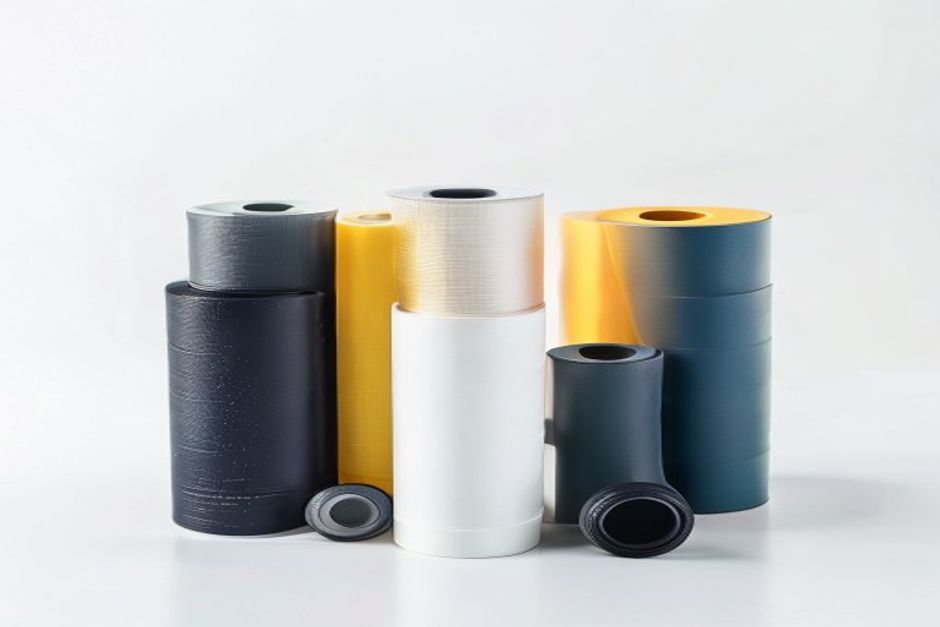
TPU Hardness Guide — Choosing Shore A 85A to 98A for Your Application

Understanding Shore A Hardness

The Shore A scale measures the hardness of flexible materials. Lower numbers indicate softer, more flexible materials:

  • 85A: Very soft, extremely flexible
  • 90A: Soft, moderate flexibility
  • 95A: Medium-soft, some rigidity
  • 98A: Semi-rigid, limited flexibility

Compared to TPE, TPU offers better layer adhesion and easier printing.
TPU Hardness Guide — Choosing Shore A 85A to 98A for Your Application - technical

Shore 85A: Maximum Flexibility

Characteristics

  • Extremely soft and rubbery
  • Excellent elongation (>500%)
  • High elasticity and recovery
  • Most challenging to print

Best Applications

  • Gaskets and seals
  • Phone cases with maximum grip
  • Vibration dampeners
  • Wearable devices

Printing Considerations

  • Requires direct drive extruder
  • Very slow speeds (10-20mm/s)
  • Minimal retraction
  • 220-240°C nozzle temperature

Like nylon, TPU benefits from dry storage.

Shore 90A: Balanced Flexibility

Characteristics

  • Soft but manageable
  • Good elongation (400-500%)
  • Excellent recovery
  • Moderate print difficulty

Best Applications

  • Flexable hinges
  • Footwear soles
  • Protective bumpers
  • Flexible couplings

Printing Considerations

  • Direct drive recommended
  • Moderate speeds (15-25mm/s)
  • Standard retraction settings
  • 220-235°C nozzle temperature

Shore 95A: Semi-Flexible

Characteristics

  • Noticeable stiffness
  • Moderate elongation (300-400%)
  • Good dimensional stability
  • Easier to print

Best Applications

  • Functional prototypes
  • Twistable components
  • Semi-rigid seals
  • Impact-resistant parts

Printing Considerations

  • Can work on Bowden setups
  • Normal speeds (20-30mm/s)
  • Standard settings mostly work
  • 225-240°C nozzle temperature

Shore 98A: Nearly Rigid

Characteristics

  • Minimal flexibility
  • Low elongation (200-300%)
  • High dimensional accuracy
  • Easy to print

Best Applications

  • Semi-rigid enclosures
  • Functional brackets
  • Snap-fit components
  • Impact protection

Printing Considerations

  • Works on most printers
  • Normal printing speeds
  • Standard settings acceptable
  • 230-245°C nozzle temperature

Application Selection Guide

Application Recommended Reason
Gaskets 85-90A Maximum sealing
Phone cases 90-95A Balance of grip and protection
Hinges 90-95A Flexibility without fatigue
Bumpers 95-98A Impact absorption
Snap fits 95-98A Predictable flex
Tires 85-90A Maximum grip

Frequently Asked Questions

Can I print 85A TPU on a Bowden extruder?
It’s possible but challenging. Direct drive is strongly recommended.

Does TPU hardness affect strength?
Yes, harder TPU generally has higher tensile strength but lower elongation.

How do I know which hardness I need?
Start with 95A if unsure. It’s the most versatile and easiest to print.

Frequently Asked Questions

Why is my print quality inconsistent?
Multiple factors affect quality: temperature stability, filament quality, and machine calibration. Test systematically.

How can I improve my print success rate?
Start with proper calibration, quality filament, and appropriate settings for each material.

What maintenance does my printer need?
Regular nozzle cleaning, belt tensioning, and lubrication of moving parts.

Frequently Asked Questions

Q: What does Shore A hardness mean for TPU?

Shore A hardness measures a material’s resistance to indentation using a durometer. The scale ranges from 00 (very soft, gel-like) to A (soft rubber) to D (semi-rigid plastics). For TPU filaments, the range typically spans Shore A 85A to 98A. The higher the number, the harder and more rigid the material.

Q: What is the difference between Shore A 85A and 98A TPU?

Shore A 85A TPU is softer, more flexible, and has better elongation. It is ideal for gaskets, seals, and flexible prototypes. Shore A 98A TPU is more rigid, has better abrasion resistance, and is better for functional parts that need durability. The trade-off is that 98A is harder to print due to higher viscosity at extrusion temperature.

Q: Can TPU 98A be printed on Bowden extruders?

Printing TPU 98A on Bowden extruders is challenging but possible with modifications. Use a flexible PTFE tube (Capricorn XS recommended), reduce print speed to 15-25mm/s, increase extrusion multiplier by 5-10%, and ensure the filament path is perfectly straight. Direct drive extruders are strongly preferred for all TPU filaments.

Q: What is the optimal printing temperature for Shore A 85A TPU?

Shore A 85A TPU prints best at 220-240 deg C. Lower temperatures improve flexibility retention but may cause under-extrusion. Start at 225 deg C and adjust based on layer adhesion quality. Print speed should be kept slow (15-30mm/s) to ensure consistent extrusion.

Q: How does TPU hardness affect layer adhesion?

Softer TPU grades (85A-90A) generally have better inter-layer adhesion due to more molecular diffusion at the bond line. Harder grades (95A-98A) may require slightly higher extrusion temperatures (235-250 deg C) to achieve optimal layer bonding.

Q: What cooling settings work best for TPU printing?

TPU requires minimal cooling – set part cooling fan to 10-30% maximum. Too much cooling causes poor layer bonding and warping. Some printers run with cooling fan off entirely for TPU.

Q: What are common applications for Shore A 85A TPU?

Shore A 85A TPU is used for: flexible gaskets and seals, shoe insoles and orthopaedic devices, protective cases and covers, vibration dampening pads, cable jackets and wire strain reliefs, and flexible hinges with small bending radii.

Q: What are common applications for Shore A 98A TPU?

Shore A 98A TPU is used for: durable functional parts requiring abrasion resistance, printer rollers and feed gears, automotive interior components, protective equipment with moderate rigidity, and structural flexible parts.

Q: Does TPU hardness affect UV resistance?

Standard TPU is not UV-resistant and will degrade under prolonged sun exposure. For outdoor applications, use UV-resistant TPU grades (often labelled as UV-stabilised or aliphatic TPU). If UV resistance is critical, consider ASA or PETG for outdoor applications.

Q: How does TPU compare to TPE for 3D printing?

TPU is a specific type of TPE that is easier to print and more widely available as 3D printing filament. TPU offers better abrasion resistance and oil resistance compared to most generic TPEs. For most 3D printing applications, TPU is preferred for its balance of printability and mechanical properties.

Creemos su solución a medida

Este campo es obligatorio.
Ir arriba