
Understanding Runner Systems
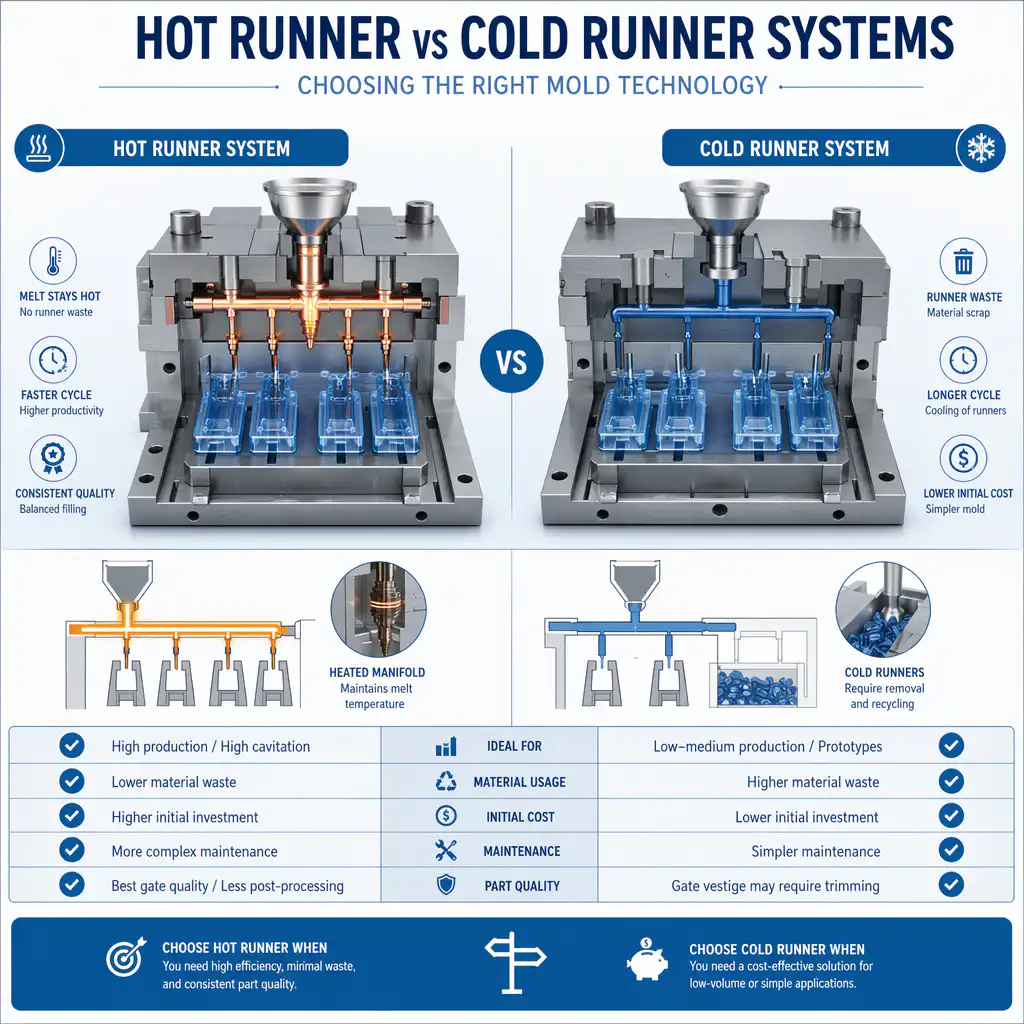
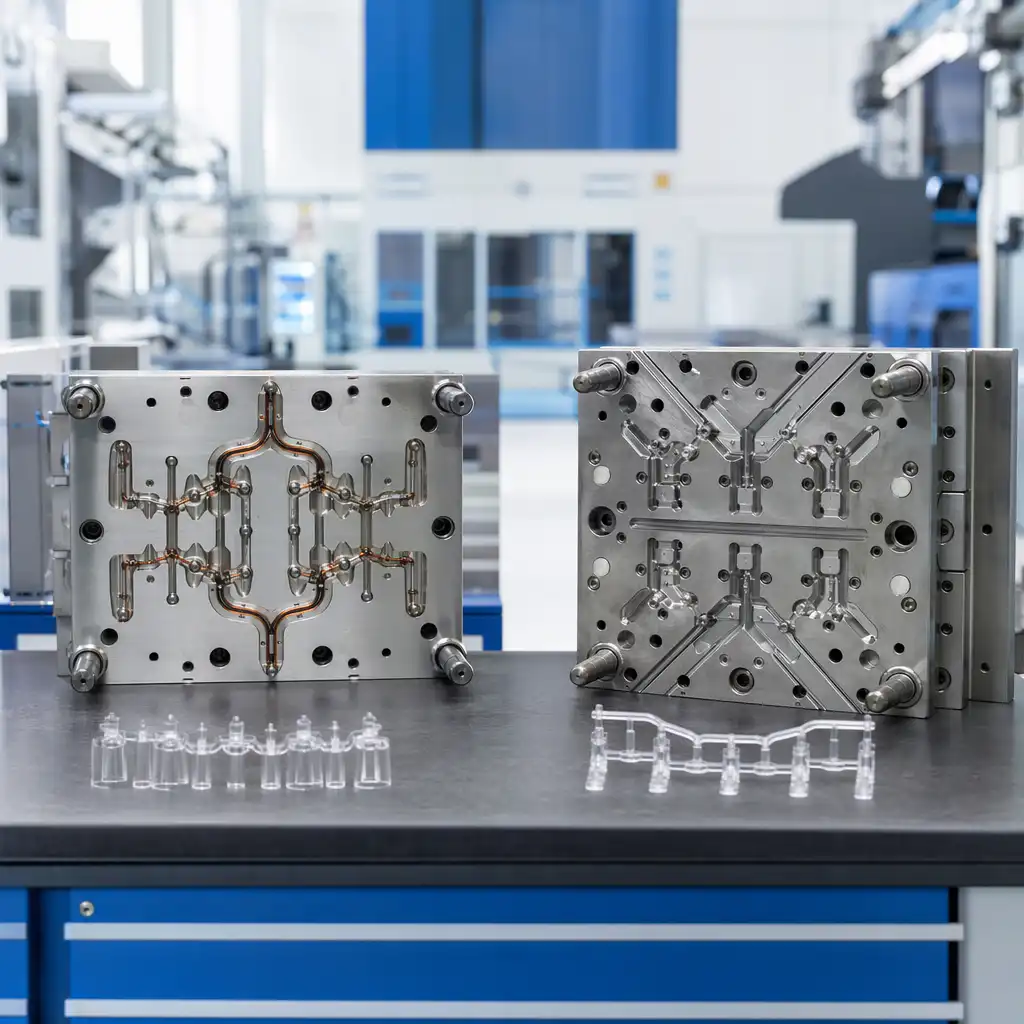
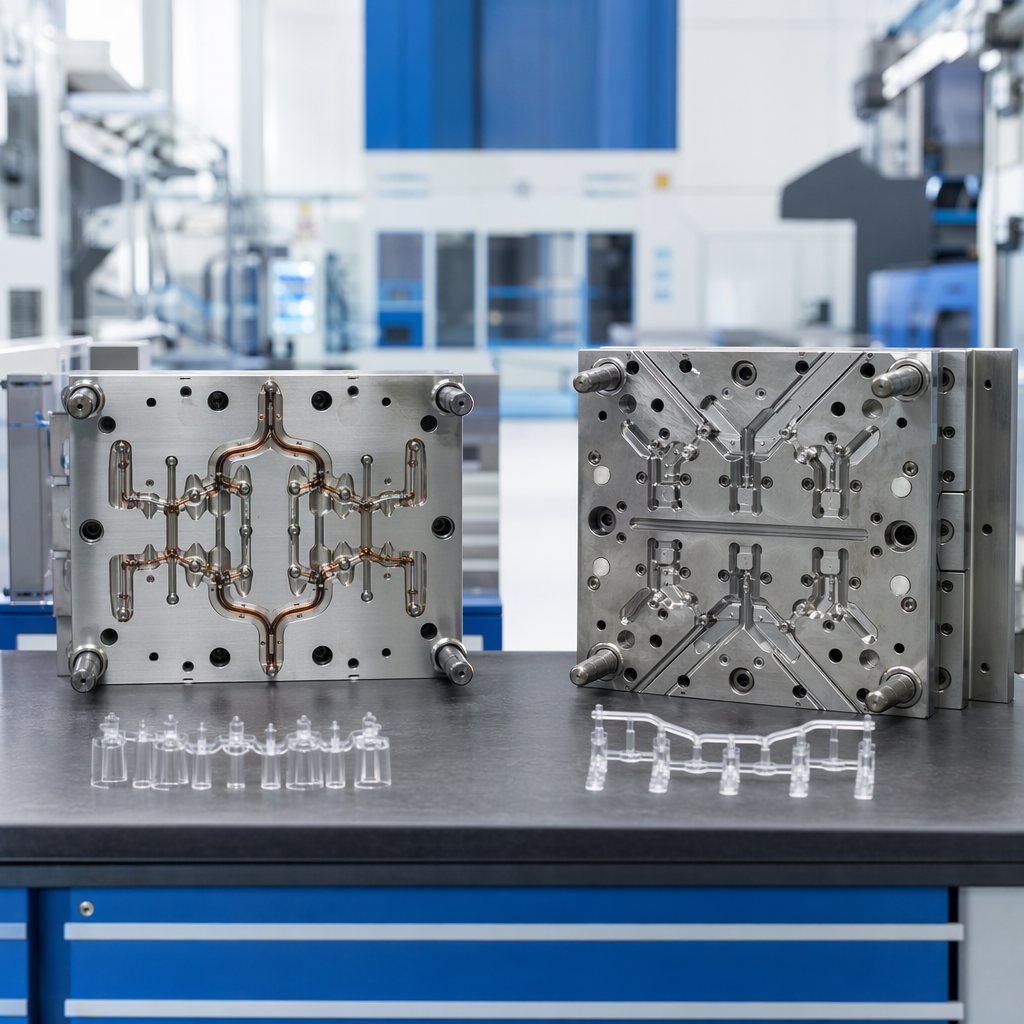
The runner system delivers molten plastic from the injection machine nozzle to the mold cavity. Choosing between hot runner and cold runner technology impacts part cost, quality, and production efficiency.
Cold Runner Systems
In cold runner molds, the runner channel is part of the mold cavity and solidifies with each cycle.
Advantages
- Lower mold cost and simpler design
- Suitable for a wide range of materials
- Easy color changes
- No heated components to maintain
- Better for small production volumes
Disadvantages
- Runner waste (sprue, runners, gates)
- Longer cycle times due to runner cooling
- Post-molding degating required
- Higher material cost over time
Best Applications
- Low to medium volume production
- Multi-cavity molds with different part weights
- Materials sensitive to thermal degradation
- Frequent color changes
Hot Runner Systems
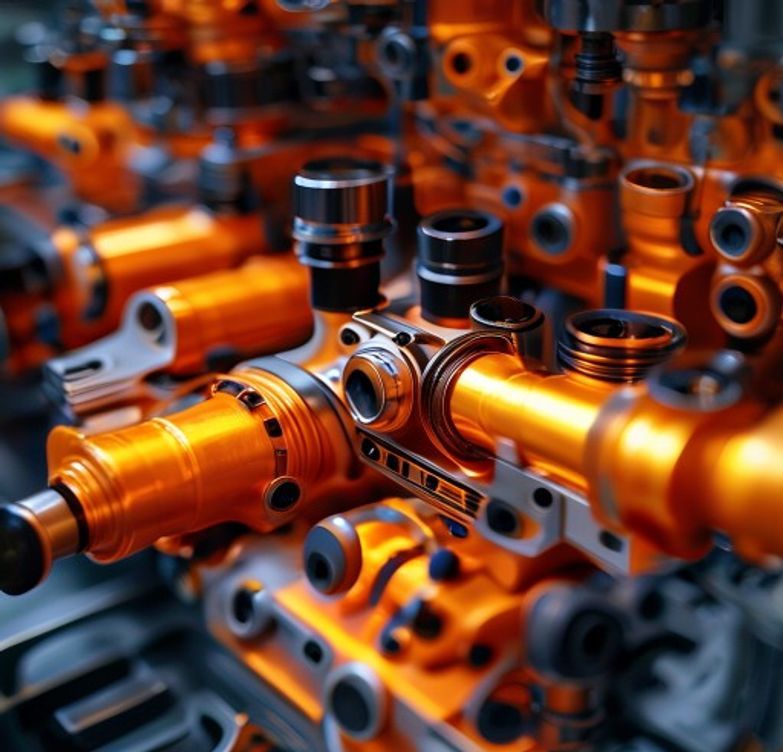
Hot runner systems maintain the runner in a molten state, eliminating solidified runner waste.
Advantages
- No runner waste (material savings)
- Faster cycle times
- Lower injection pressure required
- Better for gate location flexibility
- Improved part quality at gates
Disadvantages
- Higher initial mold cost (30-50% more)
- More complex maintenance
- Potential for thermal degradation
- Not suitable for all materials
- Color change takes longer
Best Applications
- High-volume production
- Expensive engineering materials
- Large multi-cavity molds
- Parts requiring gate vestige control
Cost Comparison
Selection Guidelines
Elija Cold Runner when:
- Production volume is low
- Budget constraints exist
- Frequent color changes required
- Material is heat-sensitive
Elija Hot Runner when:
- Production volume is high
- Material cost is significant
- Cycle time optimization needed
- Gate quality is critical
Conclusión
Both runner systems have valid applications. Evaluate total cost of ownership, production volume, and part requirements to make the optimal choice.
Recursos relacionados
- Food Grade Plastics Guide
- Nylon Moisture Treatment
- Moisture Effects on Nylon
- Nylon Printing Temperature Guide
- Mecanizado CNC Nylon
Recursos relacionados
- Food Grade Plastics Guide
- Nylon Moisture Treatment
- Moisture Effects on Nylon
- Nylon Printing Temperature Guide
- Mecanizado CNC Nylon
PREGUNTAS FRECUENTES
When does Hot Runner vs Cold Runner Systems — Choosing the Right Mold Technology make sense?
Hot Runner vs Cold Runner Systems — Choosing the Right Mold Technology makes sense when the part volume, material choice, geometry, and repeatability needs justify mold design and tooling investment.
What design factors matter most for Hot Runner vs Cold Runner Systems — Choosing the Right Mold Technology?
Wall thickness, ribs, bosses, draft angle, gate location, shrinkage, parting line, and ejection all affect molded part quality.
What information is needed before mold production?
The supplier should confirm the 3D model, material, expected annual volume, appearance requirements, tolerance needs, and any assembly or functional testing requirements.
What is the biggest risk in Hot Runner vs Cold Runner Systems — Choosing the Right Mold Technology?
The biggest risk is approving tooling before material behavior, shrinkage, flow, and part function are fully checked against the real application.

 English
 Dutch
Dutch German
 French
 Korean
 Russian
 Japanese
 Spanish
 Vietnamese
 Chinese
 Portuguese
 Arabic