
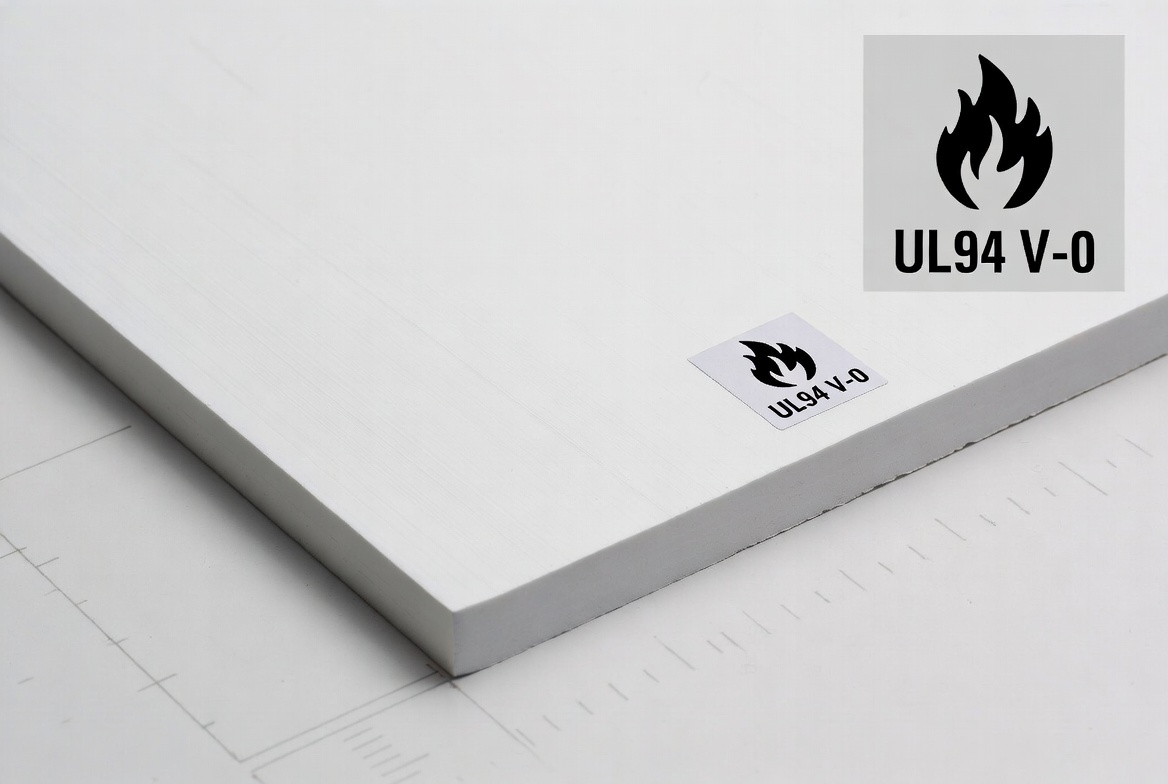
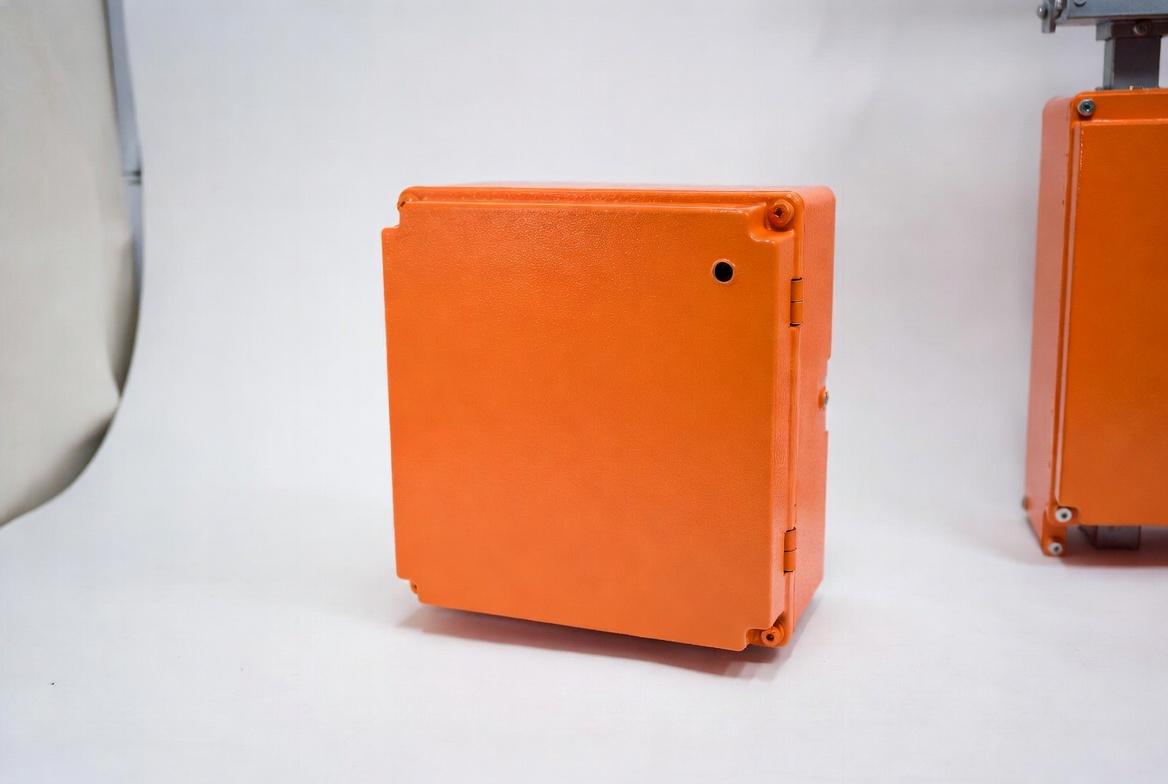
Most procurement teams looking for a glass-filled nylon 6 stop at PA6 GF30. It is the workhorse grade — good strength, decent stiffness, widely available. But if the part is going into an electrical enclosure, a circuit breaker housing, a connector body, or any component that faces a potential ignition source, standard PA6 GF30 is not enough. You need flame retardancy. And the combination — glass fiber reinforcement plus a UL 94 V-0 rating — requires a specialized compound: PA6 GF30 FR V0.
This grade sits at the intersection of two demanding sets of requirements: the mechanical performance that comes from 30% glass fiber, and the fire safety compliance that comes from carefully selected flame retardant additives. Getting both right in one compound is harder than it sounds. This article covers what PA6 GF30 FR V0 is, how the flame retardant chemistry works, what property trade-offs to expect, and how to specify it correctly for your application.
What Does PA6 GF30 FR V0 Actually Mean?
Breaking down the nomenclature:
- PA6 — Polyamide 6 (Nylon 6), the base polymer matrix
- GF30 — 30% glass fiber reinforcement by weight. This provides the mechanical backbone: tensile strength in the 130-160 MPa range and flexural modulus around 8-9 GPa.
- FR — Flame retardant additives are present in the compound
- V0 — The material achieves a UL 94 V-0 rating at the tested thickness (typically 0.8 mm, 1.6 mm, or 3.2 mm — always verify the specific thickness on the UL Yellow Card)
A UL 94 V-0 rating means that when a standard test flame is applied to a vertically oriented specimen twice for 10 seconds each, the specimen self-extinguishes within 10 seconds after each flame application, and the total afterflame time across 5 specimens does not exceed 50 seconds. No flaming drips are permitted. This is the most stringent of the three common UL 94 vertical burn ratings (V-2, V-1, V-0).
How Flame Retardancy Works in PA6
PA6 is not inherently flame retardant. It has an LOI (Limiting Oxygen Index) around 24-26%, which means it will burn in normal atmospheric conditions (21% O2). Without FR additives, PA6 GF30 burns with a yellow flame, produces drips of burning polymer, and does not self-extinguish.
Two main chemical approaches are used to achieve V-0 in PA6:
Halogenated FR Systems (Brominated)
Brominated flame retardants — typically brominated polystyrene or brominated epoxy oligomers — work in the gas phase. When the polymer heats up, the bromine compounds release HBr radicals that interfere with the free-radical chain reaction of combustion. They are highly effective at low loadings (10-18% by weight) and have minimal impact on mechanical properties. The trade-off is environmental: halogenated flame retardants face increasing regulatory pressure, particularly in Europe under REACH and the WEEE directive. Some are restricted or phased out entirely.
Halogen-Free FR Systems (Phosphorus/Nitrogen Based)
Halogen-free flame retardants — most commonly phosphorus-based compounds such as aluminum diethyl phosphinate (DEPAL) combined with nitrogen synergists like melamine polyphosphate (MPP) — work primarily in the condensed phase. They promote char formation: a stable carbonaceous layer that insulates the underlying polymer from heat and oxygen. These systems are preferred for electrical and electronics applications where halogen-free specifications are mandated (IEC 61249-2-21, many OEM internal standards). The downside: higher loading is required (18-25%), which reduces tensile strength and impact resistance more than brominated alternatives. They also tend to be more expensive.
| FR System | Typical Loading | Effect on Tensile Strength | Effect on Impact | Regulatory Profile | Coût |
|---|---|---|---|---|---|
| Brominated + Sb2O3 synergist | 12-18% | -5 to -10% vs non-FR GF30 | -10 à -20% | Restricted in some markets | Plus bas |
| Halogen-free (DEPAL + MPP) | 18-25% | -15 to -25% vs non-FR GF30 | -20 to -35% | Preferred for EU, electronics | Plus élevé |
| Red phosphorus | 5-10% | -3 to -8% | -5 to -15% | Good; phosphine odor risk | Moyen |
Property Profile: PA6 GF30 FR V0 vs Standard PA6 GF30
Adding flame retardants to a glass-filled compound comes with real property trade-offs. The FR additive particles act as stress concentrators, reducing tensile strength and especially impact toughness. They also increase density and can affect processing behavior. Here is what you should expect:
| Propriété | PA6 GF30 (Standard) | PA6 GF30 FR V0 (Halogen-Free) | PA6 GF30 FR V0 (Brominated) | Notes |
|---|---|---|---|---|
| Tensile Strength (MPa, dry) | 170-190 | 130-150 | 150-170 | Halogen-free takes a bigger hit |
| Module de flexion (GPa) | 8-10 | 8-10 | 8-10 | Modulus is largely preserved |
| Notched Izod (kJ/m2) | 10-15 | 6-9 | 8-12 | Impact is where FR hurts most |
| HDT at 1.8 MPa (C) | 195-205 | 185-200 | 190-205 | Slight reduction, still good |
| Density (g/cm3) | 1.36-1.38 | 1.45-1.55 | 1.42-1.50 | FR additives are dense |
| UL 94 Rating (0.8 mm) | HB (burns) | V-0 | V-0 | This is the point of the FR grade |
| CTI (Comparative Tracking Index) | 500-600 V | 550-600 V | 250-400 V | Brominated FR reduces CTI significantly |
| Color options | Natural, black, colors | Natural (white/cream), black | Natural, black | FR grades have limited color range |
Critical Application Requirements
Electrical Enclosures and Circuit Breakers
This is the largest application category for PA6 GF30 FR V0. Miniature circuit breaker (MCB) housings, residual current device (RCD) bodies, and electrical distribution box components must meet both structural requirements (they hold live electrical contacts under spring pressure) and fire safety requirements (a fault must not propagate fire outside the enclosure). The material must also pass glow wire testing per IEC 60695-2-11 — typically 750 C or 850 C glow wire ignition temperature (GWIT) — and have sufficient CTI to prevent tracking failures between live parts.
Automotive Electrical Components
Under-hood fuse boxes, relay housings, and battery management system (BMS) enclosures in electric vehicles increasingly specify PA6 GF30 FR V0. The material must withstand continuous use temperatures of 120-140 C, resist automotive fluids (engine oil, brake fluid, coolant), and pass stringent OEM flammability standards that go beyond UL 94. Many automotive OEMs now require halogen-free FR solutions, which points toward phosphorus/nitrogen-based systems despite their higher cost and lower mechanical properties.
Industrial Connectors and Terminal Blocks
Heavy-duty industrial connectors (Harting, Wieland, Ilme style) use PA6 GF30 FR V0 for their insulating bodies. The material must hold metal contacts with precise dimensional accuracy, resist creep under continuous clamping force, and prevent fire propagation in the event of an electrical fault. V-0 at 1.6 mm wall thickness is the typical requirement. Halogen-free is increasingly specified for railway and tunnel applications where smoke toxicity is a concern.
Power Tool Housings
Angle grinder bodies, drill housings, and circular saw guards face a dual abuse of mechanical impact and electrical fault risk. The motor sits inside a plastic housing inches from the operator’s hands. PA6 GF30 FR V0 provides the structural integrity to survive drops from 1 meter onto concrete while ensuring that an internal short-circuit does not turn the tool into a fire hazard. Impact-modified FR grades (PA6 GF30 HI FR V0) are sometimes specified for these applications, though the combination of high impact and V-0 is an expensive compounding challenge.
Specifying PA6 GF30 FR V0 Correctly
Ordering “PA6 GF30 V-0” is not specific enough to get the right material. Here is what the purchase specification should include:
- UL 94 rating and thickness: V-0 at 0.8 mm, 1.6 mm, or 3.2 mm? The thinner the wall at which V-0 is achieved, the more aggressive the FR package — and the more expensive the material.
- Halogen-free required?: If yes, specify “halogen-free per IEC 61249-2-21” or the relevant OEM standard. If brominated is acceptable, note any restrictions (e.g., “no PBB/PBDE, decaBDE acceptable”).
- Glow wire requirement: GWIT 750 C or 850 C? Glow wire flammability index (GWFI) requirements?
- CTI requirement: Minimum Comparative Tracking Index. 400 V is common for general electrical; 600 V may be required for higher-voltage applications.
- Couleur: Natural (undyed) compounds are standard for FR grades because pigments can interfere with FR performance. Black is the most common colored option. Other colors require specific FR-compatible pigment systems.
- Heat aging requirement: For under-hood automotive or continuous-use electrical, specify the target lifetime at temperature (e.g., “1000 hours at 140 C, >50% tensile retention”).
Processing PA6 GF30 FR V0
Flame-retardant PA6 compounds require more careful processing than standard GF grades:
- Séchage: Moisture at the levels that cause cosmetic issues in unfilled PA6 can cause FR additive degradation in FR grades. Target moisture below 0.08% before molding. Dry at 80 C for 4-6 hours minimum.
- Melt temperature: Stay within 240-260 C at the nozzle. Exceeding 270 C risks thermal degradation of halogen-free FR additives (phosphinates begin to decompose) and can cause corrosion issues with halogenated systems (HBr release at high temperatures).
- Residence time: Minimize. FR compounds degrade faster in the melt than standard grades. If the machine stops for more than 10 minutes, purge the barrel.
- Température du moule: 80-100 C. The higher end of this range promotes better surface finish and crystallinity, which is important for achieving the specified mechanical and electrical properties.
- Corrosion protection: Halogenated FR grades generate trace acidic byproducts. Hardened screws, bimetallic barrels, and corrosion-resistant mold steels (e.g., Stavax ESR or similar) are recommended for production tooling. Halogen-free grades are significantly less corrosive.
About Our Engineering Plastics Supply
As an ISO 9001 certified engineering plastics manufacturer and exporter, we supply PA6 GF30 FR V0 in both halogenated and halogen-free formulations. Standard grades carry UL 94 V-0 certification at 1.6 mm thickness with full Yellow Card documentation. Halogen-free grades meet IEC 61249-2-21 requirements and are suitable for European and North American electrical/electronics markets. Custom formulations — including impact-modified FR grades, specific glow wire ratings, and non-standard colors — are available with minimum order quantities. Every batch includes a certificate of analysis and, where applicable, UL Yellow Card reference. Contact our technical team to discuss your specific FR requirements and receive a material data sheet.
Questions fréquemment posées
What is the difference between V-2, V-1, and V-0?
All three are vertical burn ratings under UL 94. V-2 allows flaming drips, V-1 does not allow flaming drips but permits afterflame up to 30 seconds, V-0 allows maximum 10 seconds of afterflame per application and zero flaming drips. V-0 is the most stringent. For electrical enclosures and connectors, V-0 is the standard requirement.
Does PA6 GF30 FR V0 still have the same strength as standard PA6 GF30?
No. The flame retardant additives reduce tensile strength by approximately 10-25% and impact strength by 20-35% compared to standard PA6 GF30. The exact reduction depends on the FR system used and the loading level. Always design to the actual FR grade datasheet, not to generic PA6 GF30 properties.
Is PA6 GF30 FR V0 more expensive than standard PA6 GF30?
Yes. The flame retardant additive package adds cost, and the compound must be formulated and tested to meet UL certification requirements. Expect a 20-40% price premium over standard PA6 GF30, with halogen-free grades at the higher end of that range. The premium is justified by the regulatory and safety value of fire-rated materials in electrical applications.
Can PA6 GF30 FR V0 be colored?
Limited options. Natural (undyed, typically off-white or cream-colored) and black are standard. Other colors are possible but require careful pigment selection to avoid interference with the FR mechanism. Red phosphorus-based FR grades are limited to dark colors because red phosphorus itself is a dark red powder. Color matching on FR grades generally requires larger minimum order quantities.
Need PA6 GF30 FR V0 for your electrical or automotive application? Contact our technical team — specify your thickness, halogen-free requirement, and any glow wire or CTI targets. We will recommend the right grade and provide a datasheet.
 English
 Dutch
Dutch German
 French
 Korean
 Russian
 Japanese
 Spanish
 Vietnamese
 Chinese
 Portuguese
 Arabic