
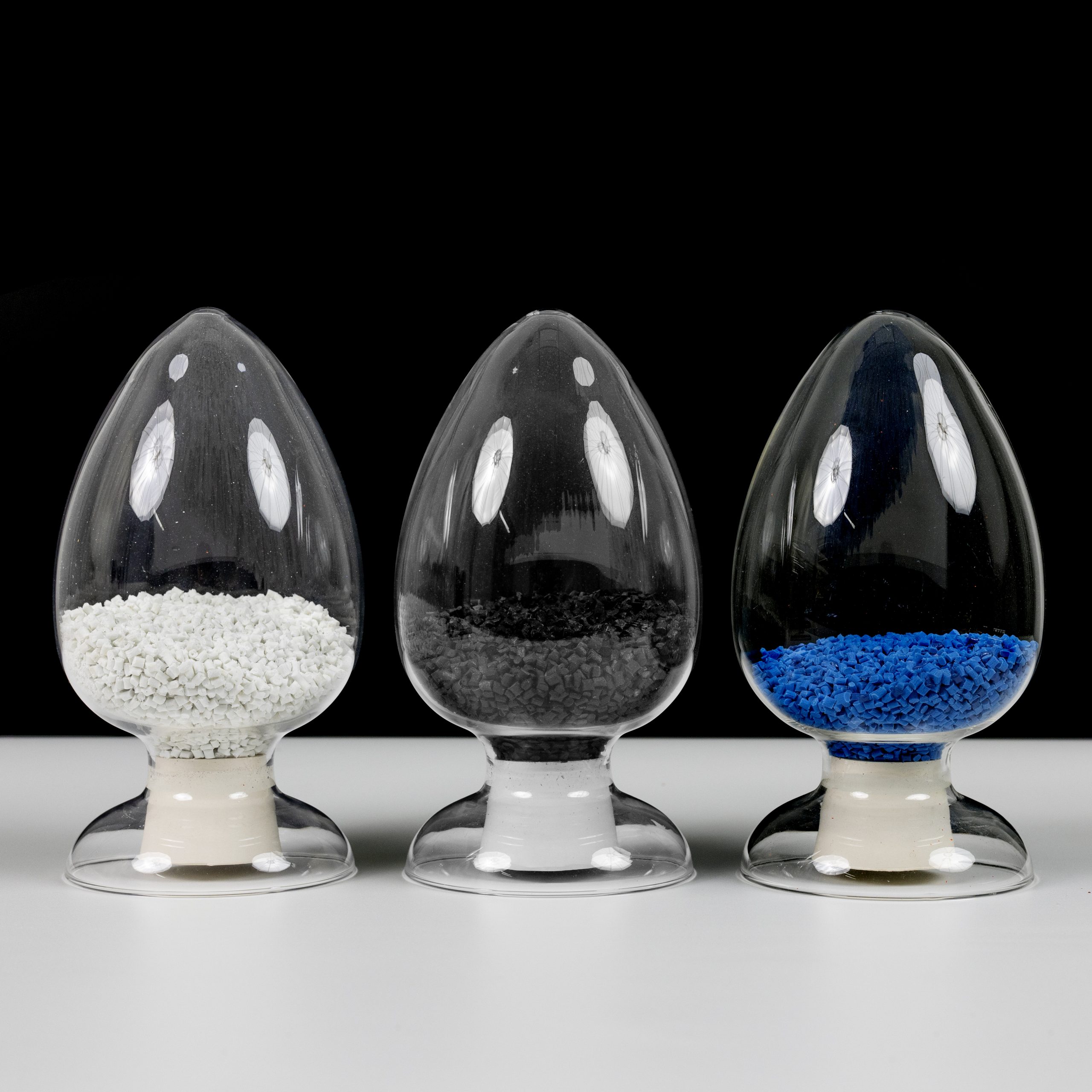
Introduction to PA6 Nylon
PA6, commonly known as Nylon 6 ou Polyamide 6, is a versatile and high-performance engineering thermoplastic. Produced through the ring-opening polymerization of caprolactam, it strikes an exceptional balance between mechanical strength, thermal stability, and processability. Its wide range of applications spans from automotive and electronics to consumer goods and industrial components.
For engineers and designers, PA6 offers a cost-effective material solution without significant compromises. Its adaptability through modifications like glass fiber reinforcement further extends its utility, making it a cornerstone material in modern manufacturing.
Key Properties and Characteristics of PA6
PA6 is renowned for its well-rounded properties, which include:
High mechanical strength and stiffness
Good impact resistance and toughness
Excellent wear and abrasion resistance
Resistance to oils, fuels, and many chemicals
Good electrical insulation properties
However, it’s also important to note that PA6 is hygroscopic, meaning it absorbs moisture from the environment, which can affect its dimensions and mechanical properties. Pre-drying before processing is essential.
PA6 vs. PA66: A Detailed Comparison
While PA6 and PA66 share many characteristics, key differences arise from their molecular structures. PA6 is derived from a single monomer (caprolactam), while PA66 is synthesized from two monomers (hexamethylenediamine and adipic acid). This gives PA66 a more symmetrical polymer chain and denser hydrogen bonding, leading to generally higher strength, rigidity, and heat resistance.
The following table provides a clear, side-by-side comparison of their fundamental properties to guide material selection.
| Propriété | PA6 (Nylon 6) | PA66 (Nylon 66) |
|---|---|---|
| Point de fusion | 215°C – 220°C | 260°C |
| Résistance à la traction | 84 MPa | 90 MPa |
| Module de flexion | 3580 MPa | 3240 MPa |
| Résistance aux chocs (Notched Izod) | 3.0 kJ/m² | 4.5 kJ/m² |
| Water Absorption (24h saturation) | 0.72% / Up to 6.6% at saturation | 0.6% / Up to 8% at saturation |
| Key Characteristics | Better ductility, impact resistance, and wider processing window | Higher strength, rigidity, and heat resistance |
Selection Insight:
Choose PA6 for applications requiring good toughness, cost-effectiveness, and where the operating temperature is within its limits
Choose PA66 for high-temperature environments and applications demanding higher mechanical strength and rigidity
At Nylon Plastique, we provide expert guidance and material customization to help you select the right grade, whether it’s standard PA6 or a high-performance variant, ensuring optimal performance for your specific application.
Glass Fiber Reinforced PA6: Enhancing Performance
A key advantage of PA6 is its excellent compatibility with reinforcements like glass fibers. Adding glass fibers significantly improves strength, stiffness, dimensional stability, and heat resistance while reducing moisture absorption and shrinkage.
Comparison of Common Glass Fiber Reinforced PA6 Grades
Different glass fiber content caters to different performance requirements. The table below compares some standard reinforced grades.
| Property / Grade | Unreinforced PA6 | PA6 GF15 | PA6 GF30 |
|---|---|---|---|
| Contenu en fibres de verre | 0% | 15% | 30% |
| Résistance à la traction (MPa) | 84 | 70 | 125-130 |
| Module de flexion (MPa) | 3,300 | 3,426 | 5,218 |
| HDT @ 1.8 MPa (°C) | 80 | 165 | 190 |
| Notched Izod Impact (J/m) | 45 | 52 | 70 |
Application Examples:
PA6 GF30: This is a widely used grade for structural components like engine covers, intake manifolds, gears, bearings, and electrical connectors. Its high strength and heat resistance make it suitable for demanding environments.
Other Grades: Variants like PA6 GF50 offer even higher stiffness and strength for extreme load-bearing applications, while combinations with additives like glass beads can improve surface finish and impact resistance.
Our capability at Nylon Plastique includes customizing these reinforced compounds to meet your specific mechanical, thermal, and regulatory requirements.
Processing and Manufacturing of PA6
PA6 can be processed using most common thermoplastic methods. Key considerations include:
Séchage: Essential due to material’s hygroscopic nature. Typically dried at 80°C for 16 hours to achieve moisture content below 0.2%
Moulage par injection: Melt temperature is typically between 230-280°C for unreinforced grades and 250-300°C for reinforced grades
Extrusion: Used for producing films, filaments, and profiles
Impression 3D: Gaining popularity, especially with glass or carbon fiber reinforced filaments
For reliable and high-quality results, partnering with an experienced manufacturer is crucial. Explore our one-stop plastic injection molding services at Nylon Plastique, where we support you from design for manufacturability through to high-volume production, ensuring part quality and consistency.
Industry Applications of PA6
PA6’s balanced property profile makes it a material of choice across diverse sectors.
Automobile: Used in both interior and under-hood components – especially in glass-reinforced grades. Its weight reduction benefits contribute to improved fuel efficiency
Électricité et électronique: Ideal for connectors, switches, circuit breakers, and appliance housings due to its good insulation properties, heat resistance, and flame retardancy
Biens de consommation et appareils ménagers: Found in power tool housings, sports equipment, and components for washing machines and air conditioners
Machines industrielles: Used for manufacturing gears, bearings, and conveyor belt components
Textiles: PA6 is a fundamental material for producing synthetic fibers


 English
 Dutch
Dutch German
 French
 Korean
 Russian
 Japanese
 Spanish
 Vietnamese
 Chinese
 Portuguese
 Arabic