
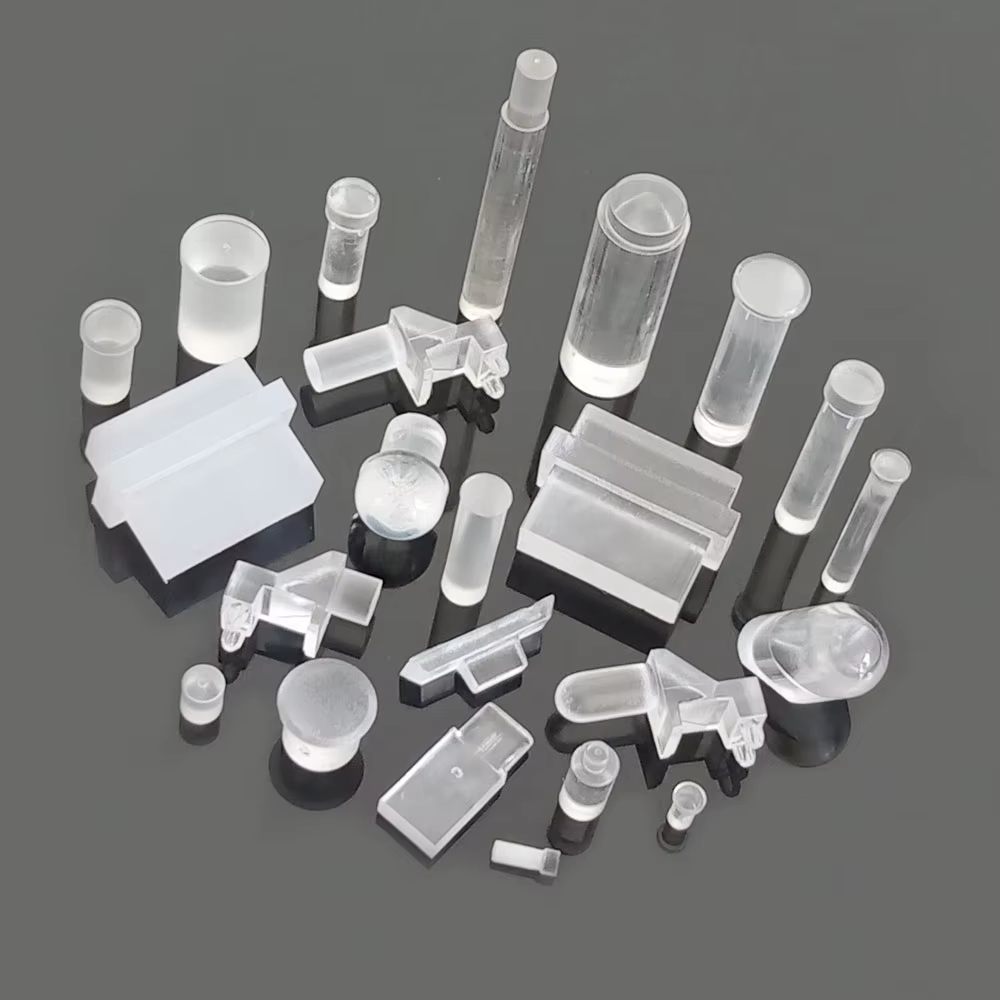
A plastic LED light guide pipe (also known as a light pipe or light guide) is an optical component designed to transmit light from an LED or other source to a desired location, often across challenging geometries or distances. Made from transparent polymers such as polycarbonate (PC) or acrylic (PMMA), these components enable uniform, efficient, and reliable light distribution in countless applications—from automotive dashboards and interior ambient lighting to electronic devices, medical equipment, and architectural illumination.
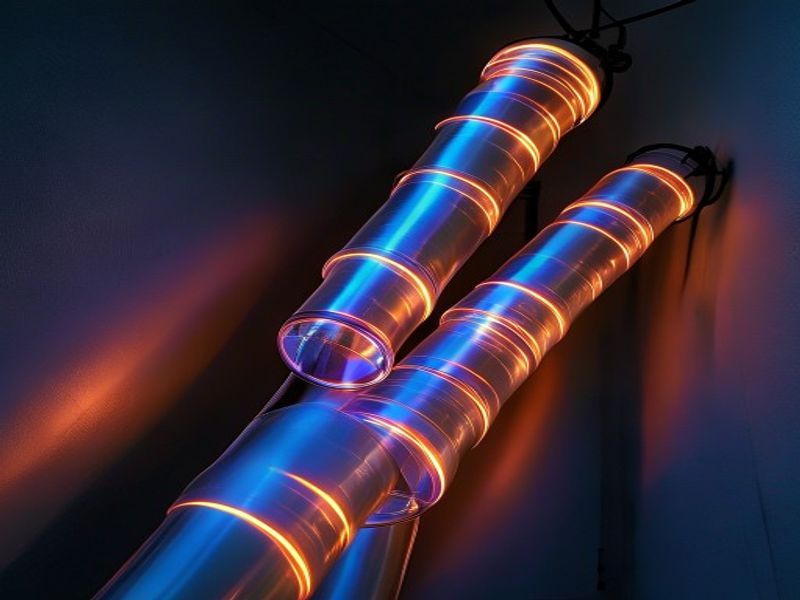

Injection molding is the preferred manufacturing process for light guide pipes because it combines design freedom with high-volume cost efficiency while delivering the optical-grade surface finish required for total internal reflection (TIR). This guide explores the materials, manufacturing processes, applications, and key considerations for sourcing high-quality plastic light guide pipes.
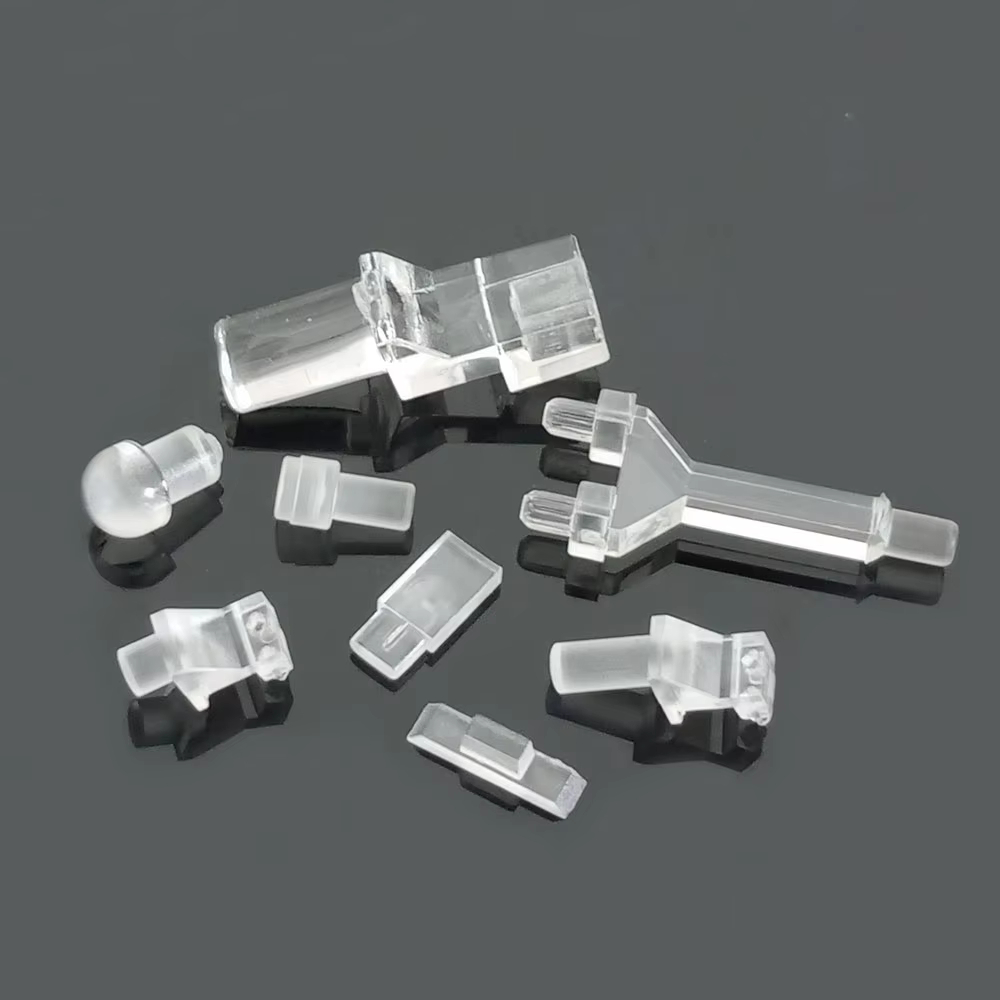
How Light Guide Pipes Work: The Principle of Total Internal Reflection
A light guide pipe relies on the principle of total internal reflection (TIR). When light enters a transparent medium (such as acrylic or polycarbonate) at a shallow angle, it reflects internally off the walls of the pipe rather than escaping. This allows light to travel long distances with minimal loss.
For a light pipe to function effectively, several conditions must be met:
- Optically smooth surfaces: Any roughness or contamination causes light scattering and reduces transmission efficiency.
- High material purity: Contaminants or micro‑cavities inside the material also scatter light, creating “hot spots” or uneven illumination.
- Precision micro‑structures: Many light guides feature prism‑like micro‑patterns that extract light at specific points along the pipe, creating a uniform “seamless light” effect.
- Mirror‑grade mold finishing: Mold surfaces must be polished to SPI A‑1 or A‑0 standards to minimize surface scatter and maximize reflection efficiency.
Key Materials for Plastic LED Light Guide Pipes
The choice of material determines the optical performance, durability, and cost of a light guide pipe. Two materials dominate the market.
| Propriété | PMMA (Acrylique) | Polycarbonate (PC) |
|---|---|---|
| Light Transmission | Up to 92% | ~88–90% |
| Refractive Index | ~1.49 | ~1.585 |
| Résistance aux chocs | Moderate (brittle) | Excellent (tough) |
| Heat Resistance | ~80°C | Up to 120°C |
| UV Resistance | Excellent (inherent) | Requires UV stabilizers |
| Coût | Plus bas | Plus élevé |
| Applications typiques | Indoor electronics, dashboard indicators, general‑purpose lighting | Automotive exteriors, outdoor lighting, rugged industrial environments |
PMMA (Acrylic / PLEXIGLAS®)
PMMA offers exceptional optical clarity with up to 92% light transmission, making it ideal for applications requiring high brightness and color fidelity. It has excellent UV resistance and is cost‑effective. However, PMMA is more brittle than PC and scratches more easily, which makes it best suited for indoor or protected environments.
Polycarbonate (PC / Makrolon® / LEXAN®)
PC light pipes are engineered for durability and resilience. While they transmit slightly less light (typically 88–90%), their superior impact strength and thermal stability make them ideal for rugged environments such as automotive exteriors, outdoor signage, and industrial machinery. PC also offers excellent flame retardancy (UL94 V‑0 grades).
High‑Performance Alternatives (COC and COP)
For specialized applications requiring ultra‑high purity, very low birefringence, or superior chemical resistance, cyclic olefin copolymers (COC, e.g., TOPAS®) and cyclic olefin polymers (COP, e.g., ZEONEX®) are available. These materials are used in high‑precision optical systems, medical devices, and lab‑on‑a‑chip applications, though they carry a higher cost.
The Injection Molding Process for Light Guide Pipes
Producing high‑quality light guide pipes requires advanced injection molding techniques. Unlike standard plastic parts, optical components demand exceptional material homogeneity, ultra‑smooth surface reproduction, and complete elimination of contaminants and micro‑cavities.
1. Material Drying and Handling
Optical‑grade resins must be thoroughly dried before processing to prevent moisture‑induced defects such as splay marks or bubbles. High‑performance dryers (e.g., desiccant or compressed air dryers) are essential.
2. Precision Injection Molding
Modern all‑electric injection molding machines (e.g., Engel e‑motion series) provide the precision and stability required for optical components. Key process parameters include:
- Nozzle temperature: Typically 220–260°C for PMMA, 260–300°C for PC
- Température du moule : Controlled between 60–100°C depending on material and part geometry
- Injection speed: Slow to moderate to prevent flow marks and jetting
- Hold pressure: Optimized to compensate for shrinkage without inducing residual stress
Advanced techniques such as starve‑feeding (reducing the amount of granules fed to the screw) minimize shear forces on the melt, reducing material degradation and improving optical purity. The melt cylinder may also be flushed with nitrogen to prevent oxidative degradation.
3. Micro‑Optical Pattern Replication
Many light guide pipes incorporate micro‑prisms or light‑outcoupling structures on their surface to control light distribution. These features, with feature sizes often measured in micrometers, require high‑precision mold cores and optimized process conditions to achieve accurate replication without defects.
4. Thick‑Wall Molding Considerations
Automotive light guides often have wall thicknesses ranging from 5 mm to 15 mm. Thick‑wall molding presents unique challenges: longer cooling times, increased risk of internal voids and bubbles, and greater residual stress leading to birefringence. Specialized multi‑stage injection cycles and carefully designed cooling channels are required to eliminate internal bubbles and ensure the light path remains 100% transparent.
5. Surface Finish and Mold Polishing
The mold cavity must be polished to an optical mirror finish—typically SPI A‑1 or A‑0 standards—to minimize light scatter at the plastic‑air interface. Any surface roughness above approximately 25 nm can cause blue light to scatter, resulting in a yellowish tint.
Applications of Plastic LED Light Guide Pipes
Light guide pipes are used wherever light must be transmitted from a source to a desired location with minimal loss and uniform distribution.
Mentor GmbH’s M‑Tube flexible light guides, for example, can be up to 700 mm in length and operate at temperatures from -40°C to +70°C with a service life of approximately 50,000 hours—far exceeding traditional fluorescent or incandescent solutions.
Rigid vs. Flexible Light Guide Pipes
Quality Assurance for Optical Light Guide Pipes
Manufacturing light guide pipes demands rigorous quality controls:
- Optical testing: Each part is tested with an LED light source to measure correlated color temperature (CCT) and ensure consistent light output.
- Dimensional inspection: Tolerances of ±0.05 mm to ±0.1 mm are standard for critical optical surfaces.
- Surface finish verification: Surface roughness is measured to ensure it remains below the 25 nm threshold for optical clarity.
- Micro‑structure inspection: Optical prisms and extraction features are inspected for accurate replication.
- Environmental testing: Parts may be subjected to temperature cycling, UV exposure, and humidity testing to validate long‑term reliability.
Sourcing Considerations for Plastic LED Light Guide Pipes
When sourcing custom light guide pipes, consider the following:
| Facteur | Key Questions |
|---|---|
| Sélection des matériaux | Will the part be used indoors or outdoors? Does it require high impact resistance or is optical clarity the priority? |
| Length and Geometry | How long must the light travel? Are there bends or obstacles that require a flexible design? |
| Light Distribution Pattern | Do you need uniform illumination across the entire length, or extraction only at specific points? |
| Color and Brightness | What LED color and brightness level will be used? Does the material need to match a specific Kelvins of white or RGB output? |
| Mounting Method | Will the pipe be mounted via push‑fit lugs, adhesive, or retained in a housing? |
| Environmental Conditions | What is the operating temperature range? Will the part be exposed to UV, moisture, or chemicals? |
| Volume and Lead Time | What quantities are needed? Are you in the prototyping stage or ready for mass production? |
Customization Options for Plastic LED Light Guide Pipes
At Nylon Plastic, we offer comprehensive customization for light guide pipes:
- Material selection: PMMA (e.g., PLEXIGLAS® 8N), PC (e.g., Makrolon® LED grades, LEXAN® Optical), COC (TOPAS®), or COP (ZEONEX®)
- Geometry: Straight, curved, or flexible designs; round, square, or custom cross‑sections
- Light extraction features: Custom micro‑prism patterns to control light distribution and eliminate hot spots
- Surface finish: SPI A‑1 optical mirror finish, textured, or frosted surfaces
- Color matching: Pantone, RAL ou spécifications de couleurs personnalisées
- Mounting features: Push‑fit lugs, snap‑fit clips, adhesive pads, or custom retention features
- Assembly: Integration with PCB, LED placement, or complete sub‑assembly
FAQ: Plastic LED Light Guide Pipe
Q1: What is the difference between a light guide pipe and a fiber optic cable?
A : A light guide pipe is typically a solid, rigid or flexible polymer rod that transmits light via total internal reflection. It is used for short‑distance illumination (millimeters to a meter). Fiber optic cables are typically hair‑thin glass or plastic strands used for high‑bandwidth data transmission over long distances.
Q2: Can light guide pipes be used with RGB LEDs?
A : Yes. With proper material selection (high‑clarity PMMA or PC) and optimized extraction features, light guide pipes can transmit and mix red, green, and blue light to produce uniform color output.
Q3: How do you prevent “hot spots” in a light guide pipe?
A : Hot spots are prevented by engineering micro‑prism structures that extract light gradually along the pipe rather than all at once at the input end. A printed reflective strip along the tube also helps deliver even, diffused light.
Q4: What is the typical light transmission efficiency?
A : PMMA offers up to 92% transmission; PC offers 88–90%. Actual efficiency depends on part geometry, surface finish, and material purity.
Q5: Can light guide pipes be manufactured in very long lengths?
A : Yes. Rigid light guides can be produced up to 700 mm or more in a single molding shot. Flexible light guides can be manufactured in continuous lengths.
Q6: What file formats do you need to provide a quote?
A : We accept 3D CAD files in STEP (.stp), IGES (.igs), SolidWorks (.sldprt), Parasolid (.x_t), or STL (.stl) . For optical simulation, we can also work with light distribution specifications and optical simulation files.
Q7: Do you offer design assistance for light guide pipes?
A : Yes. Our engineering team provides Design for Manufacturability (DFM) analysis and optical simulation support to optimize light extraction features, material selection, and molding parameters.
Q8: What industries do you serve for light guide pipes?
A : We serve plusieurs secteurs d'activité including automotive, consumer electronics, medical devices, industrial equipment, aerospace, and architectural lighting.
Conclusion: Precision Optical Components for Uniform Illumination
A plastic LED light guide pipe is a sophisticated optical component that transforms how light is transmitted and distributed in modern products. Whether you need a rigid PC light guide for an automotive DRL, a flexible PMMA pipe for a wearable device, or a custom micro‑patterned guide for a medical display, precision injection molding delivers the optical clarity, dimensional accuracy, and consistency required for reliable performance.
Ready to illuminate your next project? Contact our engineering team today to discuss your light guide pipe requirements. From material selection and optical simulation to precision injection molding and quality testing, we provide end‑to‑end solutions integrated with our broader conception de produits , personnalisation des couleurs , et moulage par injection des capacités.

 English
 Dutch
Dutch German
 French
 Korean
 Russian
 Japanese
 Spanish
 Vietnamese
 Chinese
 Portuguese
 Arabic