
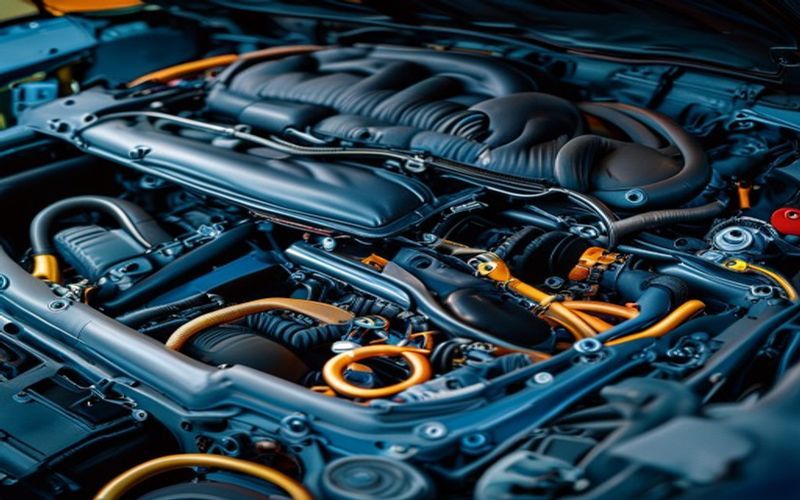
The Shift to Engineering Plastics in Automotive Design
Modern automotive engineering has fundamentally changed how engine compartments are designed. Where steel and aluminum once dominated, engineering plastics — particularly glass fiber and carbon fiber reinforced nylon — now account for over 40% of under-the-hood components in contemporary vehicles.
The driving factors are compelling: nylon components reduce weight by 30-50% compared to equivalent metal parts, lower manufacturing costs through injection molding consolidation, and enable design freedom that metal fabrication cannot match. For engine air intake manifolds, valve covers, fuel rails, and radiator end tanks, nylon is now the material of choice.
PA66-GF30 has been the workhorse automotive nylon since the 1980s, but newer grades — including heat-stabilized PA66, PA6-GF35, and carbon fiber reinforced nylon — are pushing further into applications previously requiring metal.
Temperature Zones: Matching Nylon Grades to Real Operating Conditions
Automotive under-hood temperatures vary dramatically by location. The same engine compartment can have areas exceeding 200°C near the exhaust manifold and others at -30°C overnight. Selecting the wrong nylon grade for a specific zone is one of the most common causes of premature failure.
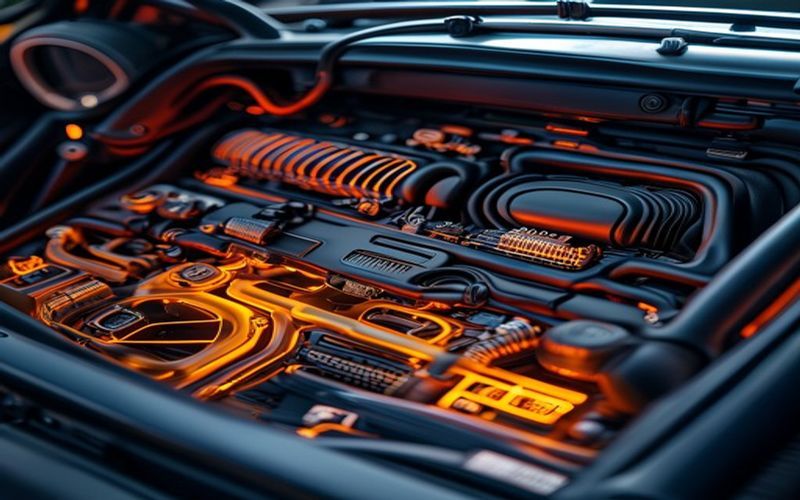
Understanding actual temperature profiles at each mounting location is essential for selecting the right material:
| Localisation | Température continue | Température maximale | Recommended Nylon |
|---|---|---|---|
| Près du bloc moteur | 120-150°C | 180°C | PA66-HT (heat-stabilized) |
| Collecteur d'admission | 130-180°C | 220°C | PA66-GF30 + heat stabilizer |
| Couvercle du moteur | 100-130°C | 160°C | PA66-GF30 |
| Zone du radiateur | 85-105°C | 130°C | PA66-GF30 or PA6-GF30 |
| Interior cabin | 70-90°C | 105°C | PA6 or PA66 unfilled |
| Sous-véhicule | -40 à 90°C | 120°C | PA12 (for fluid contact) or PA66 |
Key Under-Hood Nylon Applications
Modern automotive under-hood systems incorporate dozens of nylon components. The highest-volume and most technically demanding applications include:
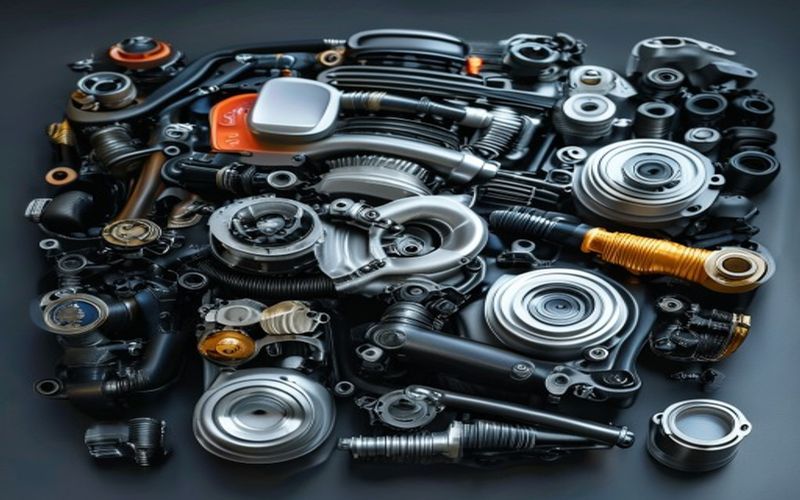
- Air intake manifolds: PA66-GF30 injection molded, replacing aluminum — 40% weight reduction, improved airflow geometry
- Engine valve covers: PA66-GF30 or PA6-GF30, oil-resistant, vibration-damping, often with integrated oil separator
- Fuel rails: PA66-GF30 or PA12, EN 594 certified for fuel contact, pressure-rated to 12+ bar
- Coolant reservoirs: PA66-GF30 or PA6-GF30, hot coolant resistant, vibration welded
- Cable harnesses and connectors: PA6 or PA66, UL 94 V-0 rated, color-coded for assembly
- Transmission components: PA66-GF30, ATF fluid resistant, fatigue-rated for gear actuation
Chemical Resistance in Engine Environments
Under-hood nylon is exposed to a complex cocktail of automotive fluids. The most critical exposures include:

- Engine oils: Conventional and synthetic motor oils at temperatures up to 150°C — PA66 and PA6 show excellent resistance to ASTM Reference Oil No. 3 at these temperatures
- Coolant (glycol/water mixtures): 50/50 ethylene glycol coolant at 100-130°C — PA66 and PA6 resist coolant but may swell slightly under prolonged immersion
- Transmission fluids: ATF and DCT fluids at 100-140°C — PA66-GF30 is standard for transmission oil pans and valve bodies
- Fuel (gasoline/ethanol blends): PA66 resists aromatic gasoline at 60°C; PA12 is preferred for direct fuel contact lines
KSAN provides material compatibility data sheets for all major automotive fluid types, tested per ASTM D543 and OEM-specific test protocols.
Vibration, Fatigue, and Long-Term Durability
Automotive under-hood components face millions of vibration cycles over their 15-year service life. Fatigue resistance is therefore a primary design criterion for all load-bearing nylon parts.
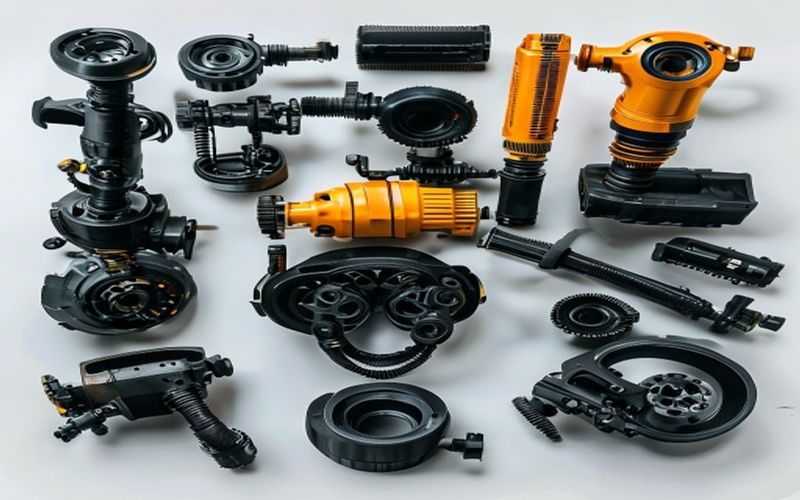
- Vibration fatigue: PA66-GF30 withstands 10^7 vibration cycles at stress levels up to 40% of ultimate tensile strength without failure
- Thermal cycling: From -40°C to +150°C thermal cycling causes micro-cracking in unreinforced nylon; GF reinforcement significantly improves thermal cycling resistance
- Creep resistance: PA66-GF30 maintains dimensional stability under sustained load at 130°C — critical for bracket and housing applications
- UV and oxidative aging: Under-hood parts are shielded from direct sunlight but exposed to engine bay heat oxidation; heat stabilizers (受阻胺光稳定剂/HALS) extend service life to 3,000+ hours at 150°C
FAQ
How do you know whether Nylon for Automotive Applications: Under-the-Hood Performance fits a part?
Nylon for Automotive Applications: Under-the-Hood Performance fits a part when its load capacity, temperature range, moisture exposure, wear behavior, and processing method match the real service conditions.
What properties should be checked for Nylon for Automotive Applications: Under-the-Hood Performance?
Vérifier la résistance, la rigidité, la résistance aux chocs, la résistance à la chaleur, l'absorption d'humidité, la stabilité dimensionnelle, le frottement, l'usure et la compatibilité chimique.
What is the biggest selection risk for Nylon for Automotive Applications: Under-the-Hood Performance?
Le plus grand risque est de choisir à partir d'une fiche technique sans tenir compte de l'environnement réel, de la méthode de traitement, de la géométrie de la pièce et de l'utilisation à long terme.
When should Nylon for Automotive Applications: Under-the-Hood Performance be tested before production?
Les essais sont recommandés lorsque la pièce est soumise à une charge, à la chaleur, à des produits chimiques, à l'humidité, à des tolérances serrées, à des exigences réglementaires ou à un nouvel environnement de travail.


 English
  Dutch
Dutch  German
  French
  Korean
  Russian
  Japanese
  Spanish
  Vietnamese
  Chinese
  Portuguese
  Arabic