


What is TPU?
TPU (Thermoplastic Polyurethane) is a polyurethane-based elastomer known for its excellent abrasion resistance, high elasticity, and durability. It’s widely used in industrial applications where mechanical wear is a concern.
Key Properties of TPU
- Shore Hardness: 60A to 95A
- Tensile Strength: 25-50 MPa
- Elongation at Break: 400-700%
- Abrasion Resistance: Excellent
- Chemical Resistance: Good resistance to oils, greases, many solvents
- Temperature Range: -40°C to +80°C
Common TPU Applications
- Industrial seals and gaskets
- Phone cases and protective covers
- Caster wheels and rollers
- Medical tubing and catheters
- Automotive cable jackets
- Vibration dampening mounts
What is TPE?
TPE (Thermoplastic Elastomer) is a broader category of elastomers combining rubber-like elasticity with plastic-like processability. TPE filaments are typically SBS or SEBS based.
Key Properties of TPE
- Shore Hardness: 30A to 90A
- Tensile Strength: 10-30 MPa
- Elongation at Break: 300-800%
- Abrasion Resistance: Moderate
- Chemical Resistance: Moderate
- Temperature Range: -40°C to +60°C
TPU vs TPE: Detailed Comparison
| Propriété | TPU | TPE |
|---|---|---|
| Hardness Range | 60A-95A | 30A-90A |
| Abrasion Resistance | Excellent | Moderate |
| Résistance chimique | Bon | Moderate |
| Print Difficulty | Moyen | Easy-Medium |
| Coût | Plus élevé | Plus bas |
| Durabilité | Haut | Moyen |
Printing TPU: Best Practices
Recommended Settings
- Nozzle Temperature: 220-250°C
- Bed Temperature: 50-60°C
- Print Speed: 15-35 mm/s
- Retraction: 1-2mm at 20-25mm/s
- Cooling Fan: 30-70%
Critical Tips
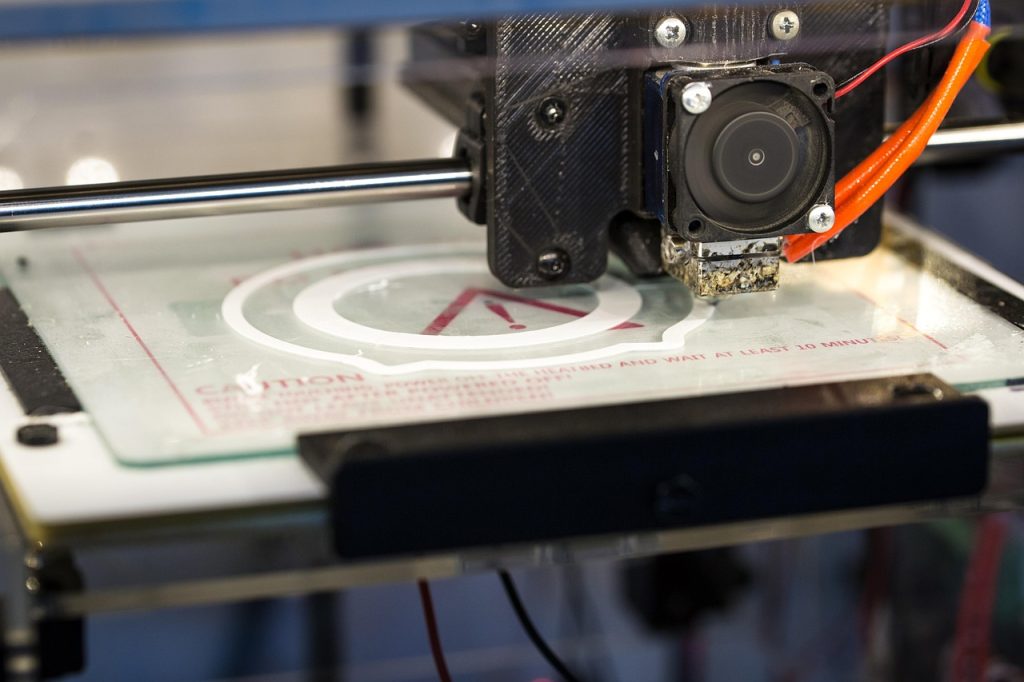
- Use a direct drive extruder for best results
- Dry filament at 80°C for 4-6 hours before printing
- Print slowly to avoid filament buckling
- Reduce retraction to prevent clogs
- Use 0.5mm+ nozzle for easier extrusion
Printing TPE: Best Practices
Recommended Settings
- Nozzle Temperature: 200-230°C
- Bed Temperature: 40-50°C
- Print Speed: 20-40 mm/s
- Retraction: 0.5-2mm at 15-25mm/s
When to Choose TPU
Select TPU when your application requires:
- High wear resistance — gears, rollers, wheels
- Chemical exposure — seals in automotive/industrial environments
- Long-term durability — parts that must last years
- Higher operating temperatures — above 60°C
When to Choose TPE
Select TPE when your application requires:
- Very soft feel — Shore hardness below 70A
- Cost sensitivity — TPE is typically cheaper
- Simple prototypes — quick rubber-like parts
- Low mechanical stress — decorative or soft-touch items
Source Quality Flexible Materials
Nylonplastic is a specialized manufacturer established in 2005 with ISO9001/14001/45001 and IATF16949 certifications. We supply TPU and TPE filaments in various hardness grades.
FAQ
When is TPU vs TPE — Flexible 3D Printing Materials Compared a good option?
TPU vs TPE — Flexible 3D Printing Materials Compared is a good option when fast iteration, complex geometry, low tooling cost, or low-volume production is more important than molded-part unit cost.
What should be checked before choosing TPU vs TPE — Flexible 3D Printing Materials Compared?
Vérifier la taille de la pièce, les propriétés du matériau, l'état de surface, la tolérance dimensionnelle, l'exposition à la chaleur, la direction de la charge et la nécessité d'un post-traitement.
How does TPU vs TPE — Flexible 3D Printing Materials Compared compare with CNC machining?
L'impression 3D permet de créer rapidement des formes complexes, tandis que l'usinage CNC est souvent plus performant pour les surfaces précises, les tolérances plus étroites et les matériaux de qualité.
What affects the cost of TPU vs TPE — Flexible 3D Printing Materials Compared?
Le coût dépend du matériau, du volume de construction, du temps d'impression, de la hauteur des couches, de l'enlèvement du support, de la finition, de l'inspection et du nombre de pièces dans la construction.
TPU vs TPE — Frequently Asked Questions
Is TPU stronger than TPE?
Yes. TPU offers higher tensile strength (25-50 MPa vs 10-30 MPa for TPE) and significantly better abrasion resistance. Choose TPU for mechanically demanding applications.
Can I print TPU on a Bowden extruder?
It's possible but challenging. Use harder TPU (Shore 95A), print slowly (15-20 mm/s), and ensure smooth PTFE tubing. Direct drive is recommended for consistent results.
Where can I source quality TPU and TPE filament?
Nylonplastic supplies both TPU and TPE filaments with tight hardness tolerance. Contact us for free samples and bulk pricing.
 English
 Dutch
Dutch German
 French
 Korean
 Russian
 Japanese
 Spanish
 Vietnamese
 Chinese
 Portuguese
 Arabic