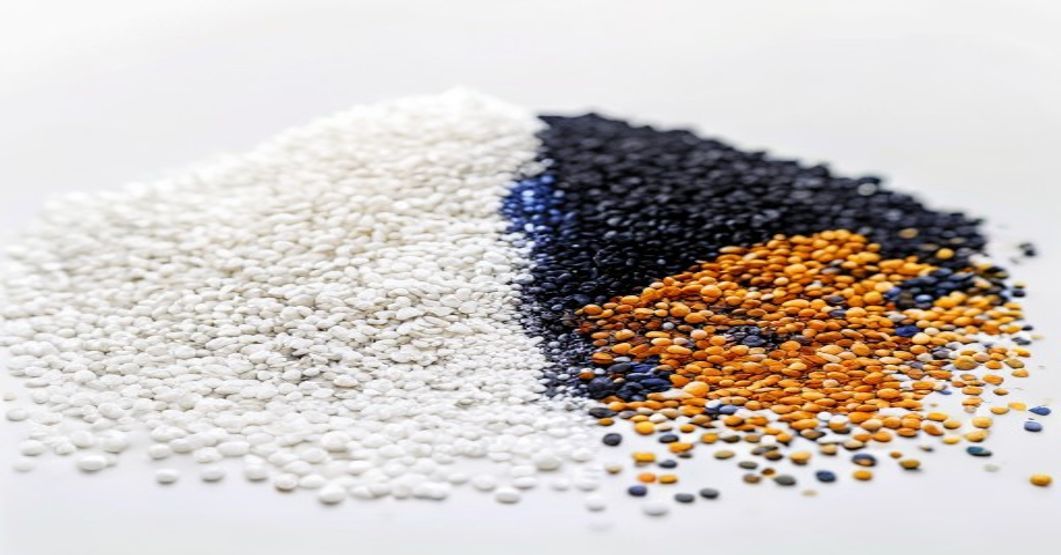
Nylon and polypropylene are two of the most widely used thermoplastics in manufacturing. While they may appear similar at first glance, their properties, costs, and ideal applications differ significantly.
Material Overview
Nylon (polyamide) is an engineering thermoplastic known for its strength, toughness, and heat resistance. Polypropylene (PP) is a commodity thermoplastic valued for its chemical resistance, low density, and cost-effectiveness.
Key Property Differences at a Glance
| プロパティ | Nylon (PA6) | ポリプロピレン(PP) |
|---|---|---|
| 密度 (g/cm³) | 1.13-1.15 | 0.90-0.91 |
| 引張強さ (MPa) | 70-85 | 25-40 |
| 融点 (°C) | 220 | 160-170 |
| Cost per kg (relative) | $$$ | $ |
Mechanical Performance
Nylon significantly outperforms polypropylene in mechanical properties. Nylon offers 2-3 times the tensile strength and substantially higher stiffness.
Fatigue and Wear Resistance
Nylon exhibits excellent fatigue resistance and self-lubricating properties, making it ideal for gears, bearings, and moving parts.
Thermal Properties
Nylon maintains its mechanical properties at significantly higher temperatures than polypropylene. While PP softens around 100°C, nylon (especially PA66) can operate continuously at 100-120°C.
耐薬品性
This is where polypropylene excels. PP has outstanding resistance to acids, bases, and many organic solvents. Nylon is susceptible to strong acids and certain solvents.
Moisture Behavior
Polypropylene is virtually hydrophobic—it absorbs almost no water. Nylon, in contrast, absorbs moisture from the environment, which can cause dimensional changes.
Processing and Manufacturing
射出成形
Both materials process well in injection molding: PP at 200-250°C with shorter cycles; Nylon at 230-300°C requiring careful drying.
Part Design Considerations
Polypropylene has higher shrinkage (1.5-2.5%) than nylon (0.8-1.5%), requiring more generous draft angles.
Cost Analysis
Polypropylene is one of the most economical thermoplastics available, typically costing 50-70% less than nylon per kilogram.
Application Guide
いつナイロンを選ぶか:
- High mechanical strength is required
- Parts will experience elevated temperatures
- Wear resistance matters
- Applications: automotive components, power tools, industrial gears
Choose Polypropylene When:
- Chemical resistance is a priority
- Cost is the primary driver
- Moisture exposure is unavoidable
- Applications: chemical containers, living hinges, food packaging
当社の能力
を超える。 300台のCNCマシン, を生産している。 毎日10,000個 という厳しい公差で ±0.005mm. .我々は受け入れる 1個からのMOQ, 納期は以下の通り。 24時間~15日間. 24時間以内にお見積もりいたします。.
よくあるご質問
How do you know whether Nylon vs Polypropylene: Material Selection Guide for Engineering Applications fits a part?
Nylon vs Polypropylene: Material Selection Guide for Engineering Applications fits a part when its load capacity, temperature range, moisture exposure, wear behavior, and processing method match the real service conditions.
What properties should be checked for Nylon vs Polypropylene: Material Selection Guide for Engineering Applications?
Check strength, stiffness, impact resistance, heat resistance, moisture absorption, dimensional stability, friction, wear, and chemical compatibility.
What is the biggest selection risk for Nylon vs Polypropylene: Material Selection Guide for Engineering Applications?
The biggest risk is choosing from a datasheet value without considering actual environment, processing method, part geometry, and long-term use.
When should Nylon vs Polypropylene: Material Selection Guide for Engineering Applications be tested before production?
Testing is recommended when the part faces load, heat, chemicals, moisture, tight tolerances, regulatory requirements, or a new operating environment.