Metal 3D printing has evolved from a prototyping curiosity to a production-ready technology. Aerospace, medical, and automotive industries now use metal additive manufacturing for end-use parts, pushing the boundaries of what’s possible in design and manufacturing.
Metal 3D Printing Technologies
Several technologies fall under the metal 3D printing umbrella, each with distinct characteristics:
DMLS(직접 금속 레이저 소결)
Developed by EOS, DMLS uses a laser to selectively sinter metal powder layer by layer. The process produces fully dense parts with mechanical properties comparable to wrought materials.
SLM(선택적 레이저 용융)
Similar to DMLS but fully melts the powder rather than sintering. Produces parts with slightly different microstructures. Used by several manufacturers including Renishaw and SLM Solutions.
EBM(전자 빔 용융)
Uses an electron beam in a vacuum environment. Higher energy efficiency and faster build rates than laser systems. Parts have a characteristic slightly rougher surface finish.
Bound Metal Deposition
Desktop Metal and Markforged offer systems that extrude bound metal filament, similar to FDM. Parts are then sintered in a furnace. More accessible than powder-based systems but with some limitations.
사용 가능한 자료
| 재료 | 속성 | 일반적인 애플리케이션 |
|---|---|---|
| Titanium (Ti64) | High strength-to-weight, biocompatible | Aerospace, medical implants |
| Aluminum (AlSi10Mg) | Lightweight, good thermal conductivity | Automotive, heat exchangers |
| Stainless Steel (316L) | Corrosion resistant, strong | Medical devices, food processing |
| Inconel (718) | Heat resistant, high strength at temperature | Turbine components, aerospace |
| 코발트 크롬 | Wear resistant, biocompatible | Dental, orthopedic implants |
Design Guidelines for Metal 3D Printing
Designing for metal additive manufacturing requires understanding the process constraints:
Support Structures
Most metal processes require supports to:
- Anchor the part to the build plate
- Support overhangs and internal features
- Conduct heat away from the melt pool
- Prevent warpage and residual stress
Minimum Features
- Wall thickness: 0.4-1.0mm minimum depending on material
- Hole diameter: 0.5mm minimum
- Pins/columns: 0.8mm diameter minimum
- Detail resolution: 0.1-0.2mm typical
Stress Relief Design
Metal printing generates significant thermal stress. Design considerations include:
- Avoid thick-to-thin transitions
- Use gradual geometry changes
- Consider self-supporting angles (typically 45°+)
- Plan for heat treatment after printing
Post-Processing Requirements
Metal printed parts almost always require post-processing:
Support Removal
Supports are typically removed mechanically (wire EDM, bandsaw, machining) or manually. Some advanced systems offer soluble supports for certain materials.
Heat Treatment
Stress relief and/or hot isostatic pressing (HIP) improve mechanical properties and relieve residual stress. Required for most structural applications.
Surface Finishing
As-printed surface roughness typically Ra 6-15μm. Options include:
- Machining for precision surfaces
- Polishing for aesthetic requirements
- Shot peening for fatigue improvement
- Coating for corrosion protection
산업 애플리케이션
항공우주
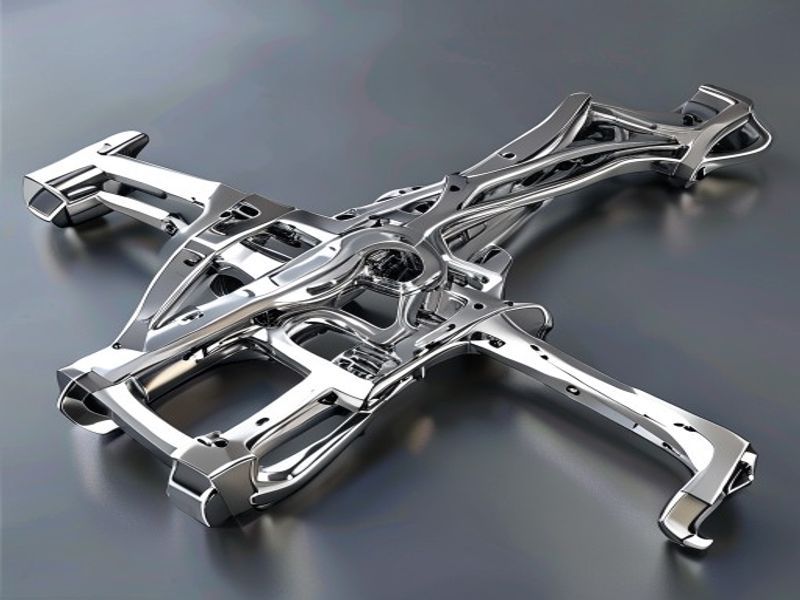
Complex brackets, fuel nozzles, and structural components. Weight reduction through optimized designs can save airlines millions in fuel costs over an aircraft’s lifetime.
의료
Patient-specific implants, surgical instruments, and dental prosthetics. Lattice structures promote bone ingrowth for orthopedic implants.
자동차
Oil and Gas
Downhole tools, valves, and repair of expensive components. Metal printing enables rapid replacement of obsolete parts.
Our Capabilities
With over 300 CNC machines, we produce more than 10,000 pieces daily with tolerances as tight as ±0.005mm. We accept MOQ from 1 piece, with delivery times ranging from 24 hours to 15 days. Whether you need a single prototype or thousands of production parts, we have the capacity and expertise to deliver. Get a quote within 24 hours.
자주 묻는 질문
When is Metal 3D Printing: Technologies, Materials, and Industrial Applications a good option?
Metal 3D Printing: Technologies, Materials, and Industrial Applications is a good option when fast iteration, complex geometry, low tooling cost, or low-volume production is more important than molded-part unit cost.
What should be checked before choosing Metal 3D Printing: Technologies, Materials, and Industrial Applications?
부품 크기, 재료 특성, 표면 마감, 치수 공차, 열 노출, 하중 방향, 후처리가 필요한지 여부를 확인합니다.
How does Metal 3D Printing: Technologies, Materials, and Industrial Applications compare with CNC machining?
3D 프린팅은 복잡한 형상을 빠르게 제작할 수 있는 반면, CNC 가공은 정밀한 표면, 엄격한 공차 및 생산 등급 재료에 더 적합한 경우가 많습니다.
What affects the cost of Metal 3D Printing: Technologies, Materials, and Industrial Applications?
비용은 재료, 빌드 볼륨, 프린트 시간, 레이어 높이, 서포트 제거, 마감, 검사 및 빌드 내 부품 수에 따라 달라집니다.