

Understanding Cycle Time
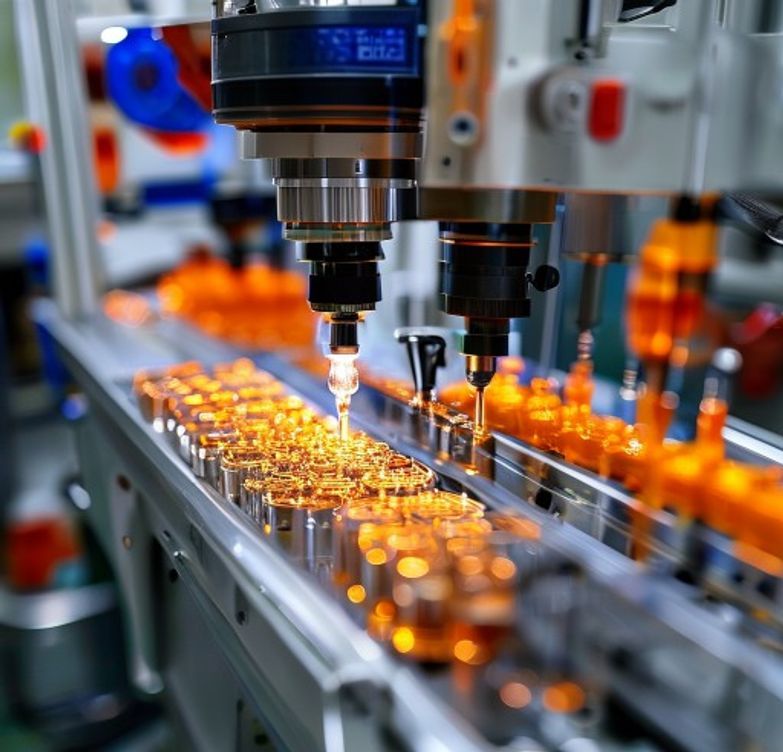
Cycle time directly impacts production cost and capacity. A 1-second reduction on a 100,000-part run saves over 27 hours of machine time. Understanding cycle time components enables targeted optimization.
Cycle Time Breakdown
| Phase | Typical % of Cycle |
|---|---|
| 주입 | 5-10% |
| Packing/Holding | 10-20% |
| Cooling | 50-70% |
| Mold Open/Close | 10-15% |
| Ejection | 5-10% |
Key Insight: Cooling dominates cycle time, offering the greatest optimization potential.
Cooling Time Optimization
Mold Design Improvements
- Optimize cooling channel layout for uniform cooling
- Use baffles and bubblers in deep cores
- Consider conformal cooling for complex parts
- Ensure adequate water flow (turbulent regime)
Process Adjustments
- Reduce mold temperature (balance with part quality)
- Use lower cooling temperature water
- Optimize packing time (not all cooling needs packing pressure)
재료 선택
- Choose materials with faster cooling characteristics
- Consider filled materials (cool faster)
- Evaluate crystalline vs amorphous materials
Injection Time Optimization
Mold Movement Time
- Use fast mold closing speeds with soft-close end
- Optimize ejection stroke length
- Consider robot-assisted part removal
- Implement simultaneous movements where possible
Advanced Optimization Techniques
Conformal Cooling
Channels follow part contour for uniform cooling:
- Up to 40% cooling time reduction
- Improved part quality (less warpage)
- Higher initial mold cost
- Requires advanced manufacturing (3D printing)
Hot Runner Systems
Eliminate runner cooling time:
- No runner solidification needed
- Significant savings for large runners
- Consider material sensitivity
Servo-Driven Systems
Replace hydraulic systems with electric:
- Faster, more precise movements
- Energy efficient
- Lower maintenance
Measurement and Analysis
- Use mold cavity pressure sensors
- Analyze cooling uniformity with thermal imaging
- Track cycle time with production monitoring
- Document improvements systematically
Common Mistakes
- Over-packing parts (wastes time and material)
- Excessive cooling time for safety margin
- Ignoring mold maintenance (reduces efficiency)
- Not validating part quality after optimization
결론
Focus on cooling time optimization for greatest impact. Balance cycle time reduction with part quality requirements. Document changes and validate results.
관련 리소스
자주 묻는 질문
When does Injection Molding Cycle Time Optimization — Boosting Production Efficiency make sense?
Injection Molding Cycle Time Optimization — Boosting Production Efficiency makes sense when the part volume, material choice, geometry, and repeatability needs justify mold design and tooling investment.
What design factors matter most for Injection Molding Cycle Time Optimization — Boosting Production Efficiency?
Wall thickness, ribs, bosses, draft angle, gate location, shrinkage, parting line, and ejection all affect molded part quality.
What information is needed before mold production?
The supplier should confirm the 3D model, material, expected annual volume, appearance requirements, tolerance needs, and any assembly or functional testing requirements.
What is the biggest risk in Injection Molding Cycle Time Optimization — Boosting Production Efficiency?
The biggest risk is approving tooling before material behavior, shrinkage, flow, and part function are fully checked against the real application.

 English
 Dutch
Dutch German
 French
 Korean
 Russian
 Japanese
 Spanish
 Vietnamese
 Chinese
 Portuguese
 Arabic