
High-Temperature Performance
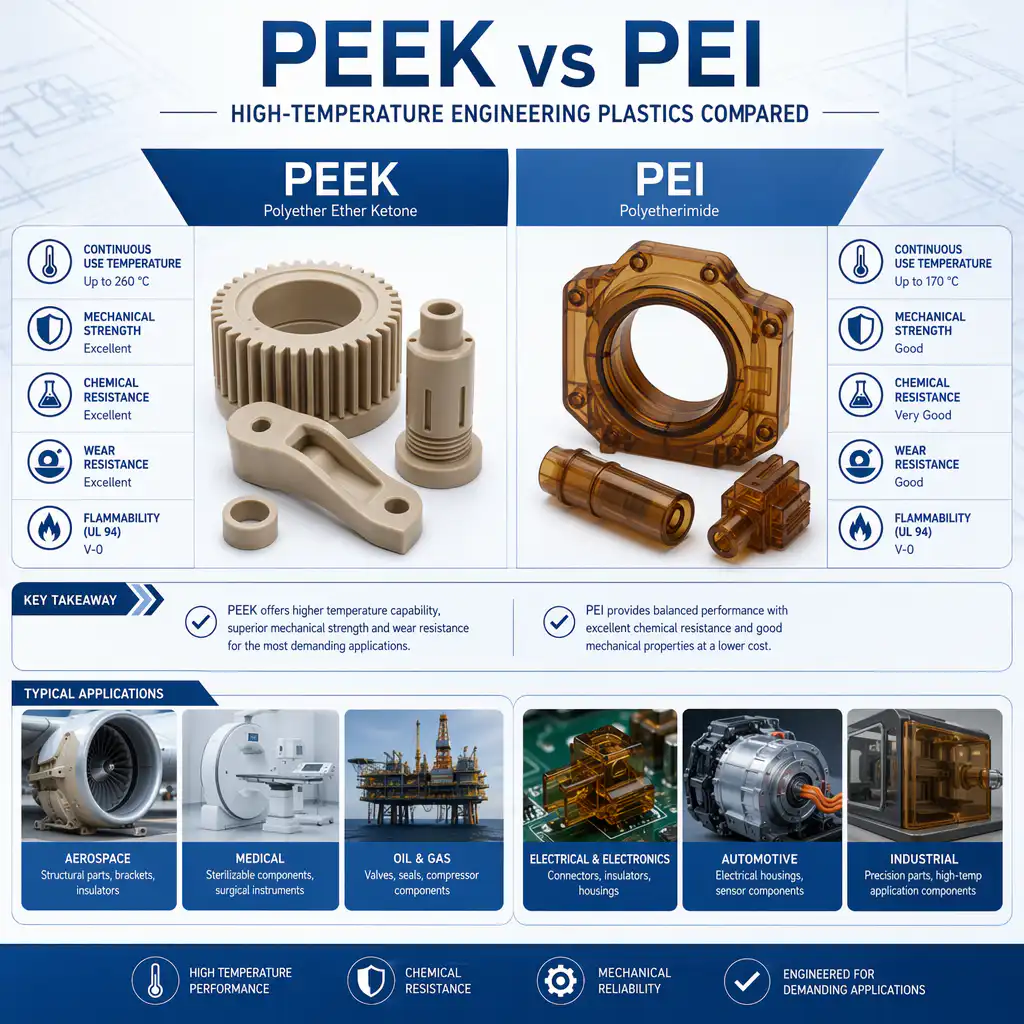
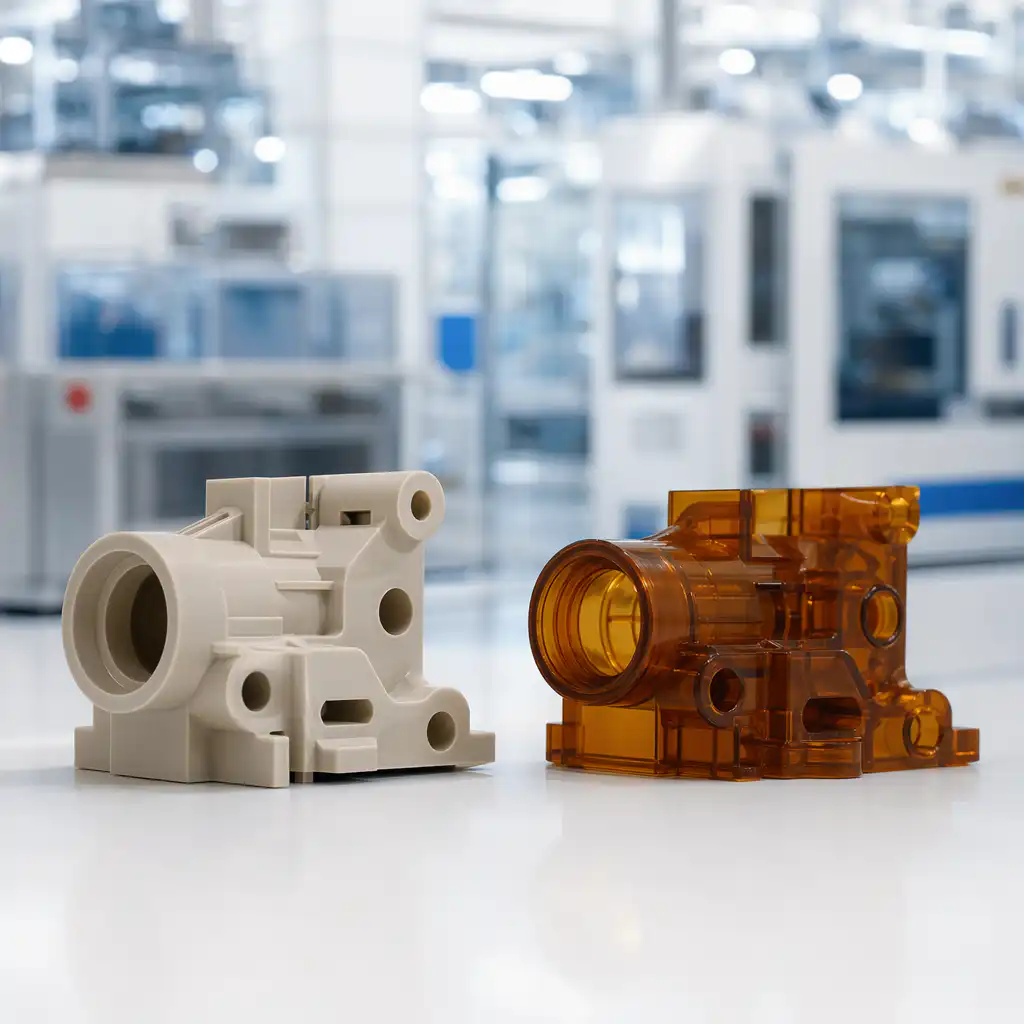
PEEK en PEI (Ultem) are leading high-temperature engineering plastics.
Key Differences
| Eigendom | PEEK | PEI |
|---|---|---|
| Continuous Use Temp | 250°C | 170°C |
| Chemische weerstand | Uitstekend | Goed |
| Kosten | $150-300/kg | $30-60/kg |
FAQ
When is PEEK vs PEI — High-Temperature Engineering Plastics Compared a good option?
PEEK vs PEI — High-Temperature Engineering Plastics Compared is a good option when fast iteration, complex geometry, low tooling cost, or low-volume production is more important than molded-part unit cost.
What should be checked before choosing PEEK vs PEI — High-Temperature Engineering Plastics Compared?
Controleer de onderdeelgrootte, materiaaleigenschappen, oppervlakteafwerking, maattolerantie, blootstelling aan hitte, belastingsrichting en of nabewerking nodig is.
How does PEEK vs PEI — High-Temperature Engineering Plastics Compared compare with CNC machining?
Met 3D-printen kunnen complexe vormen snel worden gemaakt, terwijl CNC-bewerking vaak sterker is voor precieze oppervlakken, nauwere toleranties en productiematerialen.
What affects the cost of PEEK vs PEI — High-Temperature Engineering Plastics Compared?
De kosten zijn afhankelijk van het materiaal, het bouwvolume, de printtijd, de laaghoogte, het verwijderen van de ondersteuning, de afwerking, de inspectie en het aantal onderdelen in de bouw.
PEEK vs PEI — Frequently Asked Questions
Is PEEK stronger than PEI?
At room temperature, PEI has higher tensile strength. PEEK maintains properties better at elevated temperatures.
Where can I source PEEK and PEI materials?
Nylonplastic supplies both materials in rod, sheet, and tube forms.
 English
 Dutch
Dutch German
 French
 Korean
 Russian
 Japanese
 Spanish
 Vietnamese
 Chinese
 Portuguese
 Arabic