
Acrylic (PMMA) machines to optical clarity when done right — and shatters into useless fragments when done wrong. For display components, light guides, transparent covers, and medical device windows, CNC-machined acrylic offers an alternative to injection molding without the upfront tooling investment.
Machining Parameters for Acrylic
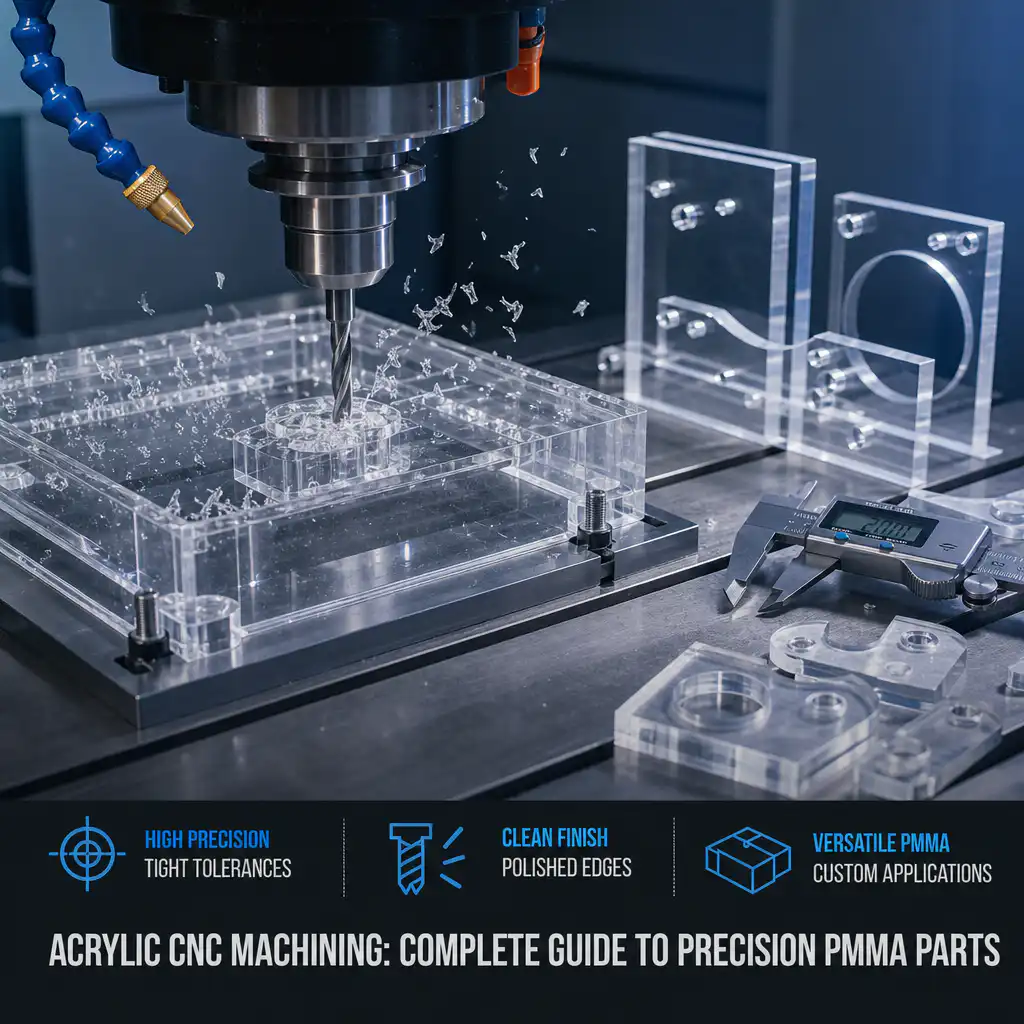
| Parâmetro | Valor recomendado |
|---|---|
| Spindle Speed | 10,000-18,000 RPM (high speed, low chip load) |
| Feed Rate | 800-1,500 mm/min |
| Depth of Cut | 0.3-1.0mm per pass (shallower for finish) |
| Tool Material | Sharp carbide, single-flute preferred |
The Golden Rule: Sharp Tools and Cool Cuts
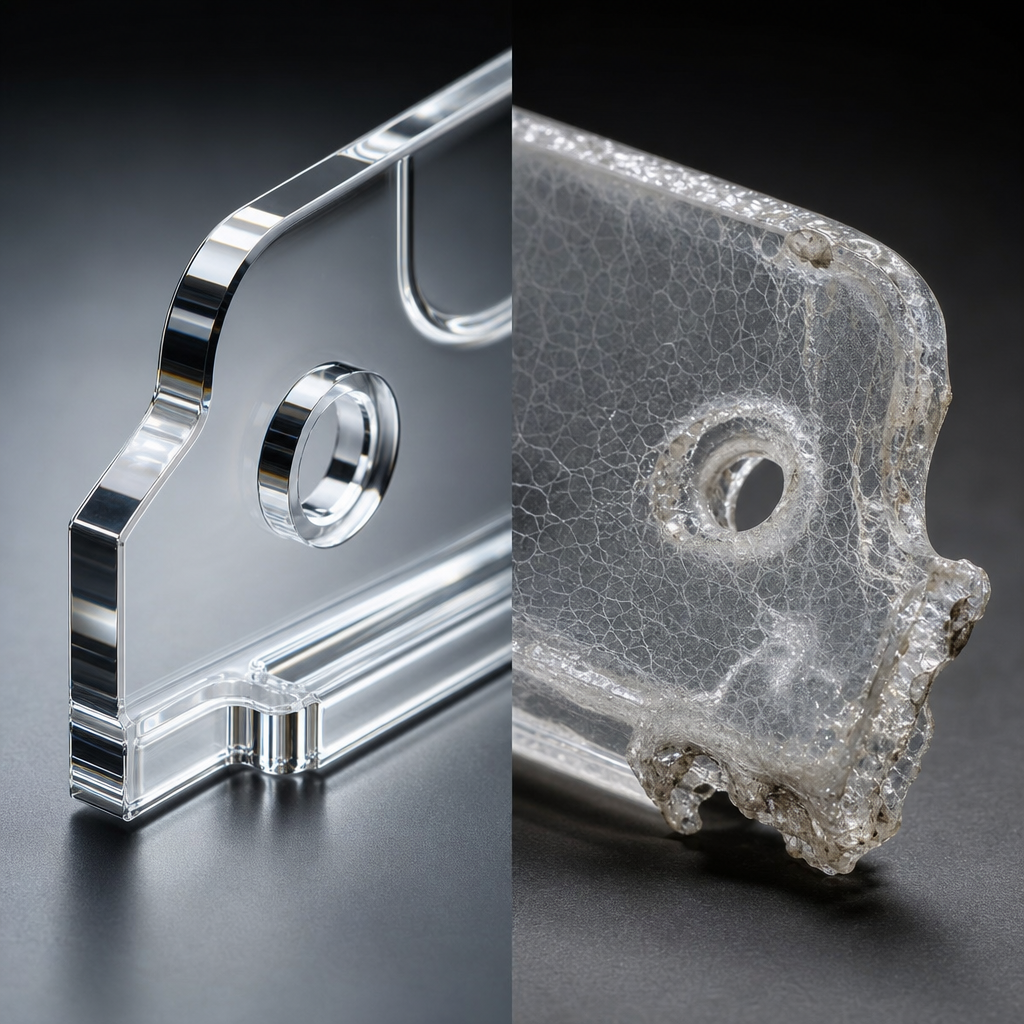
Acrylic’s melting point is only 100-120°C. A dull tool or aggressive cut generates enough friction heat to locally melt the acrylic, re-welding chips to the surface and leaving white “crazing” marks that are impossible to remove. Single-flute carbide tools with polished flutes are essential — they remove chips quickly and keep the cutting zone cool. Compressed air cooling (not liquid coolant — it stains acrylic) is standard.
Edge Finishing
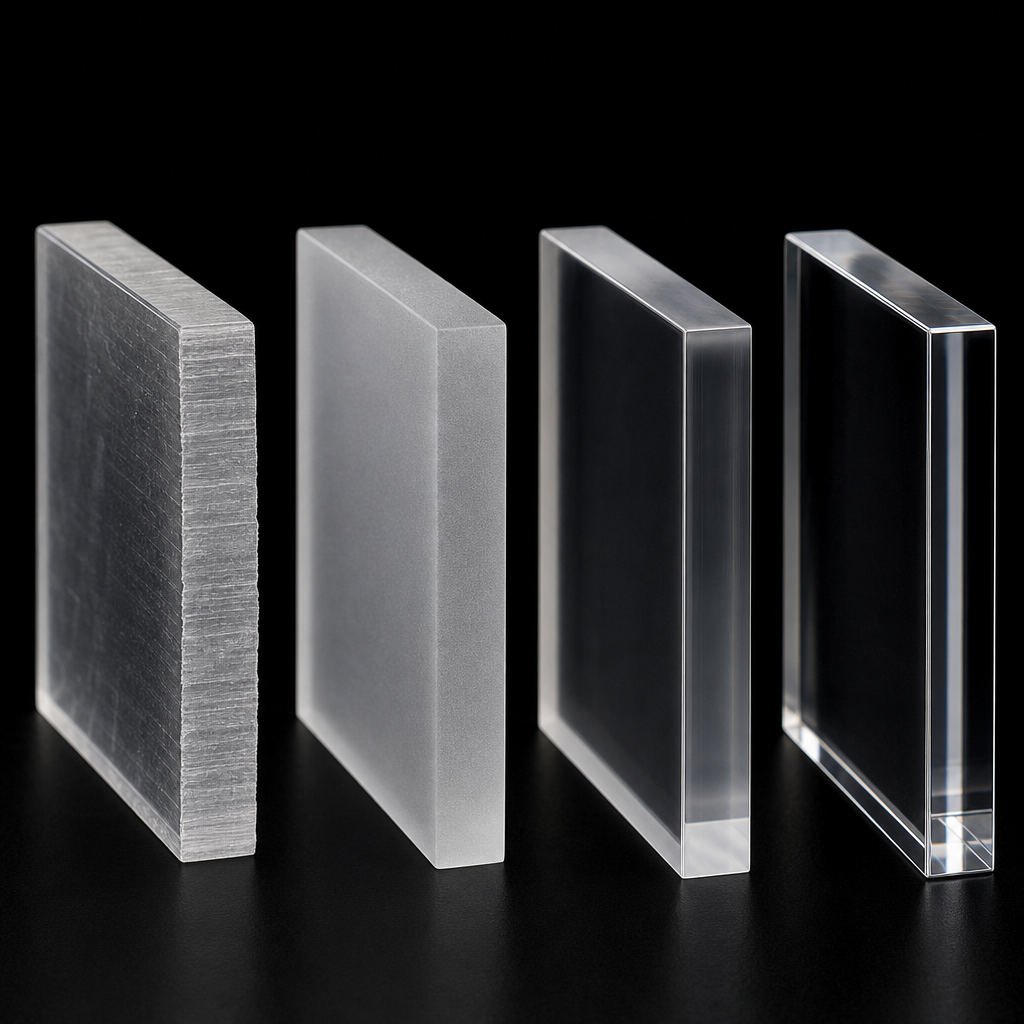
Diamond polishing with progressively finer compounds (starting at 600 grit and working up to 3,000+) produces truly optical-clear edges on machined acrylic. Flame polishing works for simple edge profiles but risks warping thin sections. For production quantities over 100 units, vapor polishing with solvent is faster and more consistent.
Perguntas mais frequentes
Can machined acrylic be as clear as molded?
With proper tooling and diamond edge polishing, machined acrylic achieves excellent clarity — though injection-molded acrylic still wins for absolute optical transmission due to the smooth, stress-free surface from the polished mold cavity.
Why do my acrylic parts have white cloudy edges?
This is crazing caused by excessive cutting heat or chemical attack from coolant. Switch to single-flute carbide tools, reduce feed rate, use air cooling only, and verify your material is cast acrylic (not extruded — cast machines cleaner).
What tolerances can you hold on acrylic?
±0.05mm is standard, ±0.025mm achievable. However, acrylic’s thermal expansion (~70 μm/m·°C) means a 200mm part changes 0.14mm with a 10°C shop temperature swing. For critical fits, specify the measurement temperature.
Can acrylic parts be threaded?
Yes, but thread-cutting taps create stress risers. For acrylic, we recommend thread milling (CNC interpolation) which produces cleaner, lower-stress threads. Alternatively, use brass heat-stake inserts for reusable threaded connections.
Need precision CNC machined acrylic parts?
From optical windows to display prototypes, we machine cast acrylic with diamond-polished edges for professional results.


 English
 Dutch
Dutch German
 French
 Korean
 Russian
 Japanese
 Spanish
 Vietnamese
 Chinese
 Portuguese
 Arabic