
What Is PPA?
PPA (polyphthalamide) is a family of semi-aromatic polyamides. Unlike standard aliphatic nylons like PA6 and PA66 — whose polymer backbones are built entirely from aliphatic carbon chains — PPA incorporates aromatic rings (terephthalic or isophthalic acid) directly into the polymer backbone. This structural difference is what gives PPA its defining advantage: dramatically lower moisture absorption, better dimensional stability in humid environments, and 20–40% higher strength retention at temperature compared to PA66.
The PPA family is not a single polymer but a class of high-performance nylons defined by the aromatic diacid used. The main commercial variants are PA6T, PA9T, PA10T, and various copolymers sold under brand names including Solvay Amodel, DuPont Zytel HTN, Kuraray Genestar, and EMS Grivory.
For engineers and buyers searching for PPA datasheets, PA6T vs PA9T comparison, or PPA vs PA66 vs PA46 selection guidance, this page consolidates the key properties, grade families, processing parameters, and application data.
PPA Sub-Families: PA6T, PA9T, PA10T — What’s the Difference?
| Variant | Base Diol | Tm (°C) | Vantagem chave | Typical Brands | Limitation |
|---|---|---|---|---|---|
| PA6T | Hexamethylene diamine (C6) | 310–325 | Highest HDT, broadest grade portfolio | Amodel (Solvay), Zytel HTN 51G (DuPont) | Pure PA6T Tm exceeds decomposition temp; always copolymerized |
| PA9T | Nonamethylene diamine (C9) | 306–315 | Lowest moisture absorption, excellent solder resistance | Genestar (Kuraray) | Higher cost, fewer FR grades |
| PA10T | Decamethylene diamine (C10) | 290–310 | Bio-based (castor oil derived), good flow | Vestamid HTplus (Evonik), Grivory (EMS) | Lower HDT than 6T, newer product |
| PA6T/66 | C6 + adipic acid | 290–310 | Improved flow, lower cost | Zytel HTN 52G, 54G (DuPont) | Higher moisture absorption than pure 6T |
| PA6T/6I | C6 + isophthalic acid | Amorphous | Transparency, barrier properties | Selar PA (DuPont) | Not for structural applications |
PPA GF30 vs. Competing High-Temperature Materials
| Imóveis | PPA GF30 (Amodel A-1133HS) | PA66 GF30 | PA46 GF30 (Stanyl) | PPS GF40 |
|---|---|---|---|---|
| Densidade | 1.47 g/cm³ | 1.36 g/cm³ | 1.41 g/cm³ | 1.65 g/cm³ |
| Ponto de fusão | 310–325°C | 260°C | 295°C | 280°C |
| HDT @ 1.80 MPa | 300–310°C | 245–255°C | 285°C | 265°C |
| Tensile Modulus (dry) | 12,000 MPa | 9,500–10,500 MPa | 10,000 MPa | 14,000–15,000 MPa |
| Tensile Modulus (conditioned) | ~11,500 MPa | 6,000–7,000 MPa | 6,000 MPa | ~14,000 MPa |
| Tensile Strength (dry) | 200 MPa | 180 MPa | 180 MPa | 190 MPa |
| Tensile Strength (conditioned) | ~180 MPa | 120 MPa | 120 MPa | ~190 MPa |
| Water Absorption (23°C / 50% RH) | 0.3–0.5% | 1.5–2.0% | 2.6% | 0.03% |
| Molding Shrinkage (flow / transverse) | 0.2% / 0.6% | 0.4% / 1.1% | 0.5% / 1.3% | 0.3% / 0.8% |
| Continuous Use Temp (5000h) | 150–170°C | 120–130°C | 163°C | 200–220°C |
| Relative Cost per kg | Elevado | Low-Moderate | Moderate-High | Elevado |
Key Insight: The Conditioned Modulus Advantage
Look at the “conditioned” tensile modulus row. This is where PPA justifies its price premium.
- PA66 GF30 loses 30–40% of its dry stiffness after moisture conditioning — a known pain point for precision applications in humid environments.
- PA46 GF30 drops even more (40%), because its high amide-group density makes it more hygroscopic than PA66.
- PPA GF30 retains 95%+ of its dry stiffness after conditioning, because the aromatic rings in the backbone block water molecules from hydrogen-bonding with amide groups.
- PPS GF40 is nearly unaffected by moisture, but costs 2–3× PPA.
For structural parts that must hold tight tolerances from dry-as-molded through end-use humidity cycling, PPA’s conditioned modulus advantage is often decisive.
Commercial PPA Grade Selector
| Manufacturer | Brand | Grau | GF % | Key Feature | Typical Application |
|---|---|---|---|---|---|
| Solvay | Amodel | A-1133 HS | 33% | General purpose GF33, heat stabilized | Automotive connectors, housings |
| Solvay | Amodel | AS-1133 HS | 33% | Thick-wall (>3 mm) optimized | Pump housings, valve bodies |
| Solvay | Amodel | A-1145 HS | 45% | High stiffness, heat stabilized | Metal replacement, structural brackets |
| Solvay | Amodel | A-1565 HS | 65% (GF+mineral) | Maximum rigidity, low warpage | Large structural housings |
| Solvay | Amodel | AE-1133 | 33% | Electrical-optimized, high CTI | EV connectors, busbar insulators |
| Solvay | Amodel | A-4122 NL WH | 22% | LED reflectors, high whiteness | Automotive lighting, LED chips |
| DuPont | Zytel HTN | 51G35HSL | 35% | Standard GF35, heat stabilized | Engine covers, oil pans |
| DuPont | Zytel HTN | 51G45HSL | 45% | High stiffness PA6T-based | Structural underhood parts |
| DuPont | Zytel HTN | 52G35HSL | 35% | 6T/66 copolymer, better flow | Thin-wall connectors |
| DuPont | Zytel HTN | 54G15HSLR | 15% | Low GF, high ductility | Snap-fit clips, flexible mounts |
| Kuraray | Genestar | GP2300 | 30% | PA9T GF30, lowest moisture | SMT connectors, precision electronics |
| Kuraray | Genestar | GR2300 | 30% | PA9T GF30 FR V-0 | USB connectors, mobile device internals |
| EMS | Grivory | GV-5H | 50% | High-strength PA6T/6I | Metal replacement, structural |
PPA Processing Guidelines
| Parâmetro | Valor recomendado | Notas |
|---|---|---|
| Pre-drying | 120°C for 4 hours | Desiccant dryer. Target moisture < 0.05% |
| Melt Temperature | 320–340°C | Varies by grade; PA6T grades need 330°C minimum |
| Temperatura do molde | 120–160°C | Higher than PA66 — oil-heated molds typically required |
| Injection Speed | Medium to fast | Fast fill to avoid premature skin formation |
| Holding Pressure | 60–100 MPa | PPA has low shrinkage; pack adequately |
| Residence Time | Minimize (≤ 5 min) | Degradation risk increases above 330°C |
Critical processing notes:
- Mold temperature is non-negotiable: PPA requires mold temperatures of 120–160°C to achieve full crystallinity. Running at standard nylon mold temperatures (80°C) produces amorphous, dimensionally unstable parts. Oil-heated or electric cartridge-heated tooling is typically necessary — water-heated molds won’t reach these temperatures.
- High barrel temperature management: At 330°C, standard nylon purging procedures apply, but residence time must be tightly controlled. PPA degradation produces volatiles; verify adequate mold venting.
- Low and predictable shrinkage: PPA’s shrinkage (0.2% flow direction for GF grades) is lower than both PA66 and PA46. This is an advantage for precision, but molds designed for PA66 may need gate and runner adjustments when switching to PPA.
- Fast crystallization once below Tm: Unlike PA46 (which crystallizes fast at all temperatures), PPA crystallizes rapidly once the melt drops below its melting point — but reaching that point requires the mold to be hot enough. This is the fundamental trade-off of PPA processing: high mold temp for crystallization vs. cycle time.
Key PPA Applications by Industry
| Indústria | Application | Why PPA Over PA66 or PA46 |
|---|---|---|
| Automotive Engine | Coolant pump housings, thermostat housings, oil filter bodies | Glycol resistance + dimensional stability at 120–150°C |
| Automotive Fuel | Fuel line connectors, quick-connects, sender unit bodies | Fuel resistance, low permeation, survives aggressive blended fuels |
| Automotive Transmission | Solenoid bobbins, sensor housings | Hot ATF resistance, stable dielectric properties |
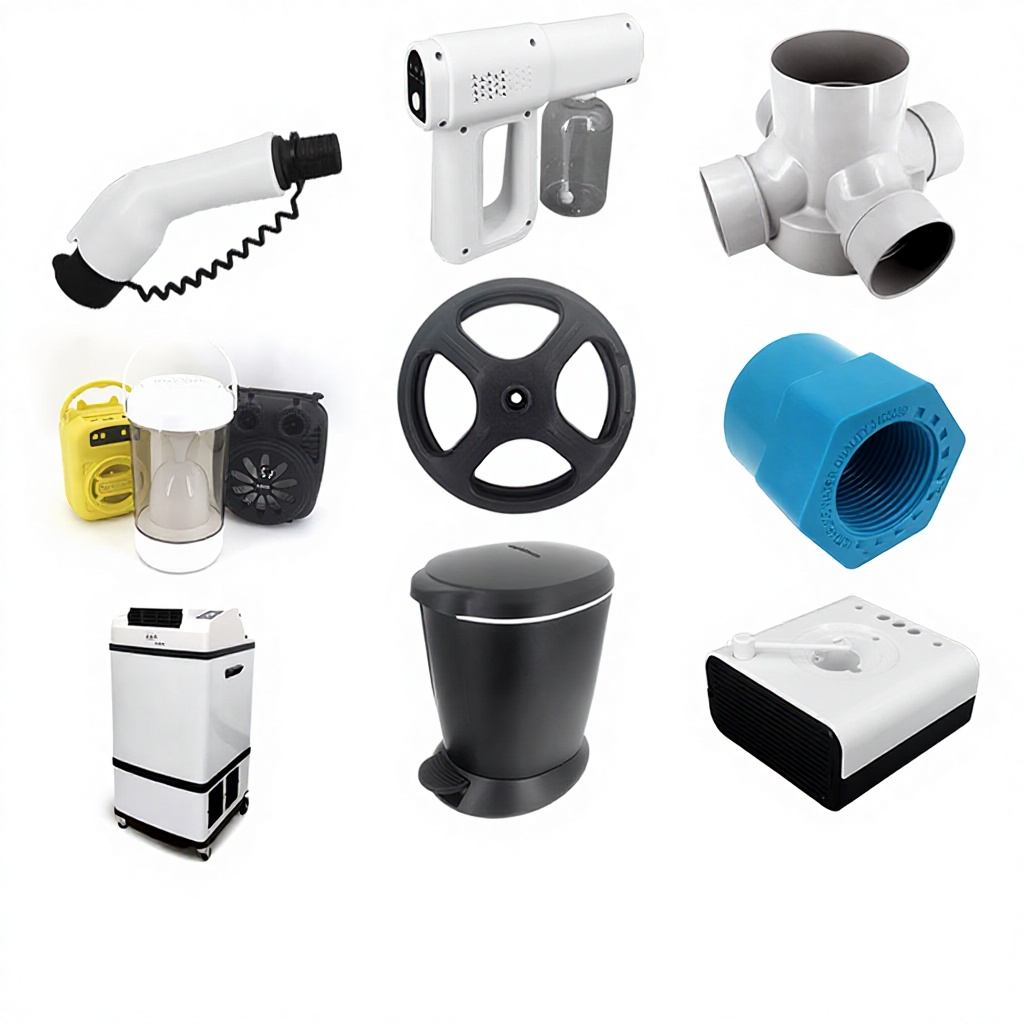
| Electrical / Electronics | SMT connectors, USB-C housings, DDR sockets, SIM card trays | Survives 260°C reflow, retains dimensions, UL94 V-0 grades available |
| Power Electronics | Busbar insulators, IGBT housings, EV charging connector bodies | High CTI (Comparative Tracking Index), arc resistance |
| Eletrónica de consumo | Mobile device frames, smartwatch housings, laptop chassis inserts | Thin-wall flow, paintable, dimensionally stable across humidity range |
| Industrial | Pump wear rings, bearing cages, valve seats | Creep resistance + chemical compatibility |
PPA vs. PA46: Choosing Between the Two
PPA and PA46 are often cross-shopped for the same applications. Here is the decision framework in practice:
| Selection Driver | Choose PPA When | Choose PA46 When |
|---|---|---|
| Moisture / humidity exposure | High humidity, outdoor, or condensing environments | Controlled indoor environments |
| Chemical exposure | Fuel, glycol, aggressive automotive fluids | Primarily oil, grease, or dry applications |
| Cycle time | Longer cycles acceptable (mold 140°C) | Need fastest cycle times (mold 100°C works) |
| Thin-wall flow | Good (walls down to 0.4 mm) | Excellent (walls down to 0.2 mm) |
| Wear / friction | Good with internal lubricants | Excellent — PA46 is the benchmark |
| Dimensional tolerance in wet/dry cycling | PPA wins — almost no change from dry to conditioned | Expect 0.2–0.5% dimensional change |
| Tooling cost | Higher (oil-heated mold required) | Moderate (water-heated mold usually sufficient) |
| Price / kg | Mais alto | Moderate |
PPA Limitations: When to Look Elsewhere
- Tooling investment: PPA’s 120–160°C mold temperature requirement means water-heated molds cannot be used. If your tool shop is not equipped for oil or electric mold heating, you will incur tooling modification or replacement costs.
- Notch sensitivity: Standard GF PPA grades are notch-sensitive — impact in notched sections is lower than you might expect from the tensile data. For snap-fit parts requiring toughness, specify impact-modified grades (e.g., Zytel HTN 54G series).
- Above 180°C continuous: PPA’s continuous use ceiling is 150–170°C (UL RTI). For sustained exposure above 180°C you need PPS or PEEK.
- Cost-sensitive projects: PPA GF30 costs 3–5× PA66 GF30. Make sure you actually need the performance before specifying it.
FAQ
What is the difference between PPA and PA66?
PPA (polyphthalamide) is a semi-aromatic polyamide, while PA66 is a fully aliphatic polyamide. PPA incorporates aromatic acid groups (terephthalic/isophthalic acid) into its polymer backbone, which reduces moisture absorption from ~2% (PA66) to ~0.3–0.5% (PPA). This means PPA retains its mechanical properties in humid environments, withstands 30–50°C higher continuous-use temperatures, and resists chemical attack from fuels and glycols better than PA66. The trade-off is higher cost and more demanding processing requirements.
Is PPA the same as PA6T?
PA6T is the most common sub-type of PPA, but not the only one. PPA is the family name; PA6T, PA9T, PA10T, and various copolymers (PA6T/66, PA6T/6I) are specific members. PA6T-based grades (Amodel, Zytel HTN 51G) dominate the automotive and industrial markets. PA9T (Genestar) has carved a niche in consumer electronics due to its even lower moisture absorption. Always check which base chemistry is used in a PPA grade — it affects moisture uptake, processing window, and cost.
Does PPA need to be dried before molding?
Yes — and with tighter requirements than PA66. PPA must be dried to below 0.05% moisture content (PA66 allows up to 0.20%). At PPA’s 330°C processing temperature, any residual moisture causes hydrolysis that degrades molecular weight and produces visibly defective parts. Dry at 120°C for a minimum of 4 hours in a desiccant dryer.
Can PPA be used for SMT (surface-mount technology) components?
Yes — this is one of PPA’s core markets. Standard PPA GF30 grades (especially PA9T Genestar) survive lead-free reflow soldering with peak temperatures of 260°C without blistering or warping. This is why PPA dominates SMT connector housings (USB, HDMI, DDR memory sockets, SIM card trays) where the plastic must survive the solder reflow oven and then maintain precise contact spacing in end-use humid environments.
What are PPA’s main disadvantages vs. PA46?
PPA processes slower (higher mold temperature required), costs more per kilogram, and is typically more notch-sensitive than PA46. PA46 cycles faster and flows better in very thin walls (< 0.3 mm). However, PPA's conditioned modulus advantage and chemical resistance often outweigh these processing trade-offs in demanding applications.
Need PPA pellets, technical datasheets, or grade selection support? We supply Amodel, Zytel HTN, and Genestar grades in GF10 to GF50 reinforcement levels. Contact us with your temperature, chemical exposure, and production volume requirements.
Last updated: June 2026. Datasheet values are typical ranges. Always verify specific grade properties with the manufacturer’s current technical data sheet. Amodel is a registered trademark of Solvay. Zytel HTN is a registered trademark of DuPont. Genestar is a registered trademark of Kuraray. Grivory is a registered trademark of EMS-Chemie.
 English
 Dutch
Dutch German
 French
 Korean
 Russian
 Japanese
 Spanish
 Vietnamese
 Chinese
 Portuguese
 Arabic