
Stringing (also called oozing or cobwebbing) occurs when molten filament leaks from the nozzle during non-printing travel moves, creating thin plastic threads between different parts of your print.
Primary Causes of Stringing
The most common cause is insufficient retraction, where filament continues flowing during travel. Temperature too high results in lower viscosity and easier flow. Material characteristics matter—PETG, TPU, and nylon are naturally prone to stringing. Wet filament creates steam bubbles forcing material out. Slow travel speed allows more time for oozing.
Optimal Retraction Settings
For PLA, use 4-6mm at 25-45mm/s. PETG works best at 3-5mm at 20-30mm/s. ABS needs 5-8mm at 35-50mm/s. Nylon requires 3-5mm at 25-35mm/s with thorough drying first. Our Filamento PA6-CF is optimized for clean printing.
Slicer Settings That Help
Enable coasting to stop extrusion before travel. Use wipe to clean nozzle on printed surfaces. Activate combing to route travels through printed areas. Increase travel speed to 100-150mm/s for less time to ooze.
Source Quality Filaments
As a specialized source manufacturer, we supply filaments with tight diameter tolerance (±0.03mm) for consistent printing. Contactar-nos for samples.
FAQ
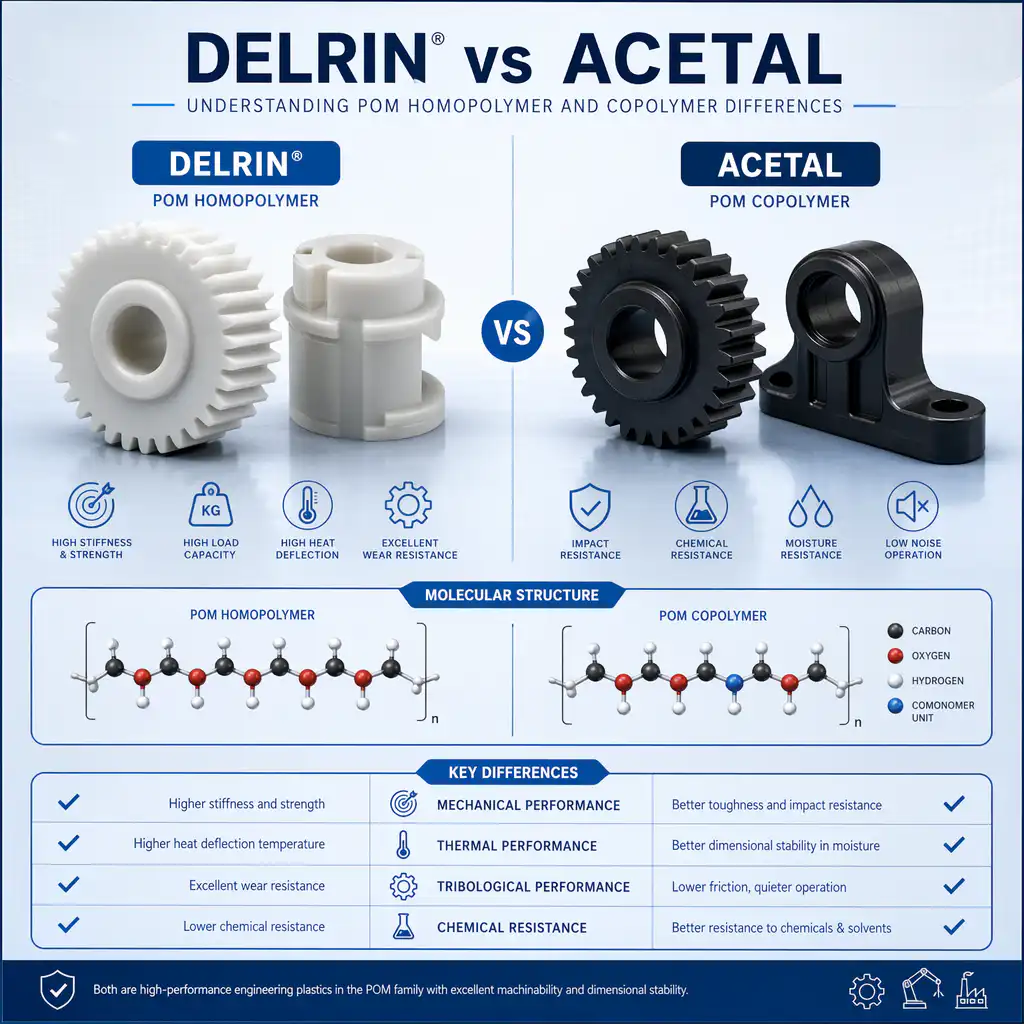
How do you know whether Delrin vs Acetal — Understanding POM Homopolymer and Copolymer Differences fits a part?
Delrin vs Acetal — Understanding POM Homopolymer and Copolymer Differences fits a part when its load capacity, temperature range, moisture exposure, wear behavior, and processing method match the real service conditions.
What properties should be checked for Delrin vs Acetal — Understanding POM Homopolymer and Copolymer Differences?
Verificar a resistência, a rigidez, a resistência ao impacto, a resistência ao calor, a absorção de humidade, a estabilidade dimensional, a fricção, o desgaste e a compatibilidade química.
What is the biggest selection risk for Delrin vs Acetal — Understanding POM Homopolymer and Copolymer Differences?
O maior risco é escolher a partir de um valor da folha de dados sem considerar o ambiente real, o método de processamento, a geometria da peça e a utilização a longo prazo.
When should Delrin vs Acetal — Understanding POM Homopolymer and Copolymer Differences be tested before production?
Recomenda-se a realização de ensaios quando a peça é sujeita a carga, calor, produtos químicos, humidade, tolerâncias apertadas, requisitos regulamentares ou um novo ambiente de funcionamento.
3D Printing Stringing — Frequently Asked Questions
What causes stringing and oozing between print moves?
Stringing occurs when molten filament continues flowing during non-printing travel moves. Primary causes: (1) Insufficient retraction distance. (2) Temperature too high. (3) Wet filament - moisture turns to steam. (4) Slow travel speed. (5) Material characteristics - PETG, TPU, and nylon are naturally more prone.
What are optimal retraction settings for different filaments?
PLA: 4-6mm at 25-45mm/s. PETG: 3-5mm at 20-30mm/s. ABS: 5-8mm at 35-50mm/s. Nylon: 3-5mm at 25-35mm/s with thorough drying first (80C for 4-6 hours). Enable coasting and wipe in your slicer for best results.
Where can I get quality filaments that minimize stringing?
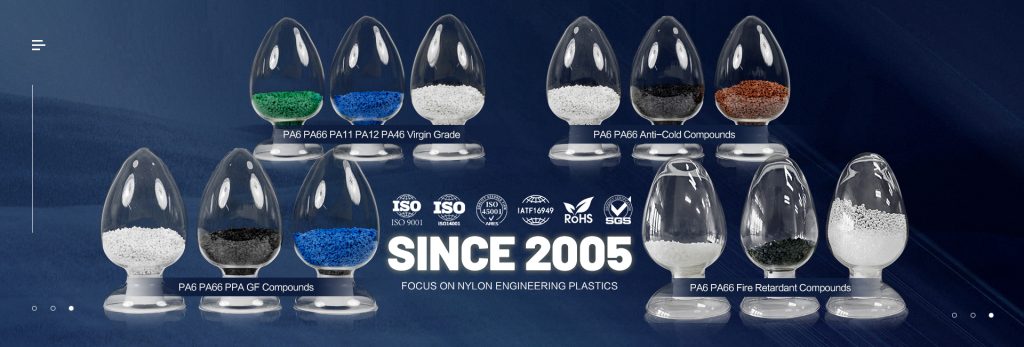
Nylonplastic is a specialized manufacturer established in 2005, ISO certified. We supply filaments with tight diameter tolerance for consistent extrusion. Our CF and GF reinforced filaments are pre-dried and vacuum sealed. Contact us for free samples.

 English
 Dutch
Dutch German
 French
 Korean
 Russian
 Japanese
 Spanish
 Vietnamese
 Chinese
 Portuguese
 Arabic