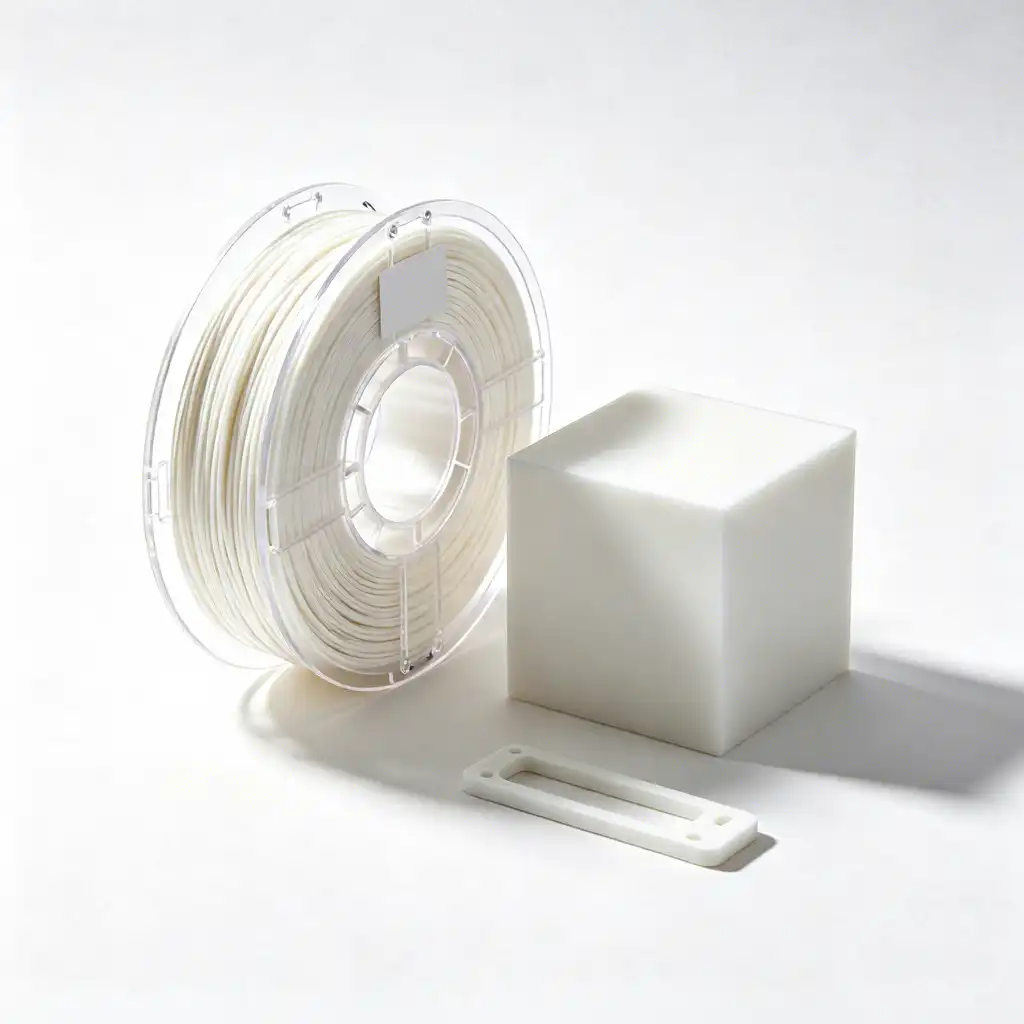

Why Nylon Requires Special Processing Attention
Nylon is one of the most demanding engineering plastics to injection mold successfully. Its combination of high melt viscosity, moisture sensitivity, and crystallinity kinetics makes it fundamentally different from polypropylene or polystyrene.
The three biggest challenges in nylon injection molding:
- Moisture sensitivity: Nylon must be dried to below 0.2% moisture before molding. Even 0.1% excess moisture causes splay, surface roughness, and part brittleness.
- High melt viscosity: Nylon melts flow poorly at low shear rates, requiring high injection speeds and pressure to fill thin-walled sections.
- Warpage and shrinkage: High mold shrinkage (1.0-1.5% for PA6, 1.3-1.8% for PA66) combined with anisotropic shrinkage causes warpage in unsymmetric parts.
Mastering these three factors — drying, processing temperature, and mold design — accounts for 90% of successful nylon molding outcomes.
Core Processing Parameters
Temperature settings are the foundation of nylon injection molding. The correct melt temperature ensures proper polymer chain entanglement while avoiding thermal degradation. Here are the recommended settings by nylon grade:

| Parameter | PA6 | PA66 | PA12 | PA6-GF30 | PA66-GF30 |
|---|---|---|---|---|---|
| Melt Temp (°C) | 230-260 | 270-290 | 240-270 | 240-270 | 280-300 |
| Mold Temp (°C) | 60-80 | 80-100 | 40-60 | 80-100 | 80-110 |
| Nozzle Temp (°C) | 230-260 | 270-290 | 240-270 | 245-275 | 285-300 |
| Front Zone (°C) | 230-250 | 265-280 | 235-255 | 235-255 | 270-285 |
| Middle Zone (°C) | 235-255 | 270-285 | 240-260 | 240-260 | 275-290 |
| Rear Zone (°C) | 230-250 | 265-280 | 235-255 | 235-255 | 270-285 |
| Drying Temp (°C) | 80-85 | 80-85 | 80-85 | 80-85 | 80-85 |
| Drying Time (hrs) | 4-6 | 4-6 | 4-6 | 4-6 | 4-6 |
Injection and Pressure Parameters
Beyond temperature, injection pressure and speed are critical for filling nylon molds properly. Nylon’s high viscosity requires higher pressures than polypropylene, but excessive pressure causes flash and mold wear.

| Parameter | PA6 | PA66 | PA6-GF30 | Примечания |
|---|---|---|---|---|
| Injection Speed | Medium-High | Medium-High | Средний | Fast fill to minimize air entrapment |
| Injection Pressure (MPa) | 80-120 | 100-140 | 100-150 | Higher for thin walls |
| Holding Pressure (MPa) | 40-60 | 50-80 | 50-70 | 60-80% of injection pressure |
| Back Pressure (MPa) | 0.3-0.5 | 0.3-0.5 | 0.5-0.8 | Low for nylon to avoid shear degradation |
| Cooling Time (s/mm) | 0.8-1.0 | 0.8-1.0 | 1.0-1.2 | Thicker parts need more time |
| Screw Speed (rpm) | 50-80 | 50-80 | 30-50 | Lower for reinforced grades |
Common Defects and Solutions
Understanding the root causes of nylon defects allows targeted solutions rather than guesswork:

- Splay (silver streaks): Caused by moisture or volatile contaminants. Solution: Dry material thoroughly, purge with nylon-specific purge compound, check vent zones.
- Weld lines: Occur where two flow fronts meet. Solution: Increase melt temperature, raise injection speed, add gas vents at weld line locations.
- Short shots: Caused by insufficient flow length or low pressure. Solution: Increase injection speed and pressure, raise melt temperature, redesign gate location.
- Warping: Results from uneven shrinkage. Solution: Increase mold temperature, balance wall thickness, add ribs for stiffness, use symmetric gating.
- Bubble formation: Indicates moisture, air entrapment, or material degradation. Solution: Verify drying, lower back pressure, check for insufficient venting.
Cycle Time Optimization
Nylon cycle time is dominated by cooling requirements. Since nylon molds at elevated temperatures (60-110°C vs 20-40°C for PP), significantly more cooling time is needed. Optimizing cooling is the most effective way to reduce cycle time for nylon parts.

- Mold cooling design: Baffle and bubbler cooling channels positioned 1.5x the cavity depth from the parting surface
- Cooling water temperature: Use chilled water (8-15°C) for large or thick nylon parts to reduce cycle time by 15-30%
- Ejection temperature: Parts should reach 60-80°C at ejection to minimize warpage
- Hot runner optimization: Nylon requires precise hot runner temperature control (within ±2°C) to prevent material degradation in the runner
Material Changeover and Purging
When switching from nylon to another material (or vice versa), proper purging prevents contamination and equipment damage. Nylon leaves significant residue in the barrel due to its adhesive nature.

- Purging from nylon: Use PA-specific purge compound or polypropylene as a purging agent at processing temperatures 20°C above nylon melt temperature
- Purging to nylon: Ensure barrel is completely clean of previous material; purge with nylon-compatible intermediate material
- Color change: Perform two full barrel purges with natural material before adding color concentrate
KSAN offers technical on-site support for nylon processing optimization and troubleshooting for customers running trial production batches.
FAQs
Q1: Can I run PA6 and PA66 in the same mold?
A: Yes, but you need to adjust temperatures accordingly — PA66 requires 30-40°C higher melt temperatures. Expect different shrinkage rates and warpage patterns. Running them in the same production run without adjustment will produce out-of-spec parts.
Q2: What is the maximum shot weight for nylon before degradation?
A: Residence time is the critical factor. Nylon begins degrading after 6-8 minutes at melt temperature. Maximum shot weight should empty the barrel in under 5 minutes of injection time.
Q3: How do I reduce warpage in glass fiber reinforced nylon parts?
A: Glass fiber reinforced nylon has highly anisotropic shrinkage (flow direction ~0.3%, cross-flow ~1.0%). Warpage is inherent but can be minimized by: using balanced gating, designing symmetric wall thickness, and post-mold annealing at 120°C for 2-4 hours to relieve internal stresses.
Q4: Do I need a special screw for nylon injection molding?
A: A general-purpose screw with medium compression ratio (2.5:1 to 3:1) works well for nylon. Barrier screws are preferred for reinforced grades. Avoid oversize compression ratio (4:1+) as it causes excessive shear heating and polymer degradation.