
Nylon 3D Printing: FDM vs. SLS for Functional Prototypes and Small-Batch Production
The choice between FDM (fused deposition modeling) and SLS (selective laser sintering) for nylon parts is one of the most consequential process decisions in additive manufacturing. Both use nylon — but the mechanical properties, surface quality, design freedom, and cost structures are fundamentally different.
This guide cuts through the marketing noise to give engineering buyers a clear decision framework. We cover the technical realities of each process, a direct property comparison, and real-world guidance for common applications in automotive, industrial equipment, and consumer products.
Process Fundamentals: How FDM and SLS Actually Work
Understanding the mechanical difference between the two processes explains most of the property and quality trade-offs that follow.
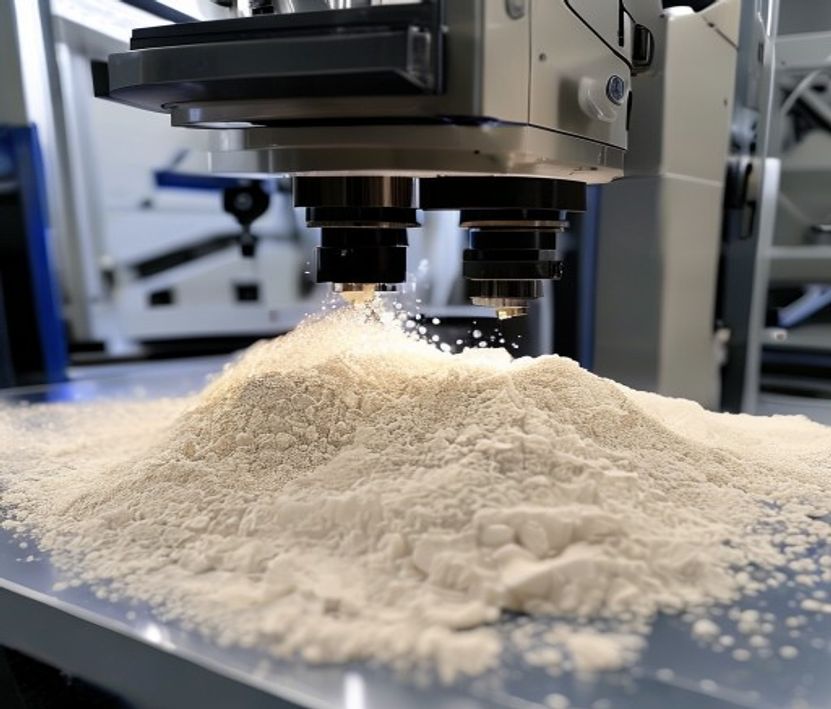
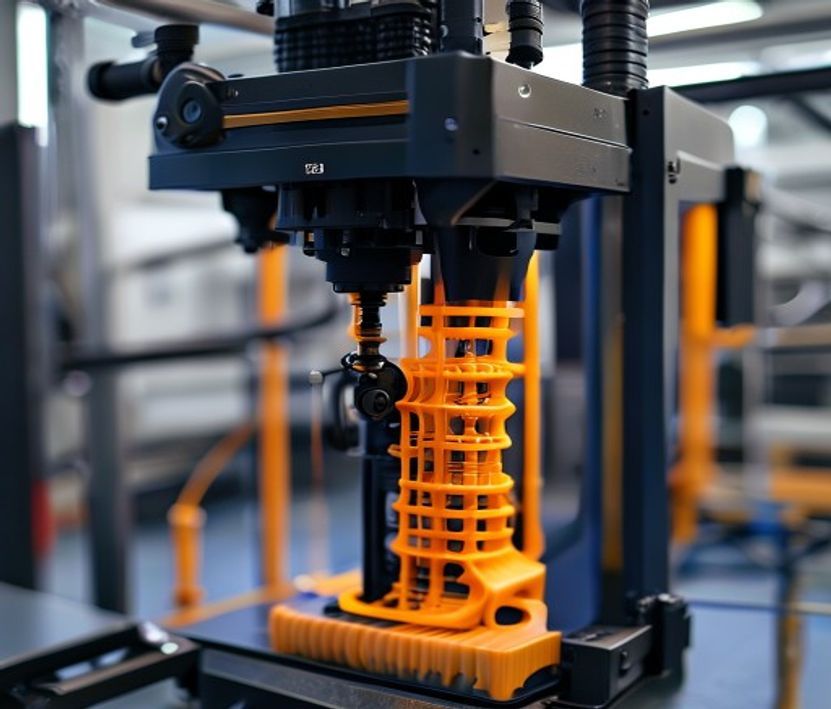
FDM (Mô hình hóa bằng phương pháp đắp lớp) extrudes molten nylon filament layer by layer through a heated nozzle (typically 230-280°C for nylon). Parts are built on a heated bed, and support structures are printed in the same or a breakaway filament. The bond between layers is primarily thermal diffusion — not molecular fusion — making layer adhesion the primary weakness.
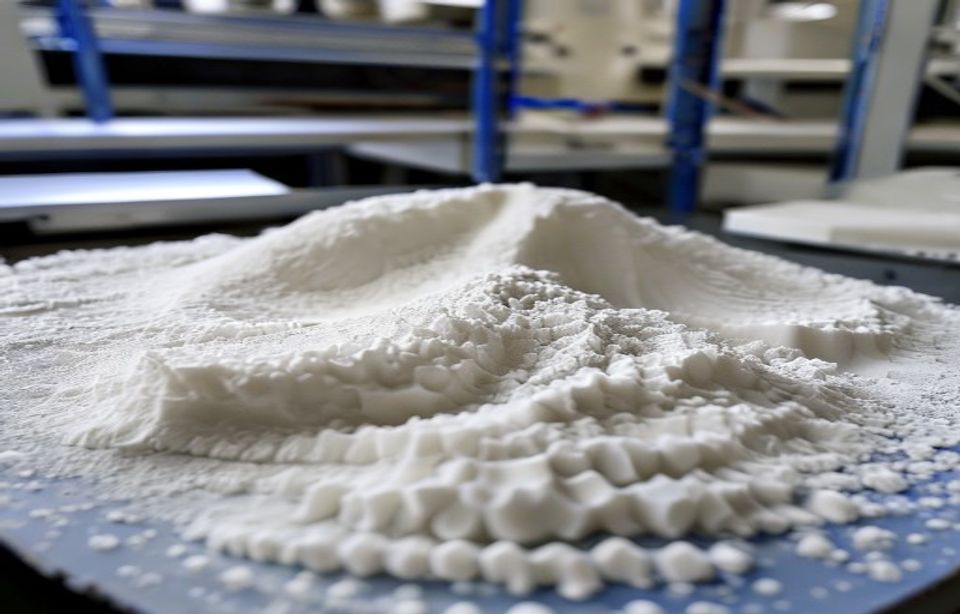
SLS (Hợp kim bằng tia laser chọn lọc) fuses nylon powder (typically PA12) using a high-power laser that sinters powder particles together in a heated build chamber (typically 170-190°C). No support structures are needed because unsintered powder supports overhanging geometry. Parts are fully dense in all directions — more isotropic than FDM.
Mechanical Property Comparison
The table below presents tensile, impact, and thermal properties for nylon FDM and SLS parts tested per ISO standards. Values represent typical properties of well-optimized parts.
| Tài sản | PA12 SLS (typical) | PA6 FDM (typical) | PA6 FDM (optimized) | Ghi chú |
|---|---|---|---|---|
| Độ bền kéo (MPa) | 46-50 | 40-50 | 50-58 | SLS PA12 limited by porosity |
| Tensile Modulus (GPa) | 1.7-1.9 | 1.5-1.8 | 1.7-2.0 | Similar range |
| Độ giãn dài khi đứt | 10-15% | 20-50% | 15-30% | FDM more ductile |
| Notched Izod Impact (kJ/m²) | 4.5-6.0 | 3-5 | 5-8 | SLS better for PA12 |
| HDT at 1.82 MPa (°C) | 175-182 | 65-75 | 65-75 | SLS PA12 much higher |
| Moisture Absorption (24h) | 0.5-1.0% | 5-8% | 5-8% | PA12 far superior |
| Isotropy | High (90%+) | Low (60-70%) | Thấp | FDM highly anisotropic |
| Surface Roughness (Ra, µm) | 6-12 | 8-15 | 5-10 | SLS smoother after bead blast |
Design Envelope: What Each Process Can and Cannot Do
Beyond mechanical properties, the geometric capabilities of each process determine which applications each can serve.
| Design Factor | FDM Nylon | SLS Nylon (PA12) | Winner |
|---|---|---|---|
| Minimum wall thickness | 0.8 mm | 0.5 mm | SLS |
| Minimum feature size | 0.5 mm | 0.3 mm | SLS |
| Overhang requirements | Requires supports | Self-supporting | SLS |
| Internal channels | Requires supports | Natural hollow printing | SLS |
| Large parts (>300mm) | Tốt | Limited by build volume | FDM |
| Dimensional tolerance | ±0.3 mm | ±0.2 mm | SLS |
| Smooth surface finish | Poor (layer lines) | Moderate (rough powder) | SLS |
| Post-processing ease | Easy (sand, paint) | Moderate (vapor smooth) | FDM |
Material Cost and Production Economics
For engineering buyers evaluating 3D printing against CNC or injection molding, understanding total part cost — not just material price — is essential.
| Cost Factor | FDM (Nylon) | SLS (PA12) | Ghi chú |
|---|---|---|---|
| Material cost ($/kg) | $45-80 | $60-110 | SLS powder more expensive |
| Machine cost (depreciation) | Low-Medium | Cao | SLS machines 3-5x more expensive |
| Support material waste | 10-30% | 0% (unused powder reusable) | SLS wins for complex parts |
| Post-processing labor | Trung bình | Low-Medium | Depends on surface requirement |
| Batch efficiency | Low (serial printing) | High (stackable parts) | SLS wins for batches |
| Best economics | Prototypes, large parts | Small complex parts, batches | Process selection by geometry |
Application-Specific Recommendations
The right process depends on your application’s requirements — there is no universally superior technology.
| Application | Recommended Process | Chất liệu | Why |
|---|---|---|---|
| Functional gears (dry environment) | SLS or FDM PA6-CF | SLS PA12 or PA6-GF FDM | Strength and wear resistance |
| Functional gears (wet/oily) | SLS PA12 | PA12 SLS | Chemical resistance, low moisture |
| Snap-fits and living hinges | FDM PA6 | PA6 FDM filament | Ductility, flexibility |
| Chemical-resistant enclosures | SLS PA12 | PA12 SLS | Broad chemical resistance |
| Large housings and covers | FDM PA6-GF30 | PA6-GF30 FDM | Large format, structural |
| High-heat components (>150°C) | SLS PA12 | PA12 SLS | HDT 175°C vs 70°C for FDM |
| Low-volume bridge production | SLS PA12 | PA12 SLS | No tooling, batch economics |
| Early-stage prototypes | FDM PA6 | PA6 or PA66 FDM | Lowest cost, fastest turnaround |
Câu hỏi thường gặp
When is Nylon 3D Printing: FDM vs. SLS for Functional Prototypes a good option?
Nylon 3D Printing: FDM vs. SLS for Functional Prototypes is a good option when fast iteration, complex geometry, low tooling cost, or low-volume production is more important than molded-part unit cost.
What should be checked before choosing Nylon 3D Printing: FDM vs. SLS for Functional Prototypes?
Kiểm tra kích thước chi tiết, tính chất vật liệu, độ nhám bề mặt, dung sai kích thước, mức độ tiếp xúc với nhiệt, hướng tải trọng và xem có cần xử lý sau gia công hay không.
How does Nylon 3D Printing: FDM vs. SLS for Functional Prototypes compare with CNC machining?
In 3D có thể tạo ra các hình dạng phức tạp một cách nhanh chóng, trong khi gia công CNC thường mang lại độ bền cao hơn cho các bề mặt chính xác, dung sai chặt chẽ hơn và sử dụng vật liệu đạt tiêu chuẩn sản xuất.
What affects the cost of Nylon 3D Printing: FDM vs. SLS for Functional Prototypes?
Chi phí phụ thuộc vào vật liệu, thể tích in, thời gian in, độ dày lớp, việc tháo khung đỡ, hoàn thiện, kiểm tra và số lượng chi tiết trong mô hình.
 English
 Dutch
Dutch German
 French
 Korean
 Russian
 Japanese
 Spanish
 Vietnamese
 Chinese
 Portuguese
 Arabic