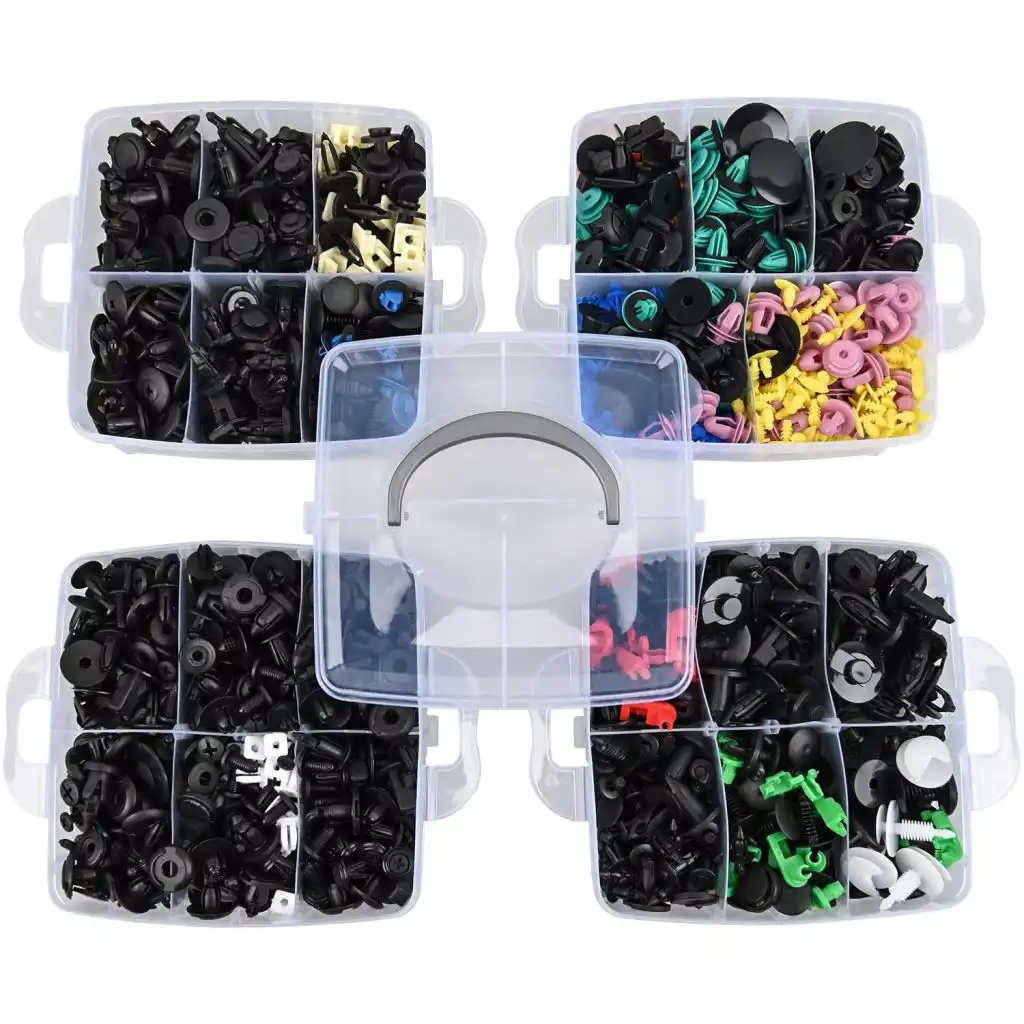
Plastic Fasteners for Cars are the unsung heroes of automotive assembly and repair, securing everything from door panels and interior trim to bumpers and underbody shields. These small but critical components—including clips, retainers, push pins, and rivets—are designed for precise fit, durability, and ease of installation. Whether you’re an automotive manufacturer, a parts distributor, or a repair shop, understanding these fasteners is essential. As a full-service partner with expertise across nhiều ngành , Nylon Plastic provides end-to-end solutions for these vital components, from material selection to high-volume production.
The Critical Role of Plastic Fasteners in Modern Vehicles
Modern automobiles rely on dozens, if not hundreds, of plastic fasteners to assemble components quickly and securely. Their importance extends far beyond simple holding power.
- Vibration Dampening and Rattle Prevention: Plastic fasteners, particularly those made from slightly flexible materials like nylon, absorb vibrations and prevent the annoying squeaks and rattles that can develop over time.
- Ease of Assembly and Disassembly: Designed for quick installation, many plastic fasteners can be pushed into place by hand or with simple tools. This speed is crucial on automotive assembly lines and for repair access.
- Corrosion Resistance: Unlike metal clips that can rust, high-quality plastic fasteners are impervious to corrosion, ensuring long-term holding power and preventing unsightly rust stains on interior or exterior components.
- Weight Reduction: Replacing metal fasteners with plastic contributes to overall vehicle weight reduction, supporting fuel efficiency goals without compromising strength.
- Cost-Effectiveness: Plastic fasteners are economical to produce in high volumes, making them a cost-effective solution for mass-market automotive manufacturing and aftermarket repair.
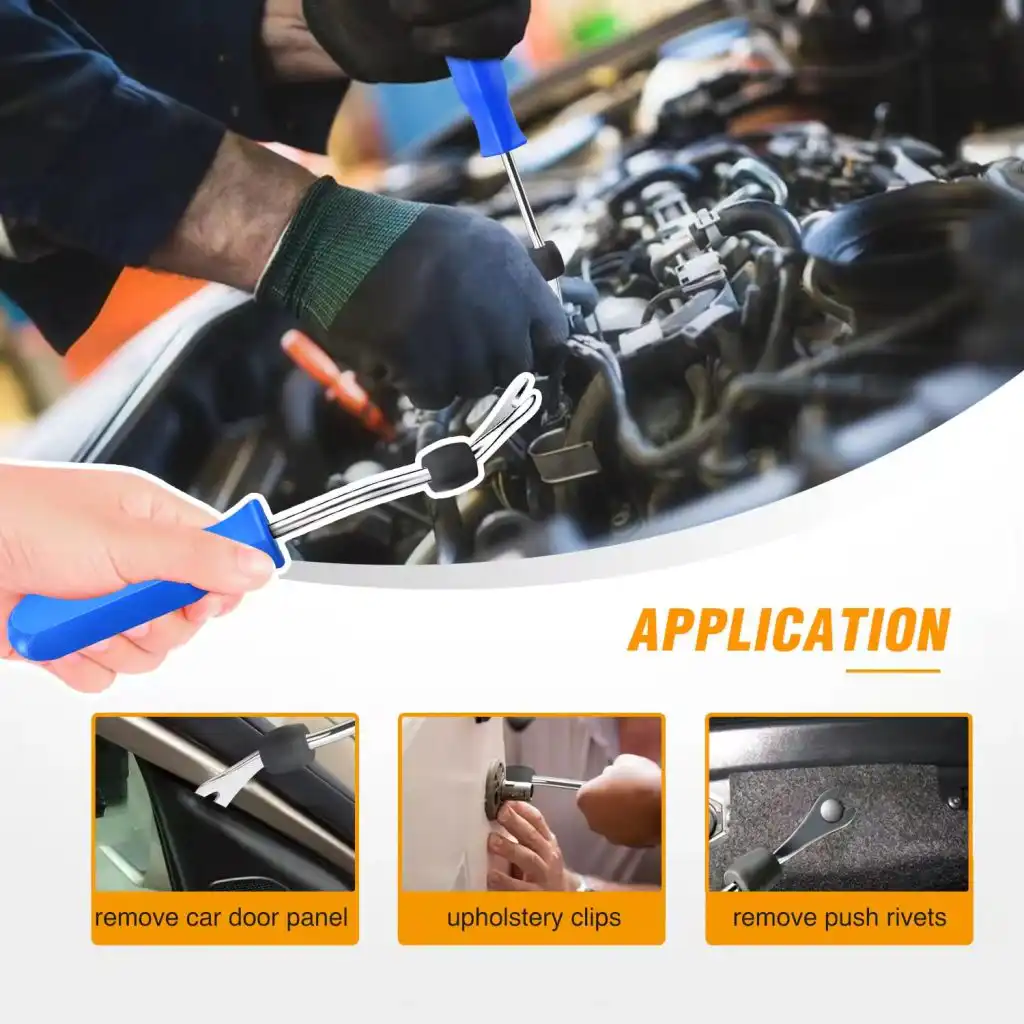
Common Types of Plastic Fasteners and Their Applications
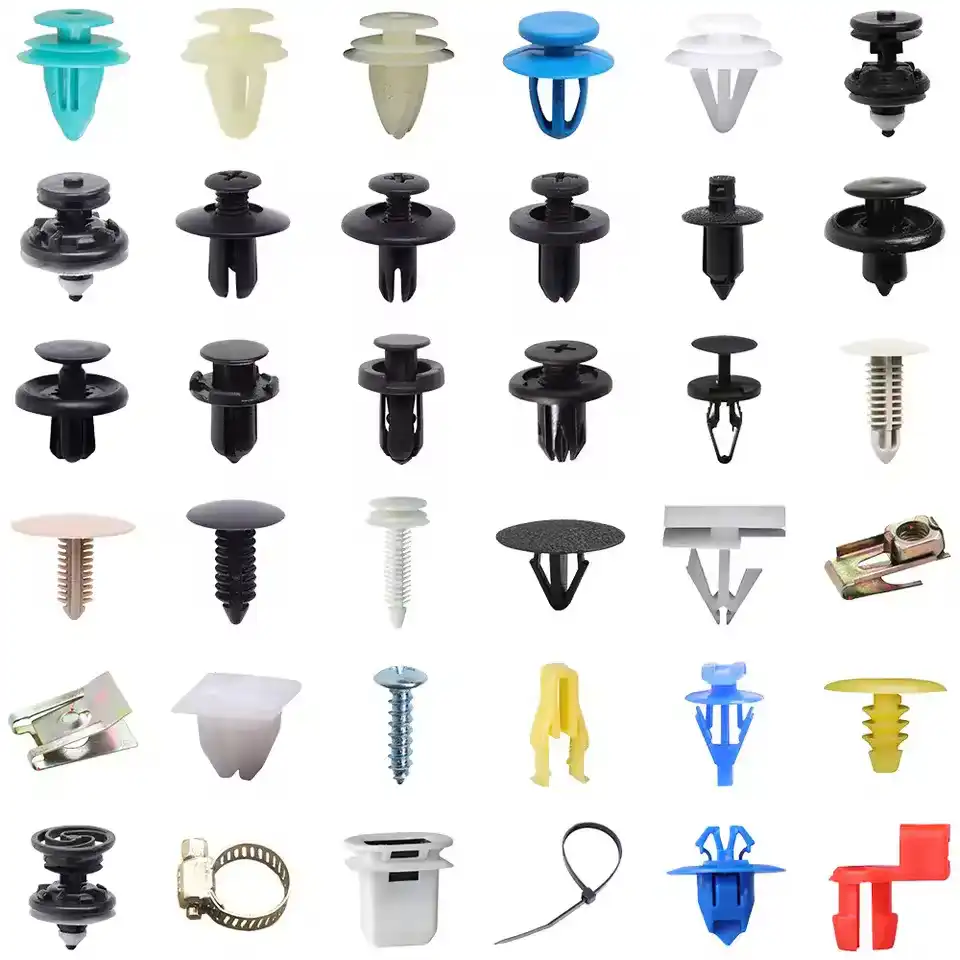
Automotive fasteners come in a wide variety of shapes and sizes, each designed for a specific function. The table below outlines some of the most common types. For complex fastener designs, our thiết kế sản phẩm team can optimize geometry for both function and manufacturability.
| Fastener Type | Mô tả | Các ứng dụng điển hình |
|---|---|---|
| Push-Type Retainers (Christmas Tree Clips) | Feature a flexible ribbed shaft that compresses when pushed into a hole and expands to hold securely. | Securing interior trim panels, door panels, trunk liners, and fender liners. |
| Screw Grommets / Well Nuts | A threaded insert, often with a rubber or plastic body, that accepts a screw. The body expands as the screw is tightened. | Mounting components where a threaded metal insert is impractical; often used in plastic bumper covers and panels. |
| Panel Retainers / U-Nuts | A U-shaped clip that slides over a panel edge and provides a threaded hole for a screw. | Securing trim pieces, grilles, and interior components to body panels. |
| Hose and Line Clips | Designed to secure wiring harnesses, fuel lines, or coolant hoses to the vehicle body or frame, preventing chafing and movement. | Throughout the engine bay and underbody, organizing and securing cables and hoses. |
| Bumper Clips / Retainers | Heavy-duty fasteners designed to withstand the elements and secure plastic bumper covers, grilles, and valence panels. | Front and rear bumper assemblies, fender liners, and underbody shields. |
| Door Panel Clips | Specially designed clips that attach the inner door trim panel to the metal door frame. Often feature a wide head to distribute load and prevent pull-through. | Securing interior door panels, armrests, and map pockets. |
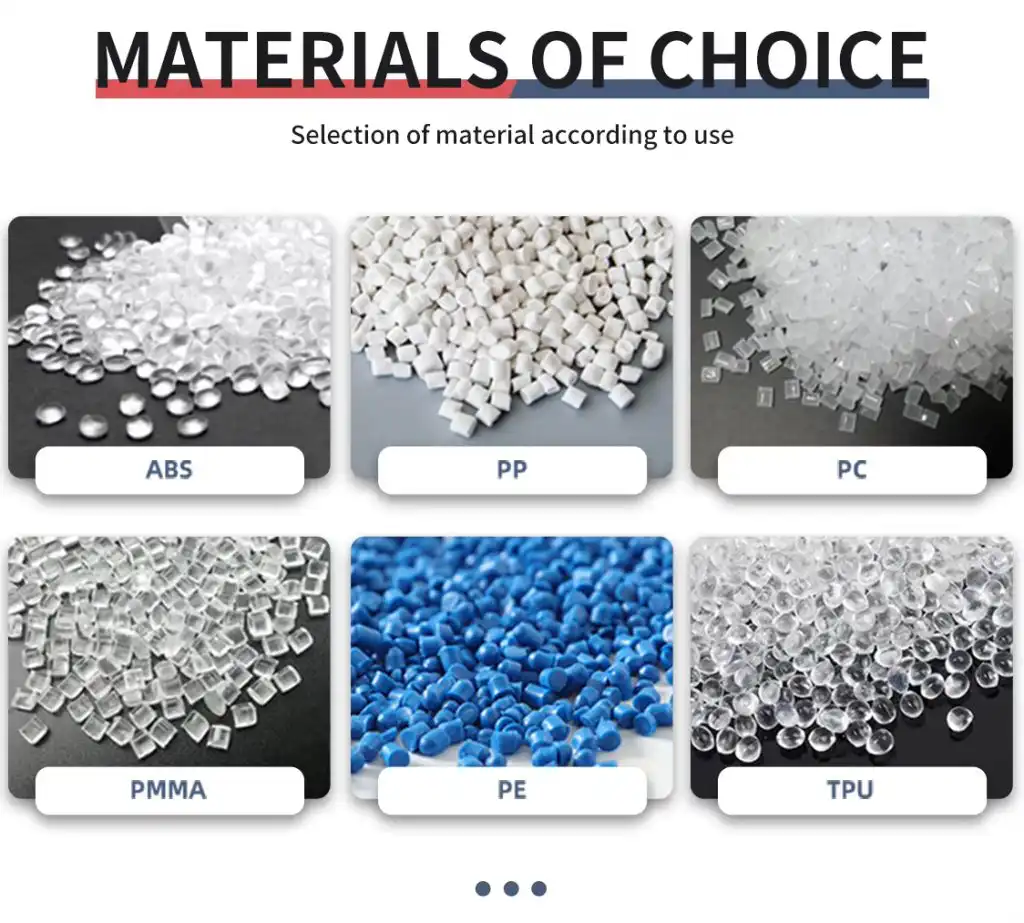
Material Matters: Choosing the Right Plastic
The performance of a fastener is heavily dependent on the material from which it is made. The reference product highlights the use of durable nylon. Here is a breakdown of common materials used for automotive fasteners. Our Trung tâm lựa chọn vật liệu provides deeper guidance on matching polymers to application requirements.
| Chất liệu | Các đặc tính chính | Các ứng dụng điển hình |
|---|---|---|
| Nylon (PA6, PA66) | High strength, excellent wear resistance, good flexibility, resistant to common automotive fluids (oils, fuels). The most common material for automotive clips and retainers. | Most interior and under-hood applications, including door panel clips, push pins, and wiring harness retainers. |
| Acetal (POM) | High stiffness, low friction, excellent dimensional stability, good chemical resistance. | Fasteners requiring precision and low friction, such as clips for moving parts or those in tight spaces. |
| Polypropylene (PP) | Good flexibility, fatigue resistance (living hinge), chemical resistance, low cost. | Hose clips, one-piece fasteners with integrated hinges, and applications requiring flexibility. |
| Polyethylene (PE) | Good flexibility, toughness, chemical resistance, low cost. Often used in less demanding applications or in softer clips. | General-purpose clips, cable ties, and protective caps. |
Key Material Consideration: For most automotive interior and exterior applications, nylon (PA66) is the material of choice due to its excellent balance of strength, flexibility, and resistance to the temperature ranges and chemicals encountered in a vehicle. Our plastic material expertise ensures optimal resin selection for every fastener type.

Quality Standards: What to Look For
Sourcing reliable fasteners is critical. The reference product emphasizes compliance with Tiêu chuẩn ISO 9001 và OEM quality assurance. At Nylon Plastic, our quality management systems are certified to ISO 9001, IATF 16949, and other international standards.
| Quality Indicator | What It Means | Why It Matters |
|---|---|---|
| Chứng nhận ISO 9001 | The manufacturer has a certified quality management system, ensuring consistent processes and product quality. | Provides confidence in the manufacturer’s ability to deliver consistent, reliable products batch after batch. |
| OEM Quality / Specifications | The fastener is designed and manufactured to meet the original equipment manufacturer’s specifications for fit, form, and function. | Ensures the fastener will fit perfectly, perform as intended, and last as long as the original part, minimizing the need for modifications. |
| Material Certification | The plastic resin used is certified and traceable to its source. | Guarantees the material properties (strength, flexibility, heat resistance) are as specified and consistent. |
| Độ chính xác về kích thước | The fastener is molded to precise dimensions, ensuring it fits the intended hole or mating component correctly. | Prevents loose-fitting fasteners that can rattle or fall out, and overly tight ones that can crack during installation. |

Sourcing and Customization Options
Whether you need standard replacement clips or custom-designed fasteners for a new vehicle program, understanding sourcing options is key. The reference product page provides insights into typical supply arrangements.
| Sourcing Aspect | Mô tả | Considerations |
|---|---|---|
| Standard Off-the-Shelf Fasteners | Common clip types and sizes are often available from stock for immediate delivery. | Ideal for repair shops, parts distributors, and low-volume needs. Look for organized packaging (e.g., 100 pieces per PE bag). |
| Custom OEM Fasteners | Fasteners designed to a customer’s exact specifications for a specific vehicle model or application. | Requires collaboration with an experienced manufacturer capable of mold design, material selection, and precision molding. |
| Tùy chỉnh màu sắc | Fasteners can be produced in specific colors for brand identification or part coding. | Của chúng tôi tùy chỉnh màu sắc services ensure precise Pantone or RAL matching for any fastener. |
| Mold Material & Design | The quality of the mold directly impacts fastener precision and longevity. | We offer comprehensive mold material customization using premium steels like P20, 718, NAK80, and S136. |
| Minimum Order Quantities (MOQs) | For custom orders, MOQs can be significant (e.g., 100,000 pieces or more for custom packaging/logo). | For large-volume OEM programs, this is standard. For smaller runs, inquire about stock items or lower MOQ options. |
| Lead Times | Stock items can ship in days (e.g., 7-15 days). Custom mold development and production will take weeks longer. | Plan your sourcing accordingly. For custom needs, factor in time for design, tooling, sampling, and production. |
| Đóng gói | Fasteners can be supplied in simple bulk bags (e.g., PE plastic bags), or in custom packaging with branding and part numbers. | Choose based on your inventory management and distribution needs. |
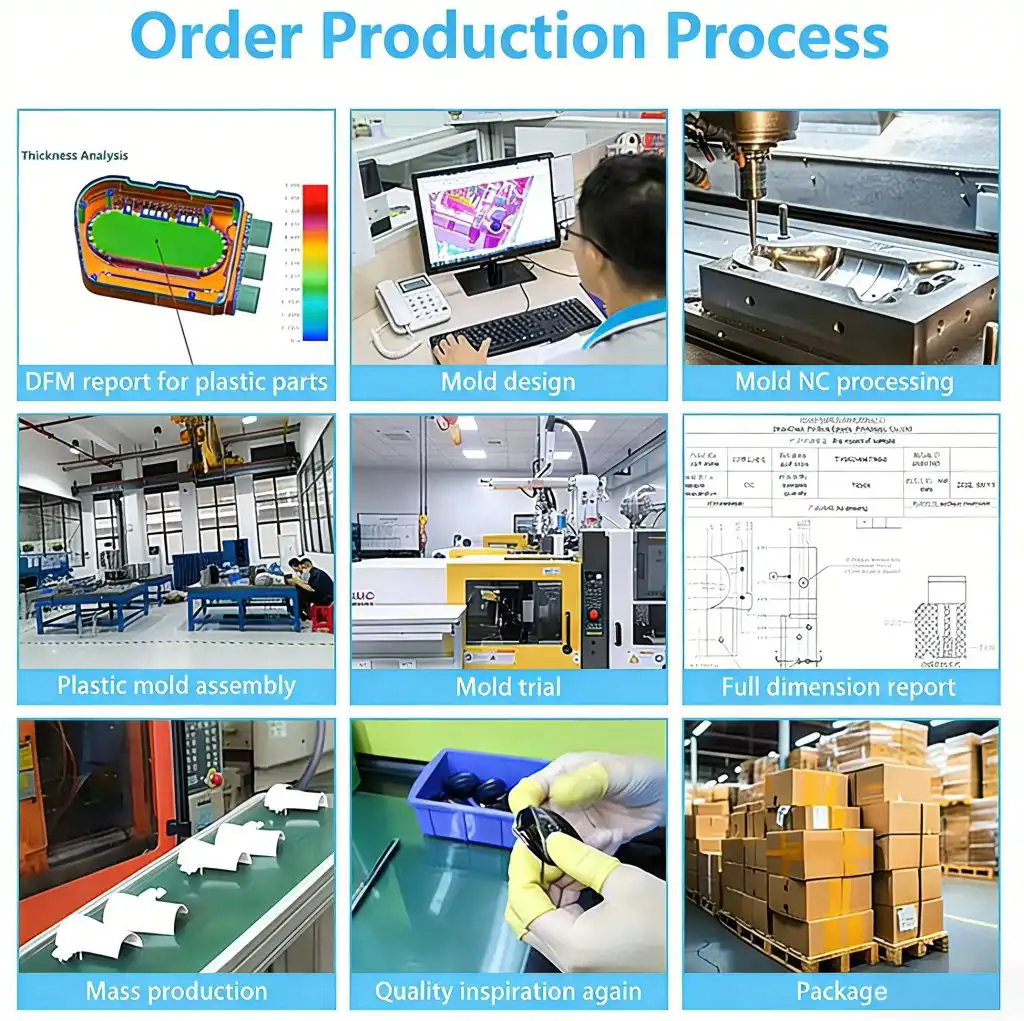
The Manufacturing Process: From Concept to Clip
Producing high-quality automotive fasteners requires a seamless, integrated approach. At Nhựa nylon , we offer end-to-end ép phun services that ensure consistency and quality at every stage.
| Sân khấu | Quy trình và công nghệ cốt lõi | Kết quả về chất lượng và hiệu quả |
|---|---|---|
| 1. Thiết kế & Kỹ thuật | – Collaborative design based on customer specifications, drawings, or samples. – DFM (Design for Manufacturability) analysis to optimize part design. |
A fastener design optimized for function, manufacturability, and cost, meeting all application requirements. |
| 2. Lựa chọn vật liệu | – Selection of the optimal engineering plastic based on performance needs (temperature, chemical, mechanical). – Sourcing of certified, traceable materials from qualified suppliers. |
Guaranteed material performance, consistency, and compliance with automotive specifications. |
| 3. Precision Mold Design & Fabrication | – Mold design using advanced CAD software, incorporating gating, cooling, and ejection systems. – Fabrication from high-grade tool steel using high-precision CNC machining. |
A durable, high-precision tool capable of producing millions of consistent, high-quality fasteners. |
| 4. Injection Molding Production | – Precision molds installed in state-of-the-art injection molding machines. – Process parameters strictly monitored and controlled for consistency. |
Consistent, repeatable production of fasteners meeting tight dimensional and performance specifications. |
| 5. Quality Assurance & Testing | – In-process and final inspection using precision measurement tools. – Functional testing as required (e.g., pull-out force, temperature cycling). |
Guaranteed fastener quality, traceability, and compliance with rigorous automotive industry standards. |
FAQ: Plastic Fasteners for Cars
Q1: How do I identify the correct plastic clip for my vehicle?
A: The best approach is to refer to your vehicle’s parts catalog using your VIN. Alternatively, you can remove the existing clip and compare it to supplier catalogs or samples. Many suppliers offer identification services based on photos or samples.
Q2: Can I reuse plastic clips after removal?
A: It depends on the clip type and its condition. Some push-type retainers can be reused once or twice if not damaged. However, many clips are designed as one-time-use and may lose holding power upon removal. For a professional, rattle-free repair, it is always best to use new fasteners.
Q3: Are all plastic fasteners the same quality?
A: No. Quality varies significantly based on the material used and manufacturing precision. Low-quality fasteners may be made from brittle recycled plastic, will not fit correctly, or will break easily during installation. Look for OEM-quality parts from suppliers with Tiêu chuẩn ISO 9001 certification to ensure reliability.
Q4: What should I do if I need a custom fastener for a new design?
A: Contact an experienced manufacturer like Nylon Plastic. You will need to provide design specifications or samples. We can assist with material selection, design for manufacturability (DFM), and produce the custom mold. Be prepared for higher minimum order quantities for fully custom parts with branded packaging.
Q5: Do you offer samples for testing?
A: Yes. We offer sample pieces for evaluation, allowing you to verify fit and quality before committing to a larger order. Liên hệ với chúng tôi to discuss your sampling needs.
Q6: What industries do you serve besides automotive?
A: Của chúng tôi kinh nghiệm chuyên môn trong ngành spans automotive, electronics, home appliances, and industrial equipment. The same precision and quality we apply to automotive fasteners extends to components for these sectors as well.
Conclusion: Small Parts, Big Impact
Plastic Fasteners for Cars are small components that play a huge role in vehicle quality, durability, and serviceability. Whether you are manufacturing new vehicles, distributing parts, or performing repairs, sourcing high-quality, OEM-specification fasteners is essential for a professional and lasting result.
Ready to secure your next project? Nylon Plastic offers comprehensive solutions for automotive plastic fasteners, from standard clips to custom-designed components. With expertise spanning lựa chọn vật liệu , thiết kế sản phẩm , tùy chỉnh màu sắc , và ép phun chính xác , we are your complete partner for automotive component manufacturing.
Câu hỏi thường gặp
When is Plastic Fasteners for Cars: The Essential Guide to OEM-Quality Clips and Retainers a good option?
Plastic Fasteners for Cars: The Essential Guide to OEM-Quality Clips and Retainers is a good option when fast iteration, complex geometry, low tooling cost, or low-volume production is more important than molded-part unit cost.
What should be checked before choosing Plastic Fasteners for Cars: The Essential Guide to OEM-Quality Clips and Retainers?
Kiểm tra kích thước chi tiết, tính chất vật liệu, độ nhám bề mặt, dung sai kích thước, mức độ tiếp xúc với nhiệt, hướng tải trọng và xem có cần xử lý sau gia công hay không.
How does Plastic Fasteners for Cars: The Essential Guide to OEM-Quality Clips and Retainers compare with CNC machining?
In 3D có thể tạo ra các hình dạng phức tạp một cách nhanh chóng, trong khi gia công CNC thường mang lại độ bền cao hơn cho các bề mặt chính xác, dung sai chặt chẽ hơn và sử dụng vật liệu đạt tiêu chuẩn sản xuất.
What affects the cost of Plastic Fasteners for Cars: The Essential Guide to OEM-Quality Clips and Retainers?
Chi phí phụ thuộc vào vật liệu, thể tích in, thời gian in, độ dày lớp, việc tháo khung đỡ, hoàn thiện, kiểm tra và số lượng chi tiết trong mô hình.