
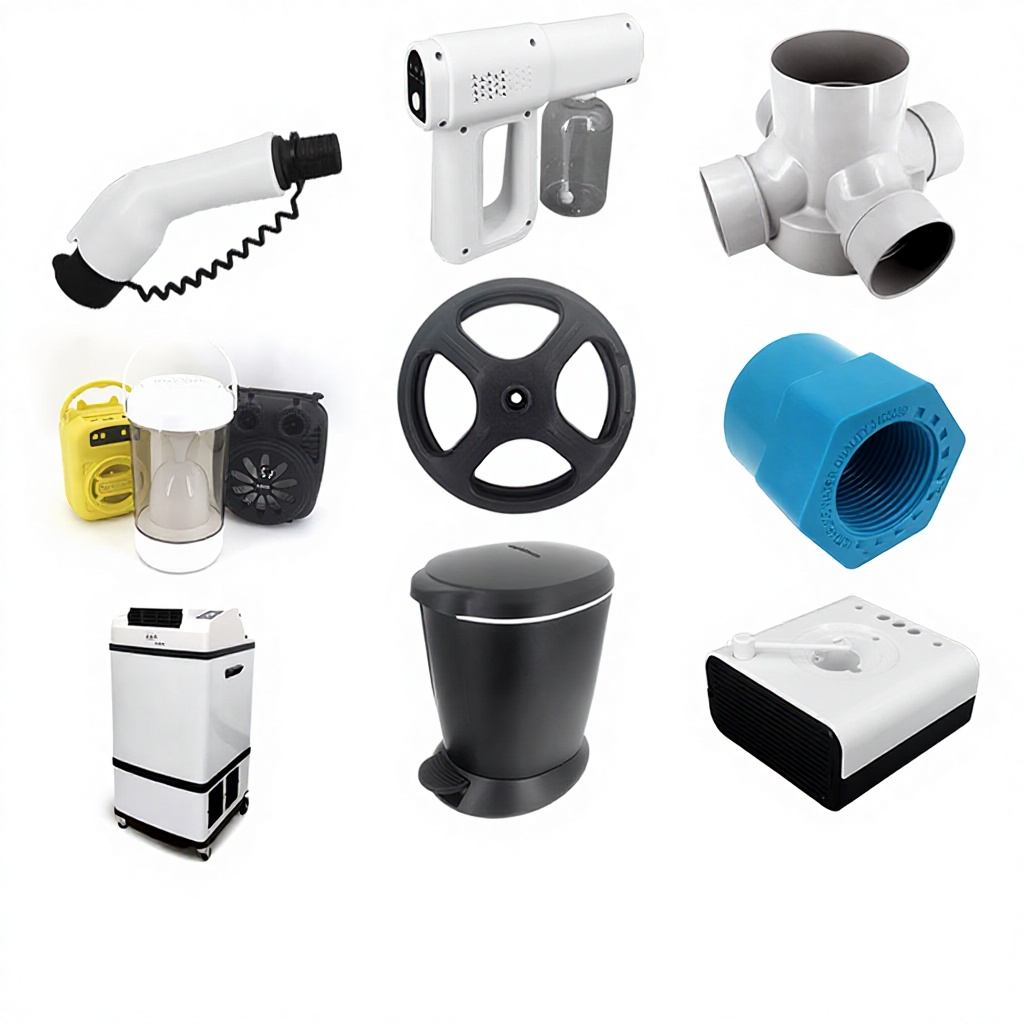
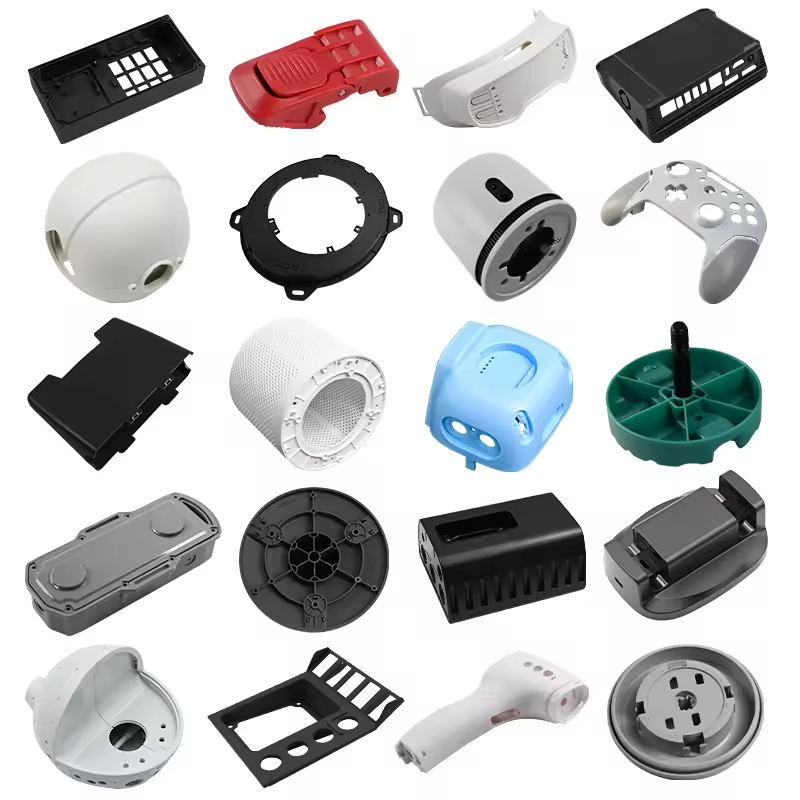
Plastic injection molding parts are ubiquitous in modern life, found in everything from automotive dashboards and medical devices to consumer electronics and household appliances. Injection molding is the most widely used process for mass‑producing complex, high‑precision plastic components because it offers exceptional repeatability, design flexibility, and cost‑efficiency at scale. This guide covers the materials, process, applications, and quality considerations for custom injection molded parts, helping you understand how to bring your design to production reliably and affordably. At 尼龍塑膠 , we combine decades of material science expertise with advanced injection molding capabilities to deliver high‑quality, custom plastic components for clients worldwide.
What Is Injection Molding?
Injection molding is a manufacturing process in which molten thermoplastic or thermoset material is forced under high pressure into a precisely machined metal mold cavity. The material cools and solidifies into the shape of the cavity, forming a finished part. Once the mold is closed, the cycle repeats, enabling the production of thousands to millions of identical parts with minimal variation.
The process is highly automated, fast (cycle times range from a few seconds to minutes), and capable of producing parts with extremely tight tolerances (±0.05 mm or better). It is ideal for high‑volume production runs but can also be cost‑effective for smaller quantities when using rapid tooling or multi‑cavity molds.

Why Choose Injection Molding for Your Plastic Parts?
Injection molding offers several distinct advantages over other manufacturing methods like 3D printing, CNC machining, or thermoforming.
| Advantage | 說明 |
|---|---|
| High Volume Efficiency | Once the mold is built, cycle times are very short (often under 60 seconds), making it the most economical process for large quantities. |
| Exceptional Precision & Repeatability | Modern injection molding machines and hardened steel molds produce identical parts within tight tolerances, critical for assembly‑line fit and functional performance. |
| Complex Geometries | Undercuts, threads, ribs, bosses, and complex internal features can be molded directly, eliminating secondary operations. |
| Wide Material Choice | Dozens of thermoplastics—from commodity resins like PP and ABS to engineering plastics like PA, PC, PBT, and high‑performance polymers like PEEK—are readily available. |
| Low Per‑Part Cost | The high upfront tooling cost is amortized over the production volume, making per‑part cost extremely low for large runs. |
| Integration of Features | Insert molding, overmolding, and multi‑shot molding allow the integration of metal inserts, soft‑touch grips, or different colors in one part. |
| Excellent Surface Finish | Mold textures (from matte to high gloss) can be applied directly to the tool, producing parts ready for use without post‑processing. |
Common Materials for Plastic Injection Molding Parts
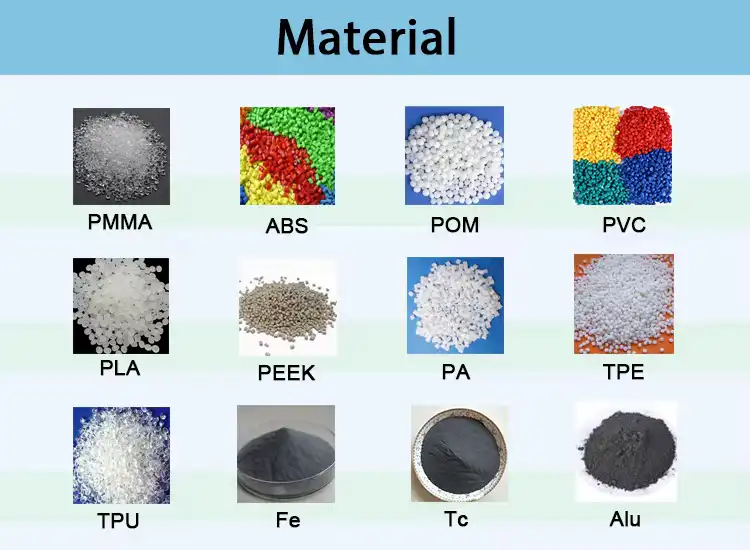
Selecting the right material is critical for part performance, cost, and manufacturability. The table below summarizes the most commonly used thermoplastics in injection molding.
| 材質 | 關鍵特性 | 典型應用 |
|---|---|---|
| ABS (丙烯腈-丁二烯-苯乙烯) | High impact strength, toughness, good heat stability, excellent surface finish, easy to plate or paint | Automotive interior trim, dashboard components, grilles, mirror housings, consumer electronics enclosures, toys, power tool housings, medical device enclosures |
| PP(聚丙烯) | Lightweight, excellent chemical resistance, fatigue resistance (living hinge), low cost, good electrical insulation | Automotive battery cases and trims, consumer goods, food containers, caps and closures, medical syringes, industrial pipes and fittings |
| PA6 / PA66 (Nylon) | High strength, wear resistance, self‑lubricating, good fatigue resistance, absorbs moisture | Gears, bearings, bushings, automotive under‑hood components (engine covers, intake manifolds), electrical connectors, cable ties |
| PC(聚碳酸酯) | High impact strength, optical clarity, heat resistance, dimensional stability | Transparent covers, headlamp lenses, medical devices, electronic enclosures, safety goggles, bullet‑resistant glass substitutes |
| PBT (Polybutylene Terephthalate) | Good electrical properties, chemical resistance, dimensional stability, often glass‑reinforced | Electrical connectors, sensor housings, ignition components, exterior automotive trim, appliance parts |
| POM (乙縮醛) | High stiffness, low friction, excellent wear resistance, good dimensional stability | Gears, bearings, valve components, pump parts, food handling equipment, zippers |
| TPU (Thermoplastic Polyurethane) | Flexibility, abrasion resistance, shock absorption, rubber‑like feel | Seals, gaskets, overmolded soft‑grip handles, protective bumpers, shock‑absorbing components |
| PC/ABS Blend | Balanced properties of PC and ABS: high impact resistance, heat resistance, good processability | Automotive interior parts (instrument panels, pillar covers), electronic housings, medical equipment enclosures |
For help selecting the optimal material for your injection molding project, visit our 材料選擇中心 .

The Injection Molding Process: Step by Step
A professional injection molding service follows a rigorous workflow to ensure part quality and consistency.
| 階段 | Core Activities | Outcome |
|---|---|---|
| 1. Part Design & DFM | Design the part using CAD software. Engineers perform Design for Manufacturability (DFM) analysis to optimize wall thickness, draft angles, gate location, and ejection features. | A production‑ready design with minimal risk of defects. |
| 2.材料選擇 | Choose the appropriate thermoplastic based on mechanical, thermal, chemical, and aesthetic requirements. | Guaranteed material performance for the application. |
| 3. Mold Design & Fabrication | Design a multi‑part steel mold (e.g., P20, 718, NAK80, S136) using advanced CAD/CAM. Machine the mold with high‑precision CNC, then assemble and polish. | A durable, high‑precision tool capable of millions of cycles. |
| 4. Injection Molding | Install the mold in an injection molding machine. Melt plastic pellets, inject into the cavity under high pressure, hold pressure, cool, and eject the part. | Consistent, repeatable parts meeting dimensional specifications. |
| 5. Secondary Operations (if needed) | Perform trimming, degating, drilling, tapping, ultrasonic welding, heat staking, painting, plating, or assembly. | Finished parts ready for integration or shipment. |
| 6.品質保證 | Inspect parts using CMM, optical comparators, and other tools. Test for dimensions, strength, and appearance. | Guaranteed quality and compliance with standards (ISO 9001, IATF 16949). |

Key Design Considerations for Injection Molded Parts
To ensure your 塑膠射出成型零件 are manufacturable, cost‑effective, and defect‑free, adhere to these design guidelines:
| Design Feature | Recommended Practice |
|---|---|
| Wall Thickness | Keep as uniform as possible. Typical range: 1.5–4.0 mm for most thermoplastics. Avoid thick sections that cause sink marks and voids. |
| Draft Angle | Add 1–3° of draft to all vertical walls to allow easy part ejection without scratching. |
| Ribs | Use ribs to add stiffness instead of increasing wall thickness. Rib thickness should be ≤ 0.6 times the nominal wall. |
| Corners | Round internal and external corners with a radius ≥ 0.5 mm to reduce stress concentration and improve flow. |
| Gates | Locate gates away from stress‑bearing areas and aesthetic surfaces. Common types: edge, fan, pin, or submarine gates. |
| Ejector Pins | Design flat areas for ejector pins; avoid deep undercuts that require side‑actions (increase mold cost). |
| 表面處理 | Specify the desired finish (e.g., SPI standards: glossy, semi‑gloss, matte, textured). Textures can hide minor defects. |

Applications of Plastic Injection Molding Parts Across Industries
Injection molded components serve virtually every sector. Below are key examples.
| 產業 | Typical Parts | Material Examples | 關鍵需求 |
|---|---|---|---|
| 汽車 | Dashboard trim, door handles, HVAC vents, connector housings, under‑hood covers | ABS, PP, PA66, PC/ABS | Heat resistance, impact strength, UV stability, tight tolerances |
| 醫療與保健 | Syringe barrels, IV connectors, diagnostic device housings, surgical instrument handles | PC, ABS, PA, PP | Biocompatibility, sterilizability (EtO, gamma), cleanability, precision |
| 消費性電子產品 | Smartphone cases, laptop bezels, power tool housings, TV frames | ABS, PC, PC/ABS | Aesthetic surface finish, flame retardancy (UL94 V‑0), dimensional stability |
| Home Appliances | Washing machine agitators, refrigerator door bins, blender jugs, vacuum cleaner parts | PP, ABS, PA | Chemical resistance, toughness, thermal stability, food contact (FDA) grades |
| 工業設備 | Gears, pump housings, valve bodies, conveyor chain links, bearing retainers | POM, PA66, PBT, PEEK | Wear resistance, low friction, high strength, chemical resistance |
| 包裝 | Caps, closures, thin‑walled containers, crates | PP, HDPE, PET | Fast cycling, good flow, stiffness, barrier properties |

Wear‑Resistant and Mechanical Plastic Parts
For applications requiring exceptional durability, such as mechanical plastic special‑shaped parts or components exposed to continuous friction, material selection is critical. Glass‑fiber‑reinforced grades (e.g., PA66‑GF30, PBT‑GF30) offer significantly improved stiffness, heat deflection temperature, and creep resistance. For high‑wear environments, acetal (POM) provides a low coefficient of friction and excellent wear resistance, making it ideal for gears and bearings.
TPU (thermoplastic polyurethane) grades, such as ETERNALAST® LS7093A, offer excellent abrasion resistance (29 mm³) and high tear strength (131 kgf/cm) with a compression set of just 15% after 22 hours at 70°C, making them suitable for injection‑molded technical parts, cleaning devices, sporting goods components, and chair casters.
PP + GF30 (30% glass fiber) combines the chemical resistance and low density of polypropylene with significantly enhanced mechanical properties. It is widely used for structural components that must resist deformation under load, such as automotive brackets and industrial housings.

Quality Assurance for Injection Molding Parts
Reputable injection molding companies maintain strict quality control systems, often certified to ISO 9001, IATF 16949 (automotive), or ISO 13485 (medical). Key quality measures include:
- First Article Inspection (FAI): Comprehensive measurement of the first production run to verify all dimensions against the CAD model.
- In‑Process Monitoring: Continuous monitoring of melt temperature, injection pressure, holding pressure, and cooling time.
- Dimensional Inspection: Use of Coordinate Measuring Machines (CMM), optical comparators, and handheld gauges.
- Visual Inspection: Checking for surface defects such as sink marks, flow lines, burns, and short shots.
- Material Certification: Traceable material certificates from the resin supplier.
- Functional Testing: Where required, tests for impact resistance, heat deflection, tensile strength, or chemical resistance.

Customization Options for Injection Molded Parts
We offer a wide range of customization to meet your exact specifications:
| Customization | Options |
|---|---|
| 材質 | ABS, PP, PA6, PA66, PC, PBT, POM, TPU, PEEK, and custom blends |
| 顏色 | Pantone, RAL, or custom matching. See our 色彩客製化 服務。. |
| 表面處理 | Polished (high gloss), matte, textured (e.g., grain, leather, sand), plated, painted |
| Logo & Marking | Molded‑in text, logos, part numbers, or laser engraving |
| Assembly | Ultrasonic welding, heat staking, snap‑fits, screw assembly, adhesive bonding |
| 包裝 | Bulk boxes, custom foam inserts, retail‑ready packaging |
Why Choose Nylon Plastic for Your Injection Molding Parts?
With over 20 years of experience and ISO 9001, IATF 16949, and ISO 14001 certifications, Nylon Plastic provides a one‑stop solution from material compounding and mold design to high‑volume injection molding. Our advantages include:
- Vertical integration: In‑house material R&D, mold making, and injection molding.
- Rapid prototyping: 3D printing and CNC machining to validate designs before tooling.
- Low MOQ: Flexible production runs from small batches to millions of parts.
- Global export: Trusted by clients in over 30 countries across automotive, electronics, home appliances, and industrial sectors.
- IP protection: Strict NDAs and secure data handling.
FAQ: Plastic Injection Molding Parts
Q1: What is the minimum order quantity (MOQ) for custom injection molded parts?
A: MOQ depends on part size, complexity, and material. For low‑volume runs, we can work with 1,000–5,000 parts using simplified molds or rapid tooling. For high‑volume production, typical MOQs start at 10,000 parts. Contact us for a project‑specific quote.
Q2: How long does it take to get injection molded parts?
A: Lead time includes mold fabrication (4–8 weeks) plus production (2–4 weeks for the first batch). With expedited tooling or family molds, initial samples can be delivered in 3–4 weeks. For bridge tooling using 3D‑printed molds, we can provide functional parts in 1–2 weeks.
Q3: What file formats do you need to quote injection molding parts?
A: We accept 3D CAD files in STEP (.stp), IGES (.igs), SolidWorks (.sldprt), Parasolid (.x_t), or AutoCAD (.dwg/.dxf) . 2D drawings (PDF) with critical tolerances and material specifications are also required.
Q4: Can you help redesign my part for injection molding?
A: Yes. Our engineers provide 可製造性設計 (DFM) analysis, recommending changes to wall thickness, draft angles, gate location, and rib design to reduce defects, shorten cycle times, and lower cost.
Q5: How do you ensure part quality across large production runs?
A: We use first article inspection (FAI), in‑process sampling, and statistical process control (SPC). Our quality management system is certified to ISO 9001 and IATF 16949, ensuring consistent part quality.
Q6: Can you produce parts with inserts or overmolding?
A: Yes. We offer insert molding (metal threaded inserts, pins, or contacts) and overmolding (soft TPE over rigid plastic) in a single automated cycle.
Q7: What surface finishes are available for injection molded parts?
A: We offer SPI standard finishes from glossy (A‑1) to matte (D‑3), as well as custom textures (e.g., leather, sand, grain). Parts can also be painted, plated, or printed after molding.
Q8: What industries do you serve for injection molded parts?
A: We serve 多行業 including automotive, electronics, medical devices, home appliances, industrial equipment, and consumer goods. Our materials are selected to meet each industry’s regulatory and performance requirements.
Conclusion: Trusted Partner for Precision Plastic Injection Molding Parts
Plastic injection molding parts are the backbone of modern manufacturing. Whether you need high‑volume production of simple clips or complex, tight‑tolerance components for medical or automotive use, the right manufacturing partner ensures quality, consistency, and cost‑effectiveness. With decades of material science expertise, in‑house tooling, and a commitment to quality, Nylon Plastic delivers injection molded parts that meet your exact specifications.
Ready to start your injection molding project? Contact our engineering team today for a DFM review and competitive quote. We’ll guide you from material selection and mold design through production and finishing.
常見問題
When does Plastic Injection Molding Parts: Precision Manufacturing for Every Industry make sense?
Plastic Injection Molding Parts: Precision Manufacturing for Every Industry makes sense when the part volume, material choice, geometry, and repeatability needs justify mold design and tooling investment.
What design factors matter most for Plastic Injection Molding Parts: Precision Manufacturing for Every Industry?
Wall thickness, ribs, bosses, draft angle, gate location, shrinkage, parting line, and ejection all affect molded part quality.
What information is needed before mold production?
The supplier should confirm the 3D model, material, expected annual volume, appearance requirements, tolerance needs, and any assembly or functional testing requirements.
What is the biggest risk in Plastic Injection Molding Parts: Precision Manufacturing for Every Industry?
The biggest risk is approving tooling before material behavior, shrinkage, flow, and part function are fully checked against the real application.

 English
  Dutch
Dutch  German
  French
  Korean
  Russian
  Japanese
  Spanish
  Vietnamese
  Chinese
  Portuguese
  Arabic