
Both die casting and injection molding produce near-net-shape parts in high volumes from reusable steel tooling — but the material difference (metal vs plastic) drives dramatically different economics, lead times, and design rules. If you’re considering metal parts but haven’t evaluated engineering plastics like glass-filled nylon, you may be overpaying for material properties you don’t need.
製程比較
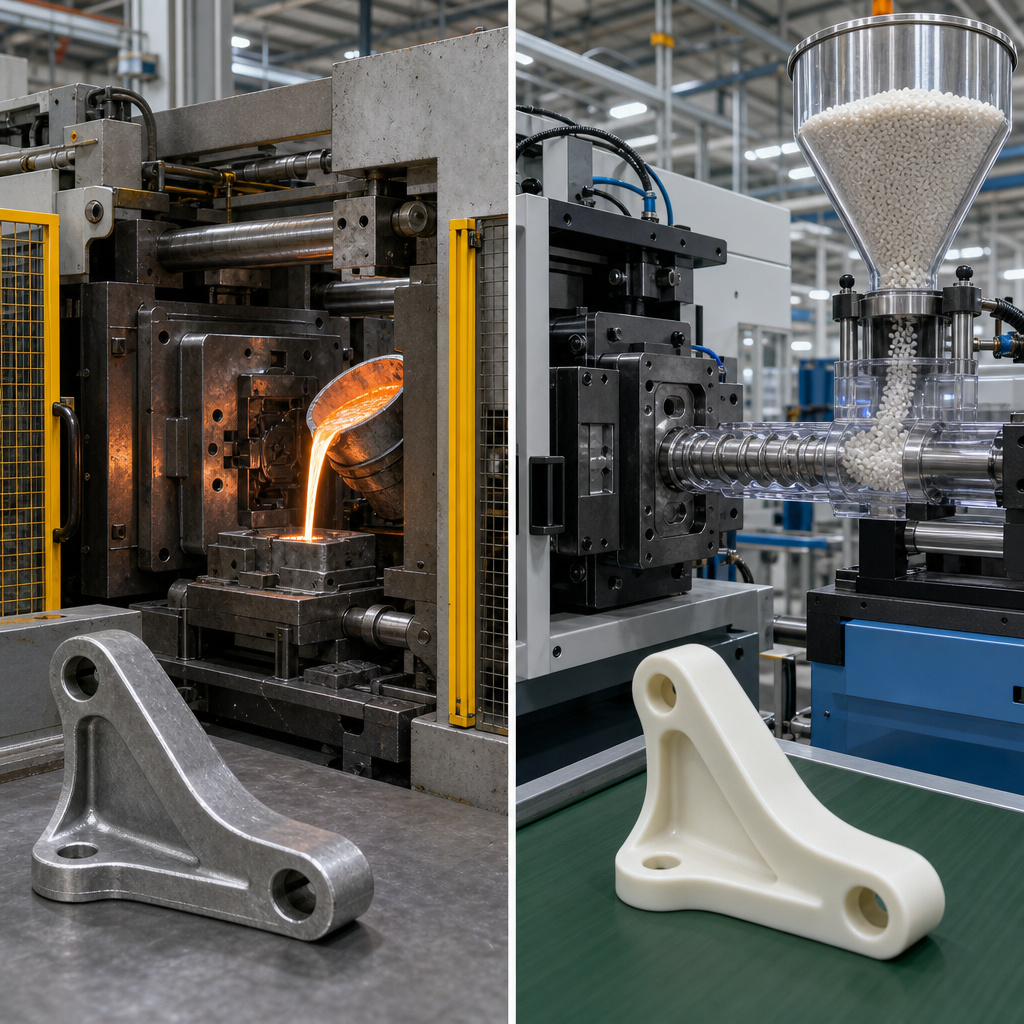
| 因子 | Die Casting (Aluminum/Zinc) | Injection Molding (Nylon/POM/ABS) |
|---|---|---|
| Mold Cost | $15,000-100,000+ | $3,000-25,000 |
| Tool Life | 100,000-300,000 shots (H13 steel) | 100,000-500,000 shots (P20/H13) |
| Cycle Time | 30-60 seconds | 15-45 seconds |
| Part Weight | 2-5x heavier (aluminum density 2.7 g/cm³) | Lighter (nylon density 1.14 g/cm³) |
| Max Service Temp | 300-400°C (aluminum) | 120-260°C (filled nylon / PEEK) |
When Plastic Replaces Die Cast Metal
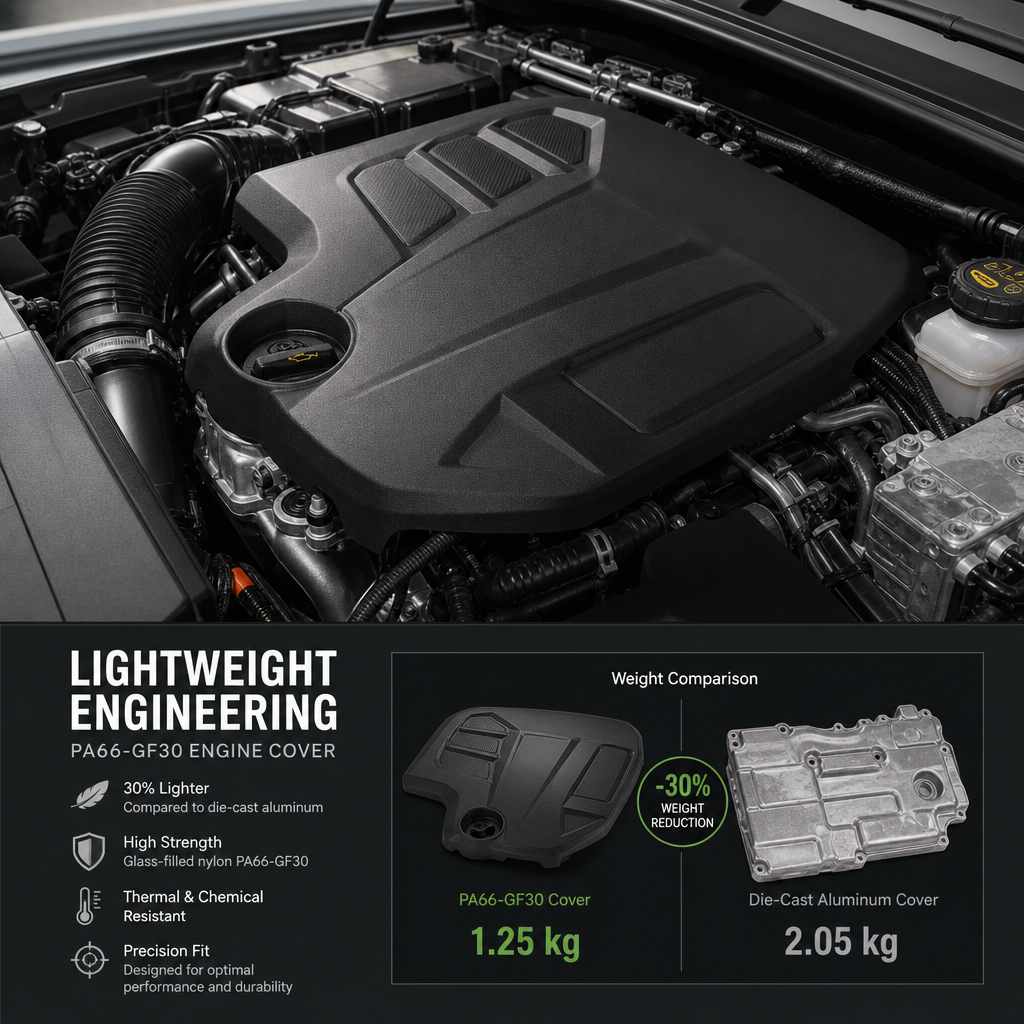
Modern glass-filled nylons (PA66-GF30, PA6-GF30) achieve tensile strengths of 160-200 MPa and heat deflection temperatures of 240-250°C — rivaling die-cast zinc in many applications. Automotive engine covers, previously die-cast aluminum, are now commonly injection molded from glass-filled nylon because the 60% weight reduction improves fuel economy without sacrificing under-hood durability.
When Metal Is Still the Right Call
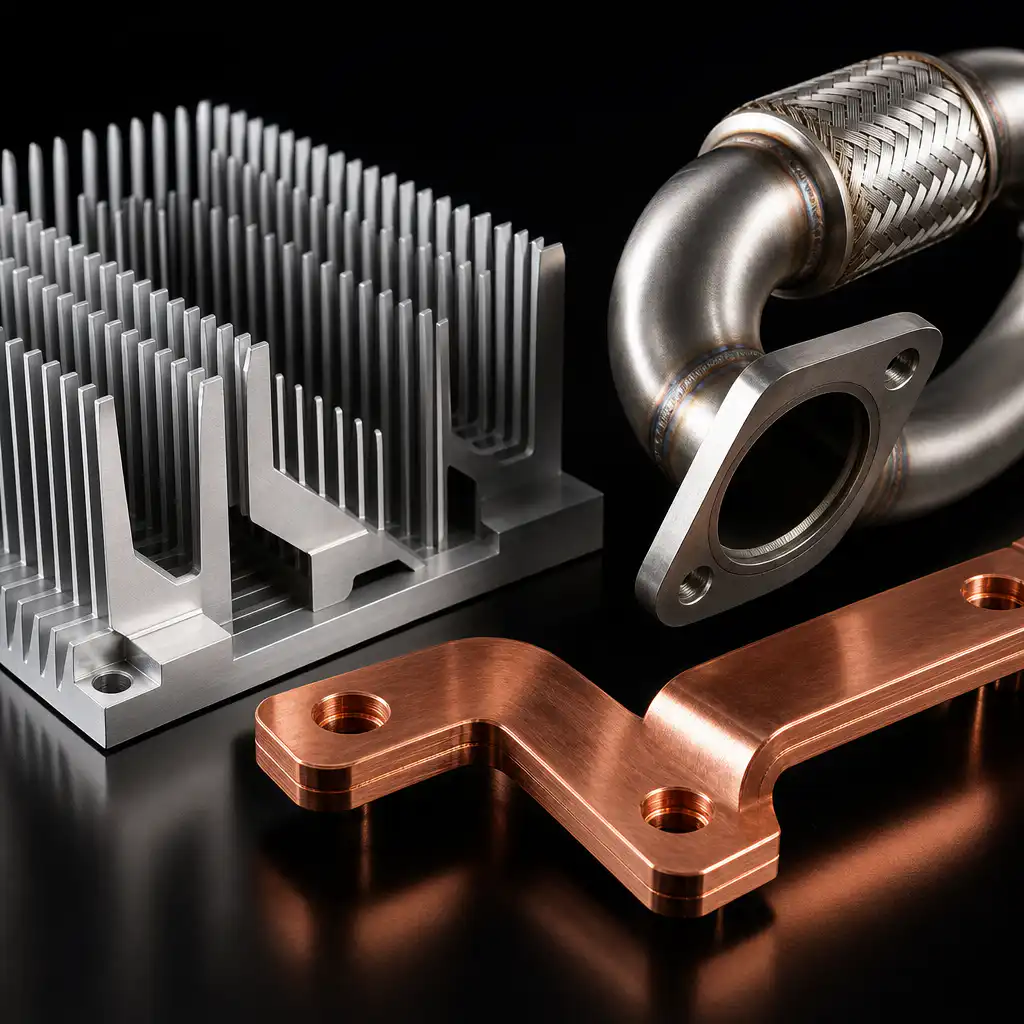
Die casting wins when the part must conduct electricity or heat, when operating temperatures exceed 250°C continuously, or when electromagnetic shielding is required. Plastic cannot replace metal for these functions — though metal insert molding can combine the best of both worlds by embedding a conductive metal insert into a lightweight plastic body.
常見問題
Can glass-filled nylon really replace die-cast aluminum?
For many mechanical brackets and housings, yes. A PA66-GF30 bracket can match the stiffness-to-weight ratio of die-cast aluminum at 40% less weight and with a less expensive mold. The limitation is temperature: above 180°C continuous service, nylon loses significant strength while aluminum doesn’t.
Why are plastic molds cheaper than die cast dies?
Plastic molds operate at 200-300°C and 500-2,000 psi. Die cast dies operate at 650-700°C molten metal temperature and 10,000-30,000 psi — requiring premium H13 tool steel, thermal management complexity, and tighter tolerances to prevent flashing with molten metal.
What about part tolerances?
Die casting holds ±0.05-0.10mm on small features versus injection molding at ±0.05-0.15mm. The difference is marginal for most applications. Both processes can achieve precision comparable to CNC machining for the right designs.
Can you help decide which process fits my part?
Yes. Send us your drawing or 3D model along with the operating environment (temperature range, chemical exposure, mechanical loads). We’ll evaluate both die casting and injection molding feasibility and give you an honest comparison.
Evaluating die casting vs injection molding?
Send us your part requirements. We’ll give you a side-by-side cost and performance comparison including both metal and engineering plastic options.


 English
 Dutch
Dutch German
 French
 Korean
 Russian
 Japanese
 Spanish
 Vietnamese
 Chinese
 Portuguese
 Arabic