
This page is deliberately different from a general CNC service article. The question here is not simply how to choose a machining vendor — it is how to source machined parts from China without losing control of quality, communication, or lead time. Cross-border sourcing adds variables that domestic buying guides usually ignore: timezone delay, engineering translation, export packing, revision control across email threads, and the difference between a factory that can machine the part and a supplier that can actually manage the order. If your real concern is overseas sourcing risk, supplier transparency, or how to compare Chinese quotes to local quotes, this is the right article to read.
There was. But it wasn’t the catch I expected — it was a learning curve. Over the next six months, we figured out the hard way that sourcing CNC machined parts from China isn’t about finding the cheapest shop. It’s about finding the right shop and knowing how to work with them.
If you’re an engineer or procurement manager wondering whether to pull the trigger on a Chinese CNC supplier, this guide is what I wish someone handed me five years ago. No marketing fluff. Just the stuff that actually matters on the shop floor.
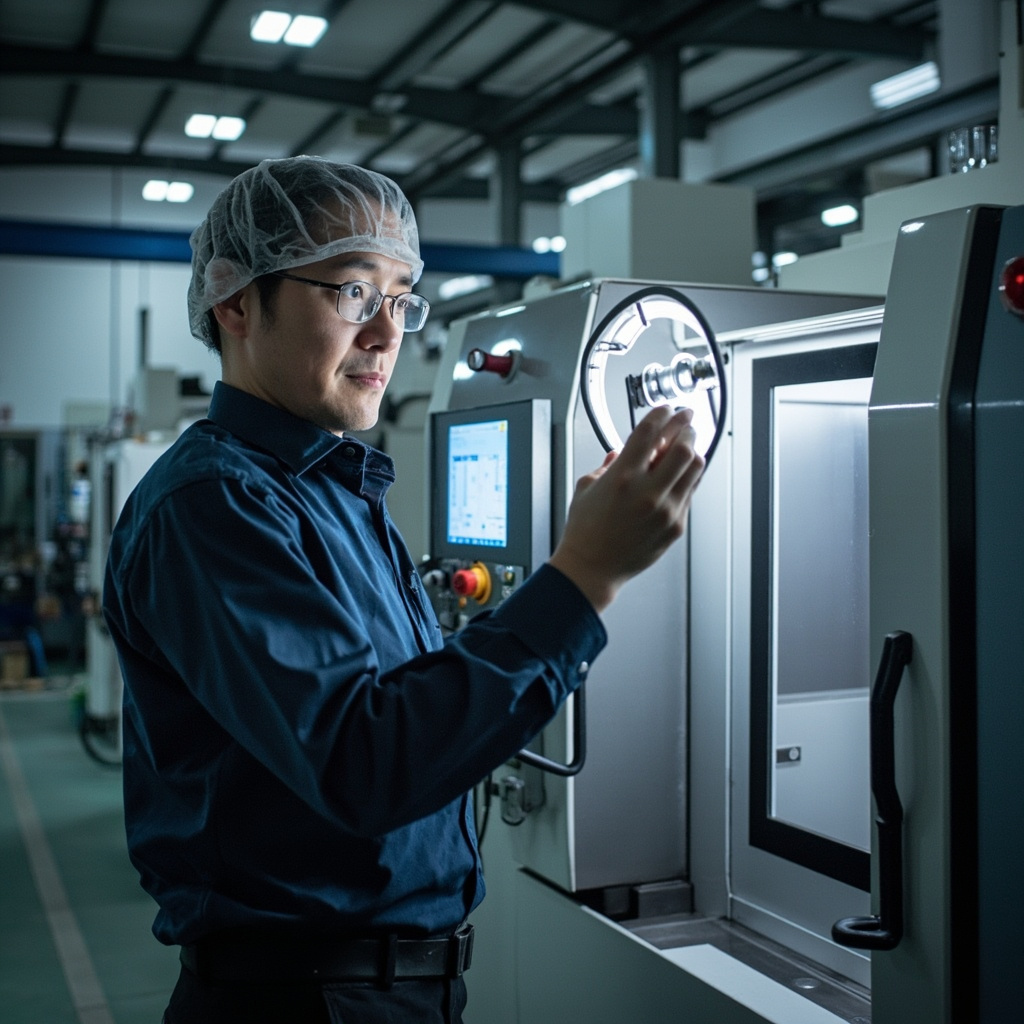
Core Concepts & Fundamentals
Let’s get one thing straight: “China CNC machining” isn’t one thing. It spans everything from a guy with two old machines in a shed to ISO 9001 / AS9100-certified facilities running lights-out production with Swiss-type lathes and 5-axis mills that cost more than your house.
The Chinese CNC machining market has matured dramatically over the past decade. The shops that survive and export are, by and large, serious operations. They’ve invested in DMG MORI, Mazak, Haas, and Doosan equipment. They know GD&T. They’ve got CMMs. They understand that an American or European customer isn’t going to accept “close enough.”
Here’s what you’re actually buying when you source from China:
- Labor-cost advantage on secondary operations. The machine time doesn’t change much — a spindle turns at the same speed everywhere. But deburring, , assembly, and packaging? That’s where the numbers shift.
- Material supply chain density. China’s raw material ecosystem is deep. Aluminum, stainless, brass, engineering plastics — the supply chains are short and competitive.
- Process specialization. Certain processes (like hard anodizing, electropolishing, or complex EDM work) are commodity-level services in industrial clusters like Shenzhen, Dongguan, and Suzhou.
But none of this matters if you pick the wrong shop or communicate poorly. That’s what the rest of this article is about.
Key Processes & Technologies
Chinese CNC shops offer essentially the same core processes you’ll find in any industrial economy. The difference is in where they specialize and how they package services.
| 製程 | Typical Chinese Shop Capability | 最適合 | Watch Out For |
|---|---|---|---|
| 3-Axis CNC Milling | Ubiquitous. Extremely competitive. Most shops run this 24/7. | Brackets, housings, plates, general prismatic parts | Quality variance at extreme tolerances (±0.005mm) |
| 5-Axis CNC Milling | Growing fast. Top-tier shops have 5-axis cells. Mid-tier increasingly adding them. | Impellers, complex aerospace components, medical implants | ming capability varies significantly between shops |
| CNC Turning | Standard capability. Swiss-type turning available at specialized shops. | Shafts, bushings, connectors, pins, fittings | Surface finish on non-standard materials can be inconsistent |
| Wire EDM | Very mature. China is arguably the global leader in EDM service volume. | Tight internal features, mold components, intricate profiles | Lead times can stretch during peak seasons |
| Sheet Metal Fabrication | Often bundled with CNC machining at full-service shops. | Enclosures, panels, chassis, mounting hardware | Welding aesthetics — specify expectations clearly |
The shops that stand out aren’t the ones with the most machines — they’re the ones that combine machining with in-house finishing, assembly, and quality control. When a shop can CNC machine your part, anodize it, laser-mark it, and ship it from one facility, you eliminate the finger-pointing that happens when subcontractors blame each other.
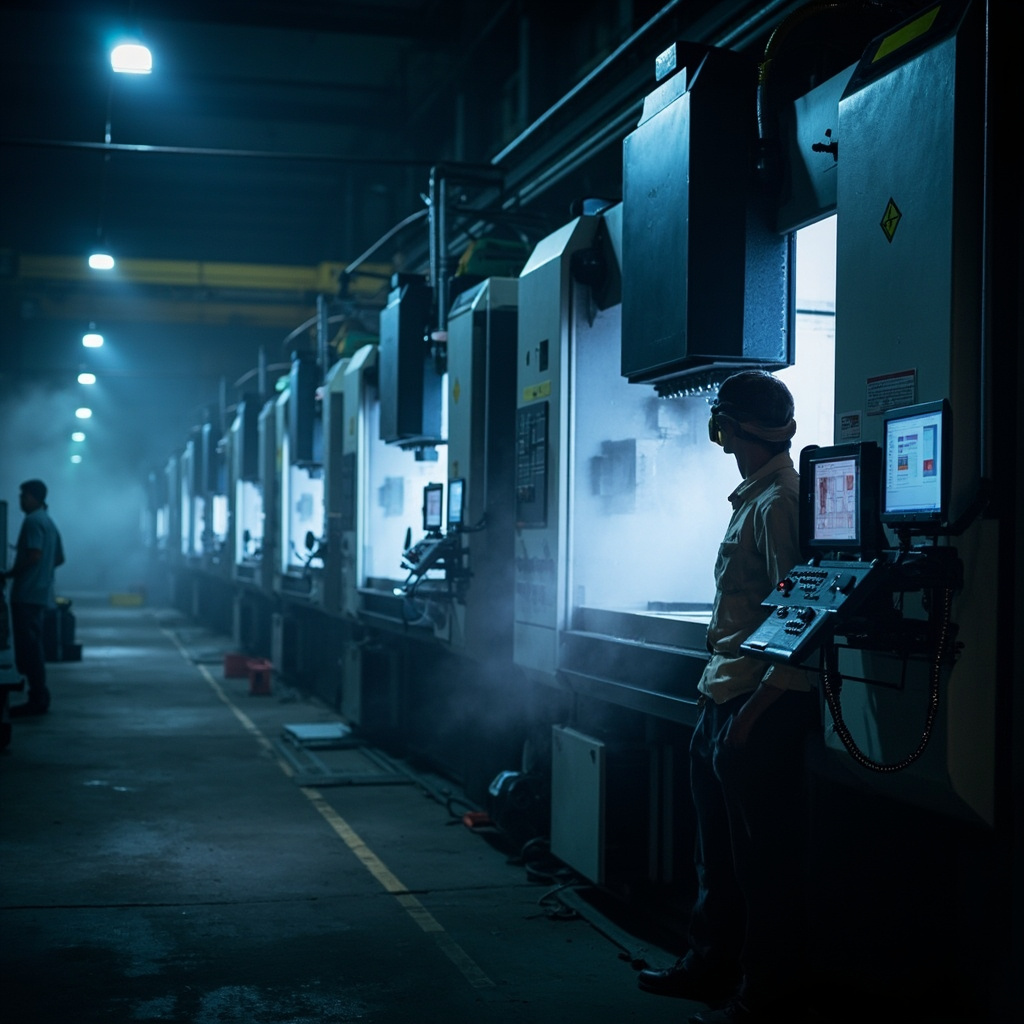
工業應用
| 產業 | 應用 | 材質 | Key Requirement | nylonplastic.com Advantage |
|---|---|---|---|---|
| 汽車 | Engine brackets, sensor housings, prototype drivetrain components | 6061-T6 Aluminum, 4140 Steel | High repeatability at volume, competitive piece price | Full CNC + finishing under one roof; ISO/TS 16949-aligned QC |
| 航太 | Lightweight structural brackets, fluid system manifolds, UAV components | 7075-T6 Aluminum, Ti-6Al-4V Titanium | AS9100-level traceability, material certs, FAI documentation | 5-axis capability + CMM reports on every batch |
| 醫療設備 | Surgical instrument bodies, implant trial components, diagnostic equipment housings | 316L Stainless, PEEK, Medical-grade Aluminum | Biocompatibility, surface finish Ra ≤ 0.4µm, full documentation | Cleanroom-compatible finishing, lot-level traceability throughout |
| 電子產品 | Heat sinks, RF enclosures, connector bodies, test s | 6061 Aluminum, Copper C110, FR4 alternatives | Tight flatness specs, EMI shielding requirements, fast turnaround | Rapid prototyping through production, anodizing in-house for thermal management |
| 工業設備 | Pump housings, valve bodies, wear plates, custom tooling | Ductile Iron, 17-4 PH Stainless, Hard-coat Aluminum | Durability under load, corrosion resistance, post-machining heat treat | Material sourcing flexibility, heat treatment partnerships, full finishing |
| 機器人自動化 | End-effector components, joint housings, mounting plates, custom grippers | 7075 Aluminum, Carbon Fiber-filled Nylon, Stainless 304 | Lightweight + high stiffness, precision assembly interfaces | Multi-process capability — CNC + 3D printing + injection molding for full robot builds |
One thing worth pointing out: the medical and aerospace rows are where you need to be most careful about supplier selection. These aren’t industries where you test the waters with an unknown shop. Your supplier needs to prove their documentation game before you send them anything that touches a patient or an aircraft.
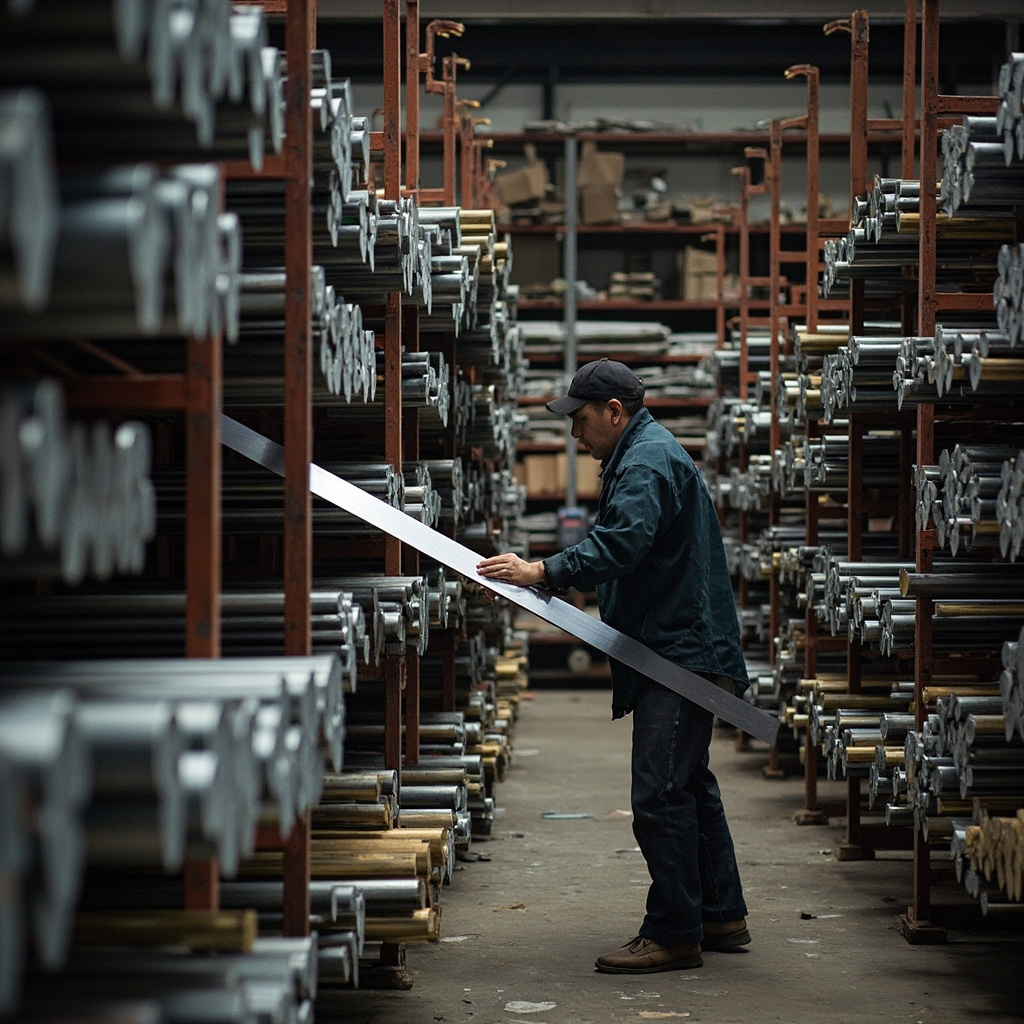
Material Selection — What Actually Works
Here’s the reality of sourcing materials through Chinese CNC shops: you can get almost anything, but some materials are a smarter play than others.
Materials where Chinese sourcing shines:
- 6061-T6 Aluminum: The king. Every shop stocks it, machines it daily, and knows its behavior. You’ll never get a better price-to-quality ratio on any other material.
- 7075-T6 Aluminum: Widely available. Higher strength than 6061. Common in aerospace and high-performance consumer products.
- 304 & 316 Stainless: Standard inventory at any serious shop. 316L for medical is readily available.
- Brass (C360): Excellent machinability, good availability, competitive pricing.
- POM (Delrin) & PEEK: Chinese engineering plastics supply chains are mature. PEEK pricing from China can be significantly better than Western suppliers — but verify the grade.
Materials that need more caution:
- Titanium alloys: Available, but not every shop machines it well. Tooling wear is brutal, and inexperienced shops will deliver parts with chatter and poor surface finish. Ask for titanium-specific experience samples.
- Exotic stainless grades (17-4 PH, 15-5 PH): Heat treatment knowledge varies. If your application requires specific H900/H1025/H1150 conditions, you need a shop that understands precipitation hardening — not just a mill-turn operation.
- Inconel & Hastelloy: Very few shops machine these well. The ones that do charge accordingly and have aerospace/energy industry pedigrees.
My rule of thumb: if your part is aluminum, stainless, brass, or engineering plastic, Chinese CNC is a no-brainer. If it’s a superalloy, you need to be more selective — but the top shops absolutely handle them.
Cost & Performance Trade-offs
Let’s talk real numbers — not exact quotes (those depend on your specific part), but the cost structure you’re dealing with.
Where the savings actually come from:
- Machine shop rate: Chinese shops typically run at $15-35/hr for milling and turning, compared to $80-150/hr in the US or Western Europe. That’s the headline number everyone focuses on, but it’s only part of the story.
- Material markup: Raw material costs in China are generally 15-30% lower, especially for aluminum and stainless. This compounds — lower material cost plus lower labor to process it.
- Secondary operations: Deburring, polishing, light assembly, packaging — these are labor-intensive steps where Chinese shops have a genuine advantage. Western shops often subcontract or rush these; Chinese shops bake them into the workflow.
- Surface finishing bundles: Anodizing, powder coating, plating — when done in-house or through long-standing local partners, these cost a fraction of what Western shops pay.
Where the savings can evaporate:
- Shipping and logistics: Air freight on dense metal parts adds up fast. For titanium or steel parts, you might find 20-30% of your unit cost is in the shipping. Sea freight is cheaper but adds 4-6 weeks.
- Tariffs and duties: These change with political winds. Budget for them and check current rates before quoting.
- Rework from quality escapes: The biggest hidden cost. One batch of out-of-spec parts that needs rework or replacement can wipe out your savings on three other projects. This is why supplier vetting matters more than the quote number.
- Communication overhead: Time zones, language barriers, and translation of technical requirements consume engineering hours. A good shop minimizes this; a bad one makes it a second job.
Here’s a practical framework: for a typical aluminum part with moderate complexity and quantity of 100-500 units, expect landed cost from China at 40-55% of a US-made equivalent. For complex parts requiring multiple setups or exotic materials, the gap narrows — maybe 60-70%. For very simple parts in high volume, Chinese CNC can hit 30-40% of Western pricing.
Quality Standards & Best Practices
This is the section that separates the engineers who have a smooth China sourcing experience from the ones who don’t.
Drawings are everything. I cannot stress this enough. A PDF with a few dimensions and a note saying “±0.1mm unless specified” is not a drawing. You need:
- Fully dimensioned 2D drawings with GD&T where it matters (flatness, perpendicularity, true position, profile)
- STEP or IGES 3D models that match the drawing exactly
- Clear callouts for critical-to-quality (CTQ) dimensions — mark them on the drawing
- Surface finish requirements stated in Ra (not “smooth” or “mirror finish”)
- Edge break specifications — “break all sharp edges 0.1-0.3mm” is specific. “Deburr” is not.
and documentation:
- Ask for material certifications — reputable shops provide these as standard
- For regulated industries, require lot traceability throughout the process
Communication cadence:
- Use WeChat or WhatsApp for quick questions, email for formal documentation
- Confirm receipt of all technical files — don’t assume they opened your STEP file
- Request in-process photos for first articles before parts ship
- Schedule a video call to review the first batch together — a 30-minute call prevents weeks of back-and-forth
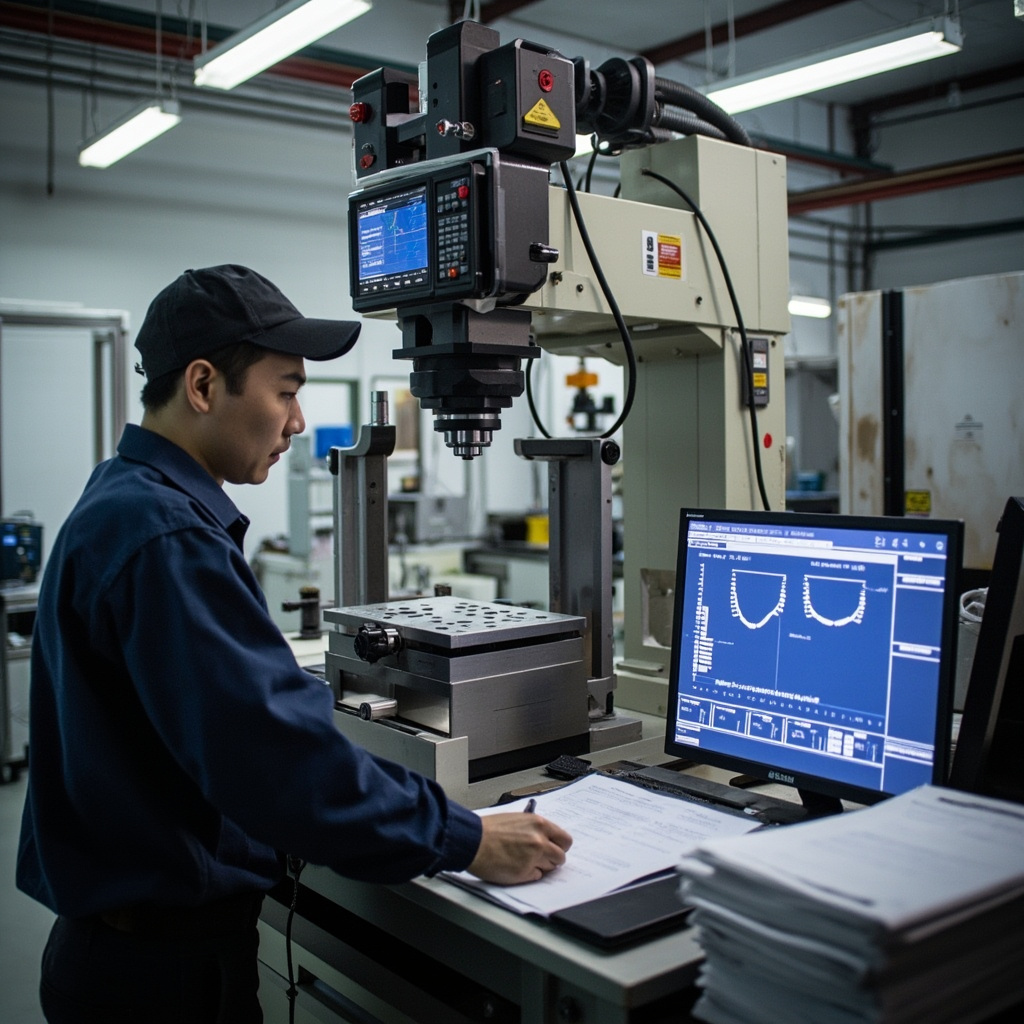
Getting Started — Practical Steps
If you’re ready to try Chinese CNC machining, here’s the sequence that minimizes your risk:
- Start with a low-risk part. Pick something that’s aluminum, moderate complexity, tolerances ≥ ±0.05mm, and not safety-critical. This is your supplier test — don’t make it your most demanding project.
- Send a complete RFQ package. Include: 3D model (STEP format), 2D PDF drawing, quantity and delivery timeline, material specification (grade + condition), finishing requirements, and any special packaging needs. Missing information leads to assumptions, and assumptions lead to bad parts.
- Request three things in every quote response: Unit price breakdown (material + machining + finishing + packaging), lead time in calendar days, and payment terms. A shop that won’t break down their quote is a shop you can’t benchmark.
- Evaluate more than price. Response speed, English quality, technical questions they ask, willingness to share machine list and quality certs — these tell you more than the bottom-line number.
- Order a small first batch. 5-10 pieces is enough for a first article review. Don’t jump to 500 units on the first order, no matter how good the quote looks.
- Inspect thoroughly on arrival. Check all CTQ dimensions. Verify surface finish. Test fit and function. Take photos and document everything for the feedback loop.
- Build the relationship before you need it. The best time to qualify a Chinese CNC supplier is when you’re not in a rush. When your regular supplier has a 12-week lead time and you need parts in 4, you’ll be glad you did the groundwork.
總結
Chinese CNC machining isn’t a magic bullet, and it’s not a gamble. It’s a sourcing strategy that rewards preparation and punishes shortcuts. The shops that do great work are out there — they’re running modern equipment, they understand Western quality expectations, and they’re hungry to prove themselves.
Your job as the buyer is to be the kind of customer they can succeed with: clear drawings, realistic tolerances, reasonable timelines, and direct communication. Do that, and you’ll wonder why you didn’t start sooner.
相關資源
- CNC Machining Services — Full Capability Overview
- CNC Machining Materials Guide — Choose the Right Metal or Plastic
- Material Selection Hub — Compare Properties, Costs & Applications
- Surface Finishing Options — Anodizing, Plating, Coating & More
Ready to get a quote on your CNC machined parts? Whether you’re prototyping five pieces or producing five thousand, we’ve got the machines, the materials, and the quality systems to deliver. Send us your STEP file and drawing — we’ll get you a detailed quote with lead time and a DFM review within 24 hours. No surprises, no hidden fees, just parts that meet your spec. Start your project here →
常見問題
When is China CNC Machining Services: What Engineers Need to Know Before Ordering the right choice?
China CNC Machining Services: What Engineers Need to Know Before Ordering is the right choice when the part requires machined accuracy, controlled surfaces, repeatable features, and a material that can be cut reliably.
What should be confirmed before ordering China CNC Machining Services: What Engineers Need to Know Before Ordering?
在開始生產前,確認圖面版本、材料等級、公差、數量、關鍵尺寸、表面處理和檢驗要求。.
What usually drives cost in China CNC Machining Services: What Engineers Need to Know Before Ordering?
成本通常是由材料、設定時間、機器時間、公差難度、夾具、刀具存取、精加工、檢驗和訂單數量所導致。.
How can quality risk be reduced in China CNC Machining Services: What Engineers Need to Know Before Ordering?
透過清楚標示關鍵特徵、避免不必要的嚴格公差、及早確認製造能力,以及使用重要尺寸的檢驗資料,可降低品質風險。.

 English
 Dutch
Dutch German
 French
 Korean
 Russian
 Japanese
 Spanish
 Vietnamese
 Chinese
 Portuguese
 Arabic