

Solar Panel Parts are the critical components that enable photovoltaic systems to function efficiently and durably in outdoor environments for decades. From junction boxes and connectors that manage electrical connections to frames, brackets, and cable management clips that provide structural integrity, these parts must withstand UV radiation, temperature extremes, moisture, and mechanical stress. Plastic injection molding is the ideal manufacturing process for producing these components with the precision, consistency, and material performance that the solar industry demands. This guide explores the world of custom solar panel parts, the materials and processes used, and how to partner with an experienced manufacturer to ensure your solar products perform reliably for years to come. At 尼龍塑膠 , we integrate over a decade of injection molding expertise with comprehensive manufacturing capabilities to deliver complete solar component solutions.

The Injection Molding Advantage for Solar Panel Components
Injection molding offers unique benefits that make it the preferred choice for manufacturing high-quality solar panel parts.
- High-Volume Production Consistency: Solar installations require thousands of identical, reliable components. Injection molding, combined with precision-machined molds, ensures every part meets exact specifications, critical for electrical safety and long-term field performance.
- Superior Material Performance: Injection molding supports a wide range of engineering plastics formulated specifically for solar applications—UV-stabilized grades, flame-retardant compounds, and materials with excellent weatherability. These materials ensure components survive decades of outdoor exposure.
- 複雜幾何形狀的設計彈性: Solar parts often require complex features—sealing ribs for weatherproofing, snap-fit assemblies for easy installation, and internal structures for electrical connections. Injection molding accommodates these requirements seamlessly.
- Cost-Effectiveness at Scale: While the initial mold investment is significant, the per-part cost becomes highly economical at the volumes required for solar projects, from residential installations to utility-scale solar farms.
- Integration with Multi-Material Processes: Techniques like insert molding 和 overmolding allow for the integration of metal contacts, sealing gaskets, or strain relief features directly into plastic components during the molding process, reducing assembly steps and improving reliability.
- Rapid Prototyping for Design Validation: Before committing to production tooling, rapid prototyping technologies like 3D printing enable quick validation of part designs, ensuring proper fit and function.
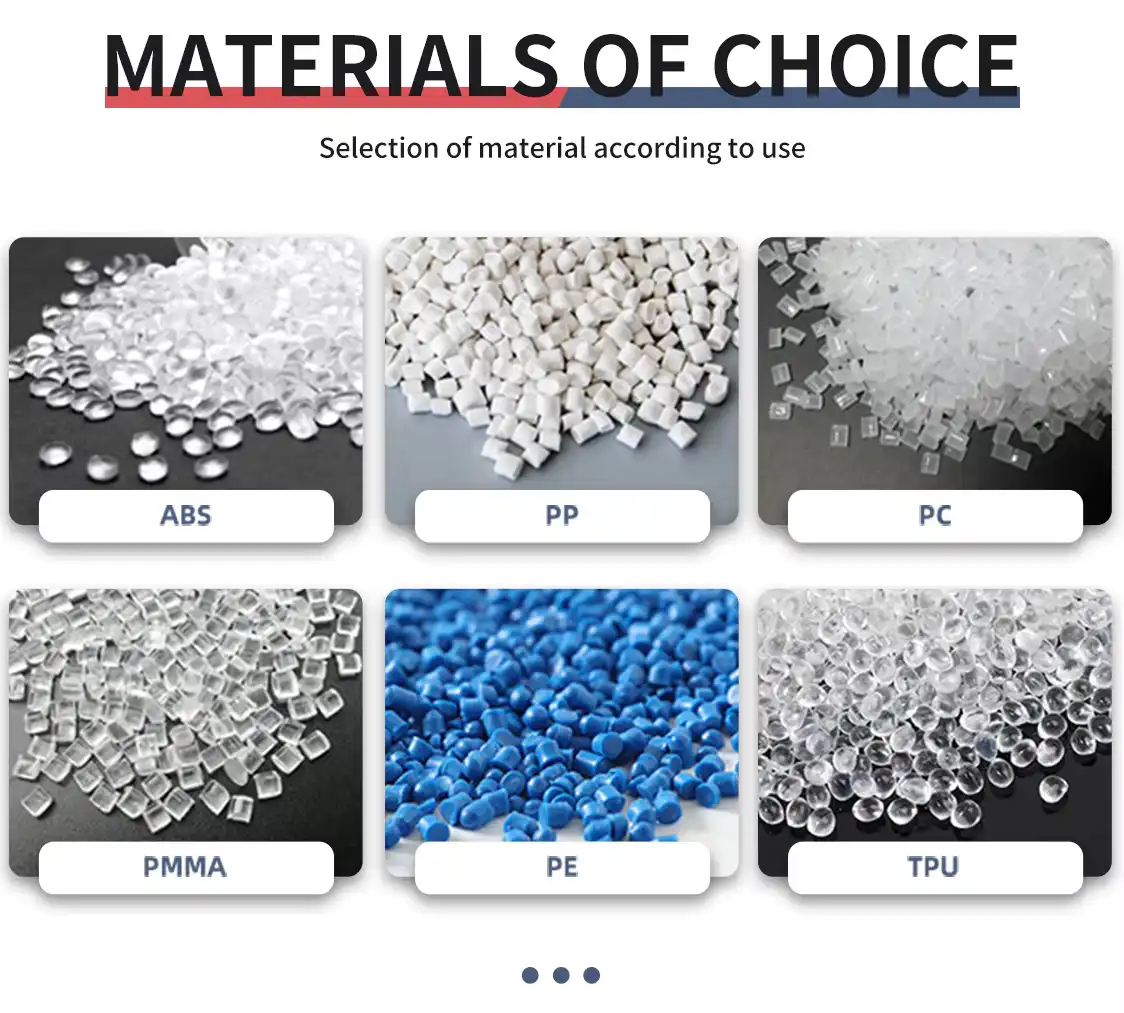
Materials for Solar Panel Parts: Engineered for Outdoor Durability
The choice of material is critical for solar components, which must perform reliably for 25+ years in harsh outdoor environments. The table below summarizes key materials and their applications.
| 材質 | 關鍵特性 | Typical Solar Panel Parts | 效能要求 |
|---|---|---|---|
| UV-Stabilized Polypropylene (PP) | Excellent UV resistance, good chemical resistance, lightweight, cost-effective, good electrical insulation. | Cable clips, mounting brackets, protective covers, wire management components. | Long-term UV stability, flexibility for snap-fit assembly, resistance to temperature cycling. |
| Flame-Retardant Polycarbonate (PC) | High impact strength, excellent electrical insulation, inherent flame retardancy (UL94 V-0 grades available), good dimensional stability. | Junction boxes, connector housings, inverter enclosures, terminal blocks. | Flame retardancy for electrical safety, impact resistance for durability, UV stability for outdoor exposure. |
| Flame-Retardant PC/ABS Blend | Balanced properties: good impact strength, heat resistance, processability, and flame retardancy. | Enclosure housings, control boxes, electrical component covers. | Electrical safety, dimensional stability, aesthetic surface finish. |
| Glass-Fiber Reinforced Nylon (PA6/PA66-GF) | High strength and stiffness, excellent heat resistance, good creep resistance, dimensional stability. | Frame corners, structural brackets, mounting hardware, reinforcement inserts. | Mechanical strength for structural loads, thermal stability, resistance to creep under sustained load. |
| PBT (Polybutylene Terephthalate) | Good electrical properties, chemical resistance, dimensional stability, available in flame-retardant grades. | Connectors, sensor housings, electrical components requiring precision. | Electrical insulation, precision tolerances, compatibility with automated assembly. |
| TPE/TPV (Thermoplastic Elastomers) | Flexibility, UV resistance, sealing properties, overmold compatibility. | Sealing gaskets, cable strain reliefs, weather seals for junction boxes. | Long-term flexibility, weather sealing, UV and ozone resistance. |
| PPS (Polyphenylene Sulfide) | Exceptional high-temperature resistance, excellent chemical resistance, inherent flame retardancy. | High-temperature connectors, components near inverters or high-power electronics. | Extreme temperature stability, chemical resistance, long-term reliability. |
For expert guidance on selecting the optimal material for your specific solar panel part, visit our 材料選擇中心 .

Key Solar Panel Parts and Their Functions
Understanding the function of each component helps in specifying the right design and material requirements.
| Component Category | Specific Parts | Primary Function | 關鍵需求 |
|---|---|---|---|
| Electrical Enclosures | Junction boxes, connection housings, inverter enclosures. | Protect electrical connections from environmental exposure; provide safe termination points for wiring. | Weatherproof sealing (IP65/IP67), flame retardancy, UV stability, secure cable entry/exit. |
| Connectors & Terminals | MC4-style connectors, terminal blocks, cable couplers, branch connectors. | Enable reliable, weatherproof electrical connections between panels and system wiring. | Precision contact retention, weatherproof sealing, low contact resistance, ease of assembly. |
| Mounting & Structural | Frame corners, rail brackets, mid-clamps, end-clamps, mounting feet. | Secure panels to mounting structures; provide structural integrity against wind and snow loads. | High mechanical strength, UV stability, resistance to creep, corrosion resistance (with metal inserts). |
| Cable Management | Cable clips, wire guides, raceways, tie mounts. | Organize and secure wiring; prevent cable damage from movement or abrasion. | Flexibility for installation, UV stability, secure retention, ease of use. |
| Ventilation & Cooling | Vent caps, cooling fans (for inverters), airflow guides. | Manage temperature and humidity within enclosures; prevent condensation. | Weather resistance, UV stability, airflow optimization. |
| Battery Components (for storage systems) | Battery boxes, containers, terminal covers, vent caps. | House and protect batteries; provide safe ventilation and terminal access. | Chemical resistance (to acid/electrolyte), flame retardancy, structural strength, UV stability. |
| Sealing Components | Gaskets, O-rings, cable glands, sealing inserts. | Create weatherproof seals between components and at cable entry points. | Long-term flexibility, compression set resistance, UV and ozone resistance. |

The Injection Molding Process for Solar Panel Parts
Producing high-quality solar components requires a seamless, end-to-end process, from design and material selection through precision molding and quality control. The reference supplier emphasizes over 10 years of experience in this specialized field.
| 階段 | 核心製程與技術 | 品質與績效成果 |
|---|---|---|
| 1. Part Design & Engineering | – Collaborative design based on customer specifications, drawings, or samples. – DFM (Design for Manufacturability) analysis to optimize part design for injection molding and field performance. | A part design optimized for function, manufacturability, and long-term durability in outdoor environments. |
| 2.材料選擇 | – Optimal engineering plastic selected based on performance needs: UV stability, flame retardancy, mechanical strength, chemical resistance. – Sourcing of certified, traceable materials from qualified suppliers. | Guaranteed material performance, consistency, and compliance with industry standards (UL, IEC). |
| 3. Precision Mold Design & Fabrication | – Mold design using advanced CAD software, incorporating gating, cooling, and ejection systems optimized for solar component geometries. – Fabrication from high-grade tool steel using high-precision CNC machining. | A durable, high-precision tool capable of producing millions of consistent, high-quality parts. |
| 4. Rapid Prototyping (Optional) | - 3D 列印 of prototypes for design validation, fit testing, and functional verification before mold fabrication. | Faster development cycles; reduced risk before committing to production tooling. |
| 5. Injection Molding Production | – Precision molds installed in state-of-the-art injection molding machines. – Process parameters (temperature, pressure, cooling time) strictly monitored and controlled. – Techniques like insert molding integrate metal contacts or threaded inserts directly. | Consistent, repeatable production of parts meeting tight dimensional and performance specifications. |
| 6.品質保證與檢驗 | – Rigorous inspection using precision measurement tools. – Functional testing as required: sealing tests (IP rating), pull-out tests for connectors, UV exposure validation. – Compliance with industry standards. | Guaranteed part quality, traceability, and compliance with solar industry requirements. |
| 7. Assembly & Finishing | – Post-molding assembly as required: insertion of contacts, installation of seals, ultrasonic welding of enclosures. – Surface finishing as specified: texturing, color matching. | Fully finished, ready-to-install components. |

Quality Assurance: Ensuring Long-Term Reliability
Solar panel parts must perform reliably for decades. Rigorous quality control is essential.
| 品質方面 | 我們的承諾 | 您的獲益 |
|---|---|---|
| Material Certification | Traceable certifications for all materials used, including UV stability and flame retardancy data. | Assurance of material properties and long-term performance. |
| 尺寸檢測 | Precision verification of critical dimensions using CMM and optical comparators. | Guaranteed fit and function in final assemblies. |
| Functional Testing | Testing as required: IP rating (water/dust ingress), dielectric strength, mechanical pull-out, UV exposure validation. | Confidence that parts will perform reliably in the field. |
| 首件檢驗 (FAI) | Comprehensive report verifying all dimensions and properties against specifications. | Validation that production processes are correct before volume manufacturing. |
| 製程中品質控制 | Parts inspected during production to maintain consistency. | Reduced scrap, consistent quality across all batches. |
| 符合 ISO 規範 | Our quality management systems align with international standards. | Consistent processes, reliable outcomes, continuous improvement. |

Industry Applications: Solar Components for Every Market
Custom injection molded parts serve all segments of the solar energy industry.
| Market Segment | 典型應用 | Key Requirements |
|---|---|---|
| Residential Solar | Junction boxes, cable clips, mounting brackets, frame corners, connector housings. | Cost-effectiveness, ease of installation, long-term reliability, aesthetic appearance. |
| Commercial & Industrial | High-voltage connectors, array junction boxes, inverter housings, cable management systems. | High reliability, compliance with electrical codes, scalability, robust mechanical design. |
| Utility-Scale Solar Farms | Large quantities of standardized components: connectors, junction boxes, mounting hardware, cable trays. | Consistency across massive volumes, low per-part cost, rapid production capability, field-proven durability. |
| Solar-Powered Products | Integrated components for solar lights, chargers, pumps, and consumer devices. | Design integration, compact size, aesthetic finish, cost-effective production. |
| Energy Storage Systems | Battery boxes, terminal covers, vent caps, enclosure components for battery management systems. | Chemical resistance, flame retardancy, structural integrity, weather protection. |
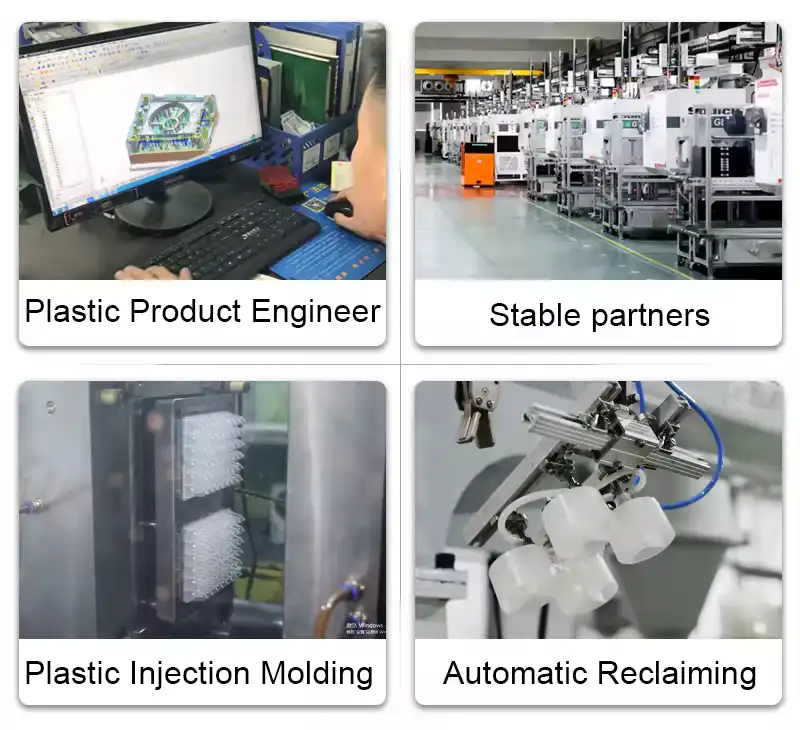
客製化選項
The reference supplier offers extensive customization to meet specific solar project requirements.
| 自訂類型 | 可用選項 | 最小訂購數量 |
|---|---|---|
| Custom Part Design | We can work from your sketches, CAD files, or existing samples. Our 產品設計 team can assist with design optimization for manufacturability and performance. | 1 set |
| 材料選擇 | Wide range of solar-grade engineering plastics: PP, PC, PC/ABS, nylon (PA6/66-GF), PBT, TPE, PPS. | 1 set |
| 顏色自訂 | Standard black for UV protection, white for reflectivity, or custom colors matched to specifications. Our 色彩客製化 services ensure precise color matching. | 1 set |
| Insert Molding | Integration of metal contacts, threaded inserts, sealing gaskets, or strain relief features during molding. | 1 set |
| 標誌標記 | Laser engraving, hot stamping, or in-mold labeling of logos and part numbers. | 1 set |
| 自訂包裝 | Packaging designed to protect parts during transit and meet installation site requirements. | 1 set |
| 組裝服務 | Ultrasonic welding of enclosures, insertion of contacts, installation of seals, final assembly. | 1 set |

與更廣泛的製造能力整合
Solar panel part manufacturing is most powerful when integrated with other processes. At Nylon Plastic, we combine injection molding with our full range of services.
| 整合服務 | How Injection Molding Enhances It | 對您的益處 |
|---|---|---|
| Complete Solar Component Systems | Molded plastic parts combined with CNC 加工 metal inserts or sheet metal fabricated brackets for complete mounting systems. | Single-source accountability for entire solar component assemblies. |
| 從原型到生產的橋樑 | 3D printed prototypes for design validation, then transition to injection molding for high-volume production. | 在投入生產模具之前,先驗證設計,加快產品上市時間。. |
| Insert Molding | Precision placement of metal contacts, threaded inserts, or sealing components during the molding process. | Reduced assembly steps, improved reliability, integrated functionality. |
| Multi-Component Assemblies | Production of multiple components (housing, seal, cover) coordinated for perfect fit and function. | Guaranteed compatibility, simplified supply chain. |
| 成品解決方案 | Injection molding combined with assembly, testing, and custom packaging for complete product delivery. | Single-source accountability, reduced logistics complexity. |

FAQ: Solar Panel Parts via Injection Molding
Q1: What solar panel parts can be produced via injection molding?
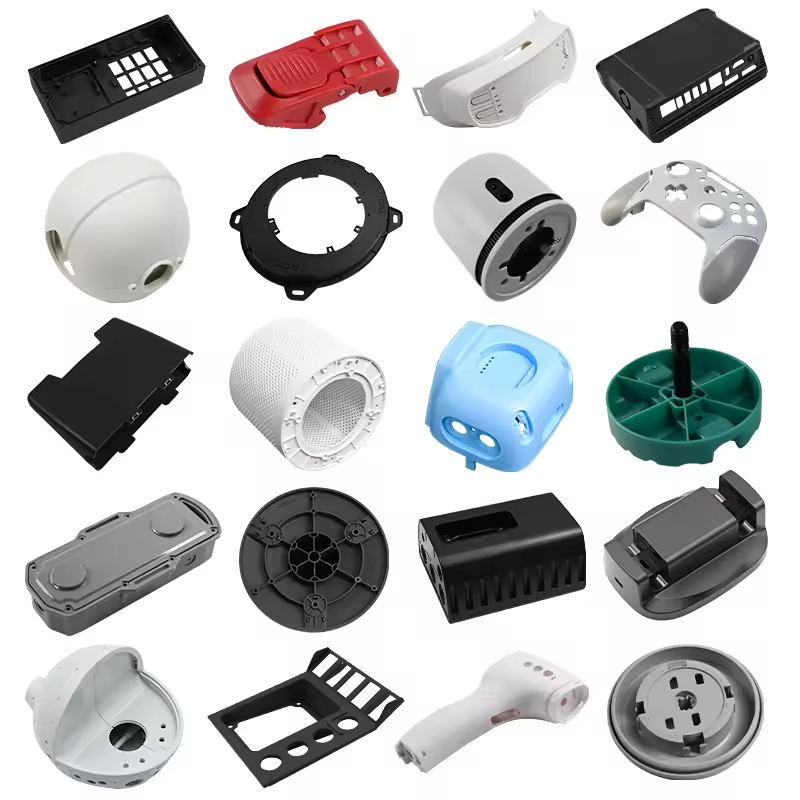
A: Injection molding can produce a wide range of solar components, including junction boxes, connectors, frame corners, mounting brackets, cable clips, vent caps, battery boxes, and enclosure components for inverters and control systems.
Q2: What materials are best for outdoor solar applications?
A: Materials must be specifically formulated for outdoor durability. Key options include UV-stabilized polypropylene (PP) for clips and brackets, flame-retardant polycarbonate (PC) for junction boxes and connectors, glass-reinforced nylon (PA6/66-GF) for structural components, and TPE for sealing gaskets. Each material offers specific properties for its intended function.
Q3: How do you ensure parts meet weatherproofing requirements (IP ratings)?
A: Weatherproofing is achieved through a combination of precision-molded sealing surfaces, integrated gasket designs, and careful material selection. Parts can be designed and tested to meet specific IP ratings (IP65, IP67, etc.) for water and dust ingress protection.
Q4: What is the minimum order quantity (MOQ) for custom solar panel parts?
A: Our MOQ for custom injection molded parts is typically 1 set for prototyping and initial sampling. Production MOQs depend on part size, complexity, and material, and we support everything from pilot runs to high-volume production for large solar projects.
Q5: Can you integrate metal contacts or threaded inserts into plastic parts?
A: Yes. We specialize in insert molding, where metal contacts, threaded inserts, or other components are placed in the mold and become permanently integrated into the plastic part during molding. This ensures precise positioning and reliable performance.
Q6: What quality certifications do you hold for solar component manufacturing?
A: Our facility adheres to international quality standards, ensuring consistent processes and reliable outcomes. We can provide material certifications and test data as required for solar industry applications.
Q7: Do you offer design assistance for solar panel parts?
A: 是的。我們的工程團隊提供 可製造性設計 (DFM) analysis as part of our service. We review your design and suggest modifications that can improve performance, reduce cost, or enhance manufacturability while maintaining functional requirements. Our 產品設計 team can also assist with custom part development.
Q8: Can you produce parts for both residential and utility-scale solar projects?
答:絕對是。. We have the capability to produce components for all market segments, from low-volume residential accessory production to high-volume runs for large-scale solar farms. Our processes scale efficiently to meet your volume requirements.
Q9: What file formats do you need to provide a quote for solar panel parts?
A: To provide an accurate quote and DFM feedback, we typically need 3D CAD files in formats like STEP (.stp), IGES (.igs), SolidWorks (.sldprt), or AutoCAD (.dwg, .dxf) . 2D drawings with critical tolerances and specifications are also helpful.
Q10: What is the typical lead time for custom solar panel part molds and production?
A: Lead times vary with complexity. Mold fabrication typically requires 4-8 weeks. Rapid prototyping can provide sample parts in 3-5 days for design validation. Once the mold is approved, production lead times depend on order volume but are typically 2-4 weeks.
Conclusion: Reliable Solar Panel Parts for a Sustainable Future
Solar Panel Parts manufactured through precision injection molding are essential to the performance, safety, and longevity of photovoltaic systems. With over a decade of experience, comprehensive material expertise, and rigorous quality control, we deliver components that withstand decades of outdoor exposure while maintaining critical electrical and mechanical functions.
Ready to develop custom solar components for your next project? Contact our engineering team today to discuss your requirements. From material selection and design optimization to precision molding and assembly, we provide end-to-end solutions integrated with our broader 產品設計 , CNC 加工 , 以及 色彩客製化 能力。.

 English
 Dutch
Dutch German
 French
 Korean
 Russian
 Japanese
 Spanish
 Vietnamese
 Chinese
 Portuguese
 Arabic