

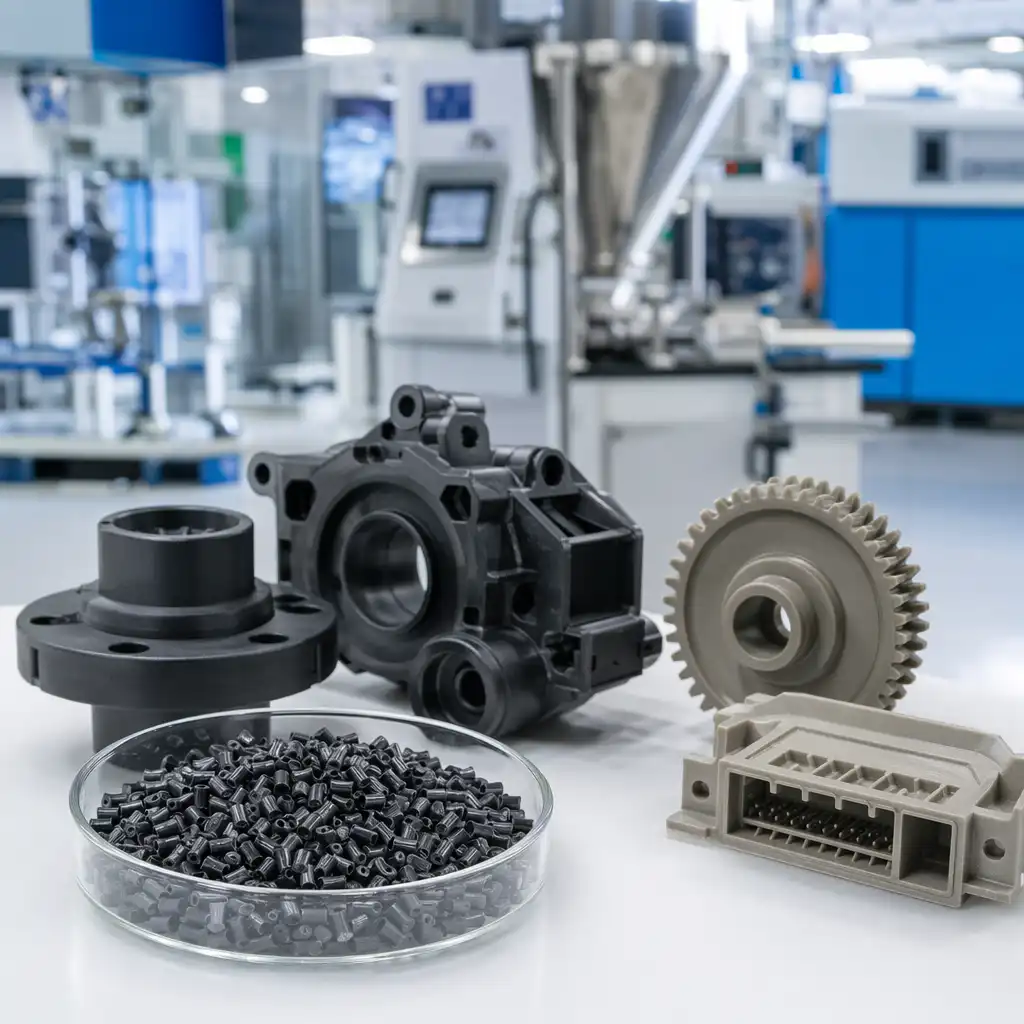
PPS Technische Kunststoffe - Ein umfassender Leitfaden zu Polyphenylensulfid

PPS polyphenylene sulfide high-temperature engineering plastic - Nylonplastic

PPS Engineering Plastics — A Comprehensive Guide to Polyphenylene Sulf

What Is PPS?

Polyphenylene Sulfide (PPS) is a high-performance engineering thermoplastic known for outstanding chemical resistance and thermal stability.

Wichtige Eigenschaften

  • Continuous Service Temp: 200–220°C
  • Melting Point: 280°C
  • Chemical Resistance: Exceptional — resists acids, bases, solvents
  • UL94 Rating: V-0
  • Hydrolysis: Excellent resistance

Anwendungen

PPS is used in automotive under-hood components, industrial pump parts, electrical connectors, and medical devices requiring sterilizability.

Grades Available

  • Unfilled: Maximum toughness
  • GF30/40%: Glass fiber reinforced for stiffness
  • CF10/30%: Carbon fiber for wear resistance
  • PTFE-filled: Self-lubricating grades

Sourcing PPS from China

Nylonplastic supplies PPS compounds with full technical documentation and export support.

FAQ

When is PPS Engineering Plastics — A Comprehensive Guide to Polyphenylene Sulfide a good option?

PPS Engineering Plastics — A Comprehensive Guide to Polyphenylene Sulfide is a good option when fast iteration, complex geometry, low tooling cost, or low-volume production is more important than molded-part unit cost.

What should be checked before choosing PPS Engineering Plastics — A Comprehensive Guide to Polyphenylene Sulfide?

Prüfen Sie die Größe des Teils, die Materialeigenschaften, die Oberflächenbeschaffenheit, die Maßtoleranz, die Wärmeeinwirkung, die Belastungsrichtung und ob eine Nachbearbeitung erforderlich ist.

How does PPS Engineering Plastics — A Comprehensive Guide to Polyphenylene Sulfide compare with CNC machining?

Mit dem 3D-Druck lassen sich komplexe Formen schnell erstellen, während die CNC-Bearbeitung für präzise Oberflächen, engere Toleranzen und serienreife Materialien oft besser geeignet ist.

What affects the cost of PPS Engineering Plastics — A Comprehensive Guide to Polyphenylene Sulfide?

Die Kosten hängen vom Material, dem Bauvolumen, der Druckzeit, der Schichthöhe, der Entfernung von Stützen, der Endbearbeitung, der Prüfung und der Anzahl der Teile im Bau ab.

Entwerfen wir Ihre individuelle Lösung

Dieses Feld ist erforderlich.

Einen Kommentar hinterlassen

Ihre E-Mail-Adresse wird nicht veröffentlicht. Erforderliche Felder sind mit * markiert

Nach oben blättern