

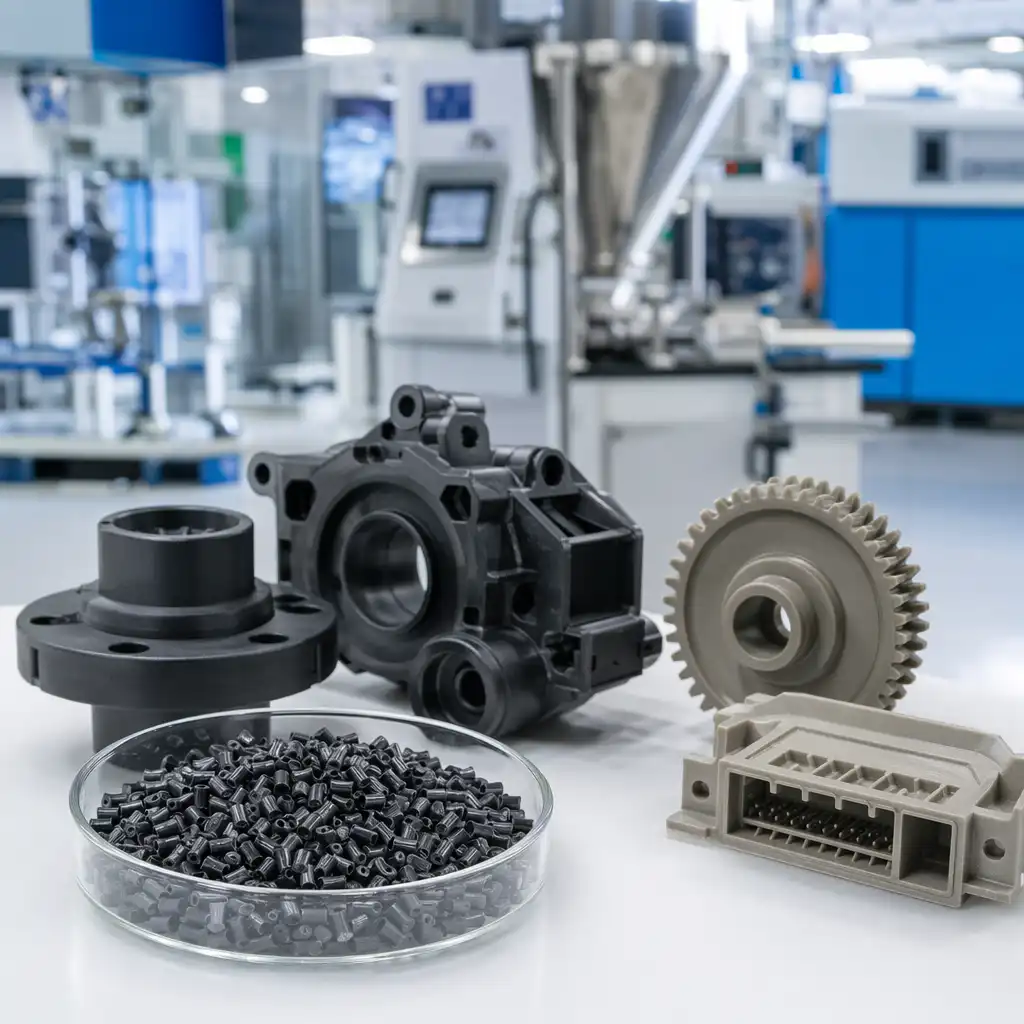
Plásticos técnicos PPS - Guía completa del sulfuro de polifenileno

PPS polyphenylene sulfide high-temperature engineering plastic - Nylonplastic

PPS Engineering Plastics — A Comprehensive Guide to Polyphenylene Sulf

What Is PPS?

Polyphenylene Sulfide (PPS) is a high-performance engineering thermoplastic known for outstanding chemical resistance and thermal stability.

Propiedades clave

  • Continuous Service Temp: 200–220°C
  • Punto de fusión: 280°C
  • Resistencia química: Exceptional — resists acids, bases, solvents
  • UL94 Rating: V-0
  • Hydrolysis: Excellent resistance

Aplicaciones

PPS is used in automotive under-hood components, industrial pump parts, electrical connectors, and medical devices requiring sterilizability.

Grades Available

  • Unfilled: Maximum toughness
  • GF30/40%: Glass fiber reinforced for stiffness
  • CF10/30%: Carbon fiber for wear resistance
  • PTFE-filled: Self-lubricating grades

Sourcing PPS from China

Nylonplastic supplies PPS compounds with full technical documentation and export support.

PREGUNTAS FRECUENTES

When is PPS Engineering Plastics — A Comprehensive Guide to Polyphenylene Sulfide a good option?

PPS Engineering Plastics — A Comprehensive Guide to Polyphenylene Sulfide is a good option when fast iteration, complex geometry, low tooling cost, or low-volume production is more important than molded-part unit cost.

What should be checked before choosing PPS Engineering Plastics — A Comprehensive Guide to Polyphenylene Sulfide?

Compruebe el tamaño de la pieza, las propiedades del material, el acabado superficial, la tolerancia dimensional, la exposición al calor, la dirección de la carga y si es necesario un tratamiento posterior.

How does PPS Engineering Plastics — A Comprehensive Guide to Polyphenylene Sulfide compare with CNC machining?

La impresión 3D puede crear formas complejas con rapidez, mientras que el mecanizado CNC suele ser más potente para superficies precisas, tolerancias más ajustadas y materiales de calidad de producción.

What affects the cost of PPS Engineering Plastics — A Comprehensive Guide to Polyphenylene Sulfide?

El coste depende del material, el volumen de fabricación, el tiempo de impresión, la altura de capa, la eliminación de soportes, el acabado, la inspección y el número de piezas de la fabricación.

Creemos su solución a medida

Este campo es obligatorio.

Deja un comentario

Tu dirección de correo electrónico no será publicada. Los campos obligatorios están marcados con *

Ir arriba