Fibra de vidrio frente a fibra de carbono frente a acero: ¿qué material es el adecuado para su aplicación estructural?

Carbon fiber vs glass fiber composites lightweight engineering - Nylonplastic composite materials

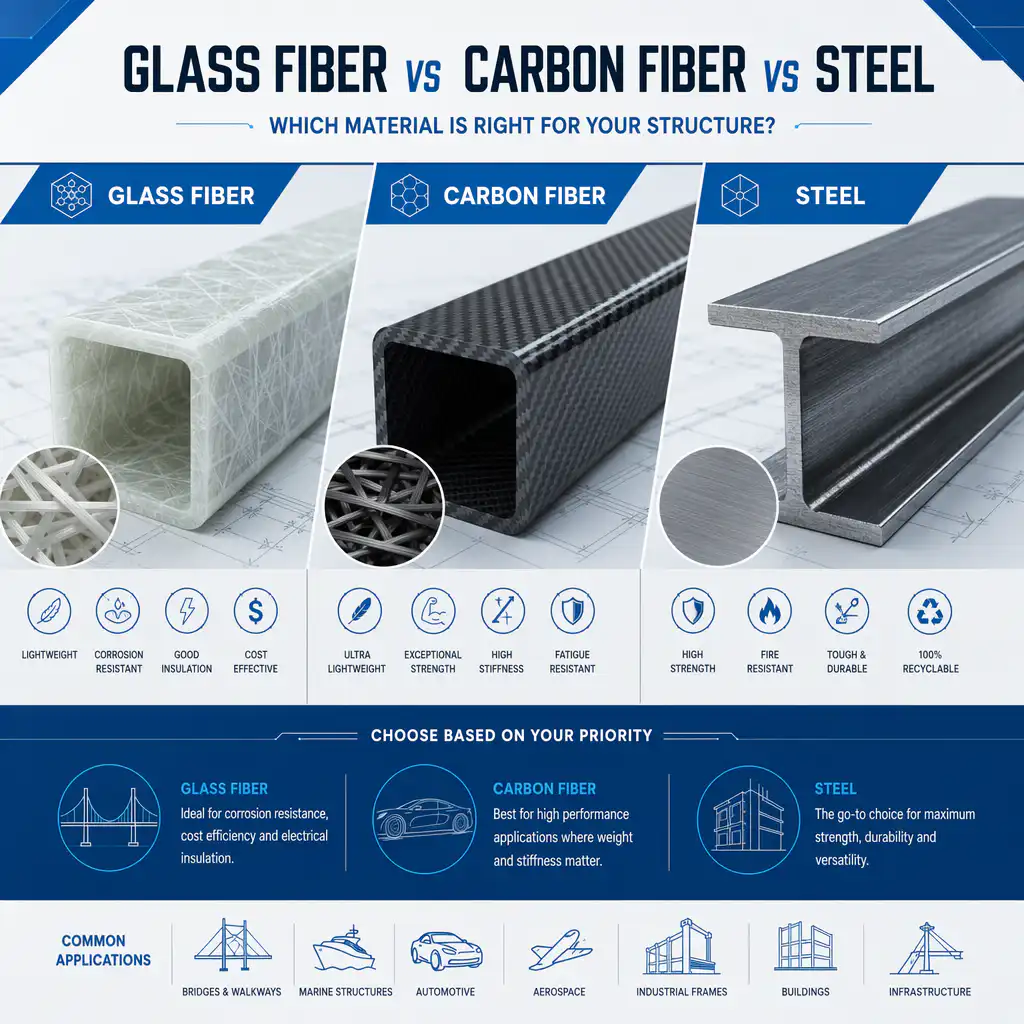
Glass Fiber vs Carbon Fiber vs Steel — Which Material Is Right for You

Material Comparison Overview

Selecting structural materials requires balancing strength, weight, cost, and manufacturing considerations.

Glass Fiber Reinforced Plastics

  • Cost: Lowest of reinforced plastics
  • Strength: Good tensile and compressive strength
  • Weight: ~40% lighter than steel
  • Best for: Cost-sensitive structural parts

Carbon Fiber Reinforced Plastics

  • Cost: Higher than glass fiber
  • Strength: Superior strength-to-weight ratio
  • Weight: ~60% lighter than steel
  • Best for: High-performance lightweight applications

Acero

  • Cost: Low material cost, higher processing cost
  • Strength: High absolute strength
  • Weight: Heavier than composites
  • Best for: High-load applications, cost-sensitive projects

Selection Matrix

Consider: load requirements, budget, weight limits, production volume, and manufacturing method.

PREGUNTAS FRECUENTES

How should buyers evaluate Glass Fiber vs Carbon Fiber vs Steel — Which Material Is Right for Your Structural Application??

Glass Fiber vs Carbon Fiber vs Steel — Which Material Is Right for Your Structural Application? should be evaluated by matching strength, corrosion resistance, heat exposure, machinability, finishing requirements, and certification needs to the operating environment.

What properties matter most for Glass Fiber vs Carbon Fiber vs Steel — Which Material Is Right for Your Structural Application??

Las propiedades más importantes suelen ser la resistencia, la dureza, la ductilidad, la resistencia a la corrosión, el comportamiento térmico, la maquinabilidad y la compatibilidad con el tratamiento superficial.

¿Qué información ayuda a seleccionar el grado de metal adecuado?

La carga de la aplicación, el entorno, la temperatura, los materiales de contacto, el acabado requerido, el proceso de producción y las normas aplicables ayudan a limitar la elección del grado.

What is a common mistake when choosing Glass Fiber vs Carbon Fiber vs Steel — Which Material Is Right for Your Structural Application??

Un error común es elegir sólo por la resistencia ignorando la corrosión, el conformado, el mecanizado, la soldadura, el acabado o las condiciones de servicio a largo plazo.

Creemos su solución a medida

Este campo es obligatorio.

Deja un comentario

Tu dirección de correo electrónico no será publicada. Los campos obligatorios están marcados con *

Ir arriba











