Glass Fiber vs Carbon Fiber vs Steel — Which Material Is Right for Your Structural Application?

Carbon fiber vs glass fiber composites lightweight engineering - Nylonplastic composite materials

Glass Fiber vs Carbon Fiber vs Steel — Which Material Is Right for You

Material Comparison Overview

Selecting structural materials requires balancing strength, weight, cost, and manufacturing considerations.

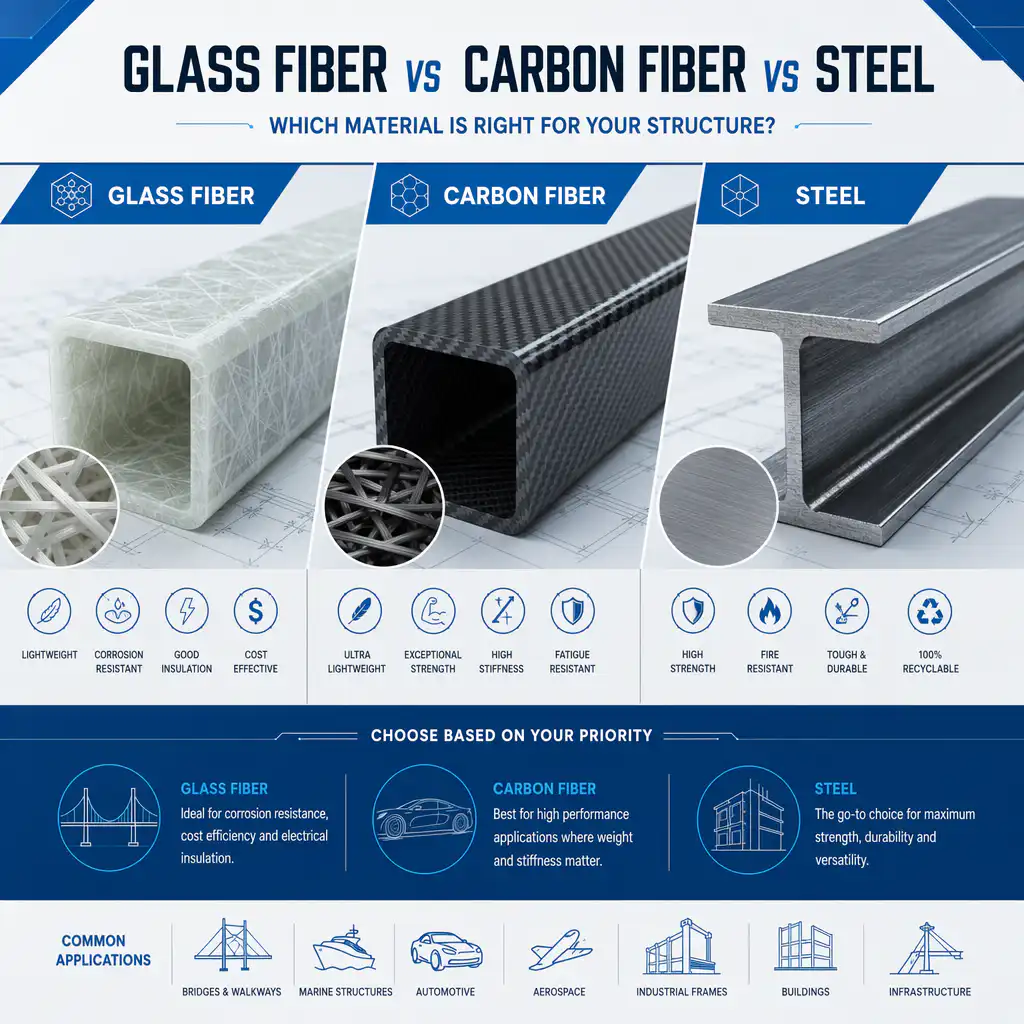
Glass Fiber Reinforced Plastics

  • Cost: Lowest of reinforced plastics
  • Strength: Good tensile and compressive strength
  • Weight: ~40% lighter than steel
  • Best for: Cost-sensitive structural parts

Carbon Fiber Reinforced Plastics

  • Cost: Higher than glass fiber
  • Strength: Superior strength-to-weight ratio
  • Weight: ~60% lighter than steel
  • Best for: High-performance lightweight applications

Acier

  • Cost: Low material cost, higher processing cost
  • Strength: High absolute strength
  • Weight: Heavier than composites
  • Best for: High-load applications, cost-sensitive projects

Selection Matrix

Consider: load requirements, budget, weight limits, production volume, and manufacturing method.

FAQ

How should buyers evaluate Glass Fiber vs Carbon Fiber vs Steel — Which Material Is Right for Your Structural Application??

Glass Fiber vs Carbon Fiber vs Steel — Which Material Is Right for Your Structural Application? should be evaluated by matching strength, corrosion resistance, heat exposure, machinability, finishing requirements, and certification needs to the operating environment.

What properties matter most for Glass Fiber vs Carbon Fiber vs Steel — Which Material Is Right for Your Structural Application??

Les propriétés les plus importantes sont généralement la résistance, la dureté, la ductilité, la résistance à la corrosion, le comportement thermique, l'usinabilité et la compatibilité avec les traitements de surface.

Quelles sont les informations qui permettent de sélectionner la bonne qualité de métal ?

La charge de l'application, l'environnement, la température, les matériaux de contact, la finition requise, le processus de production et les normes applicables sont autant d'éléments qui permettent de restreindre le choix de la qualité.

What is a common mistake when choosing Glass Fiber vs Carbon Fiber vs Steel — Which Material Is Right for Your Structural Application??

Une erreur fréquente consiste à choisir en fonction de la seule résistance, sans tenir compte de la corrosion, du formage, de l'usinage, du soudage, de la finition ou des conditions d'utilisation à long terme.

Créons votre solution personnalisée

Ce champ est requis.

Laisser un commentaire

Votre adresse e-mail ne sera pas publiée. Les champs obligatoires sont indiqués avec *

Défiler vers le haut