

Glass Fiber vs Carbon Fiber vs Steel — Which Material Is Right for Your Structural Application?

Carbon fiber vs glass fiber composites lightweight engineering - Nylonplastic composite materials

Glass Fiber vs Carbon Fiber vs Steel — Which Material Is Right for You

Material Comparison Overview

Selecting structural materials requires balancing strength, weight, cost, and manufacturing considerations.

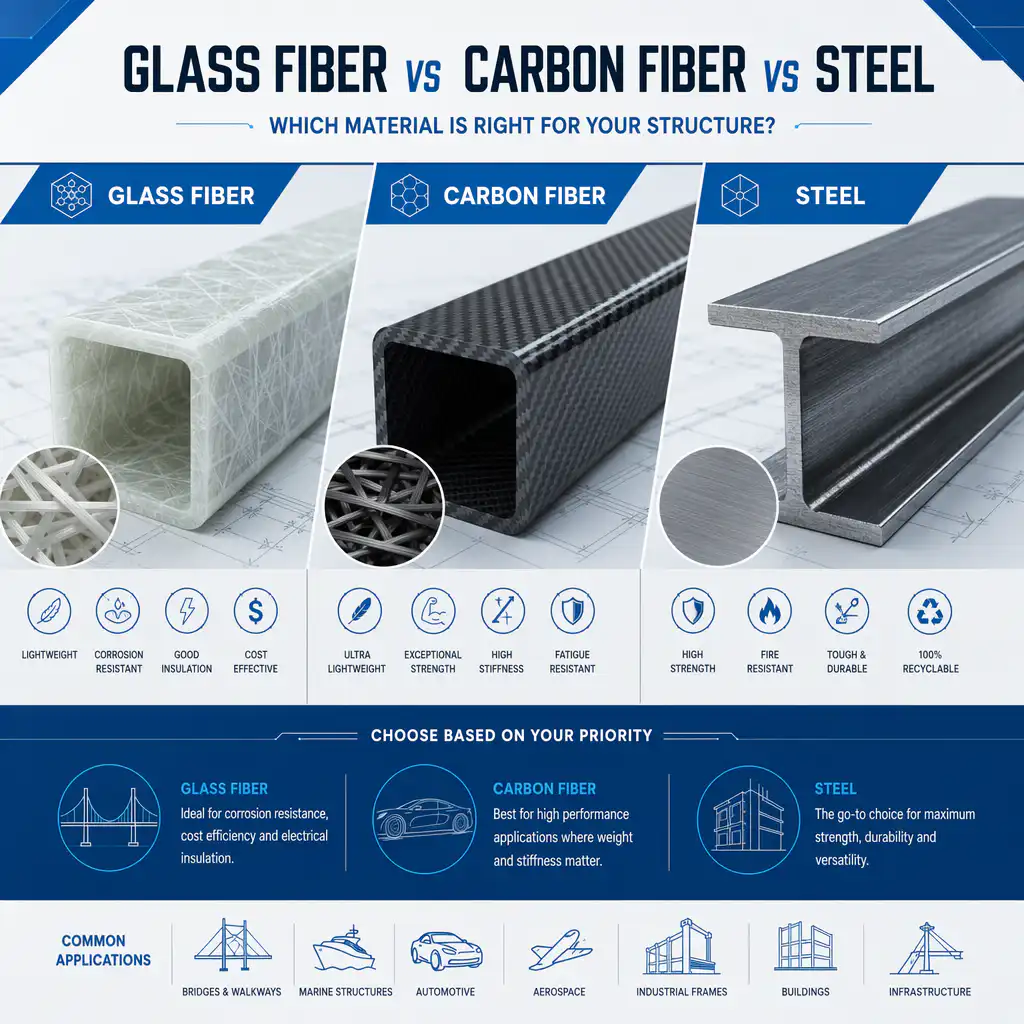
Glass Fiber Reinforced Plastics

  • Cost: Lowest of reinforced plastics
  • Strength: Good tensile and compressive strength
  • Weight: ~40% lighter than steel
  • Best for: Cost-sensitive structural parts

Carbon Fiber Reinforced Plastics

  • Cost: Higher than glass fiber
  • Strength: Superior strength-to-weight ratio
  • Weight: ~60% lighter than steel
  • Best for: High-performance lightweight applications

Steel

  • Cost: Low material cost, higher processing cost
  • Strength: High absolute strength
  • Weight: Heavier than composites
  • Best for: High-load applications, cost-sensitive projects

Selection Matrix

Consider: load requirements, budget, weight limits, production volume, and manufacturing method.

FAQ

How should buyers evaluate Glass Fiber vs Carbon Fiber vs Steel — Which Material Is Right for Your Structural Application??

Glass Fiber vs Carbon Fiber vs Steel — Which Material Is Right for Your Structural Application? should be evaluated by matching strength, corrosion resistance, heat exposure, machinability, finishing requirements, and certification needs to the operating environment.

What properties matter most for Glass Fiber vs Carbon Fiber vs Steel — Which Material Is Right for Your Structural Application??

The most important properties usually include strength, hardness, ductility, corrosion resistance, thermal behavior, machinability, and surface treatment compatibility.

What information helps select the right metal grade?

Application load, environment, temperature, contact materials, required finish, production process, and applicable standards all help narrow the grade choice.

What is a common mistake when choosing Glass Fiber vs Carbon Fiber vs Steel — Which Material Is Right for Your Structural Application??

A common mistake is choosing by strength alone while ignoring corrosion, forming, machining, welding, finishing, or long-term service conditions.

Let's Craft Your Custom Solution

This field is required.

Leave a Comment

Your email address will not be published. Required fields are marked *

Scroll to Top