PPS Engineering Plastics — A Comprehensive Guide to Polyphenylene Sulfide
April 20, 2026 | 2 minutes of reading
PPS Engineering Plastics — A Comprehensive Guide to Polyphenylene SulfPPS Engineering Plastics — A Comprehensive Guide to Polyphenylene SulfPPS Engineering Plastics — A Comprehensive Guide to Polyphenylene Sulf
What Is PPS?
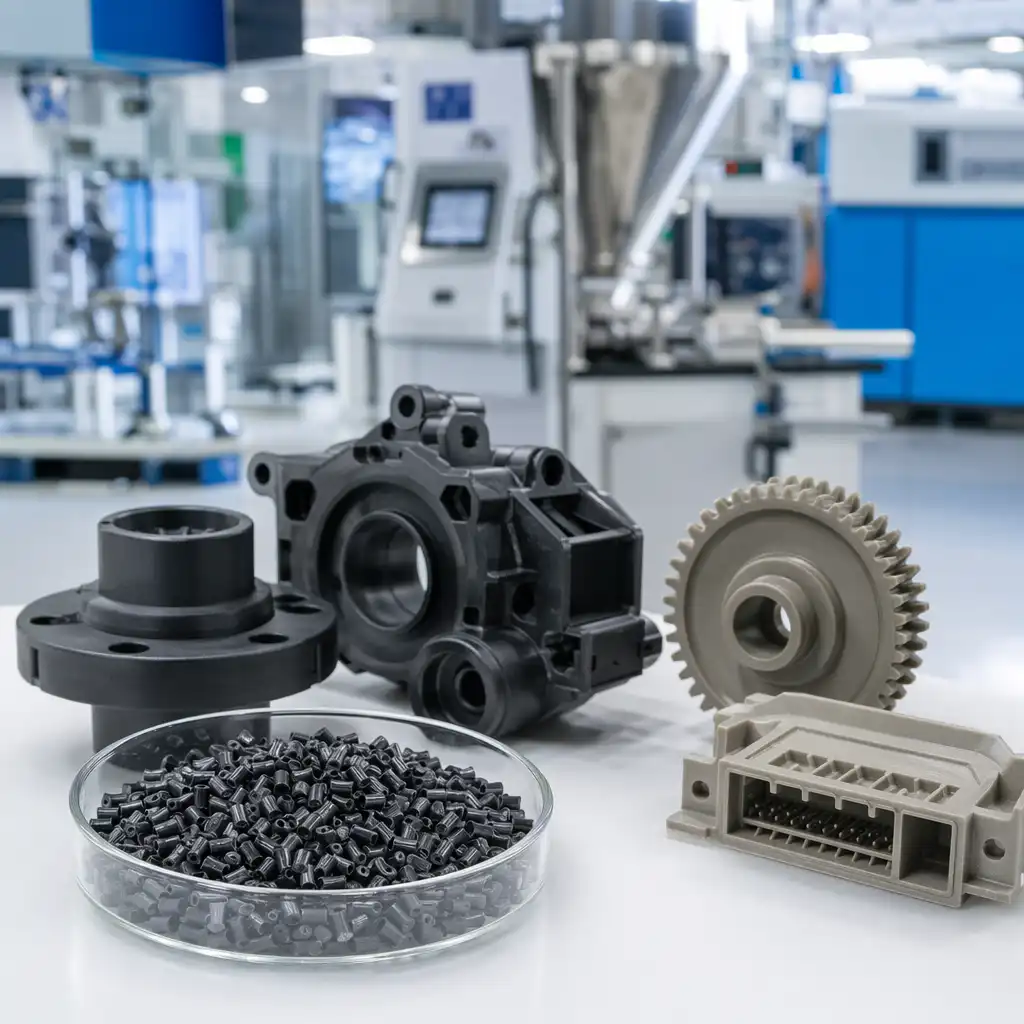
Polyphenylene Sulfide (PPS) is a high-performance engineering thermoplastic known for outstanding chemical resistance and thermal stability.
Key Properties
Continuous Service Temp: 200–220°C
Melting Point: 280°C
Chemical Resistance: Exceptional — resists acids, bases, solvents
UL94 Rating: V-0
Hydrolysis: Excellent resistance
Applications
PPS is used in automotive under-hood components, industrial pump parts, electrical connectors, and medical devices requiring sterilizability.
Grades Available
Unfilled: Maximum toughness
GF30/40%: Glass fiber reinforced for stiffness
CF10/30%: Carbon fiber for wear resistance
PTFE-filled: Self-lubricating grades
Sourcing PPS from China
Nylonplastic supplies PPS compounds with full technical documentation and export support.
PPS Selection Checks Before Production
Requirement
PPS check
Heat and chemicals
Confirm continuous temperature, peaks, media and exposure duration
Dimensional stability
Review shrinkage, fiber orientation, warpage and tolerance stack-up
Grade
Compare unfilled, glass-filled, mineral-filled and wear-modified options
Process route
Confirm drying, mold temperature, venting, weld-line and inspection controls
Request the exact PPS grade datasheet and processing window. Validate the finished geometry, not only a flat coupon, when the part includes sealing, snap-fit, thread or wear features.
FAQ
When is PPS Engineering Plastics — A Comprehensive Guide to Polyphenylene Sulfide a good option?
PPS Engineering Plastics — A Comprehensive Guide to Polyphenylene Sulfide is a good option when fast iteration, complex geometry, low tooling cost, or low-volume production is more important than molded-part unit cost.
What should be checked before choosing PPS Engineering Plastics — A Comprehensive Guide to Polyphenylene Sulfide?
Check part size, material properties, surface finish, dimensional tolerance, heat exposure, load direction, and whether post-processing is required.
How does PPS Engineering Plastics — A Comprehensive Guide to Polyphenylene Sulfide compare with CNC machining?
3D printing can create complex shapes quickly, while CNC machining is often stronger for precise surfaces, tighter tolerances, and production-grade materials.
What affects the cost of PPS Engineering Plastics — A Comprehensive Guide to Polyphenylene Sulfide?
Cost depends on material, build volume, print time, layer height, support removal, finishing, inspection, and the number of parts in the build.