This flame retardant plastics automotive guide explains practical material, design, manufacturing, and sourcing considerations for Nylon Plastic readers.
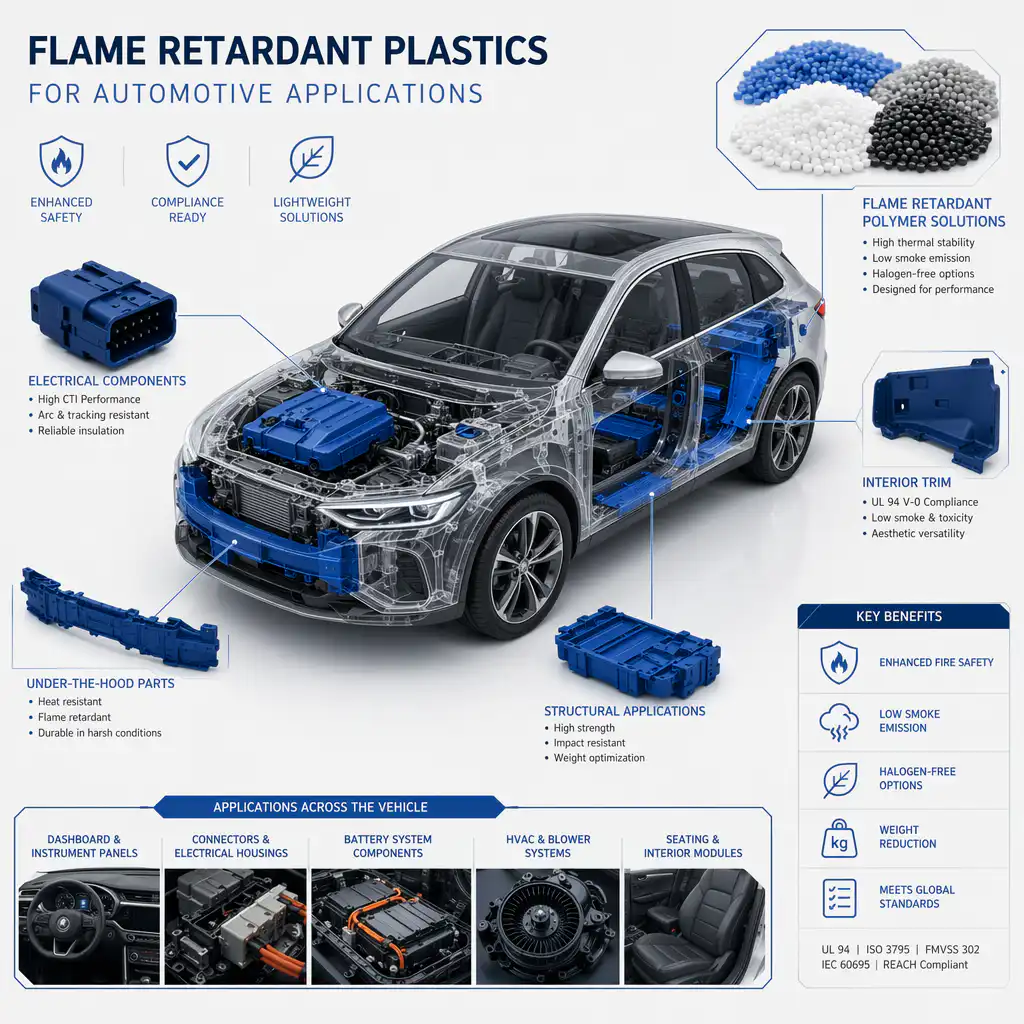
Automotive Fire Safety Standards
Vehicle interior components must meet strict flame retardant standards to protect passengers.
Key Standards
- FMVSS 302: US federal standard
- UL94 V-0/V-1/V-2: Vertical burn ratings
- ISO 3795: European equivalent
Common FR Materials
- PA66-FR: V-0 rated, halogen-free available
- PP-FR: FMVSS 302 compliant
- ABS-FR: V-0 rated interior grades
FAQ
When is Flame Retardant Plastics for Automotive Applications a good option?
Flame Retardant Plastics for Automotive Applications is a good option when fast iteration, complex geometry, low tooling cost, or low-volume production is more important than molded-part unit cost.
What should be checked before choosing Flame Retardant Plastics for Automotive Applications?
Check part size, material properties, surface finish, dimensional tolerance, heat exposure, load direction, and whether post-processing is required.
How does Flame Retardant Plastics for Automotive Applications compare with CNC machining?
3D printing can create complex shapes quickly, while CNC machining is often stronger for precise surfaces, tighter tolerances, and production-grade materials.
What affects the cost of Flame Retardant Plastics for Automotive Applications?
Cost depends on material, build volume, print time, layer height, support removal, finishing, inspection, and the number of parts in the build.