
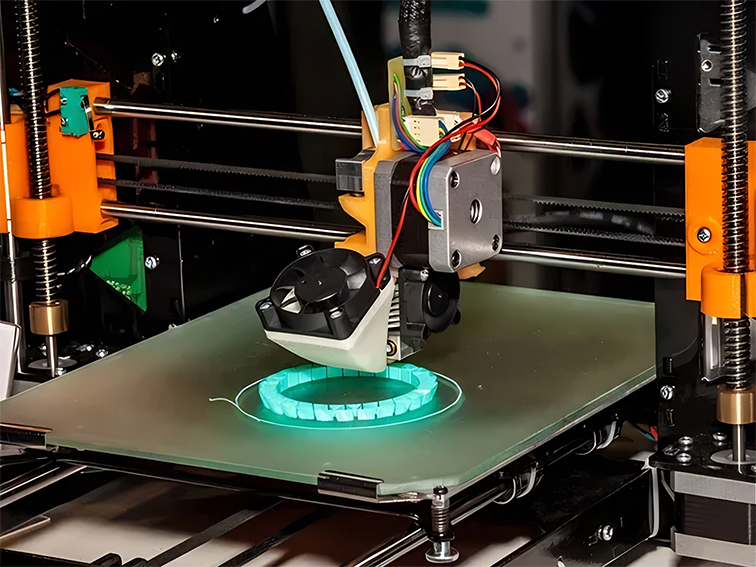
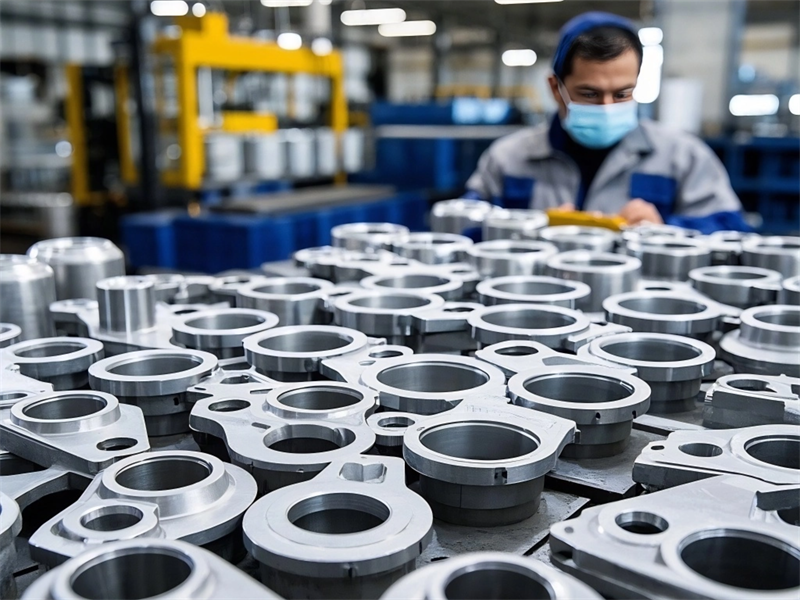
Electronic Devices Project Review
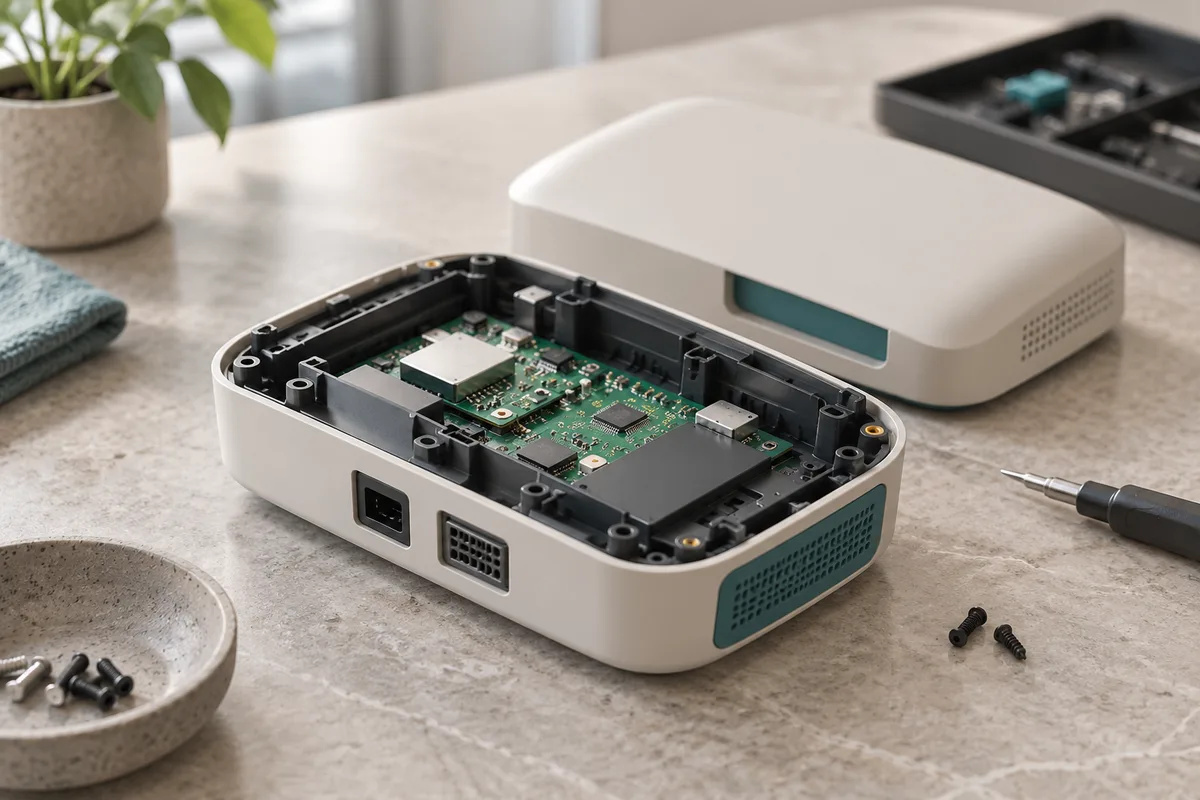
For an enclosure, show the PCB, fasteners, cable entries and heat sources. For a connector body, mark the contact interfaces, retention features and insulation requirements.
Identify visible surfaces and any flame-test conditions for the intended design so resin selection and tooling address the same requirements.
Electronic Device Housings
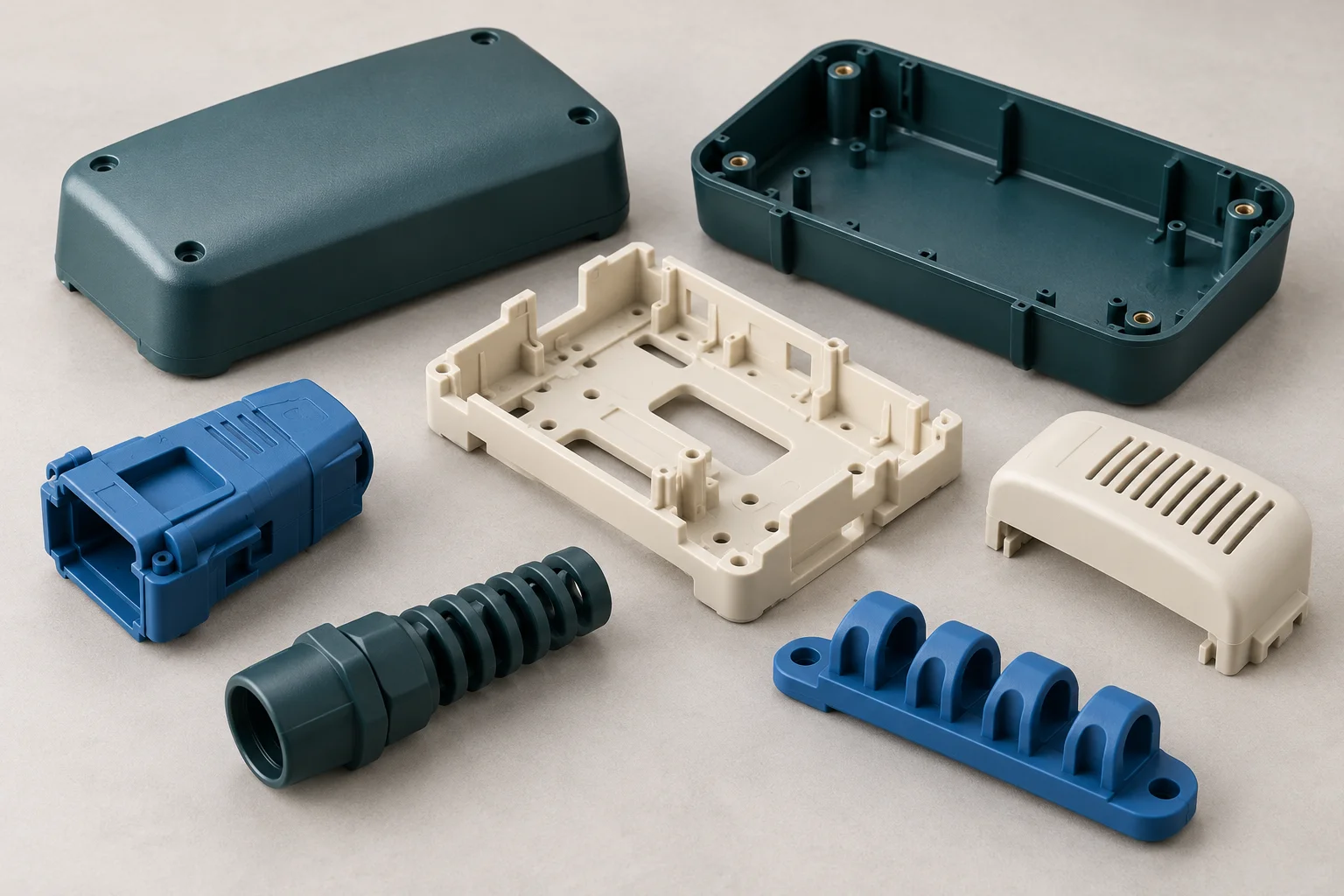
For housings, define seams, display and connector openings, fastener locations and visible surfaces. Include the assembled device to explain packaging constraints.
Internal Frames
For internal frames, identify locating datums, board supports, inserts and mounting loads. Mark features that control alignment of the surrounding assembly.
Connector Components
For connector components, provide mating geometry, retention requirements and applicable electrical or flame-test conditions. Evaluate the exact grade and finished design together.
Cable Guides
For cable guides, describe cable size, bend path, retention, movement and assembly access. Identify surfaces where abrasion or repeated contact needs review.
Brackets & Covers
For brackets and covers, specify clips, bosses, screw access and service opening requirements. Review how repeated assembly will be evaluated.
Custom Electronics Parts
For custom electronics parts, send the device envelope, component drawing and development stage so the manufacturing discussion addresses the real assembly.
Electrical, Thermal and Enclosure Design Requirements
Package fit and assembly order
Show the board, connectors, battery space and mounting interfaces relevant to the plastic part. Review stack-up, tool access, snap fits and screw bosses together rather than approving each component only by its external dimensions.
Heat, electrical and material requirements
State the operating environment and any insulation, flame, exposure or electrostatic requirements for the application. Request evidence for the exact proposed grade and specified test conditions; material selection does not replace finished-device verification.
Appearance and user-facing details
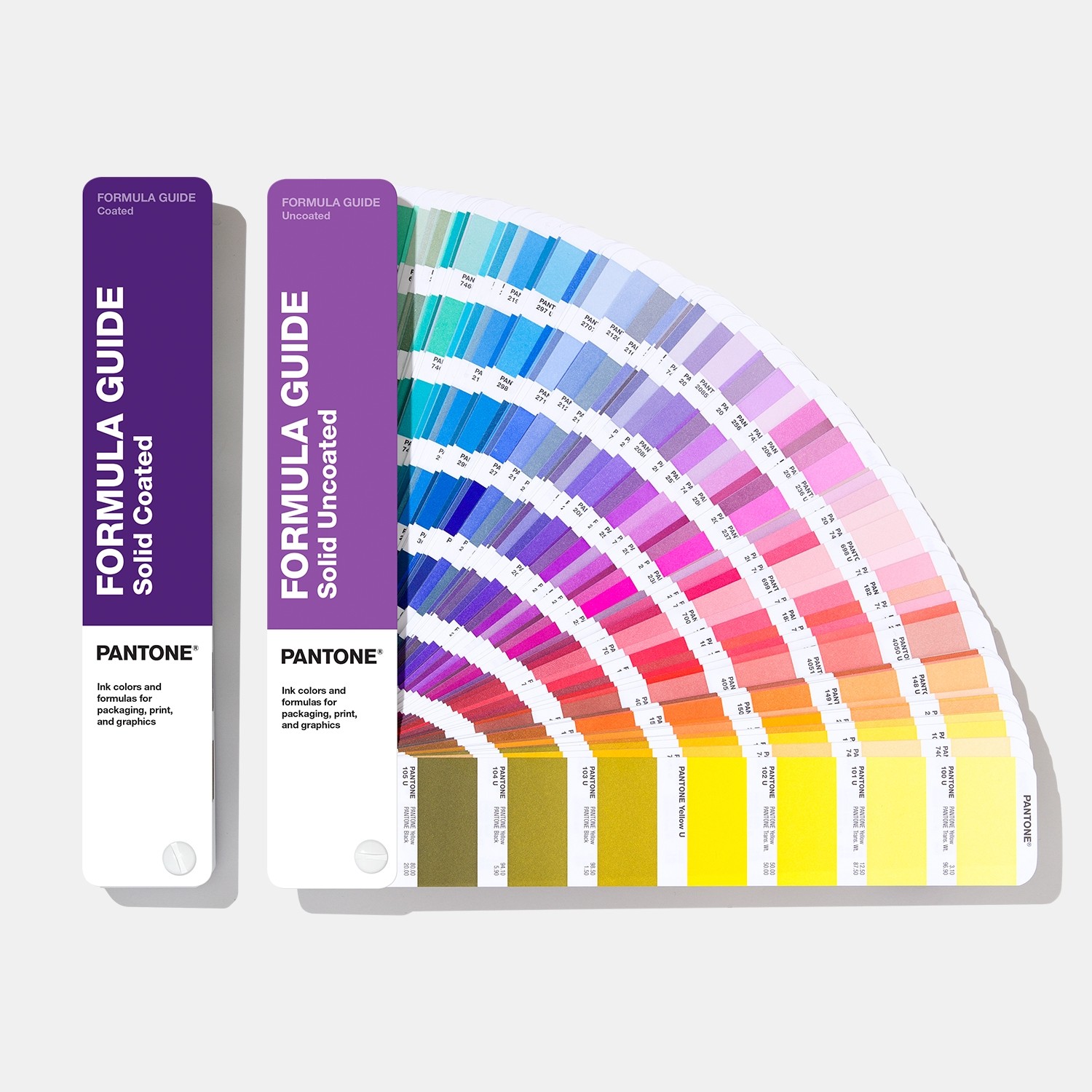
Identify cosmetic surfaces, color and texture references, allowable marks and seams. Specify the conditions used to judge appearance and mark surfaces where gates, ejectors or joining details need particular review.
Developing the Housing and Connector Fit
Packaging prototype
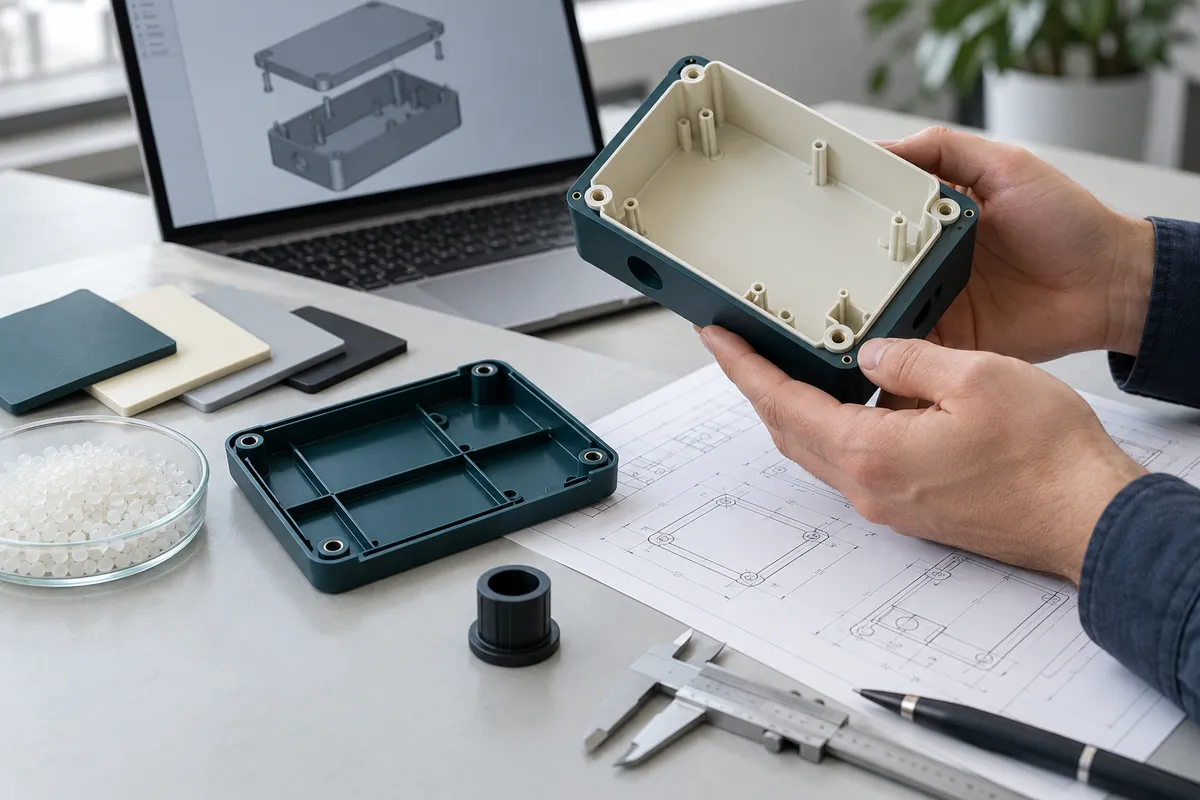
Use an agreed prototype route to review component placement, assembly access and user-facing geometry. Separate visual and fit acceptance from production-material performance checks.
Mold and sample review
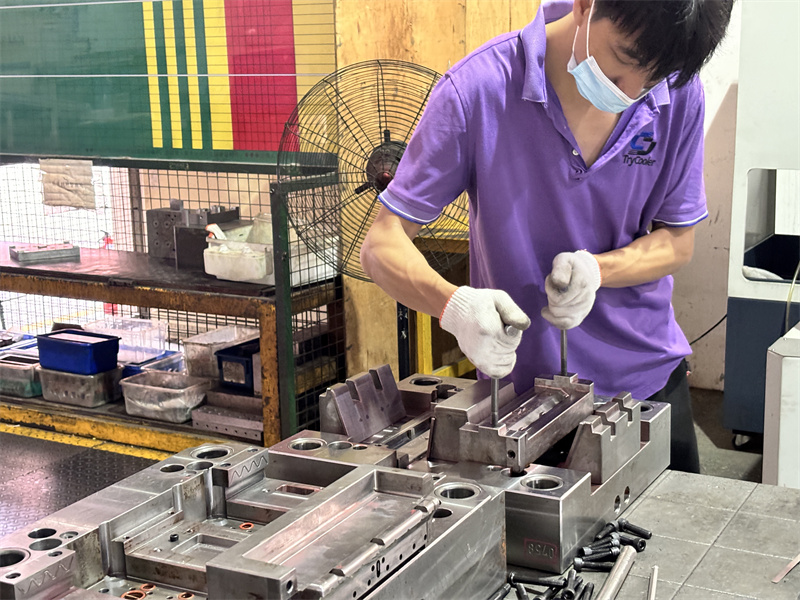
Review wall transitions, bosses, ribs, gates and joining features with the proposed grade. Define sample checks for fit, appearance and critical dimensions.
Production and revisions
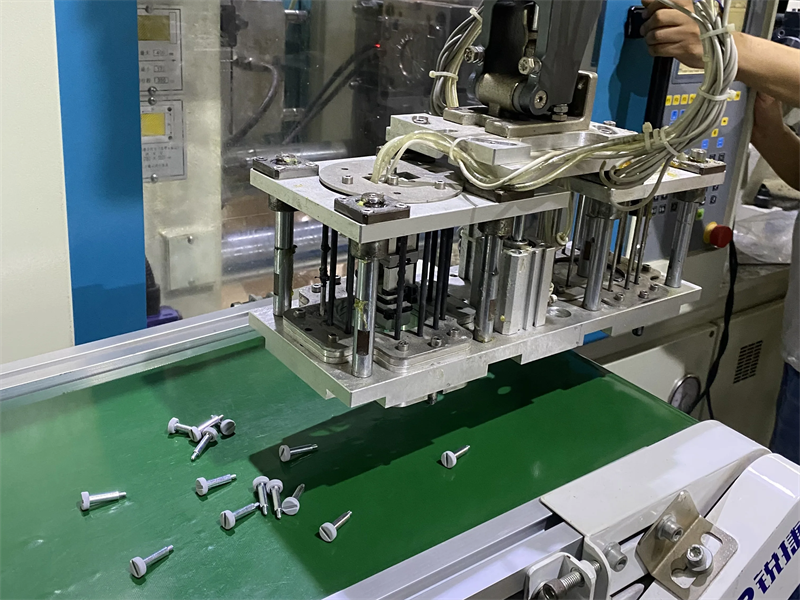
Agree approved references, inspection frequency, identification and change control. Explain expected revisions and demand so the tooling and production discussion reflects the product stage.
Material and Inspection Records for Electronic Parts
- Assembly drawing and critical interface dimensions
- Exact material and project-specific test requirements
- Color, texture and cosmetic acceptance references
- Inspection plan, drawing revision and approved sample criteria
Confirm the records available for the exact material, manufacturing entity and quoted order. Review material and certificate document guidance.
Information for an Electronic Housing Inquiry
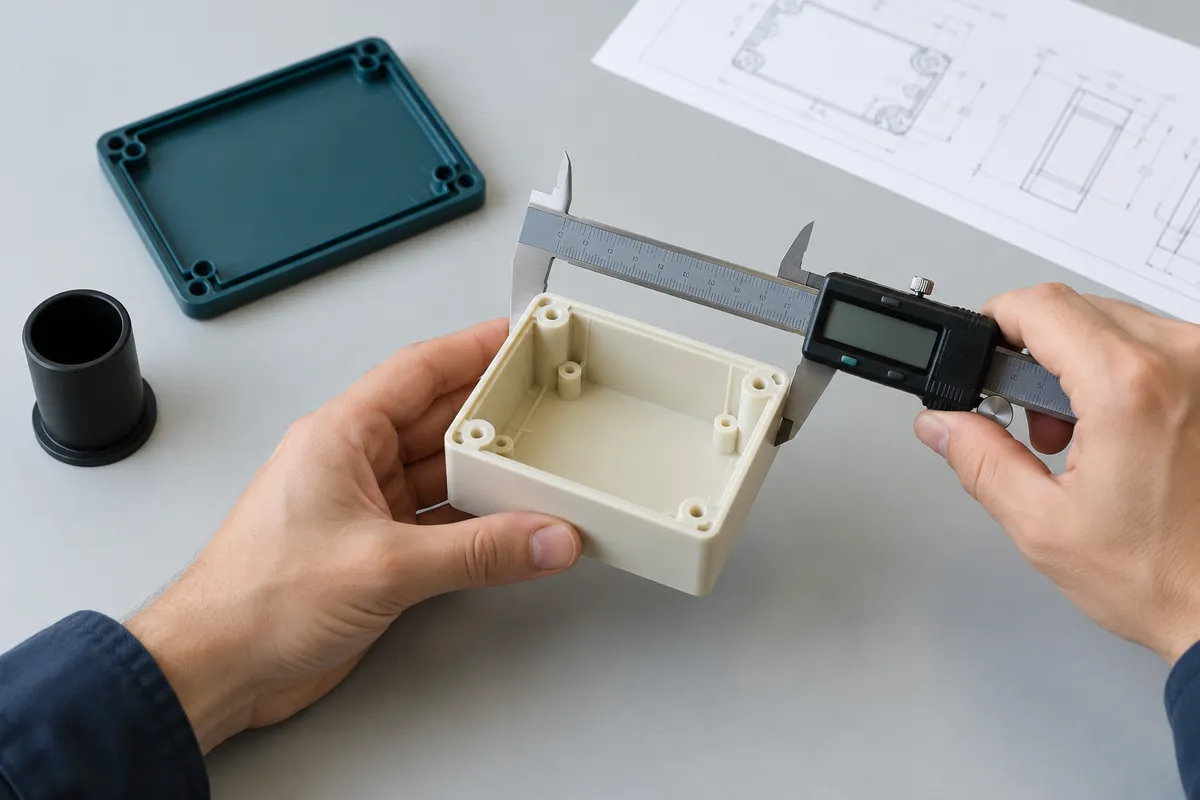
- Part CAD, drawing and relevant assembly
- Board, connector and fastener interfaces
- Operating environment and material requirements
- Cosmetic surfaces, color and texture
- Prototype and production quantities
- Inspection criteria and expected revisions
If the grade is still open, request a material selection review with the service conditions and target properties.
Electronic Component Manufacturing Questions
Is a flame-rated resin enough to approve the enclosure?
State the required standard, specimen or wall conditions and finished-design requirements. Review the exact grade and supporting evidence, then define the component or device evaluations required by the project.
Can a prototype confirm the final surface finish?
A prototype can support visual discussion, but its material and process may differ from the molded part. Agree the production finish reference and sample-review conditions before accepting the cosmetic result.
What helps reduce changes after tooling starts?
Provide the assembly, connector positions, screw access and marked cosmetic surfaces early. Record unresolved interfaces before the mold concept is finalized, and agree how later revisions will be assessed.
Materials
Surface Finishes