
Carbon in Steel represents Complete Guide to Carbon Content and Steel Properties one of the most important materials in modern engineering and manufacturing. This comprehensive guide examines the fundamental properties, industrial applications, and manufacturing considerations for this critical material, providing engineers and procurement professionals with essential knowledge for material selection and application design.

Grundlegende Eigenschaften und Merkmale
The material properties of carbon in carbon steel determine its suitability for specific engineering applications. Key characteristics include mechanical strength, thermal stability, chemical resistance, and processing behavior. Understanding these fundamental properties enables optimal material selection across diverse industrial applications.

Industrielle Anwendungen
| Anwendungsbereich | Spezifische Verwendung | Leistungsanforderungen | Vorteile des Materials |
|---|---|---|---|
| Herstellung | Produktion von Bauteilen | Hohe Festigkeit, Haltbarkeit | Kostengünstig, zuverlässig |
| Bauwesen | Strukturelle Elemente | Tragfähigkeit | Lange Lebensdauer |
| Elektronik | Elektrische Komponenten | Leitfähigkeit, Stabilität | Konsistenz der Leistung |
| Automobilindustrie | Fahrzeugkomponenten | Optimierung des Gewichts | Kraftstoffeffizienz |
| Luft- und Raumfahrt | Strukturen von Luftfahrzeugen | Hohe Festigkeit im Verhältnis zum Gewicht | Sicherheitskritisch |
Herstellungsverfahren
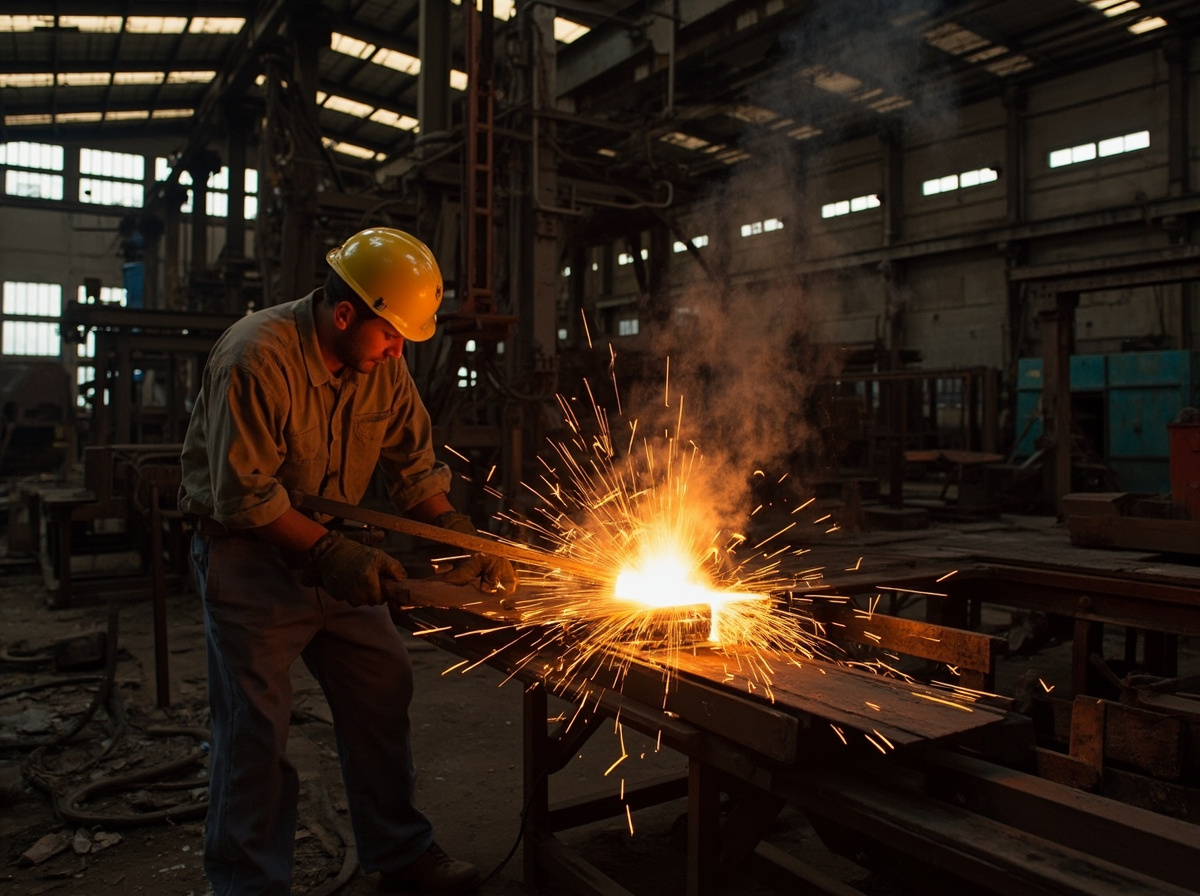
carbon in carbon steel manufacturing involves specialized processes tailored to material properties and application requirements. Common manufacturing methods include casting, forging, machining, and additive manufacturing, each offering distinct advantages for specific component geometries and performance criteria.

Überlegungen zur Materialauswahl
Selecting carbon in carbon steel for engineering applications requires evaluating multiple performance criteria against cost constraints and manufacturing feasibility. Key considerations include mechanical properties, environmental resistance, processing characteristics, and lifecycle costs.
Analyse von Leistung und Kosten
Material selection balances performance requirements against economic constraints. carbon in carbon steel offers specific advantages in applications requiring [performance characteristic], though alternative materials may provide better cost-performance ratios for less demanding applications.
Ökologische und regulatorische Faktoren
Environmental regulations and sustainability considerations increasingly influence material selection. carbon in carbon steel compliance with relevant standards and regulations must be verified for specific applications and geographic markets.
Künftige Entwicklungen und Trends
Advancements in carbon in carbon steel technology continue to expand application possibilities while addressing sustainability concerns. Emerging trends include improved processing efficiency, enhanced material properties through alloy development, and increased focus on recyclability and circular economy principles.
Schlussfolgerung
carbon in carbon steel represents a critical material category with diverse industrial applications spanning manufacturing, construction, electronics, and beyond. Understanding its fundamental properties, processing characteristics, and application-specific considerations enables engineers and procurement professionals to make informed material selection decisions that balance performance, cost, and sustainability requirements.
FAQ
How should buyers evaluate Carbon in Steel: Complete Guide to Carbon Content and Steel Properties?
Carbon in Steel: Complete Guide to Carbon Content and Steel Properties should be evaluated by matching strength, corrosion resistance, heat exposure, machinability, finishing requirements, and certification needs to the operating environment.
What properties matter most for Carbon in Steel: Complete Guide to Carbon Content and Steel Properties?
Zu den wichtigsten Eigenschaften gehören in der Regel Festigkeit, Härte, Duktilität, Korrosionsbeständigkeit, thermisches Verhalten, Bearbeitbarkeit und Verträglichkeit der Oberflächenbehandlung.
Welche Informationen helfen bei der Auswahl der richtigen Metallsorte?
Anwendungsbelastung, Umgebung, Temperatur, Kontaktmaterialien, geforderte Oberflächenbeschaffenheit, Produktionsverfahren und geltende Normen tragen dazu bei, die Auswahl der Sorte einzugrenzen.
What is a common mistake when choosing Carbon in Steel: Complete Guide to Carbon Content and Steel Properties?
Ein weit verbreiteter Fehler ist es, allein nach der Festigkeit auszuwählen und dabei Korrosion, Umformung, Bearbeitung, Schweißen, Endbearbeitung oder langfristige Betriebsbedingungen außer Acht zu lassen.
 English
 Dutch
Dutch German
 French
 Korean
 Russian
 Japanese
 Spanish
 Vietnamese
 Chinese
 Portuguese
 Arabic