

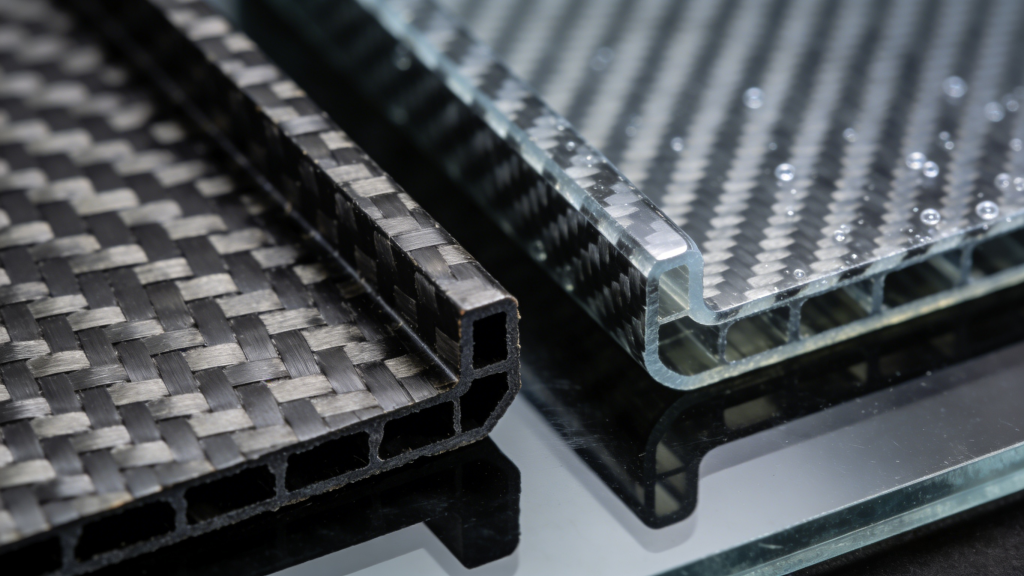
Llantas de fibra de carbono represent the pinnacle of wheel technology, transforming how vehicles—from high-performance automobiles and motorcycles to competitive bicycles—accelerate, handle, and stop. By leveraging advanced composite materials, carbon rims deliver an unparalleled combination of extreme lightweight construction, exceptional stiffness, and aerodynamic efficiency that traditional alloy wheels cannot match. This guide explores the engineering superiority behind carbon fiber rims, their quantifiable performance benefits, and how precision manufacturing creates these critical performance components.

The Carbon Fiber Advantage: Measurable Performance Gains
Integrating carbon fiber into rim construction directly addresses the fundamental physics of vehicle dynamics, delivering benefits that are immediately noticeable to any driver or rider .
- Dramatic Reduction in Unsprung Weight: Carbon fiber rims can be 40% to 60% lighter than equivalent aluminum alloy wheels . For motorcycles, this translates to weight savings of 1.7kg per set compared to lightweight alloy wheels . Lower unsprung weight means suspension components can react faster to road irregularities, improving traction and comfort.
- Quicker Acceleration and Braking: Reduced rotational mass (moment of inertia) means less energy is required to spin the wheels up to speed. This results in measurably faster acceleration and the ability to brake later into corners . The effect is often described as a “significant engine upgrade” in feel .
- Superior Stiffness for Precise Handling: Carbon fiber is twice as rigid as steel while being drastically lighter . This exceptional stiffness-to-weight ratio translates to sharper steering response, improved cornering precision, and better feedback from the road or track . The wheel deflects less under load, keeping the tire contact patch optimized.
- Aerodynamic Efficiency: For cycling applications especially, carbon fiber allows manufacturers to engineer deeper rim profiles that are simply too heavy to produce in aluminum. These aerodynamic shapes reduce drag at higher speeds, providing a “free speed” benefit, particularly valuable in time trials and triathlons .
- Enhanced Ride Quality and Reduced Fatigue: Despite their stiffness, carbon fiber rims can be engineered to dampen high-frequency vibrations, reducing road noise and rider fatigue on long journeys . This “tuned compliance” is a unique advantage of composite materials.

Material Comparison: Carbon Fiber vs. Aluminum Alloy
The choice between carbon and aluminum defines a vehicle’s dynamic character. This comparison clarifies the fundamental differences.
Análisis: While aluminum offers proven durability and repairability at a lower cost, carbon fiber rims provide a superior performance envelope for those seeking the ultimate in weight savings, stiffness, and aerodynamic optimization. The trade-off in repairability is offset by the material’s exceptional fatigue resistance and the performance gains it unlocks .

The Manufacturing Process: From Prepreg to Perfection
Constructing a high-performance carbon fiber rim is a precise, multi-stage process requiring meticulous control and expertise. Leading manufacturers like Zipp and BST employ sophisticated techniques .

Innovations in Rim Technology
Manufacturers continue to push boundaries with advanced techniques:
- Multi-Material Composites: Some manufacturers integrate stainless steel wire into the rim edge to increase impact resistance and ductility while maintaining the benefits of carbon .
- High-Pressure Resin Transfer Molding (RTM): This process injects liquid epoxy under high pressure into a mold containing dry carbon fabric, achieving high fiber density and precise dimensional accuracy .
- Hollow Spoke Technology: Advanced techniques allow for completely hollow, one-piece carbon spokes that further reduce weight without compromising strength .

FAQ: Carbon Fiber Rims
Q1: How much weight can I save by switching to carbon fiber rims?
A: Weight savings are substantial. For automotive applications, expect 20-30% weight reduction per wheel (approximately 2-3kg per wheel for a 20″ rim) . For motorcycles, complete sets can be 1.7kg lighter than stock alloy wheels . For bicycles, the savings are equally dramatic, especially in deeper-section rims.
Q2: Are carbon rims safe and durable for everyday use?
A: Yes, when properly engineered and manufactured. Premium carbon rims undergo rigorous testing—including impact, radial fatigue, and torsion fatigue tests—to meet international safety standards like JWL, TÜV, and ISO . They are designed to withstand the demands of both road and track use. However, they require appropriate care, and major impacts can cause cracking rather than bending.
Q3: What is the difference between rim brake and disc brake carbon rims?
A: Disc brake rims have simplified construction as they don’t require a brake track, often making them lighter and more durable. Rim brake carbon rims incorporate specialized resin systems and heat-resistant materials in the brake track to manage the heat generated during braking, especially on long descents .
Q4: Can carbon rims be repaired if damaged?
A: Repair is generally not recommended for structural damage. While minor cosmetic scratches can be touched up, cracks or impact damage compromise the structural integrity. Unlike aluminum, which can often be bent back, carbon rims must be replaced if structurally compromised .
Q5: Can you manufacture custom carbon rims for OEM or aftermarket brands?
R: Por supuesto. We specialize in OEM/ODM manufacturing and custom composite development. For automotive and powersports brands, we can engineer rims with specific offsets, fitments, and aesthetic treatments (weave patterns, colors, branding). Contacte con nuestro equipo de ingenieros to discuss developing a signature wheel program.
Conclusion: Redefining Performance, One Revolution at a Time
Llantas de fibra de carbono represent the intersection of material science and automotive/aerospace engineering applied to the critical interface between vehicle and road. They deliver tangible, repeatable performance advantages that serious drivers and riders can feel with every acceleration, every corner, and every stop.
Ready to explore how carbon composite technology can define your next product line? For manufacturers dedicated to innovation in the wheel space, Nylon Plástico proporciona la colaboración esencial en advanced material formulation, precision composite engineering, and high-quality manufacturing to bring world-class carbon fiber rims to market.
PREGUNTAS FRECUENTES
What is the practical value of Carbon Fiber Rims: Engineering the Ultimate Performance Upgrade?
Carbon Fiber Rims: Engineering the Ultimate Performance Upgrade helps connect material choice, process limits, cost, and application risk before committing to production.
What should be checked first for Carbon Fiber Rims: Engineering the Ultimate Performance Upgrade?
Start with the real application requirements, expected environment, production quantity, tolerance needs, and quality control expectations.
What usually causes problems in Carbon Fiber Rims: Engineering the Ultimate Performance Upgrade?
Problems usually come from unclear requirements, mismatched materials, unrealistic tolerances, missing inspection criteria, or late design changes.
How can buyers reduce risk with Carbon Fiber Rims: Engineering the Ultimate Performance Upgrade?
Buyers can reduce risk by sharing drawings, use conditions, critical dimensions, target quantities, and quality expectations before quoting.

 English
 Dutch
Dutch German
 French
 Korean
 Russian
 Japanese
 Spanish
 Vietnamese
 Chinese
 Portuguese
 Arabic