
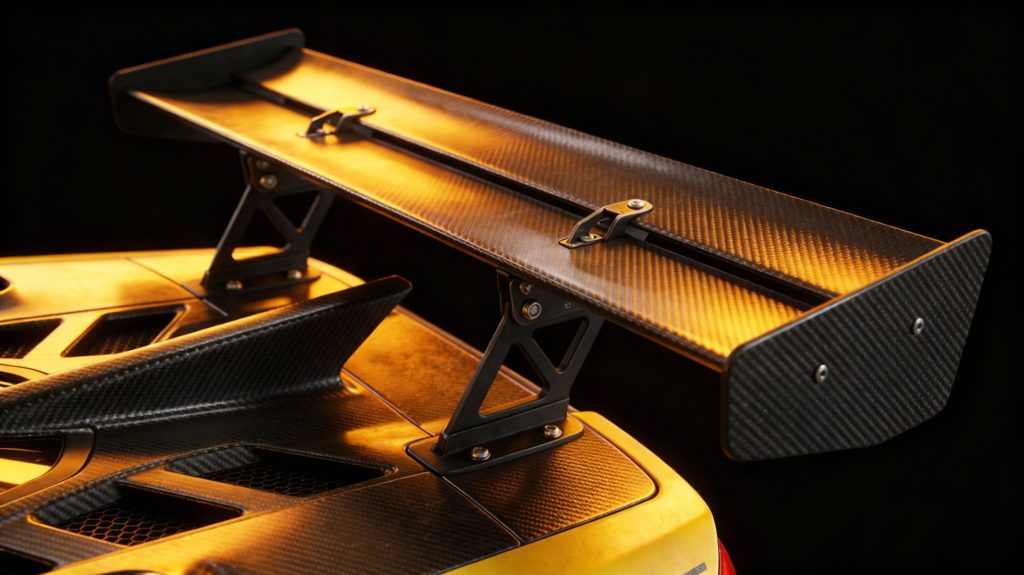
If you’re researching how to make carbon fiber parts or searching for custom carbon fiber car parts, you’re benefiting from a technological revolution that truly hit its stride in the carbon fiber parts in 1990s. This decade wasn’t just about using the material; it was about mastering it, moving it from the exclusive realm of F1 and aerospace into the high-performance automotive mainstream. At Nylon Plastic, we build upon this legacy every day, providing advanced composites that make custom, high-strength parts accessible. Let’s explore that pivotal era and demystify the modern processes behind creating your own carbon fiber components.
The 1990s: When Carbon Fiber Went Mainstream (in Performance Terms)
Before the 1990s, carbon fiber was a wondrous but prohibitively expensive curiosity for all but the best-funded racing teams and aircraft manufacturers. The 1990s changed everything, driven by three key factors:
- Automotive “Halos” and Trickle-Down Tech: The iconic McLaren F1 (launched in 1992) wasn’t just fast—it was built around a carbon fiber monocoque tub. This public marvel showcased the material’s ultimate potential: incredible strength, lightweight, and safety. Simultaneously, brands like Porsche and Ferrari began offering carbon fiber custom carbon fiber car parts like spoilers, mirrors, and interior trim as exotic options, planting the desire in the consumer market.
- Process Advancements: Manufacturing techniques evolved. Prepreg (pre-impregnated) carbon fiber became more standardized, and resin transfer molding (RTM) saw increased use. These processes improved consistency, finish quality, and made moderate-volume production (like for limited-run car parts) more feasible than ever before.
- Material Supply Chain Growth: Increased demand from aerospace and sporting goods lowered costs and improved the availability of consistent, high-quality carbon fiber fabrics and resins, fueling further innovation.
This decade laid the foundational knowledge and commercial pathway that all modern carbon fiber parts manufacturing follows.
How to Make Carbon Fiber Parts: Core Methods Explained
Today, creating custom carbon fiber car parts or any component involves choosing the right process. Here’s a breakdown of the most common methods, from DIY to professional:
1. Wet Lay-Up (The Accessible Start)
This is the foundational method for many learning how to make carbon fiber parts.
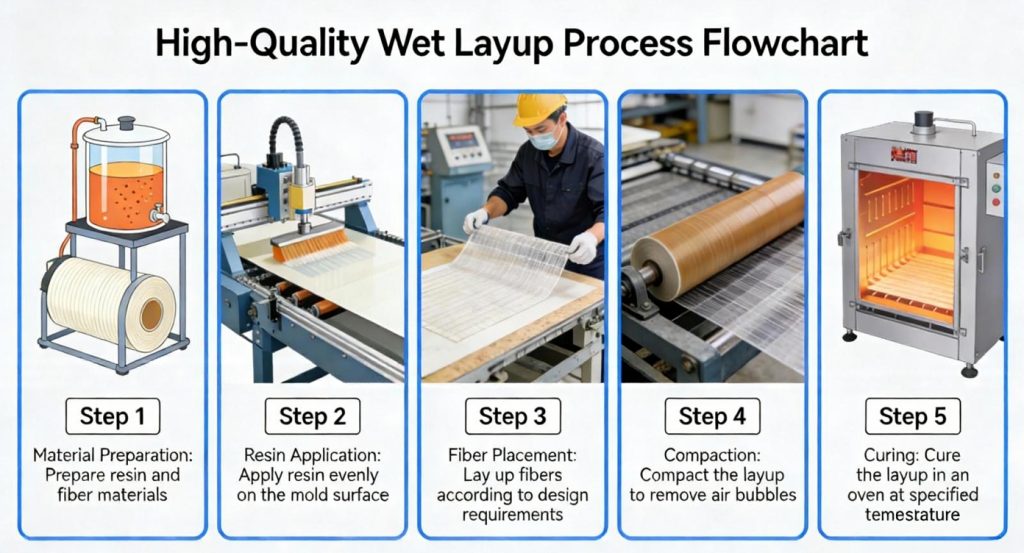
- Process: Dry fabric is placed in a mold, saturated with liquid resin by hand (using brushes/rollers), covered with a vacuum bag, and cured.
- Pros: Low tooling cost, great for prototypes, one-off parts, and large components.
- Contras: Labor-intensive, resin quality can be inconsistent, higher VOC emissions, surface finish requires more post-work.
- Ideal For: DIY projects, prototyping, low-volume or large parts like body panels or custom dashboards.
2. Prepreg Lay-Up (The Professional Standard)
This method, refined since the 1990s, is used for top-tier aerospace, motorsport, and high-end automotive carbon fiber parts.
- Process: Using fabric pre-impregnated with a precise amount of resin (the “prepreg”). Layers are laid in a mold, vacuum-bagged, and cured in an autoclave (a heated pressure oven).
- Pros: Exceptional fiber-to-resin ratio, superior strength, excellent consistency, and surface finish.
- Contras: Requires refrigerated storage, expensive materials, and requires an autoclave for best results.
- Ideal For: Structural components, mission-critical parts, and where the highest strength-to-weight ratio is needed.
3. Resin Transfer Molding (RTM) (The Volume Solution)
A closed-mold process that scaled up from the 1990s for medium-volume production of high-quality custom carbon fiber car parts.
- Process: Dry fabric is placed in a closed, two-part mold. Liquid resin is injected under pressure to fully impregnate the fabric before curing.
- Pros: Excellent finish on both sides, high consistency, good mechanical properties, cleaner than wet lay-up.
- Contras: High initial mold cost, more complex tooling and equipment.
- Ideal For: Medium-volume production runs of hoods, doors, spoilers, and complex architectural parts.

The Engine Behind the Part: Why Material Choice is Everything
Knowing how to make carbon fiber parts is only half the battle. The choice of matrix (the resin) is what turns strong fibers into a phenomenal composite part. This is where Nylon Plastic’s expertise transforms projects.
While traditional epoxy is common, advanced engineered thermoplastics are revolutionizing performance:
- PA-CF (Nylon Carbon Fiber): Offers superior toughness, impact resistance, and fatigue life compared to epoxy. Perfect for parts that must withstand vibration and minor impacts.
- PET-CF & PEEK-CF: Provide exceptional chemical resistance, higher continuous use temperatures, and lower moisture absorption. Ideal for under-hood custom carbon fiber car parts or components exposed to harsh fluids and heat.
Using these advanced composites in processes like compression molding allows for faster cycle times, recyclability, and even better mechanical properties than traditional thermoset resins, carrying the 1990s legacy into the next generation.
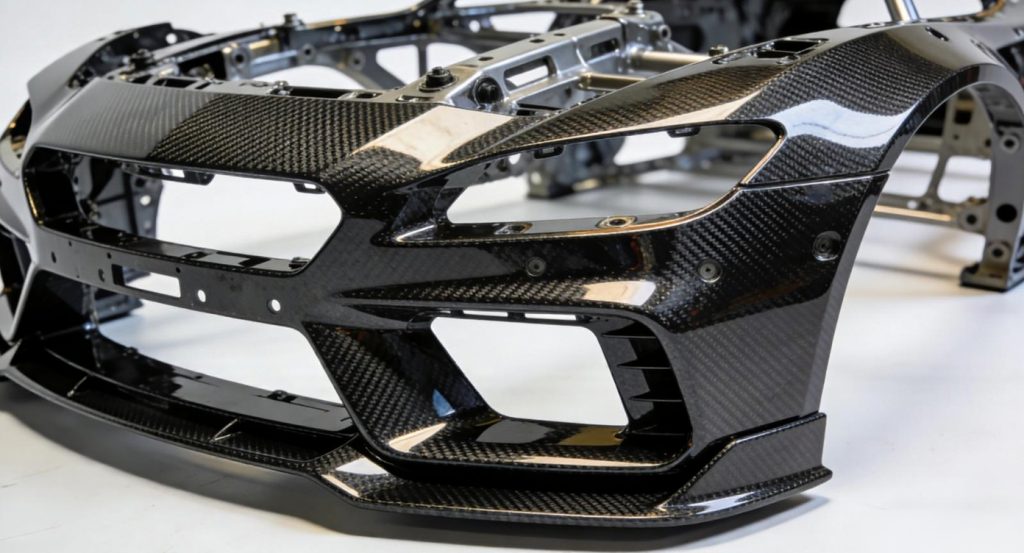
Your Partner in Advanced Composites
The journey from the pioneering days of carbon fiber parts in the 1990s to today’s possibilities is about making extreme performance accessible. Whether you’re a hobbyist exploring how to make carbon fiber parts, a designer prototyping the next great accessory, or a manufacturer needing reliable material for custom carbon fiber car parts, the foundation is quality materials.
Explore our high-performance carbon fiber reinforced composites that can elevate your next project:
- PA6-CF Series: For tough, impact-resistant components.
- PA66-CF Series: For higher thermal resistance and stiffness.
- PET-CF Series: For excellent dimensional stability and chemical resistance.
Ready to specify the right material for your custom part? Contact our engineering team today for a consultation.
PREGUNTAS FRECUENTES
What is the practical value of From Race Track to Road: The 1990s Revolution in Carbon Fiber Parts & How We Make Them Today?
From Race Track to Road: The 1990s Revolution in Carbon Fiber Parts & How We Make Them Today helps connect material choice, process limits, cost, and application risk before committing to production.
What should be checked first for From Race Track to Road: The 1990s Revolution in Carbon Fiber Parts & How We Make Them Today?
Start with the real application requirements, expected environment, production quantity, tolerance needs, and quality control expectations.
What usually causes problems in From Race Track to Road: The 1990s Revolution in Carbon Fiber Parts & How We Make Them Today?
Problems usually come from unclear requirements, mismatched materials, unrealistic tolerances, missing inspection criteria, or late design changes.
How can buyers reduce risk with From Race Track to Road: The 1990s Revolution in Carbon Fiber Parts & How We Make Them Today?
Buyers can reduce risk by sharing drawings, use conditions, critical dimensions, target quantities, and quality expectations before quoting.
 English
 Dutch
Dutch German
 French
 Korean
 Russian
 Japanese
 Spanish
 Vietnamese
 Chinese
 Portuguese
 Arabic