
High-Temperature Performance
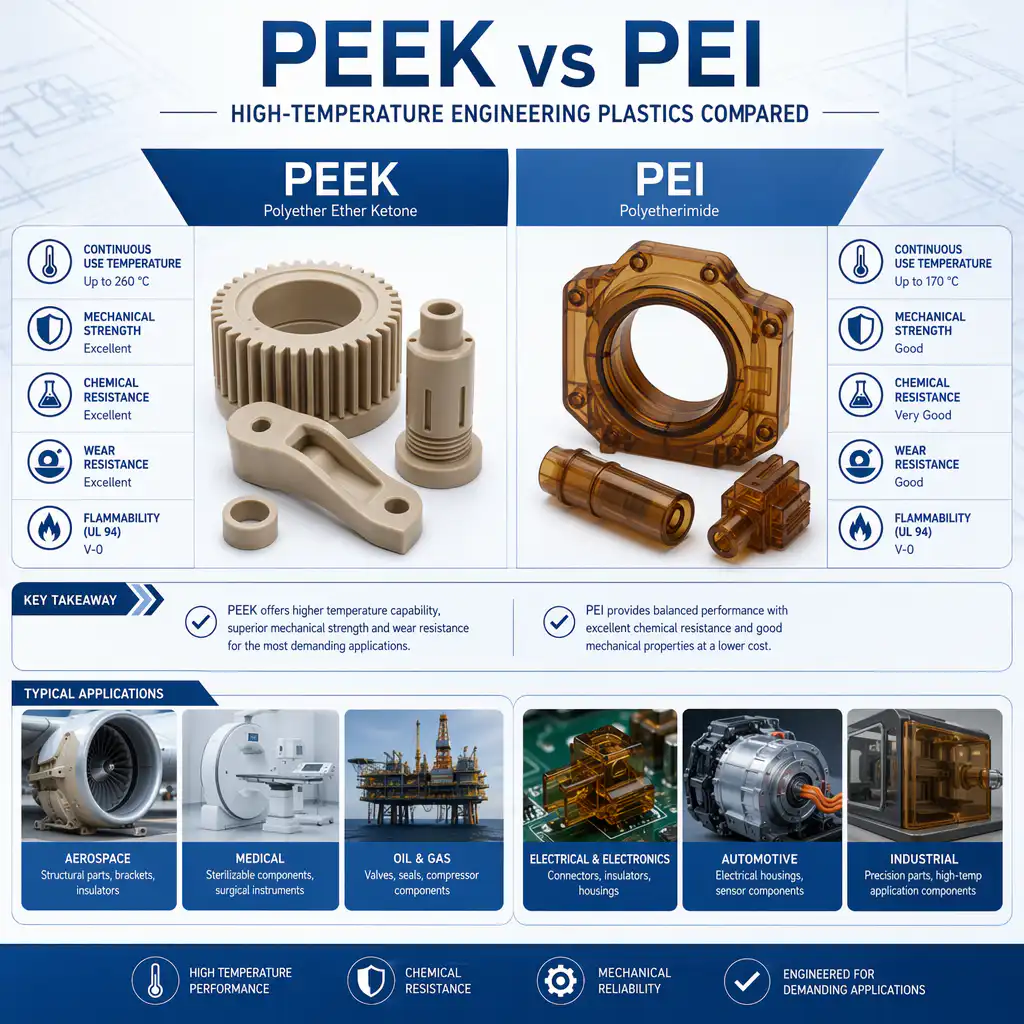
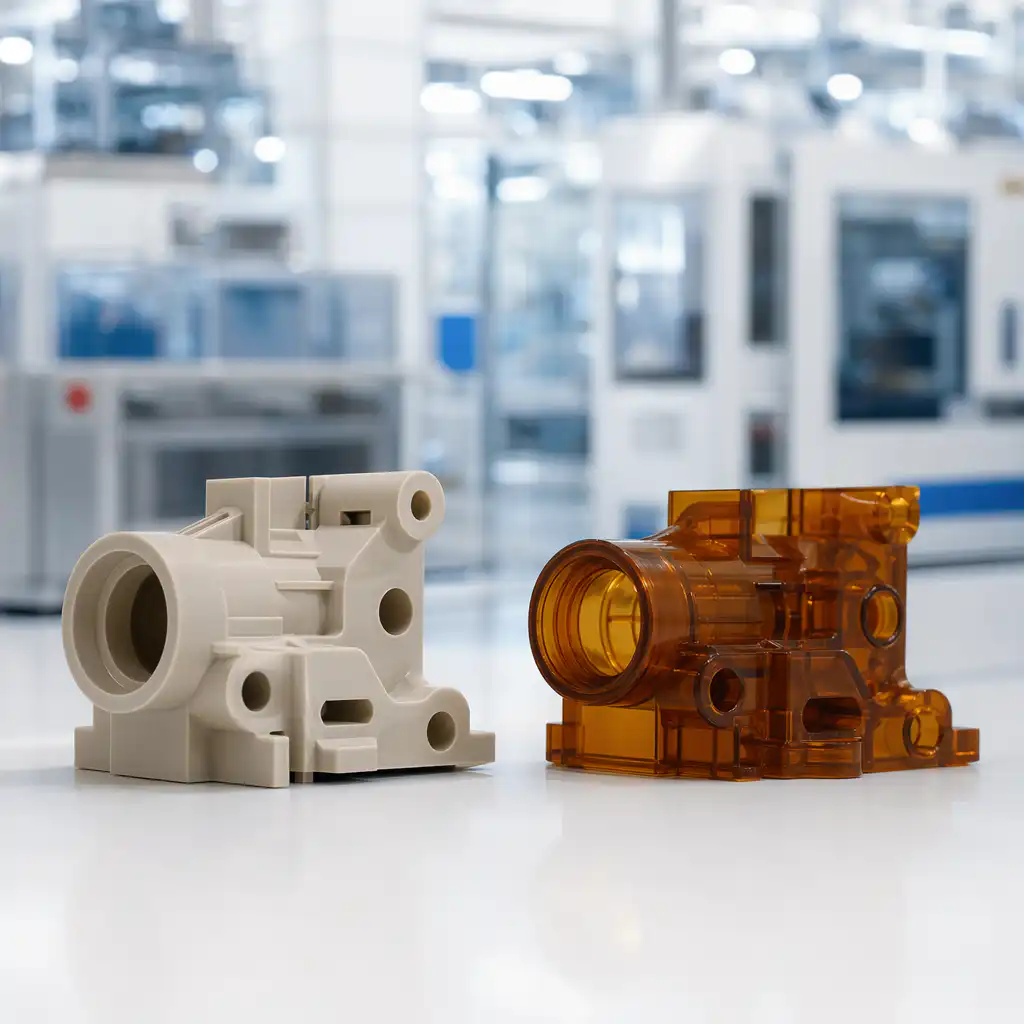
PEEK et PEI (Ultem) are leading high-temperature engineering plastics.
Key Differences
| Propriété | PEEK | PEI |
|---|---|---|
| Continuous Use Temp | 250°C | 170°C |
| Résistance chimique | Excellent | Bon |
| Coût | $150-300/kg | $30-60/kg |
FAQ
When is PEEK vs PEI — High-Temperature Engineering Plastics Compared a good option?
PEEK vs PEI — High-Temperature Engineering Plastics Compared is a good option when fast iteration, complex geometry, low tooling cost, or low-volume production is more important than molded-part unit cost.
What should be checked before choosing PEEK vs PEI — High-Temperature Engineering Plastics Compared?
Vérifier la taille de la pièce, les propriétés du matériau, l'état de surface, la tolérance dimensionnelle, l'exposition à la chaleur, la direction de la charge et la nécessité d'un post-traitement.
How does PEEK vs PEI — High-Temperature Engineering Plastics Compared compare with CNC machining?
L'impression 3D permet de créer rapidement des formes complexes, tandis que l'usinage CNC est souvent plus performant pour les surfaces précises, les tolérances plus étroites et les matériaux de qualité.
What affects the cost of PEEK vs PEI — High-Temperature Engineering Plastics Compared?
Le coût dépend du matériau, du volume de construction, du temps d'impression, de la hauteur des couches, de l'enlèvement du support, de la finition, de l'inspection et du nombre de pièces dans la construction.
PEEK vs PEI — Frequently Asked Questions
Is PEEK stronger than PEI?
At room temperature, PEI has higher tensile strength. PEEK maintains properties better at elevated temperatures.
Where can I source PEEK and PEI materials?
Nylonplastic supplies both materials in rod, sheet, and tube forms.
 English
 Dutch
Dutch German
 French
 Korean
 Russian
 Japanese
 Spanish
 Vietnamese
 Chinese
 Portuguese
 Arabic