
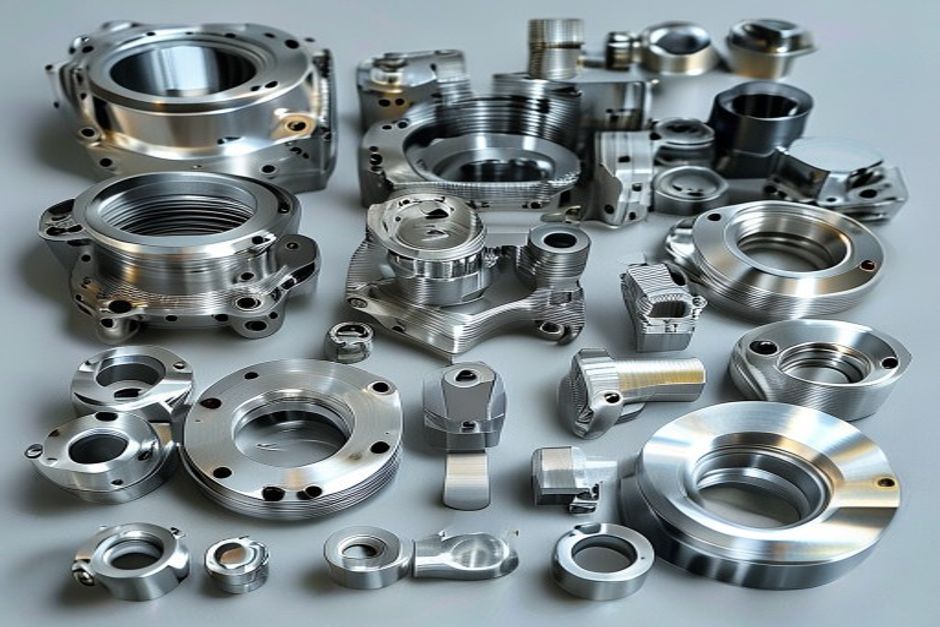
The automotive industry relies extensively on CNC machining across the entire vehicle development and production lifecycle. From prototype components for design validation to low-volume production parts, tooling for high-volume stamping, and aftermarket performance components, CNC machining provides the precision, flexibility, and speed that automotive engineering demands.
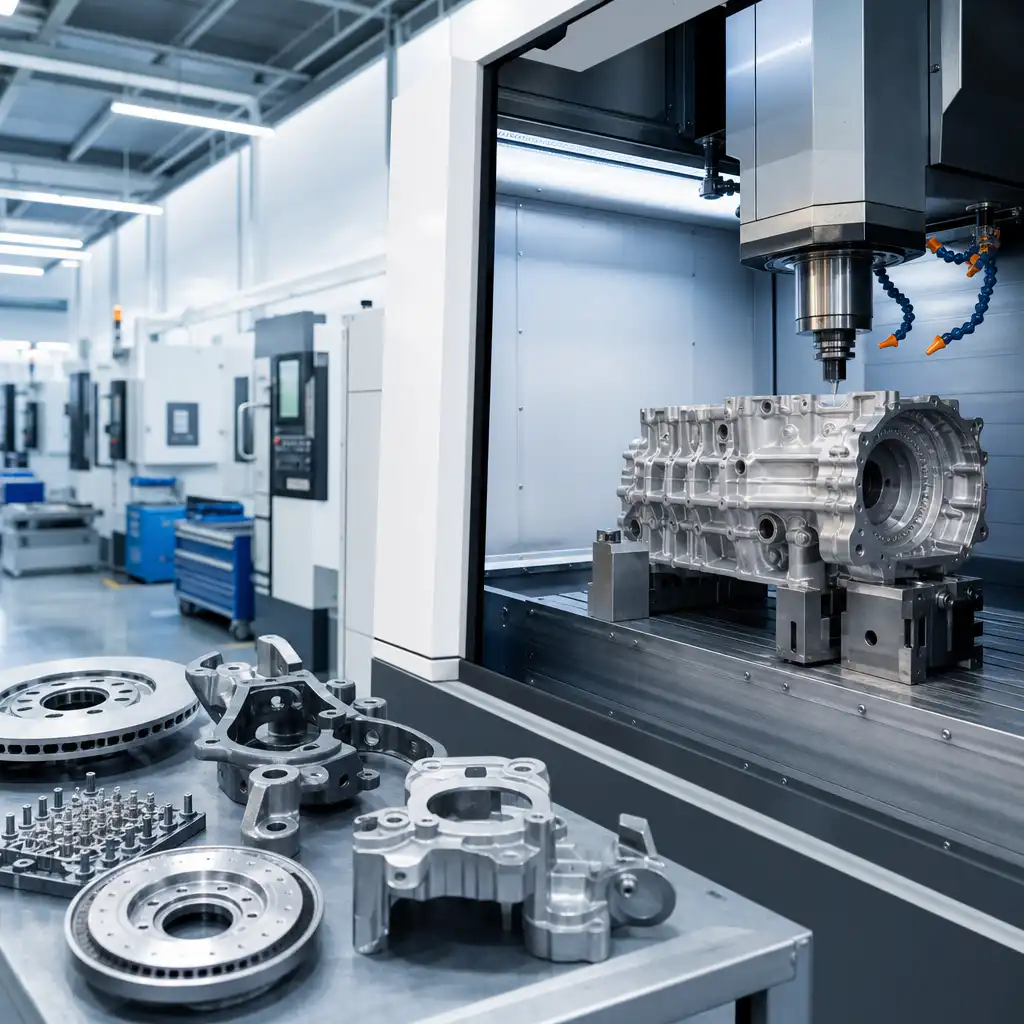
CNC Machining Applications in Automotive
1. Prototyping and Concept Validation
Before committing to high-volume production tooling (injection molds, stamping dies, casting patterns), automotive engineers validate form, fit, and function with CNC-machined prototypes. CNC machining enables:
- Functional prototypes from production-intent materials (Nylon, POM, aluminum, steel)
- Assembly validation before tooling investment ($50,000+ for a single mold)
- Wind tunnel testing components with accurate surface geometry
- Crash test prototypes with production-equivalent material properties
2. Low-Volume Production (Pre-Production and Specialty)
Many automotive components are produced in quantities of 100-5,000 units — below the economic threshold for injection molding or die casting. CNC machining fills this gap:
- Pre-production validation builds (100-500 units)
- Motorsports and performance aftermarket components
- Classic car restoration parts (no longer in production)
- Specialty vehicles (fire trucks, ambulances, off-road equipment)
3. Tooling and Manufacturing
- Stamping Dies: CNC-milled from tool steel (D2, A2, H13) with tolerances of ±0.001 inches on critical dimensions
- Injection Mold Inserts: Cavity and core machined from P20, H13, or stainless steel, with EDM finishing for complex geometries
- Casting Patterns: CNC-machined patterns for sand casting, investment casting, and die casting
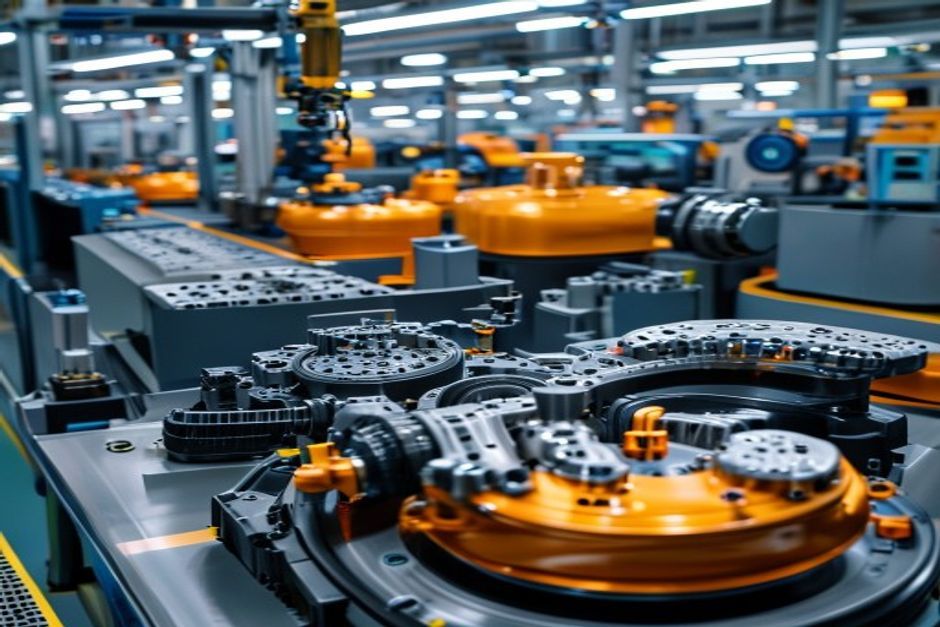
4. Electric Vehicle (EV) Components
The transition to electric vehicles has created new applications for CNC machining:
- Battery Enclosure Components: Precision-machined aluminum and engineering plastic fittings, seals, and structural mounts
- Thermal Management: Cold plates, heat sinks, and fluid manifolds machined from aluminum with complex internal channels
- Motor Housings: Stator and rotor housings machined to ±0.0005 inches concentricity
- Power Electronics: Heat sinks, bus bar mounts, and inverter housings
Materials in Automotive CNC Machining
| Matériau | Application | Machining Notes |
|---|---|---|
| Aluminum 6061/7075 | Housings, brackets, heat sinks | Excellent machinability, high speed |
| Stainless Steel 304/316 | Exhaust, fluid fittings | Work-hardens; use sharp tools |
| Nylon (PA6, PA66) | Bearings, gears, cable ties | Absorbs moisture; account for growth |
| POM (acétal) | Fuel system, gears, bushings | Excellent dimensional stability |
| PEEK | Under-hood, transmission | High temp; use sharp tools, coolant |
Quality and Compliance Requirements
Automotive suppliers must meet rigorous quality standards:
- IATF 16949: The automotive-specific quality management standard (replaces ISO/TS 16949)
- PPAP (Production Part Approval Process): Documentation package proving the supplier understands and controls the manufacturing process
- IMDS (International Material Data System): Material composition reporting for recycling compliance
- CMM : Dimensional verification with statistical process control (SPC)
FAQ
When is CNC Machining in Automotive Manufacturing: Applications and Advantages the right choice?
CNC Machining in Automotive Manufacturing: Applications and Advantages is the right choice when the part requires machined accuracy, controlled surfaces, repeatable features, and a material that can be cut reliably.
What should be confirmed before ordering CNC Machining in Automotive Manufacturing: Applications and Advantages?
Confirmer la version du dessin, la qualité du matériau, les tolérances, la quantité, les dimensions critiques, l'état de surface et les exigences d'inspection avant de lancer la production.
What usually drives cost in CNC Machining in Automotive Manufacturing: Applications and Advantages?
Le coût est généralement déterminé par les matériaux, le temps de préparation, le temps machine, les difficultés liées aux tolérances, la fixation, l'accès aux outils, la finition, l'inspection et la quantité commandée.
How can quality risk be reduced in CNC Machining in Automotive Manufacturing: Applications and Advantages?
Le risque de qualité est réduit en marquant clairement les caractéristiques critiques, en évitant les tolérances trop étroites, en confirmant la fabricabilité à un stade précoce et en utilisant les données d'inspection pour les dimensions importantes.


 English
 Dutch
Dutch German
 French
 Korean
 Russian
 Japanese
 Spanish
 Vietnamese
 Chinese
 Portuguese
 Arabic