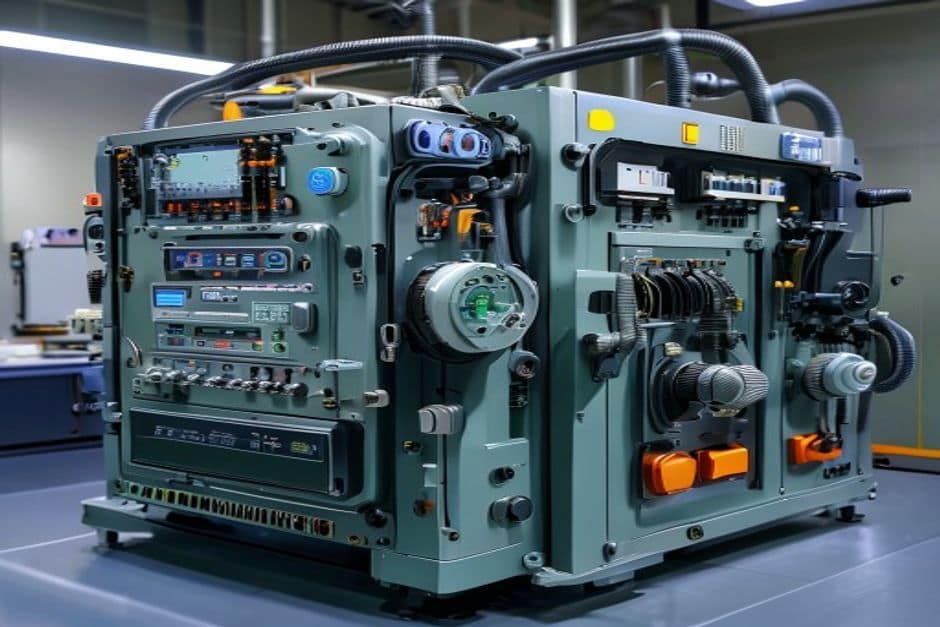
Custom machine building — also called special-purpose machinery or bespoke manufacturing systems — transforms unique production requirements into purpose-designed, purpose-built machines that perform specific tasks. Unlike standard machine tools (CNC mills, lathes, presses) designed for general flexibility, custom machines are optimized for a single product or process, often achieving dramatically higher throughput, tighter tolerances, or lower operating costs than adapting general-purpose equipment.
When Is Custom Machine Building the Right Approach?
Custom machines are justified when:
- No off-the-shelf solution exists: The specific process, part geometry, or throughput requirement cannot be met by standard equipment available on the market
- Throughput multiplication: A custom assembly or test machine processes 5-10× faster than manual alternatives, paying for itself in labor savings within 12-24 months
- Quality requirements exceed manual capability: Automated assembly, inspection, and testing consistently achieve quality levels that manual processes cannot sustain across shifts
- Integration advantage: Multiple discrete processes (machining, assembly, inspection, packaging) can be integrated into a single automated system, eliminating work-in-process inventory and material handling
- Proprietary process: The manufacturing method is a competitive advantage and embedding it in custom equipment provides IP protection
The Custom Machine Building Process
Phase 1: Requirements Definition (2-4 weeks)
- Document detailed functional requirements: what the machine must do, not how
- Define throughput targets (cycles per minute, parts per hour)
- Specify quality requirements (tolerances, inspection criteria, rejected-part handling)
- Document operator interface requirements (safety, ergonomics, HMIs)
- Define facility constraints (floor space, utilities, environmental conditions)
Phase 2: Conceptual Design and Feasibility (3-6 weeks)
- Develop 2-3 concept alternatives with different cost/performance tradeoffs
- Identify enabling technologies (vision systems, robots, precision actuators) and verify feasibility
- Create preliminary 3D CAD models showing machine envelope, material flow, and key subsystems
- Estimate development cost, production machine cost, and commissioning timeline
Phase 3: Detailed Engineering (6-12 weeks)
- Complete mechanical design: frames, actuators, pneumatics, hydraulics, guarding
- Complete electrical design: control panel, PLC, HMI, sensors, safety circuits
- Complete controls programming: PLC ladder logic or structured text, HMI screens, alarm handling
- Specify all purchased components (bearings, linear guides, motors, sensors, pneumatics)
- Generate fabrication drawings for all custom-manufactured components
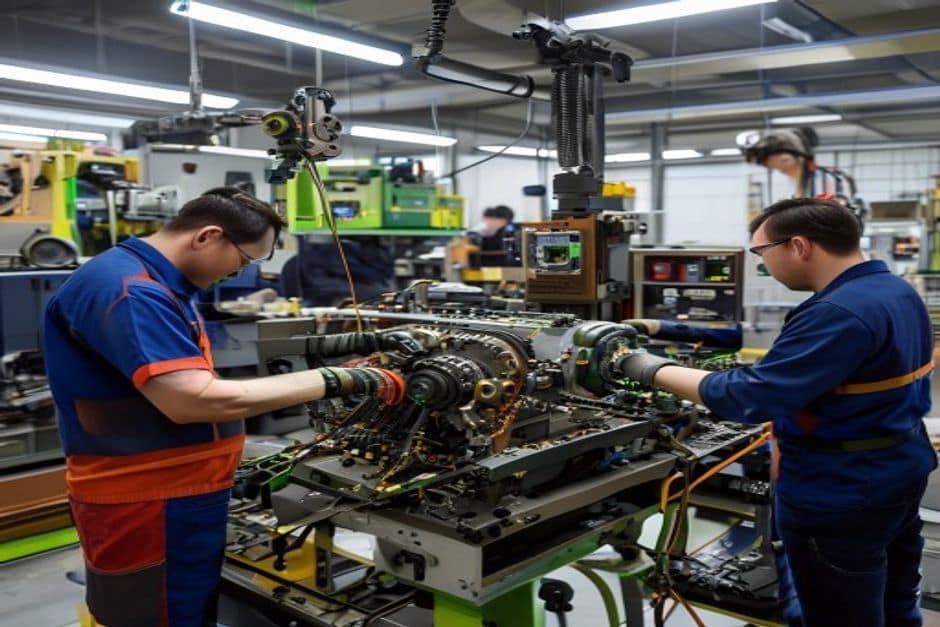
Phase 4: Component Manufacturing (4-8 weeks)
- CNC machine all custom frame components, brackets, and mounts
- Fabricate structural weldments (frames, bases, guards)
- Procure purchase parts (bearings, drives, sensors, pneumatics, electrical) — typically the longest-lead-time items
Phase 5: Assembly, Integration, and Debug (4-8 weeks)
- Mechanical assembly on leveling mounts with laser-aligned structural components
- Pneumatic and electrical integration with point-to-point verification
- Controls debug — verify every sensor reading, actuator command, and safety interlock
- Dry-cycle testing (no product) to verify timing, motion, and interlocks
- Product testing with controlled conditions to verify quality and throughput
Phase 6: Factory Acceptance and Commissioning (2-4 weeks)
- Factory Acceptance Testing (FAT): customer witnesses the machine operating with production parts, achieving throughput and quality specifications
- Disassembly, shipping, reassembly at customer facility
- Site Acceptance Testing (SAT): identical performance verification at customer facility
- Operator and maintenance technician training
- Release to production with 90-day warranty support
Materials in Custom Machine Building
Custom machines demand engineering material selection optimized for each subsystem:
- Structural Frames: Welded steel, normalized and Blanchard ground, with precision-machined mounting surfaces for rails and actuators
- Tooling Inserts: Hardened tool steel (D2, A2) or engineered plastic (Nylon 6/6, POM) for wear part interfaces
- Guarding: Aluminum extrusion framing with polycarbonate windows and interlocked doors
- Precision Mechanisms: CNC-machined aluminum (6061 or 7075), stainless steel (303/304), and engineering plastic (PEEK, Nylon) for lightweight, guided, or low-friction applications
Cost Drivers in Custom Machine Building
- Complexity: Number of axes of motion, sensors, and actuators — roughly $2,000-5,000 per axis for precision linear drives
- Controls Development: Complex PLC programs with vision integration and data collection add 20-40% to engineering cost
- Material Specialization: Food-grade (304 SS, FDA seals), cleanroom, and explosive-environment machines carry significant material and documentation premiums
- Schedule Compression: Accelerating timelines by 25% typically adds 15-30% to cost due to overtime, expedited procurement, and concurrent-phased engineering
Articles connexes
Explore our complete guide to engineering plastics and precision manufacturing. For detailed technical guidance, review our articles on CNC machining processes, material selection, and manufacturing optimization.
Questions fréquemment posées
What determines the best manufacturing process for my project?
The optimal process depends on production volume, material, tolerances, geometry complexity, and budget. Low-volume precision parts suit CNC machining. High-volume identical parts favor injection molding. Hardened materials with sharp corners benefit from EDM. Cold-cutting requirements point to water jet.
How important is material selection in the manufacturing outcome?
Material choice is arguably the most important decision. It determines cutting parameters, tool selection, achievable tolerances, surface finish, and ultimately part performance. Engineering plastics like Nylon and POM behave very differently from metals — requiring specific feeds, speeds, and cooling strategies.
What certifications should I look for when choosing a manufacturer?
ISO 9001:2015 is the baseline. Industry-specific certifications include AS9100 (aerospace), ISO 13485 (medical), IATF 16949 (automotive), and NADCAP (special processes). Verify the certification scope covers your specific component type.
How can I reduce manufacturing costs?
Optimize designs for manufacturability: relax tolerances where functionally acceptable, minimize setups by designing features accessible from one orientation, use standard tool sizes, and order larger quantities to amortize setup time. Early supplier engagement during the design phase is the most effective cost-reduction strategy.