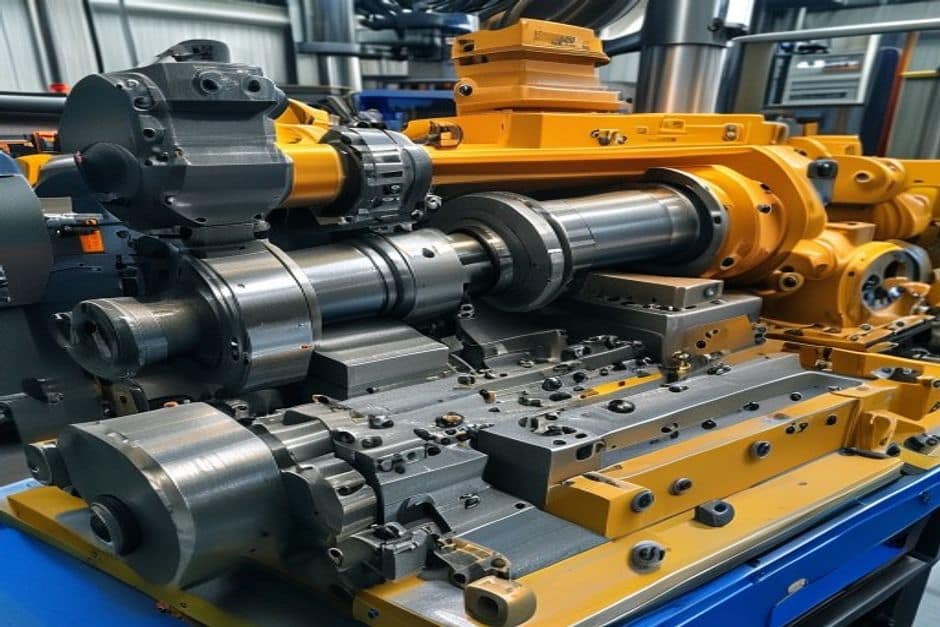
Industrial equipment and heavy machinery represent the most demanding applications for CNC machining — combining large part dimensions, thick material sections, high-strength alloys, and surface finishes that often resist typical machining strategies. From mining excavator components machined from 6-inch steel plate to turbine shaft bearings requiring ±0.0005 inch concentricity over 40 inches of length, industrial equipment machining pushes the limits of machine tool design, tooling technology, and process engineering.
Categories of Industrial Equipment Components
Large Structural Components
- Excavator and Bulldozer Components: Boom sections, arm assemblies, bucket linkage components — machined from thick steel plate (2-6 inches) with bolt-hole patterns and pin bores requiring ±0.001 inch positional tolerances across spans exceeding 10 feet
- Mining Equipment Housings: Gearbox housings, bearing pedestals, crusher frame components — cast iron or ductile iron, with precision bores for shaft alignment
- Shipbuilding and Offshore Components: Propeller shaft bearings, rudder stock housings, thruster mounting flanges — corrosion-resistant alloys (316 SS, duplex stainless, nickel aluminum bronze) machined to ±0.001 inch
Rotating Equipment Components
- Turbine Shafts: Steam and gas turbine shafts up to 40 feet long, turned from high-alloy steel forgings to ±0.0005 inch concentricity
- Compressor Impellers: 5-axis machined from titanium or stainless steel forgings with complex aerodynamic blade geometries
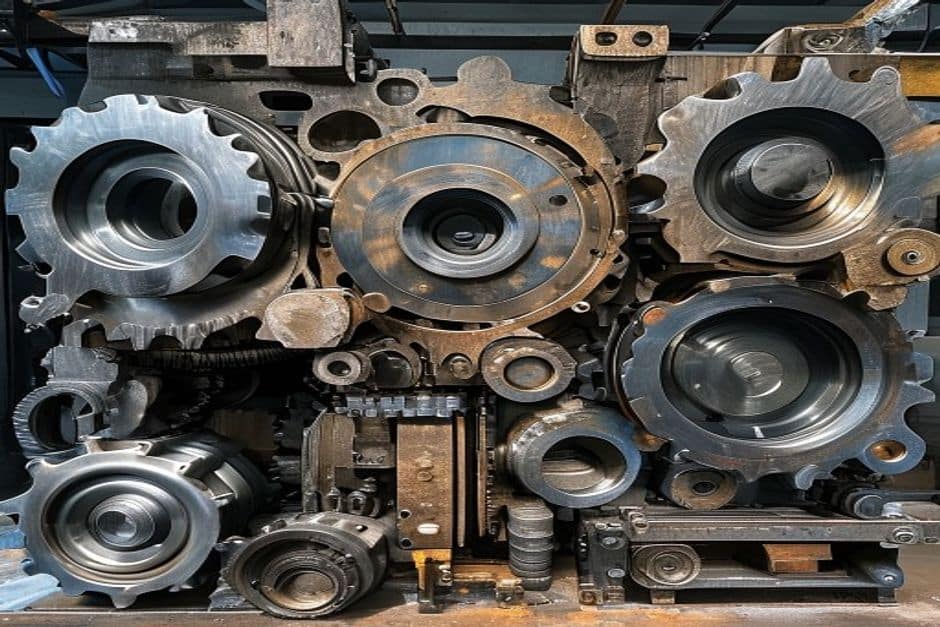
- Large-Diameter Bearings: Slewing ring bearings (20+ feet diameter) for cranes, wind turbines, and tunnel boring machines — turned, milled, and induction-hardened
Wear Components
- Wear Plates and Liners: Hardened steel (400-500 BHN) or engineered plastic (UHMW-PE, Nylon) liners for mining chutes, hopper linings, and conveyor systems — machined with polished geometries to minimize material hang-up
- Bushings and Bearings: Bronze (C93200, C95400) or engineering plastic (POM, Nylon, PEEK) bushings machined for press-fit installation with ±0.001 inch bore tolerances
- Hydraulic Components: Cylinder barrels, piston heads, and valve bodies machined from steel or ductile iron with precision bore tolerances for seal functionality
Large-Format CNC Machining Challenges
Chip Management
Large industrial components generate enormous volumes of chips. A single roughing pass on a 5-foot gear housing can produce 20-50 cubic inches of steel chips per minute. Chip conveyor capacity, coolant filtration, and chip disposal logistics become significant operational considerations.
Part Fixturing
Components weighing 5,000-50,000+ pounds require crane handling for setup. Fixture design must accommodate variable stock dimensions (castings, weldments), secure the part against cutting forces exceeding 10,000 pounds, and provide access to the features being machined — all while enabling the operator to load and unload the part with an overhead crane in a reasonable time.
Thermal Management
Large components act as thermal reservoirs — a casting that sits in the shop overnight at 60°F and warms to 72°F during an 8-hour machining shift will change dimension measurably. Precision bores machined at different times of day may not align. Temperature-controlled coolant systems (maintaining ±2°F) are essential for precision industrial machining.
Material Selection for Industrial Equipment
| Matériau | Application | Machinability |
|---|---|---|
| 4140 Alloy Steel | Shafts, gears, structural | Good in annealed; difficult at 40+ HRC |
| Ductile Iron (65-45-12) | Housings, frames, gear cases | Excellent — graphite lubricates cut |
| 316 Stainless Steel | Corrosion environments | Work-hardens — use sharp tools, coolant |
| UHMW-PE | Wear liners, slide pads | Easy to machine; watch for expansion |
| Nylon 6 (Cast) | Bearings, gears, rollers | Machines well; account for moisture growth |
| POM (acétal) | Precision bearings, cams | Excellent dimensional stability |
Engineering Plastics in Heavy Equipment
Engineering plastics are increasingly specified for heavy equipment components where their unique properties — self-lubrication, noise reduction, corrosion immunity, and weight reduction — outweigh conventional metal alternatives:
- Nylon (PA6/PA66, cast or machined): Wear-resistant bushings, sheaves, and rollers replacing bronze or steel bearings. Self-lubricating (no grease fittings required), 7× lighter than steel, immune to corrosion in wet mining environments.
- POM (acétal): Precision bearing surfaces, cam followers, and gear components requiring tight tolerances (±0.001 inch) and stable dimensions across temperature swings
- UHMW-PE (Ultra-High-Molecular-Weight PE): Chute linings, hopper liners, chain guides, and wear strips in abrasive material-handling environments. Extreme abrasion resistance at low cost.
- PEEK: High-temperature bearings and seals in continuous-service applications exceeding 400°F (200°C) — steam turbine components, compressor bearings, and pump wear rings
Articles connexes
Explore our complete guide to engineering plastics and precision manufacturing. For detailed technical guidance, review our articles on CNC machining processes, material selection, and manufacturing optimization.
Questions fréquemment posées
What determines the best manufacturing process for my project?
The optimal process depends on production volume, material, tolerances, geometry complexity, and budget. Low-volume precision parts suit CNC machining. High-volume identical parts favor injection molding. Hardened materials with sharp corners benefit from EDM. Cold-cutting requirements point to water jet.
How important is material selection in the manufacturing outcome?
Material choice is arguably the most important decision. It determines cutting parameters, tool selection, achievable tolerances, surface finish, and ultimately part performance. Engineering plastics like Nylon and POM behave very differently from metals — requiring specific feeds, speeds, and cooling strategies.
What certifications should I look for when choosing a manufacturer?
ISO 9001:2015 is the baseline. Industry-specific certifications include AS9100 (aerospace), ISO 13485 (medical), IATF 16949 (automotive), and NADCAP (special processes). Verify the certification scope covers your specific component type.
How can I reduce manufacturing costs?
Optimize designs for manufacturability: relax tolerances where functionally acceptable, minimize setups by designing features accessible from one orientation, use standard tool sizes, and order larger quantities to amortize setup time. Early supplier engagement during the design phase is the most effective cost-reduction strategy.