
Common Injection Molding Defects
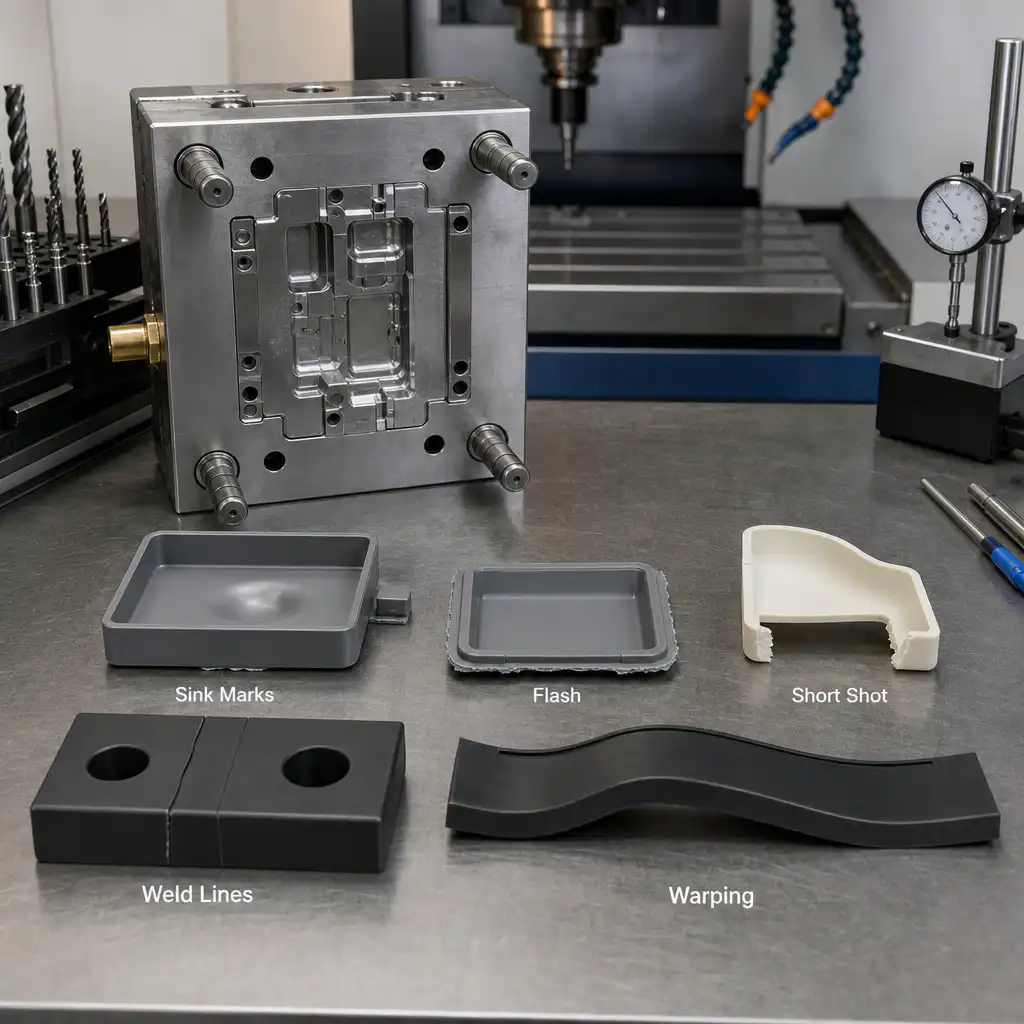
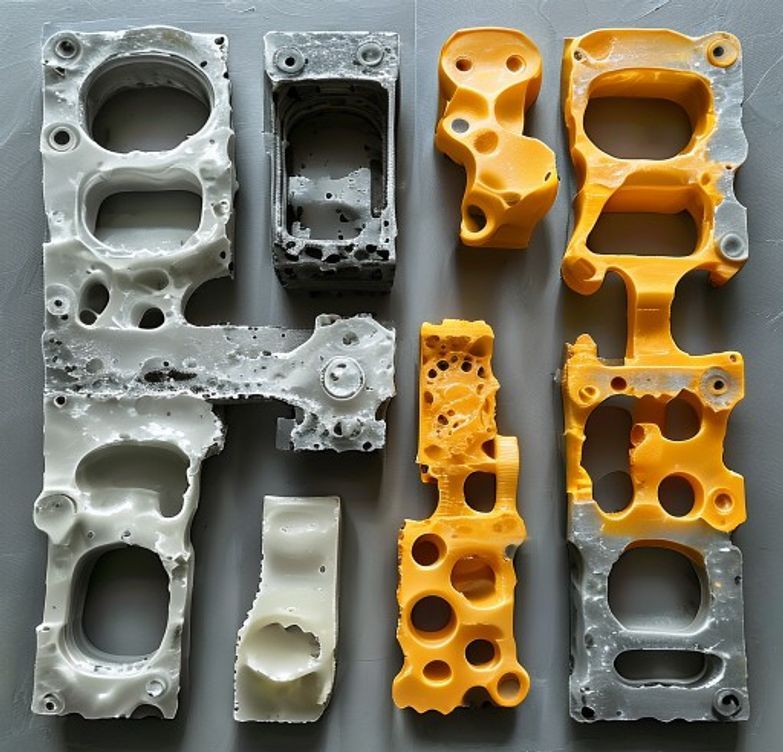
Injection molding defects can affect part appearance, function, and cost. Understanding root causes enables quick troubleshooting and prevention.
1. Sink Marks
Apparence : Depressions on part surface, typically near thick sections.
Causes:
- Excessive wall thickness variation
- Ribs too thick relative to wall
- Insufficient cooling time
- High packing pressure needed
Solutions:
- Reduce rib thickness to 50-70% of wall
- Increase cooling time
- Optimize packing pressure and time
- Use gas-assist molding for thick sections
2. Flash
Apparence : Thin excess plastic at parting lines or around features.
Causes:
- Insufficient clamp force
- Worn mold components
- Excessive injection pressure
- Poor mold alignment
Solutions:
- Increase clamp tonnage
- Repair or replace worn components
- Reduce injection pressure
- Check mold alignment and guide pins
3. Short Shots
4. Warpage
Apparence : Part distortion after ejection.
Causes:
- Non-uniform cooling
- Asymmetric part design
- Incorrect ejection timing
- Material shrinkage variation
Solutions:
- Optimize cooling channel design
- Balance wall thickness
- Adjust ejection timing
- Use material with lower shrinkage
5. Weld Lines
Apparence : Visible lines where flow fronts meet.
Causes:
- Multiple gates or flow fronts
- Holes or inserts creating flow splits
- Low injection speed
- Cold material at meeting point
Solutions:
- Move weld lines to non-critical areas
- Increase injection speed
- Raise mold temperature
- Add overflow wells at weld locations
Defect Prevention Checklist
- Design parts with uniform wall thickness
- Include adequate draft angles
- Provide proper venting
- Optimize gate location
- Ensure balanced cooling
Conclusion
Most injection molding defects stem from design, processing, or mold issues. Early detection and systematic troubleshooting minimize production downtime and scrap rates.
Ressources connexes
- Facteurs de coût des plastiques techniques
- Comparaison PEEK vs PEI
- Flame Retardant Plastics
- Food Grade Plastics Guide
- Nylon Moisture Treatment
Ressources connexes
- Facteurs de coût des plastiques techniques
- Comparaison PEEK vs PEI
- Flame Retardant Plastics
- Food Grade Plastics Guide
- Nylon Moisture Treatment
Ressources connexes
- Facteurs de coût des plastiques techniques
- Comparaison PEEK vs PEI
- Flame Retardant Plastics
- Food Grade Plastics Guide
- Nylon Moisture Treatment
FAQ

When does Plastic Injection Molding Defects — Causes and Solutions make sense?
Plastic Injection Molding Defects — Causes and Solutions makes sense when the part volume, material choice, geometry, and repeatability needs justify mold design and tooling investment.
What design factors matter most for Plastic Injection Molding Defects — Causes and Solutions?
Wall thickness, ribs, bosses, draft angle, gate location, shrinkage, parting line, and ejection all affect molded part quality.
What information is needed before mold production?
The supplier should confirm the 3D model, material, expected annual volume, appearance requirements, tolerance needs, and any assembly or functional testing requirements.
What is the biggest risk in Plastic Injection Molding Defects — Causes and Solutions?
The biggest risk is approving tooling before material behavior, shrinkage, flow, and part function are fully checked against the real application.

 English
 Dutch
Dutch German
 French
 Korean
 Russian
 Japanese
 Spanish
 Vietnamese
 Chinese
 Portuguese
 Arabic