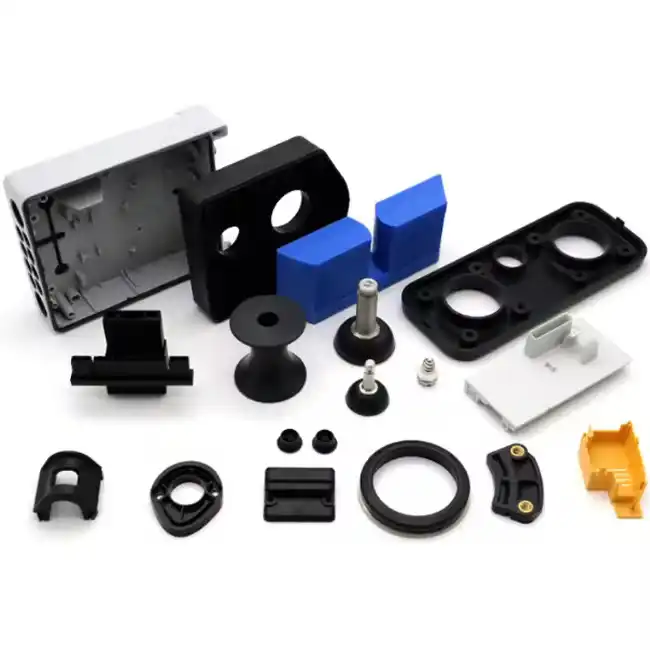

Metal 3D Printing Service represents the forefront of manufacturing technology, enabling the creation of complex, high-strength metal components that are impossible to produce through traditional methods. Using advanced techniques like Selective Laser Melting (SLM) and Direct Metal Laser Sintering (DMLS), this service transforms digital designs into fully dense, functional metal parts for industries ranging from aerospace and automotive to medical devices and robotics. As a comprehensive manufacturing partner, Nylon Plastique integrates metal additive manufacturing with our broader capabilities to deliver complete solutions from prototype to production.
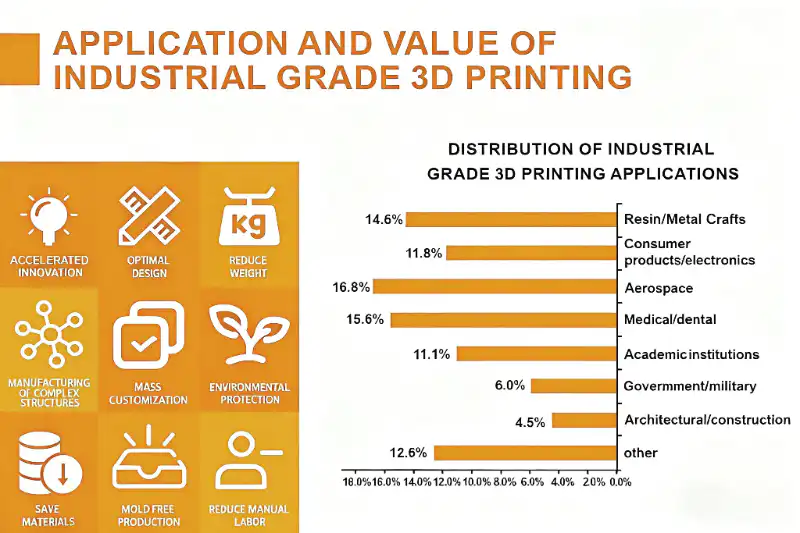
The Metal AM Advantage: Design Freedom Meets Material Performance
Metal 3D printing offers transformative benefits that are reshaping how engineers and designers approach component manufacturing.
- Unparalleled Design Freedom: Complex internal geometries, lattice structures, organic shapes, and conformal cooling channels can be produced without the constraints of traditional machining or casting. This enables part consolidation, weight reduction, and optimized performance. Our conception de produits team specializes in optimizing geometries specifically for additive manufacturing.
- Rapid Prototyping and Iteration: Metal 3D printing accelerates product development cycles by producing functional prototypes in days rather than weeks or months. Design iterations can be quickly tested and refined before committing to expensive hard tooling.
- No Tooling Required: Unlike casting or forging, additive manufacturing eliminates the need for molds or dies. This makes it exceptionally cost-effective for low-volume production, custom one-offs, and replacement parts.
- Material Efficiency: Additive processes are near-net-shape, generating minimal waste compared to subtractive manufacturing (CNC machining), where up to 80-90% of material can be cut away. Unused metal powder can often be recycled.
- On-Demand Manufacturing: Digital inventory means parts can be stored as files and produced only when needed, reducing warehousing costs and enabling rapid response to supply chain demands.

Metal 3D Printing Technologies: Choosing the Right Process
Different metal 3D printing technologies suit different applications. The table below compares the most common industrial processes.
| Technologie | Description du processus | Principaux avantages | Applications typiques |
|---|---|---|---|
| SLM (Selective Laser Melting) | A high-power laser fully melts metal powder, layer by layer, creating fully dense parts with mechanical properties comparable to wrought metal. | Highest density and mechanical strength; excellent for functional end-use parts. | Aerospace components, medical implants, high-performance automotive parts. |
| DMLS (Direct Metal Laser Sintering) | Similar to SLM but sinters (fuses) powder particles without fully melting; often used for specific alloys. | Good for complex geometries with excellent surface finish. | Tooling inserts, complex brackets, lightweight structures. |
| EBM (Electron Beam Melting) | Uses an electron beam as the energy source in a vacuum; typically for higher-temperature alloys. | High build rates; reduced residual stress; suitable for titanium and cobalt chrome. | Orthopedic implants, aerospace structural parts. |
| Binder Jetting | A liquid binder is selectively deposited onto a powder bed, joining the particles. The “green” part is then sintered in a furnace. | High-speed production; no support structures needed; large build volumes possible. | High-volume production of complex metal parts, automotive components. |
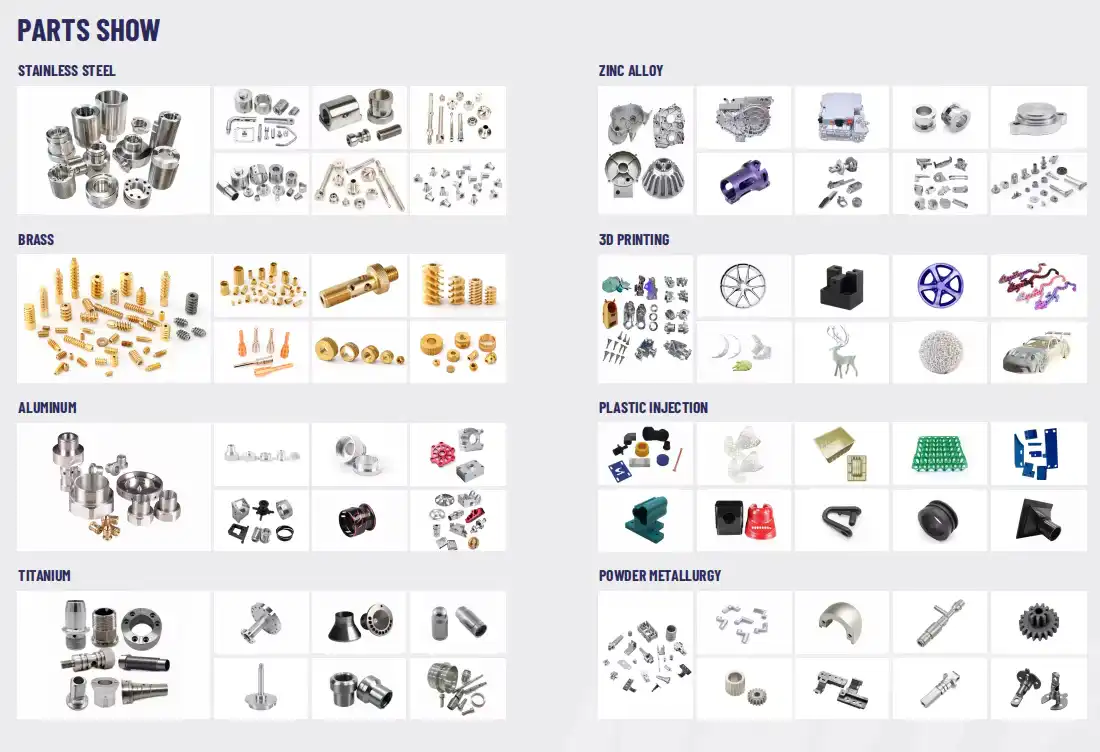
Metal Materials for 3D Printing: A Comprehensive Guide
The range of printable metals continues to expand, covering most engineering alloys. The reference supplier offers materials including aluminum, stainless steel, titanium, and more. Our pôle de sélection des matériaux provides deeper guidance on matching metal powders to specific application requirements.
| Material Category | Specific Alloys | Propriétés principales | Applications typiques |
|---|---|---|---|
| Titanium Alloys | Ti6Al4V (Grade 5), Ti6Al4V ELI (Grade 23) | Exceptional strength-to-weight ratio, outstanding corrosion resistance, biocompatible. | Aerospace structural parts, medical implants (hip stems, spinal cages), high-performance automotive components, marine hardware. |
| Stainless Steels | 316L, 304L, 17-4PH | Good corrosion resistance, excellent mechanical properties, weldability, available in precipitation-hardening grades. | Medical instruments, food processing equipment, chemical plant components, functional prototypes, tooling. |
| Aluminum Alloys | AlSi10Mg, AlSi7Mg, Scalmalloy® | Lightweight, good thermal conductivity, excellent strength-to-weight ratio. | Automotive brackets and housings, aerospace components, heat exchangers, lightweight structural parts. |
| Cobalt Chrome | CoCrMo, CoCrW | High temperature strength, excellent wear resistance, biocompatible. | Dental prosthetics (crowns, bridges), orthopedic implants, gas turbine components, high-wear applications. |
| Nickel Superalloys | Inconel 625, Inconel 718, Hastelloy X | Exceptional high-temperature strength, oxidation and corrosion resistance. | Jet engine components, gas turbine parts, heat exchangers, nuclear reactors, chemical processing equipment. |
| Tool Steels | Maraging Steel (MS1), H13, 420 | High hardness, wear resistance, good toughness. | Injection molds, die casting tools, cutting tools, high-strength mechanical parts. |
| Copper Alloys | Pure Copper, CuCrZr, CuNi2SiCr | Excellent electrical and thermal conductivity. | Induction coils, heat sinks, electrical connectors, welding nozzles, thermal management components. |
| Precious Metals | Gold, Silver, Platinum, Palladium | Biocompatible, corrosion resistant, aesthetic. | Jewelry, dental restorations, luxury goods, specialized electrical contacts. |
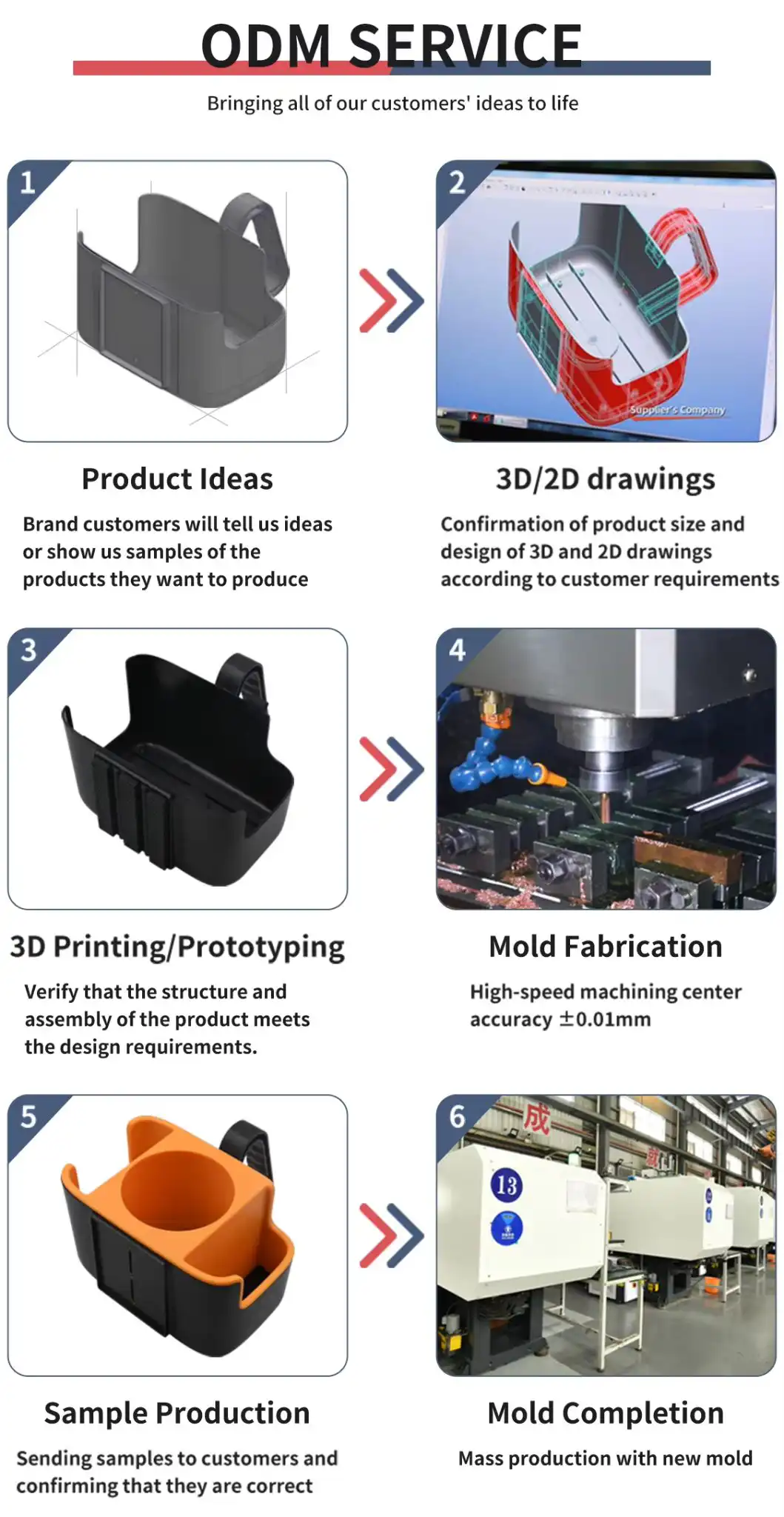
The Metal 3D Printing Process: From Design to Delivery
Un professionnel Metal 3D Printing Service follows a systematic workflow to ensure quality and precision at every stage, from file submission to finished part.
| Stade | Processus et technologie de base | Résultats en matière de qualité et de performance |
|---|---|---|
| 1. Conception et préparation des dossiers | – Customer provides 3D model in standard formats (STEP, STL, OBJ, 3MF). - Les ingénieurs examinent la conception en fonction de l'imprimabilité, de l'orientation et des exigences de la structure de support. – DFAM (Design for Additive Manufacturing) analysis optimizes geometry for the chosen process. | Un modèle numérique validé, prêt à être imprimé avec un risque minimal d'échec de la construction. |
| 2. Sélection des matériaux | – Optimal metal powder is selected based on application requirements (strength, temperature, corrosion, biocompatibility). – Certified powders with verified chemistry and particle size distribution ensure consistency. | Guaranteed material properties and traceability for critical applications. |
| 3. Build Preparation & Slicing | – Parts are oriented and support structures are generated within the build volume. – Slicing software converts the model into thin layers and generates laser paths. - Les paramètres de construction sont optimisés pour le matériau et la géométrie spécifiques. | Stratégie de fabrication optimisée pour la précision dimensionnelle, la qualité de surface et un post-traitement minimal. |
| 4. Additive Manufacturing | – The metal 3D printer builds the part layer by layer (typically 20-60 microns thick) in an inert atmosphere (argon or nitrogen). – Processes are monitored for quality assurance. | A near-net-shape metal part with properties matching the intended design. |
| 5. Post-traitement | – Thermal stress relief (heat treatment) to relieve internal stresses. – Part removal from build plate (wire EDM or bandsaw). – Support structure removal. – Surface finishing options: CNC machining, polishing, bead blasting, anodizing, coating. | A finished part meeting dimensional tolerances and surface finish specifications. |
| 6. Assurance qualité et inspection | – Dimensional inspection using CMM or optical scanners. – Material verification and mechanical testing as required. – Non-destructive testing (CT scanning, dye penetrant) for critical applications. | Certified part quality with full traceability and compliance with industry standards (ISO 9001, CE). |
| 7. Emballage et livraison | – Parts are carefully packed with protective materials (cotton filling, sealed/foam bags, standard cartons) for safe transit. - Expédition globale avec suivi. | Livraison sécurisée et ponctuelle des composants finis. |

Industry Applications: Where Metal 3D Printing Excels
Metal additive manufacturing serves a growing range of industries, each leveraging its unique capabilities. Our expertise spans multiple industries , allowing us to apply metal 3D printing solutions across diverse sectors.
| L'industrie | Applications | Principaux avantages obtenus |
|---|---|---|
| Aérospatiale | Turbine blades, fuel nozzles, brackets, ducting, engine components, satellite parts. | Weight reduction, part consolidation, complex cooling channels, reduced lead times for complex geometries. |
| Automobile | Custom brackets, intake manifolds, heat exchangers, lightweight structural parts, tooling, jigs, fixtures. | Rapid prototyping, weight savings for performance vehicles, custom and low-volume production, conformal cooling in molds. |
| Medical & Dental | Custom implants (hip, knee, spinal), surgical guides and instruments, dental crowns and bridges, prosthetics. | Patient-specific customization, biocompatible materials, porous structures for osseointegration. |
| Machines industrielles | Complex machine components, custom tooling, conformally cooled injection mold inserts, wear parts. | Optimized performance, reduced lead times for replacement parts, improved tool life through better cooling. |
| Robotics | Lightweight end-effectors, grippers, structural frames, custom brackets. | Weight reduction for faster movement, complex integrated designs, rapid iteration. |
| Produits de consommation | Custom jewelry, eyewear, watches, high-end sporting goods, design prototypes. | Design freedom for unique aesthetics, personalization, rapid market testing. |
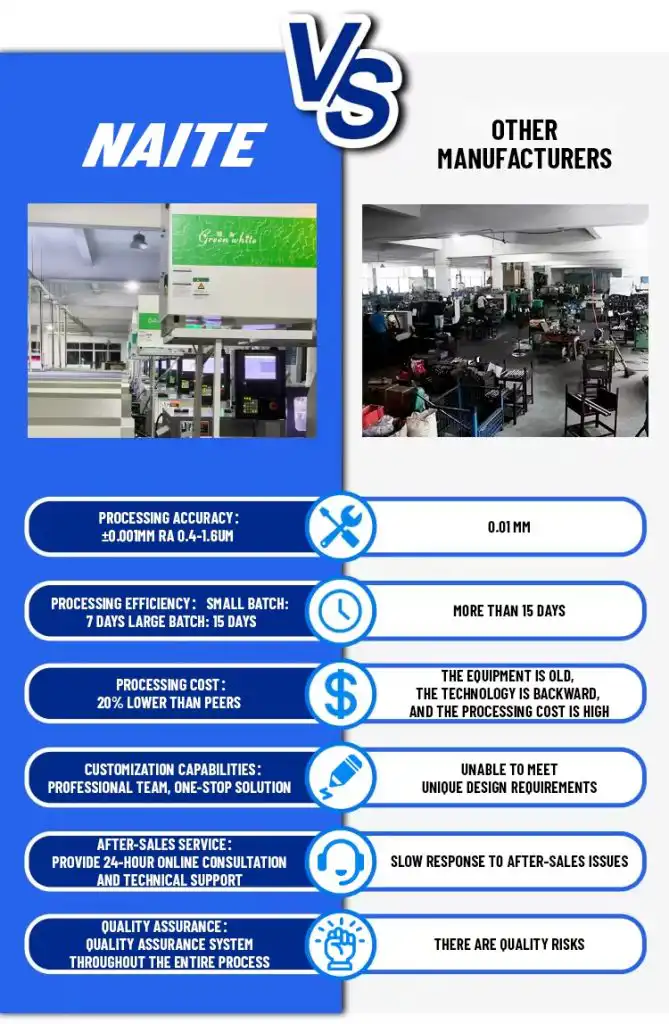
Metal 3D Printing vs. Traditional Manufacturing
Understanding when to choose additive manufacturing over conventional methods is key to leveraging its strengths.
| Aspect | Metal 3D Printing | Traditional Manufacturing (CNC, Casting) |
|---|---|---|
| Design Complexity | Excellent – No additional cost for complexity; can produce internal channels, lattices. | Limited – Complexity increases cost; some geometries impossible. |
| Lead Time | Fast – Days for prototypes; no tooling delays. | Slow – Weeks to months for tooling and setup. |
| Volume Suitability | Low to Medium (1-1,000+ parts) – Most cost-effective for low volumes. | Haut – Economical only at high volumes due to tooling amortization. |
| Material Options | Growing – Wide range of metals but less than traditional. | Extensive – Virtually all metals and alloys available. |
| Part Size | Limited – Restricted by build chamber size (parts can be segmented and welded). | Unlimited – Large parts possible with appropriate machines. |
| Finition de la surface | Good – Typically 4-12 µm Ra; may require post-processing. | Excellent – As-machined finishes down to 0.4 µm Ra achievable. |
| Mechanical Properties | Excellent – Comparable to wrought; fully dense parts. | Excellent – Well-established, predictable properties. |

Intégration avec des capacités de fabrication plus larges
Metal 3D printing does not exist in isolation. At Nylon Plastic, we integrate additive manufacturing with our comprehensive moulage par injection and finishing services to provide true end-to-end solutions.
| Service intégré | How Metal 3D Printing Enhances It | Vos avantages |
|---|---|---|
| Rapid Tooling for Injection Molds | 3D printed conformal cooling inserts produced in tool steel or copper alloys are integrated into injection molds. | Reduced cycle times (30-50% faster), improved part quality, reduced warpage. |
| Fabrication hybride | Complex core geometries are 3D printed, then precision machined on CNC equipment for critical surfaces and tolerances. | Best of both worlds: design complexity + machined precision. |
| Du prototype à la production | Functional metal prototypes produced via 3D printing for validation, then transition to casting or machining for high-volume production. | Faster time-to-market with validated designs before committing to hard tooling. |
| Custom Fixtures and Tooling | On-demand production of assembly jigs, fixtures, and workholding tools using metal 3D printing. | Reduced downtime, optimized production workflows. |
FAQ: Metal 3D Printing Service
Q1: What file formats do you accept for metal 3D printing?
A : Nous acceptons tous les formats de fichiers 3D standard, y compris STEP (.stp), STL (.stl), OBJ (.obj), IGES (.igs), 3MF (.3mf), and FBX (.fbx) . For best results, STEP files are preferred as they preserve exact geometric data.
Q2: What is the minimum order quantity (MOQ) for metal 3D printed parts?
A : Metal 3D printing excels at low-volume production. Our MOQ is 1 piece, making it ideal for prototyping, custom one-offs, and small-batch production. Volume discounts apply for larger quantities.
Q3: What are typical lead times?
A : Lead times depend on part complexity and quantity. Standard lead times range from 4-15 days for most projects, including printing and post-processing. Expedited options may be available for urgent requirements.
Q4: What surface finish can I expect?
A : As-printed parts have a characteristic matte finish with a surface roughness typically between 4-12 µm Ra. We offer various post-processing options to improve surface finish, including CNC machining, polishing, bead blasting, and coating.
Q5: How strong are 3D printed metal parts compared to machined parts?
A : Properly processed SLM and DMLS parts achieve fully dense (99.5%+) structures with mechanical properties equivalent or superior to castings and comparable to wrought materials in many alloys. Post-process heat treatment further optimizes properties.
Q6: Can you produce parts with internal channels or lattice structures?
R : Absolument. These complex geometries are where metal 3D printing excels. We can produce conformal cooling channels, lightweight lattice infills, and intricate internal passages impossible to machine.
Q7: Do you offer design assistance for additive manufacturing?
A : Oui. Notre équipe d'ingénieurs fournit Conception pour la fabrication additive (DFAM) support, helping optimize your designs for printability, strength, weight reduction, and cost-effectiveness while maintaining functional requirements.
Q8: What quality certifications do you hold?
A : Nos installations sont ISO 9001:2015 certified and our products comply with CE standards. For medical and aerospace applications, we can provide material certifications and inspection reports as required.
Q9: Can metal 3D printing be combined with other manufacturing processes?
A : Yes. We specialize in hybrid approaches that combine additive manufacturing with moulage par injection , CNC machining, and finishing to deliver complete solutions.
Q10: Do you offer color customization for metal parts?
A : While metal parts themselves are colored by their material (e.g., titanium’s natural silver, aluminum’s brightness), we offer various personnalisation des couleurs options through post-processing finishes including anodizing (for aluminum), PVD coating, and painting.
Conclusion: Unlock New Possibilities with Metal Additive Manufacturing
Metal 3D Printing Service empowers engineers and designers to transcend traditional manufacturing limitations, creating components that are lighter, stronger, and more functional than ever before. Whether you need rapid prototypes, custom one-offs, or low-volume production runs, this technology delivers unparalleled design freedom and speed to market.
Ready to transform your design into reality? Contact our engineering team today to discuss your project requirements. From initial DFAM analysis to finished, inspected parts, we provide end-to-end metal additive manufacturing solutions integrated with our broader material selection , conception de produits , et moulage par injection des capacités.
Demande de devis | Contacter notre équipe d'ingénieurs