


Design for Manufacturing (DFM) Overview
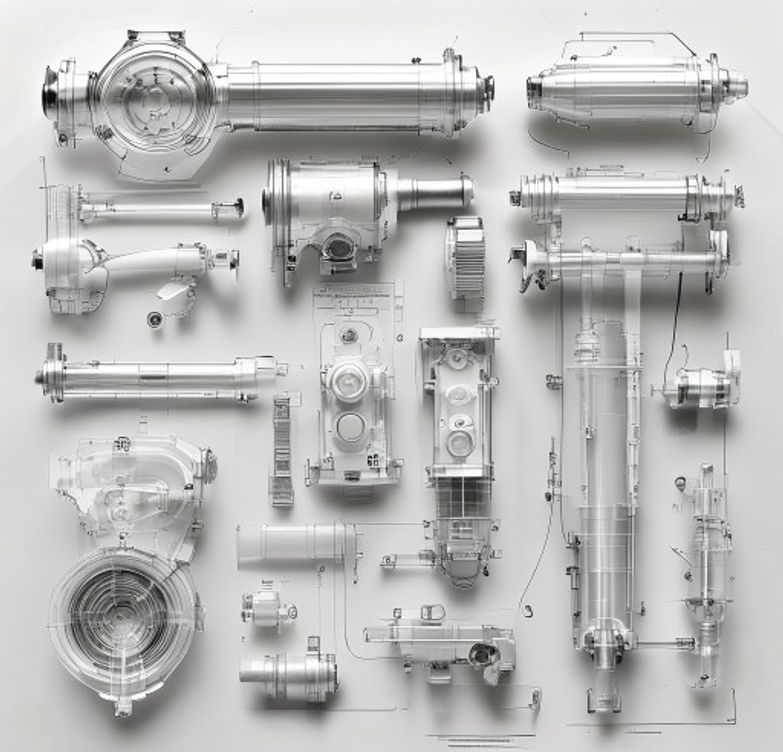
Design for Manufacturing considers production requirements early in the design phase. For injection molding, DFM prevents costly mold modifications, improves part quality, and reduces production costs.
Wall Thickness Design
Uniform Walls
- Consistent thickness prevents warpage and sink marks
- Target 2-3mm for typical parts
- Transitions should be gradual (3:1 ratio)
Material-Specific Guidelines
| Matériau | Min (mm) | Recommended (mm) | Max (mm) |
|---|---|---|---|
| ABS | 1.0 | 2.0-2.5 | 4.0 |
| PP | 0.8 | 2.0 | 5.0 |
| PC | 1.0 | 2.0-3.0 | 4.5 |
| PA (Nylon) | 0.8 | 1.5-2.5 | 3.5 |
| POM | 1.0 | 2.0 | 3.5 |
Ribs and Bosses
Rib Design
- Thickness: 50-70% of adjacent wall
- Height: Maximum 3× wall thickness
- Draft: 0.5-1° minimum
- Spacing: 2× wall thickness minimum
Boss Design
- Wall thickness: 60-70% of nominal wall
- Core hole depth: 2-3× diameter
- Include radii at base
- Consider draft for ejection
Corners and Radii
Draft Angles
- Standard surfaces: 0.5-1° minimum
- Surfaces texturées : 2-5° depending on texture
- Caractéristiques profondes : Increase draft proportionally
- Rétrécissement : Account for material shrinkage in draft
Undercuts and Side Actions
Designing Without Undercuts
- Reduces mold complexity
- Lower tooling cost
- Simpler maintenance
When Undercuts Are Necessary
- Use side actions (slides)
- Consider lifters for internal undercuts
- Design for proper release angles
Gating Considerations
- Position gates in non-visible areas
- Consider gate vestige requirements
- Account for weld line locations
- Design for automated degating when possible
Common Design Errors
- Sharp internal corners causing stress
- Insufficient draft causing ejection issues
- Thick sections causing sink marks
- Undercuts without proper mechanisms
- Ignoring shrinkage tolerances
DFM Checklist
- ☐ Uniform wall thickness throughout
- ☐ Adequate draft angles specified
- ☐ Radii on all internal corners
- ☐ Ribs properly proportioned
- ☐ Bosses designed for function
- ☐ Undercuts identified and addressed
- ☐ Gate locations proposed
- ☐ Material shrinkage accounted
Conclusion
DFM for injection molding prevents costly iterations and ensures manufacturable designs. Involve manufacturing engineers early in the design process.
Ressources connexes
- Comparaison PEEK vs PEI
- Flame Retardant Plastics
- Food Grade Plastics Guide
- Nylon Moisture Treatment
- Moisture Effects on Nylon
FAQ
When does Plastic Part Design for Manufacturing — DFM Guidelines for Injection Molding make sense?
Plastic Part Design for Manufacturing — DFM Guidelines for Injection Molding makes sense when the part volume, material choice, geometry, and repeatability needs justify mold design and tooling investment.
What design factors matter most for Plastic Part Design for Manufacturing — DFM Guidelines for Injection Molding?
Wall thickness, ribs, bosses, draft angle, gate location, shrinkage, parting line, and ejection all affect molded part quality.
What information is needed before mold production?
The supplier should confirm the 3D model, material, expected annual volume, appearance requirements, tolerance needs, and any assembly or functional testing requirements.
What is the biggest risk in Plastic Part Design for Manufacturing — DFM Guidelines for Injection Molding?
The biggest risk is approving tooling before material behavior, shrinkage, flow, and part function are fully checked against the real application.

 English
 Dutch
Dutch German
 French
 Korean
 Russian
 Japanese
 Spanish
 Vietnamese
 Chinese
 Portuguese
 Arabic