Large format 3D printing opens new possibilities for manufacturing oversized parts that were previously impossible or prohibitively expensive to produce. From automotive prototypes to architectural models, this technology is transforming how we approach big projects.
What Defines Large Format 3D Printing?
Large format 3D printers typically have build volumes exceeding 500mm in at least one dimension. Industrial systems can produce parts over 1 meter, with some specialized machines capable of printing parts several meters long.
Build Volume Categories
| カテゴリー | Build Volume | 代表的なアプリケーション |
|---|---|---|
| Standard Large | 500-1000mm | Automotive parts, furniture |
| Extra Large | 1000-2000mm | Full-scale prototypes, tooling |
| Industrial Scale | 2000mm+ | Aerospace, construction |
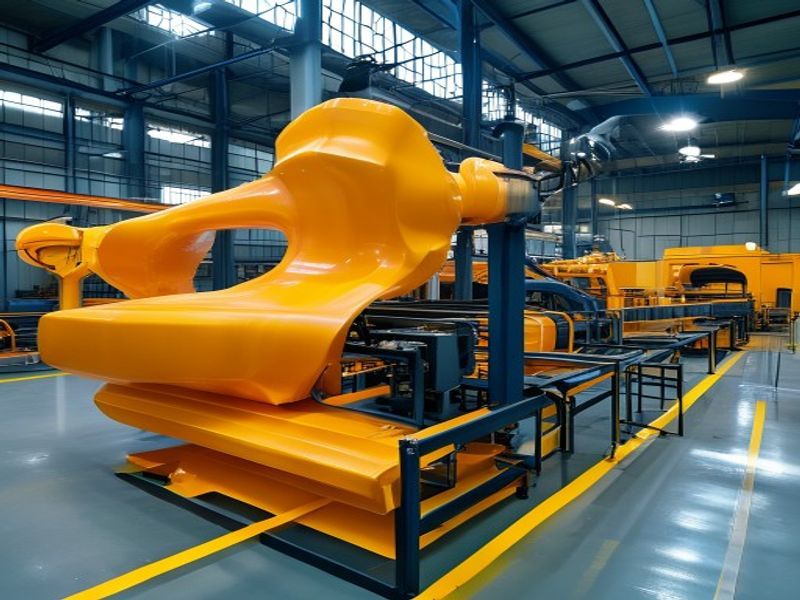
Technologies for Large Format Printing
Several 3D printing technologies have been adapted for large format production:
FDM/FFF
The most common technology for large format printing. Benefits include:
- Wide material selection including engineering plastics
- Lower equipment and material costs
- Scalable nozzle sizes for faster deposition
- Proven reliability for large parts
BAAM (Big Area Additive Manufacturing)
Developed by Cincinnati Incorporated and Oak Ridge National Laboratory, BAAM systems can print parts up to 6 meters long. Uses pellet extrusion for high deposition rates.
Thermoplastic Pellet Extrusion
Uses plastic pellets instead of filament, significantly reducing material costs and enabling faster print speeds. Ideal for production-scale applications.
Material Options for Large Parts
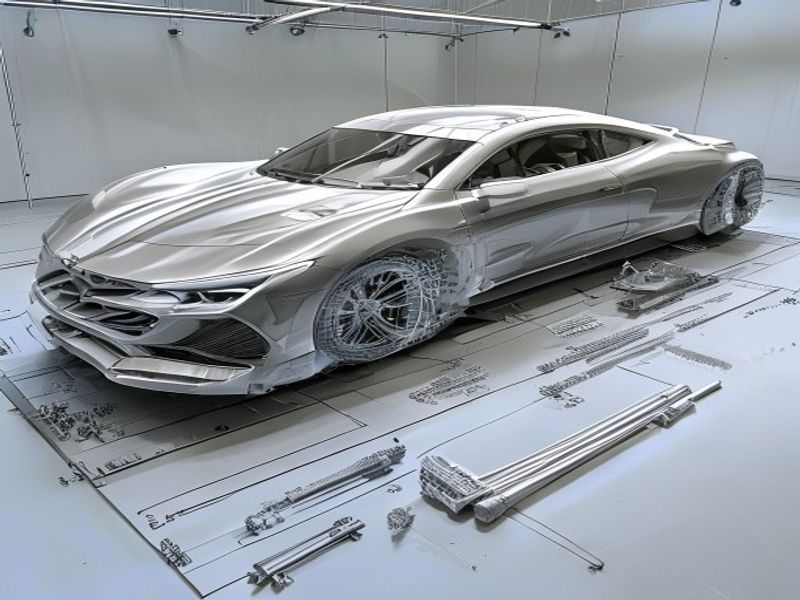
Large format printing typically uses industrial-grade materials:
ABS/ASA
Good balance of strength, temperature resistance, and cost. ASA offers UV resistance for outdoor applications.
Nylon (PA6, PA12)
Excellent mechanical properties and chemical resistance. Carbon fiber reinforced variants provide additional stiffness.
ポリカーボネート
High impact strength and heat resistance. Ideal for functional prototypes and tooling.
Composite Materials
Carbon fiber or glass fiber reinforced materials provide exceptional stiffness-to-weight ratios for structural applications.
Design Considerations
Designing for large format printing requires attention to unique challenges:
Warpage and Residual Stress
Large parts are particularly susceptible to warpage. Mitigation strategies include:
- Enclosed, heated build chambers
- Optimized part orientation
- Strategic placement of features
- Controlled cooling rates
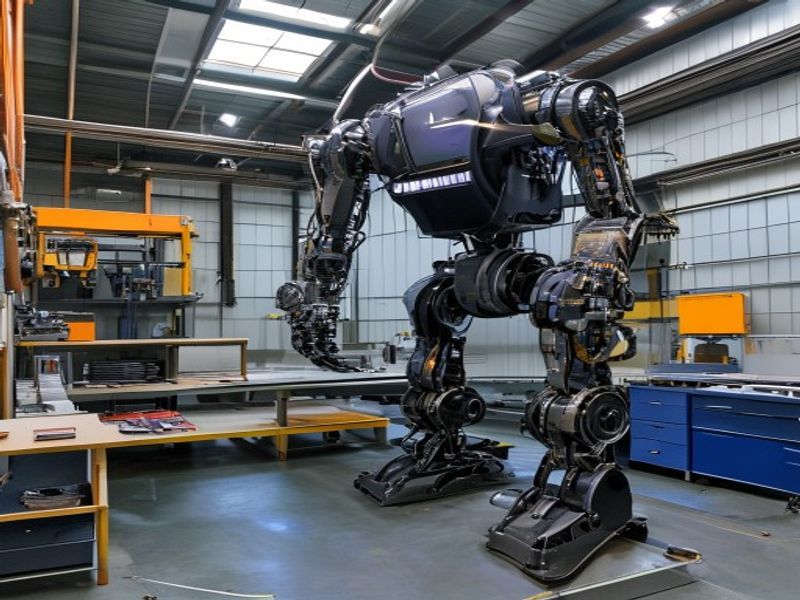
Print Time Management
Large parts can take days to print. Consider:
- Part segmentation for assembly
- Optimized infill strategies
- Larger nozzle sizes where detail permits
- Print scheduling and monitoring
Structural Integrity
Large parts must maintain strength throughout:
- Appropriate wall thickness (typically 3-5mm minimum)
- Strategic internal structure design
- Consider load paths in print orientation
- Post-processing for critical surfaces
Applications Across Industries
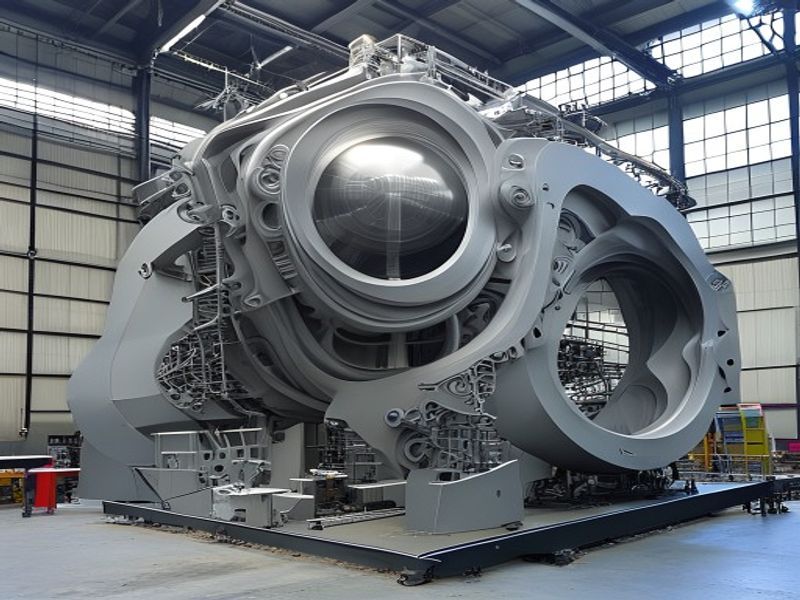
自動車
Full-scale prototypes, interior panels, bumper covers, and custom tooling. Enables rapid design iteration without expensive molds.
航空宇宙
Large structural components, ducting, and interior cabin parts. Weight optimization through lattice structures and integrated features.
Architecture and Construction
Architectural models, construction elements, and even printed structures. Some systems can print with concrete for building applications.
Entertainment and Props
Movie props, theme park elements, and exhibition displays. Complex geometries impossible with traditional manufacturing.
When to Choose Large Format 3D Printing
Consider large format printing when:
- Part dimensions exceed conventional printer capacity
- Traditional manufacturing would require expensive tooling
- Complex geometry is required at large scale
- Rapid prototyping of full-scale models is needed
- Custom or one-off large parts are required
当社の能力
を超える。 300台のCNCマシン, を生産している。 毎日10,000個 という厳しい公差で ±0.005mm. .我々は受け入れる 1個からのMOQ, 納期は以下の通り。 24時間~15日間. .試作品1個から数千個の生産部品まで、当社には供給能力と専門知識があります。. 24時間以内にお見積もりいたします。.
よくあるご質問
When is Large Format 3D Printing: Capabilities, Materials, and Applications a good option?
Large Format 3D Printing: Capabilities, Materials, and Applications is a good option when fast iteration, complex geometry, low tooling cost, or low-volume production is more important than molded-part unit cost.
What should be checked before choosing Large Format 3D Printing: Capabilities, Materials, and Applications?
部品サイズ、材料特性、表面仕上げ、寸法公差、熱暴露、荷重方向、後処理が必要かどうかを確認する。.
How does Large Format 3D Printing: Capabilities, Materials, and Applications compare with CNC machining?
3Dプリンティングは複雑な形状を素早く作ることができるが、CNC機械加工は精密な表面、より厳しい公差、生産グレードの材料に強いことが多い。.
What affects the cost of Large Format 3D Printing: Capabilities, Materials, and Applications?
コストは、材料、造形量、印刷時間、レイヤーの高さ、サポート除去、仕上げ、検査、造形物の部品数によって異なる。.