
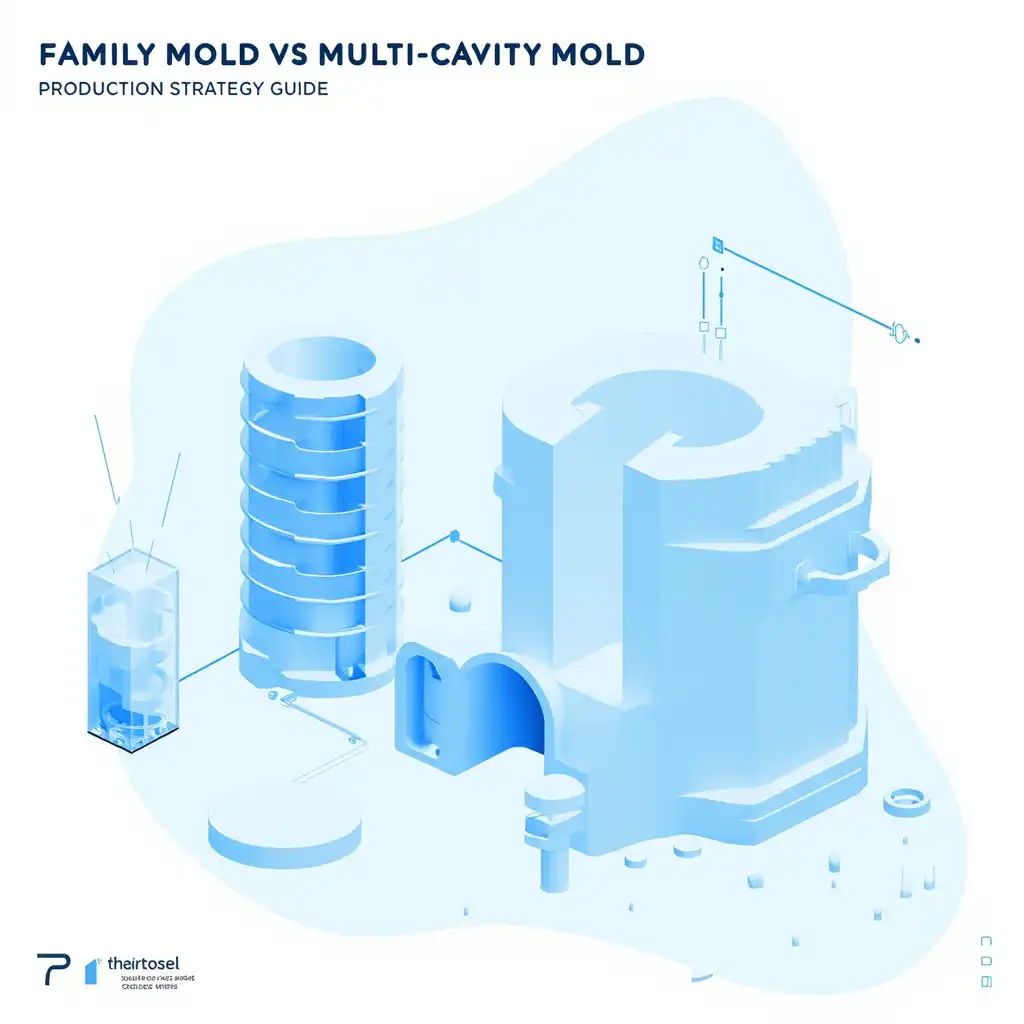
Understanding Mold Configurations
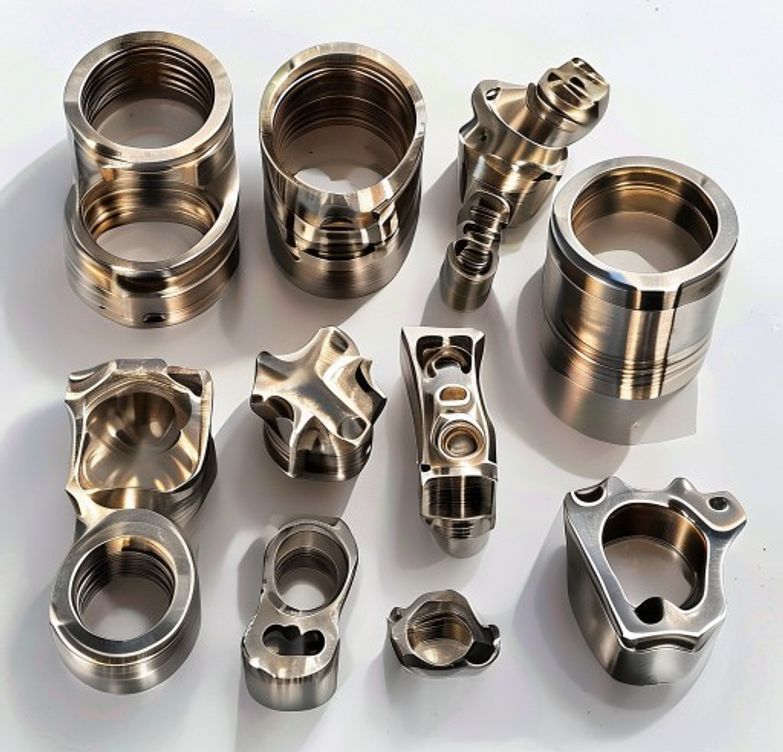
Mold configuration significantly impacts production cost, efficiency, and flexibility. Understanding the differences between family molds and multi-cavity molds helps optimize manufacturing strategy.
Multi-Cavity Molds
Multi-cavity molds produce multiple identical parts in a single cycle. All cavities are the same design.
Advantages
- Maximum production efficiency
- Consistent part quality across cavities
- Easier process optimization
- Predictable cycle times
- Lower per-part cost at high volume
Challenges
- Higher mold cost
- Single part design per mold
- All cavities must be filled evenly
Best Applications
- High-volume single part production
- Parts requiring strict consistency
- Commodity components
Family Molds
Family molds produce different parts in the same mold. Multiple part designs share a single mold base.
Advantages
- Lower total mold investment
- Produces multiple parts simultaneously
- Suitable for low-volume assemblies
- Reduces inventory complexity
Challenges
- Difficult to balance fill between cavities
- Different parts may need different cycle times
- Quality control more complex
- May require compromise on process parameters
Best Applications
- Low to medium volume assemblies
- Related parts with similar size and material
- Prototype and bridge production
Key Decision Factors
Design Considerations for Family Molds
Part Similarity
- Similar wall thickness
- Compatible materials
- Comparable shot sizes
- Similar cooling requirements
Runner Balance
- Design runner system to balance fill
- Consider different cavity sizes
- May need flow restrictors
Gating Strategy
- Different gate sizes for different cavities
- Position gates for optimal fill
- Consider automatic degating
Cost Analysis Example
Scenario: Assembly with 4 different plastic parts, 50,000 sets per year
- Option A: 4 single-cavity molds = $60,000 total
- Option B: 1 family mold (4 cavities) = $25,000
- Option C: 4 multi-cavity molds (8 cavities each) = $120,000
For this volume, the family mold offers the best cost-efficiency.
Conclusão
Choose multi-cavity molds for high-volume, single-part production. Consider family molds for assemblies with multiple parts at lower volumes. Evaluate total cost, production needs, and part complexity.
Related Resources
- Moisture Effects on Nylon
- Nylon Printing Temperature Guide
- CNC Machining Nylon
- 3D Printing for Prototyping vs Production
- Plastic Material Selection Guide
FAQ
When does Family Mold vs Multi-Cavity Mold — Production Strategy Guide make sense?
Family Mold vs Multi-Cavity Mold — Production Strategy Guide makes sense when the part volume, material choice, geometry, and repeatability needs justify mold design and tooling investment.
What design factors matter most for Family Mold vs Multi-Cavity Mold — Production Strategy Guide?
Wall thickness, ribs, bosses, draft angle, gate location, shrinkage, parting line, and ejection all affect molded part quality.
What information is needed before mold production?
The supplier should confirm the 3D model, material, expected annual volume, appearance requirements, tolerance needs, and any assembly or functional testing requirements.
What is the biggest risk in Family Mold vs Multi-Cavity Mold — Production Strategy Guide?
The biggest risk is approving tooling before material behavior, shrinkage, flow, and part function are fully checked against the real application.

 English
 Dutch
Dutch German
 French
 Korean
 Russian
 Japanese
 Spanish
 Vietnamese
 Chinese
 Portuguese
 Arabic